You can teach meaningful social skills at home by embedding short, caregiver-led practice into daily routines. Special playtime, emotion coaching, and visual supports are the tools we lean on most. Research on parent-implemented interventions and video modeling backs this approach. Below you'll find copy-ready activities, routine ideas, and a starter plan that fits into a short daily routine.
TL;DR:
Start with five minutes of daily playtime that follows your child’s lead, repeat one short activity, and practice taking turns during meals and chores.
When coaching emotions, notice feelings early, move close, listen without rushing to fix things, name the feeling, and discuss solutions after your child calms.
Keep videos realistic and predictable, show one target behavior with simple words or pictures, then practice the scene together immediately afterward.
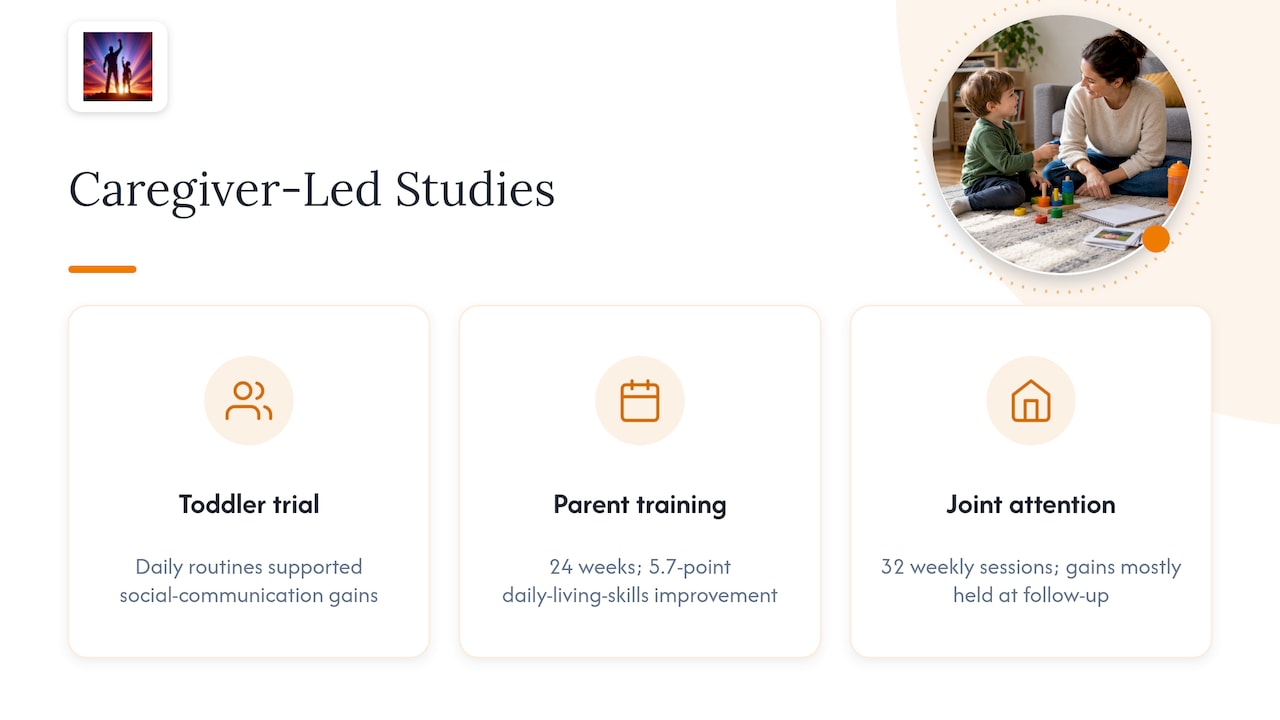
A parent training trial lasting 24 weeks reported an improvement of 5.7 points in daily living skills among children with autism and disruptive behavior.
Ask a pediatrician or specialist for guidance if consistent practice produces no progress, safety becomes a concern, or your child withdraws severely from people.
Table of Contents
Which social skills at home activities can you start today?
How can you build social practice into daily routines?
How does emotion coaching teach empathy and emotional awareness?
Why do visual supports and video modeling help?
What social goals fit toddlers, preschoolers, and early school-age kids?
What does the research say, and when should you ask for more help?
A caregiver-ready starter plan for this week
Where can you find guided lessons, short videos, and bilingual resources?
Sources
Which social skills at home activities can you start today?
Pick one activity and repeat it before adding another. Short and repeated beats long and occasional.
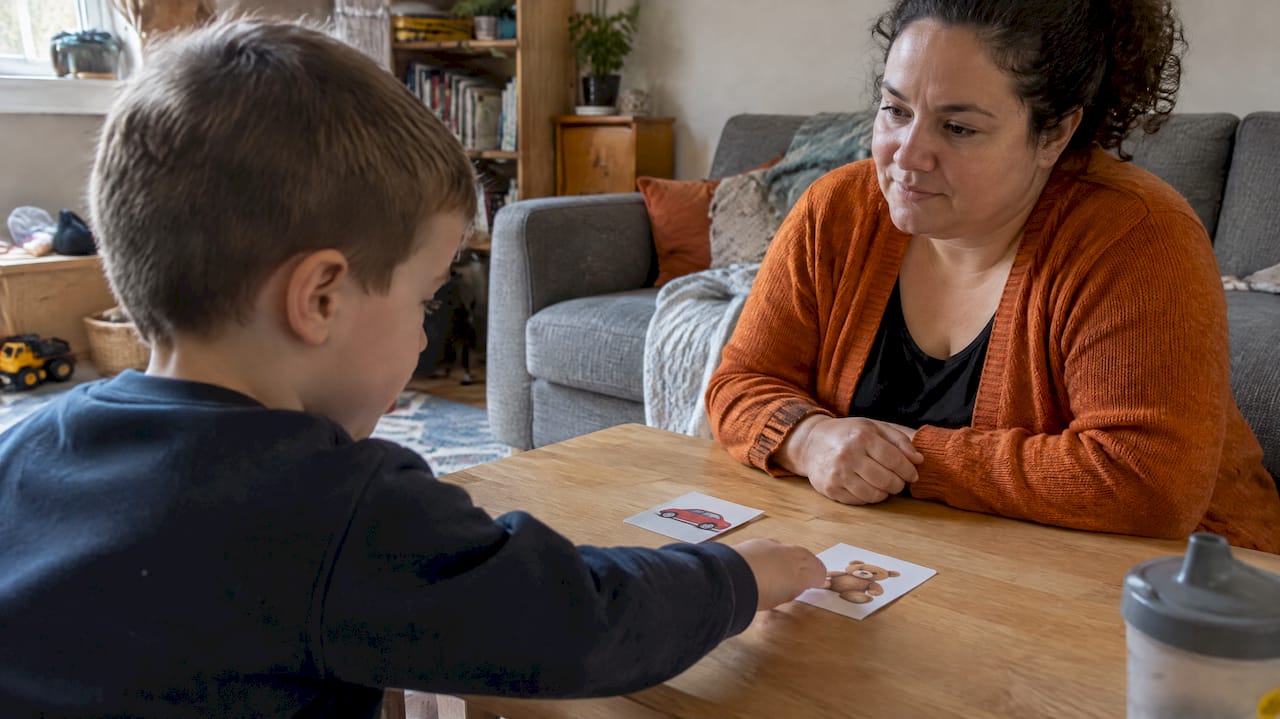
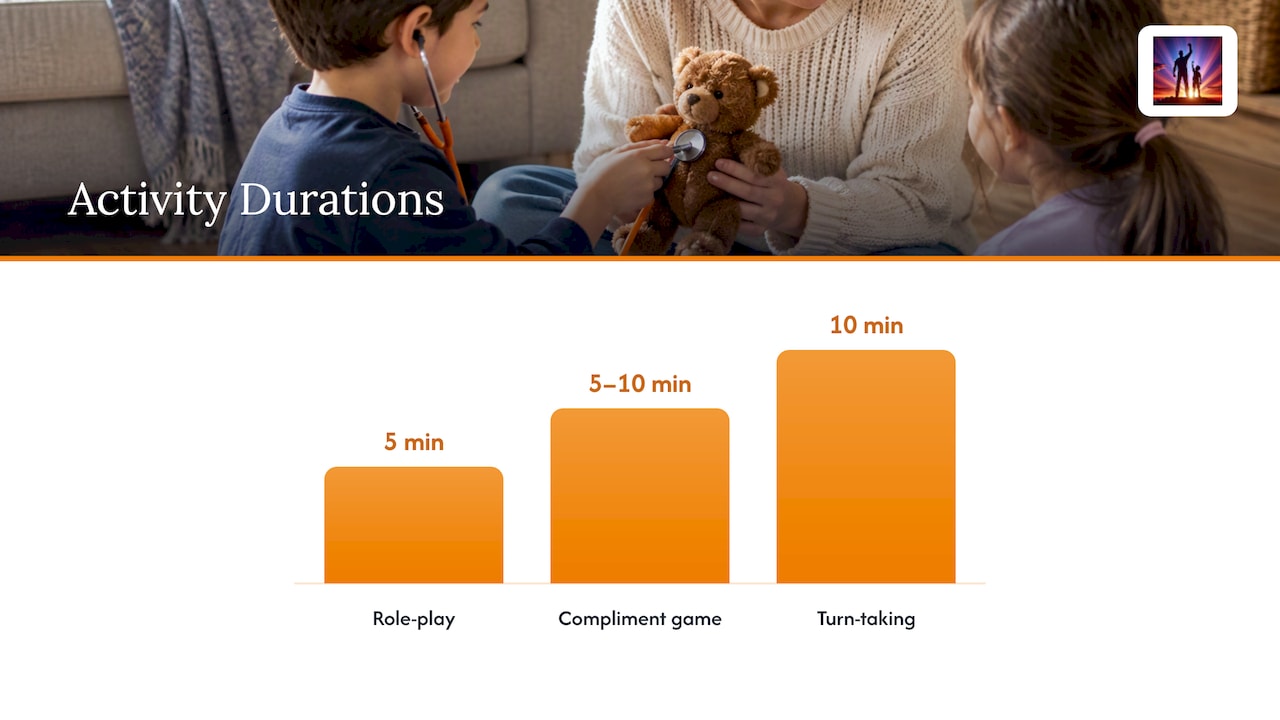
Role-play greetings and sharing. Goal: practice saying hello, asking to join, and offering a turn. Ages 3 to 8. Five minutes. Script a simple exchange ("Hi, can I play too?" "Sure, you can have the red car") and swap roles so your child plays both parts. Variation: use puppets or stuffed animals if a child resists acting.
Feelings charades. Goal: label emotions from faces and body language. Choose an activity suited to your child and keep it brief. Act out "happy," "frustrated," or "surprised" and let your child guess, then flip. Variation: use a mirror so your child sees their own face.
The Compliment Game. Goal: perspective-taking and kind language. Ages 4 to 8. Five to ten minutes. Take turns noticing one thing the other person did well, such as "You waited so patiently." Variation: write compliments on slips of paper and draw one at dinner.
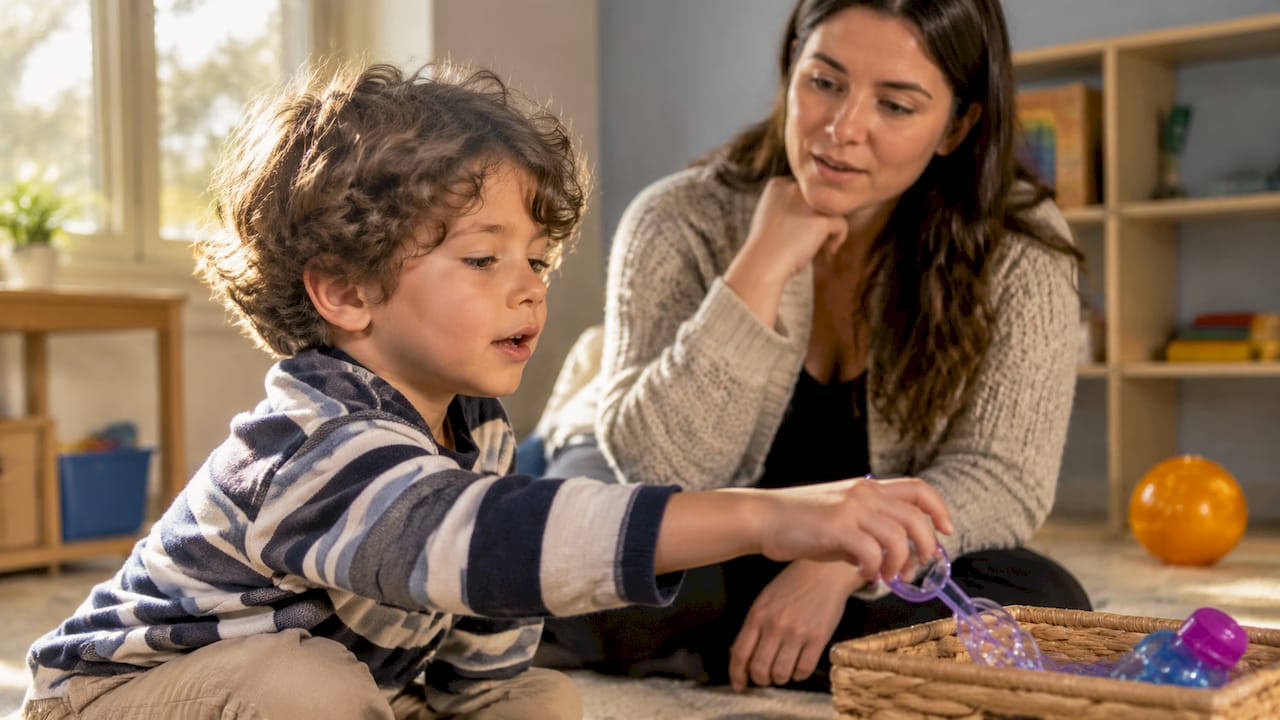
Turn-taking games. Goal: waiting, fairness, and handling a loss. Ages 2 to 8. Ten minutes. Simon Says, Freeze, and simple card or board games all work. Variation: play cooperatively, with both of you trying to beat the timer instead of each other.
Clinical guidance also suggests teaching turn-taking through shared tasks like baking, and talking through emotions you spot in shows and movies, as described in CHOC's at-home tips.
Pro Tip: Stop while your child still wants more. Ending a game on a good note makes tomorrow's round easier to start.
How can you build social practice into daily routines?
Ordinary moments are your best classroom because they repeat every day. Start with special playtime: a short, child-led block where you imitate what your child does, describe it out loud, and praise it. Experts suggest beginning with five minutes and growing gradually, as the CDC's special playtime guidance explains.
Then carry the same moves into the rest of the day:
Mealtime turn-taking. Pass dishes one at a time and say "Your turn, then mine." Ask each person one question about their day.
Cooperative chores. Give each person one half of a job, like one of you holding the laundry basket while the other loads the machine. Name the teamwork when it works.
Waiting scripts. Before a transition, give a short line your child can use: "I'm waiting. I can count to ten." Practice it when nothing is at stake.
Predictable cues. Use the same phrase or signal each time, such as a chime before cleanup. Consistency lowers anxiety and helps skills carry from one setting to another, a point the CDC makes in its guidance on noticing and naming emotions.
If you want more structure, our guide on building communication at home in 5 to 15 minute routines walks through daily sessions step by step.
How does emotion coaching teach empathy and emotional awareness?
Emotion coaching gives your child words for feelings before big reactions hit. The CDC describes a "Noticing and Naming" approach: get down on your child's level, make eye contact, and describe what you see so they learn that every feeling is acceptable, even when not every behavior is. We use this flow:
Notice the feeling while it is still small.
Connect by moving close and softening your voice.
Listen without fixing right away.
Name the emotion: "You look frustrated that the tower fell."
Find solutions together once your child is calm.
Practice active listening, descriptive commenting, and mirroring in low-stress moments, as the CDC's tips on connecting and communicating recommend. If you want a clinician-aligned primer on why this matters, this overview of emotional awareness and well-being is a useful read.
Your own state matters too. Pause to settle yourself before coaching, because coaching while stressed can accidentally dismiss a child's feelings. Keep sessions brief so neither of you burns out.
Pro Tip: Say your own feelings out loud: "I'm a little frustrated, so I'm taking a breath." Children copy what they hear.
Why do visual supports and video modeling help?
Visual supports and video modeling show a child what a social moment looks like, including facial expressions, tone of voice, and body language. Research indicates that short, realistic video scenarios help children learn social expectations and carry those behaviors into real life.
You can make your own clips at home:
Film a short real-life scene showing one target behavior, such as asking to join a game.
Add a simple script in plain words or pictures.
Watch it together, then practice the same scene live right away.
Keep materials predictable and concrete: same setting, same wording, one skill at a time.
Pair every video with live practice so the skill doesn't stay on the screen. For a walkthrough, see our practical guide to video modeling for autism, and for daily structure, our guide to visual schedules.
What social goals fit toddlers, preschoolers, and early school-age kids?
Expect small steps. Research syntheses on social and emotional learning for ages 3 to 8 describe effective programs as explicit instruction plus supportive environments across settings. The What Works Clearinghouse likewise recommends intentional, engaging practice of social-emotional skills, with families informed so they can reinforce it at home.
Toddlers: joint attention and simple turn-taking, like rolling a ball back and forth.
Preschoolers: sharing and brief back-and-forth conversation.
Early school-age: perspective-taking and cooperative problem-solving.
Break any skill into manageable micro-steps. "Sharing" might become: hold out a toy, wait, let go, say thanks. Practice one step in a short routine until it feels easy. Celebrate what you can see: a longer glance, one extra turn, a feeling named without prompting.
What does the research say, and when should you ask for more help?
Caregiver-led practice has real evidence behind it. A randomized trial of a parent-implemented social intervention for toddlers with autism found that embedding practice in daily routines supported gains in social communication. A 24-week trial of parent training reported a 5.7-point improvement in daily living skills for children with autism and disruptive behavior. And a parent-mediated joint attention trial with 32 weekly home sessions found gains in preverbal social communication that mostly held at follow-up.
Talk with your pediatrician or a specialist if you see no progress despite consistent practice, if safety is a concern, or if your child withdraws severely from people.
A caregiver-ready starter plan for this week
Here is the plan we'd hand a friend. Do five minutes of special playtime every day. On some days, add feelings charades. On other days, play the compliment game. Track just one thing, like how many turns your child took. Celebrate it out loud. If either of you feels overwhelmed, pause and try again tomorrow. Adjust everything to your child's pace.
— Ronnie Talent
Where can you find guided lessons, short videos, and bilingual resources?
When you want structure for the practice above, our app brings together guided activities, short caregiver training videos, bilingual English and Spanish content, and state-by-state resources in one place. It's built by caregivers for caregivers, so you can extend home practice without piecing it together yourself. Our training videos for caregivers are a good place to begin. You can see plans and trial details on our pricing page.

This article is general information, not a substitute for advice from a qualified doctor. Consult a qualified healthcare professional about your own circumstances before acting on anything here.
FAQ
How do I teach my kids social skills at home?
Start with five minutes of daily special playtime, then add one short activity like feelings charades or turn-taking games. Practice inside routines such as meals and chores so skills show up in real life. Consistency matters more than session length.
Is it normal if my 2-year-old isn't interacting with peers?
Peer interaction varies among children. If you have concerns about your child's development, ask your pediatrician. Work on joint attention and simple turn-taking at home. If you see no progress despite steady practice, ask your pediatrician.
What is included in social skills?
Social skills cover conversation, turn-taking, sharing, empathy, emotional awareness, and cooperation. Research syntheses on social and emotional learning group these under self-awareness, self-management, social awareness, relationship skills, and responsible decision-making.
How do you teach someone social cues?
Name what you notice in the moment: "Her arms are crossed, so she may not want to play right now." Videos and picture prompts help too, because they let a child see expressions and body language repeatedly. Practice live right after.
Sources
Recommended