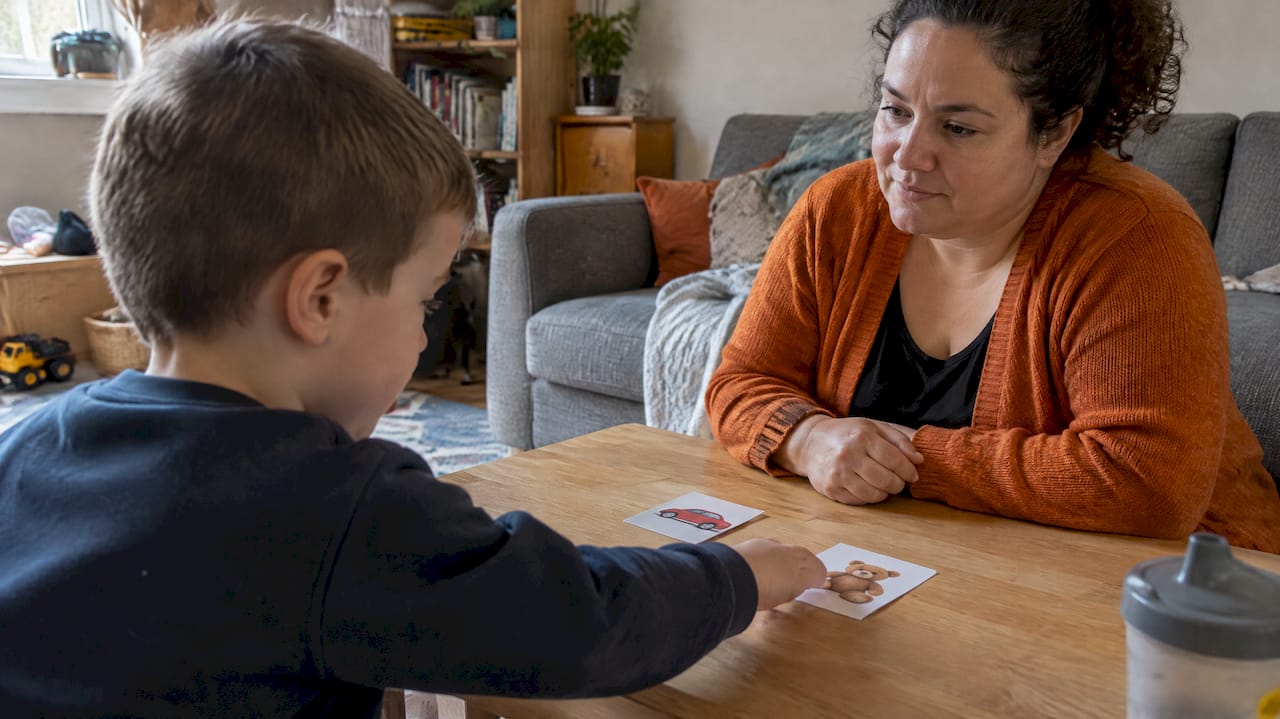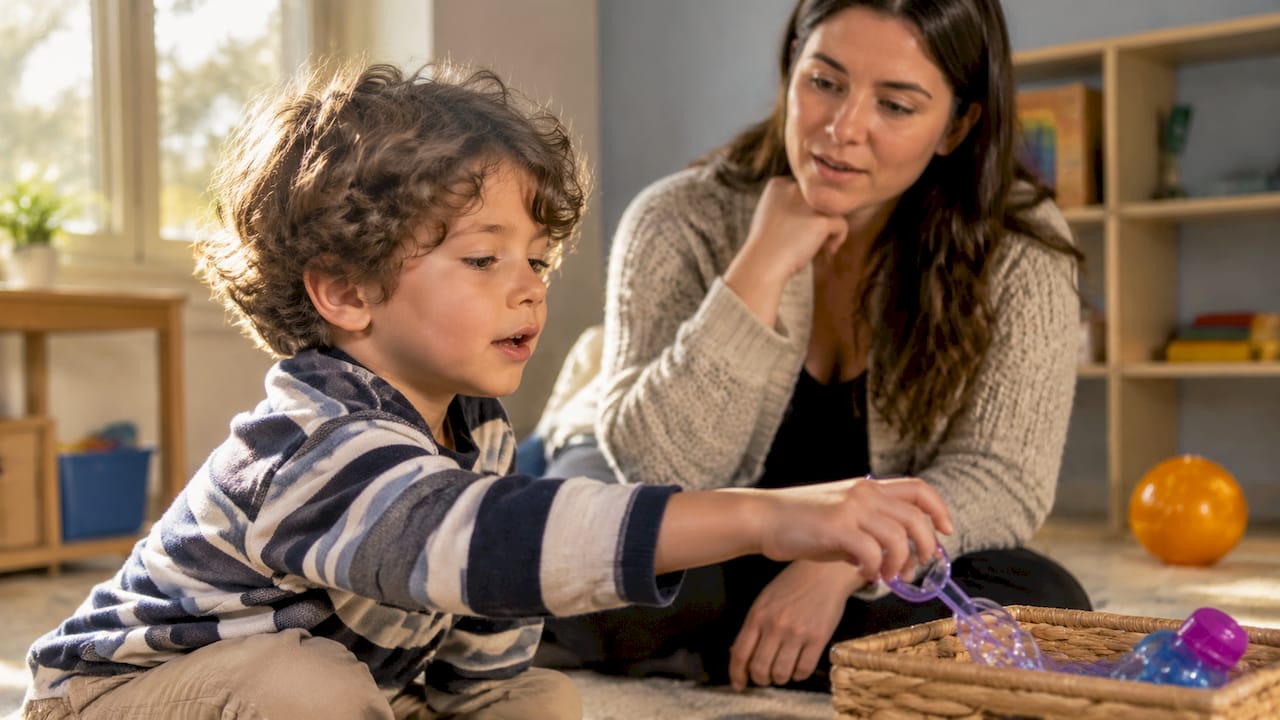
Pivotal Response Treatment (PRT) is an evidence-based, naturalistic behavioral intervention designed to increase motivation, social initiations, and functional communication in autistic children. It’s built on the principles of applied behavior analysis but delivered through play, following the child’s lead rather than running fixed drills. Parents, teachers, and trained therapists can all deliver it, in homes, schools, clinics, or over telehealth, though how well a child responds still varies from case to case.
TL;DR:
The variability in children’s responses emphasizes that PRT is most effective when tailored to individual motivation and developmental levels.
Fidelity in parent implementation, supported by coaching and self-review, significantly influences treatment outcomes at home.
Ongoing research aims to identify neural predictors of who benefits most from PRT, but no guaranteed results are currently available.
Delivery by trained providers in multiple settings with a focus on parent-led sessions can enhance generalization and effectiveness.
Using tools like the Autism Victory App can improve consistency and progress tracking during parent-led PRT practice at home.
Table of Contents
What Is Pivotal Response Treatment? A Look at the Core Model
PRT grew out of work by Robert and Lynn Koegel at the University of California, Santa Barbara, and it’s now studied extensively through programs like the Stanford PRT Research and Training Program. It sits in a family of interventions researchers call Naturalistic Developmental Behavioral Interventions, or NDBIs, which blend ABA’s structured reinforcement with the flexibility of ordinary play and daily routines.
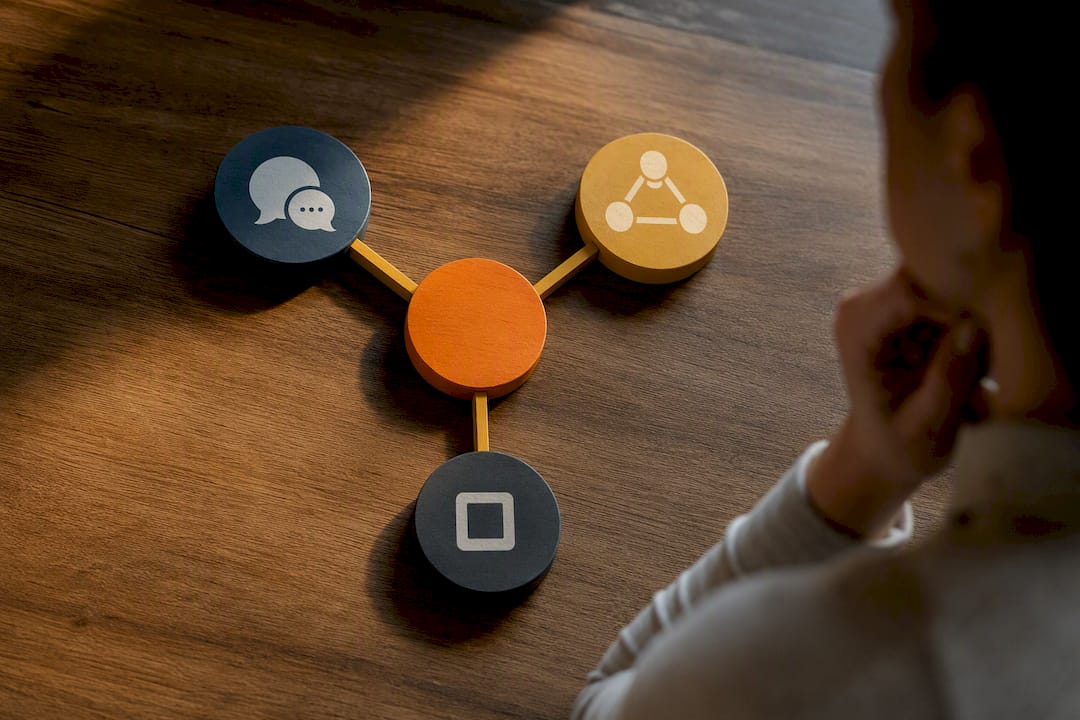
The name comes from a specific idea: some skills are “pivotal” because progress in one area produces gains across many others. Motivation is the clearest example. A child who becomes more motivated to initiate communication doesn’t just get better at that one skill. They tend to show improvement in language, social engagement, and even reductions in disruptive behavior, because motivation touches nearly everything a child attempts.
This is where PRT diverges sharply from Discrete Trial Training (DTT), the more traditional ABA method many parents picture when they hear “autism therapy.” DTT typically happens at a table, with a therapist presenting the same instruction repeatedly until the child masters it, then moving to the next skill in a controlled sequence. It’s structured, predictable, and has strong evidence behind it for teaching discrete skills.
PRT takes a different route. The CDC’s overview of autism treatments draws this contrast directly: PRT happens in natural settings, follows the child’s interests, and targets broad developmental areas rather than isolated behaviors. Instead of a therapist choosing the toy and the task, the child picks what they want to play with, and the therapist or parent builds learning opportunities into that choice.
A few things distinguish PRT from other approaches in practice:
It’s child-led, not therapist-led. The activity starts with what the child finds motivating, not a predetermined lesson plan.
It happens in natural environments. Sessions can unfold at the kitchen table, on a playground, or in the backyard, not only in a clinical room.
It targets pivotal skills over isolated behaviors. Motivation, self-initiation, and responsiveness to multiple cues are the priority, because gains here tend to generalize.
It reinforces attempts, not just perfect responses. A child reaching for a word or gesture gets rewarded for trying, not only for getting it exactly right.
It uses natural, functional reinforcement. If a child asks for a ball, they get the ball, not an unrelated treat or sticker.
That last point matters more than it sounds. Traditional behavioral programs sometimes rely on rewards disconnected from the task itself, like candy for finishing a matching exercise. PRT insists the reward matches the child’s original request. Ask for the swing, get pushed on the swing. That direct connection is part of why the model claims stronger generalization outside the therapy room.
How PRT Works in Practice: Procedures and a Real Example
PRT is built from a set of core procedures that clinicians and parents apply consistently, session after session. The WWC evidence snapshot on Pivotal Response Training outlines these steps as the backbone of the model, and they’re what separates PRT from generic “child-led play.”
Child choice. The adult offers several motivating items or activities and lets the child pick, rather than assigning one.
Following the child’s lead. The interaction builds around whatever the child is already engaged with, instead of redirecting to an adult-chosen task.
Interspersal of maintenance and acquisition tasks. Easier, already-mastered tasks get mixed in with newer, harder ones to keep motivation and success rates high.
Rewarding attempts. A reasonable, good-faith try at a response earns reinforcement, not just a flawless answer.
Natural, direct reinforcement. The reward relates logically to the child’s request or action, keeping the connection between effort and outcome clear.
Clear opportunities. The adult sets up situations where a response is genuinely called for, rather than talking at the child continuously.
Task variation. Activities shift regularly to prevent boredom and to keep the child’s engagement high across a session.
Here’s what that looks like in an actual moment. A child is playing with a set of toy cars and reaches for a red one that’s just out of reach. Instead of handing it over automatically, the parent holds it up and waits, creating a clear opportunity. The child says “car” or points, even imperfectly. The parent immediately hands over the car while saying “car! Here’s the car,” pairing language with the exact reinforcement the child wanted. No unrelated treat, no delay, no unrelated praise phrase. The connection between the attempt and the reward is instant and logical.
That immediacy is deliberate. Waiting even ten or fifteen seconds to deliver the reward weakens the link a young child makes between their action and the outcome. The reinforcement has to land right when the attempt happens.

Pro Tip: Resist the urge to correct a child’s attempt on the spot. If your child reaches for juice and says “ju” instead of “juice,” give the juice immediately and model the full word as you hand it over. Correcting first and rewarding second breaks the pivotal connection PRT depends on.
Parents often ask how “wrong” an attempt can be and still count as reinforceable. The general guideline: any goal-directed effort toward communication, whether a gesture, an approximation, or eye contact paired with reaching, qualifies. The bar is deliberately low early on, then rises gradually as a child’s skills grow. Setting the bar too high, too soon, is one of the more common mistakes new parent implementers make, and it tends to backfire by reducing a child’s willingness to try at all.
Does the Research Actually Support PRT?
PRT has one of the stronger evidence bases among naturalistic autism spectrum interventions, but the research also comes with real caveats parents should weigh honestly.
A review of the literature on PRT for autism spectrum disorder describes an evidence base built across multiple experimental designs and settings, with consistent findings of improved functional social communication and increased initiations in many children studied. That’s a meaningful signal. It’s not one small pilot study; it’s a pattern replicated across different research teams and methodologies over time.
The WWC evidence snapshot backs this up from a different angle, listing PRT among evidence-based practices for school-age children while also noting that effect sizes and outcomes vary across studies. That variation is worth sitting with rather than glossing over. Some children show dramatic gains in initiations and social engagement within months. Others show more modest, incremental change. The research doesn’t support a promise of uniform results, and any provider who frames PRT as guaranteed to work a certain way isn’t representing the evidence accurately.
Small neuroimaging studies have started identifying baseline neural patterns associated with stronger response to PRT, suggesting some children’s brains may be primed to benefit more from this specific model, though this research remains preliminary.
That finding comes from a small fMRI study involving 20 children with a mean age of about 5.9 years, which identified four neural clusters whose baseline activation predicted social competency gains after 16 weeks of PRT, as described in the same PMC review of PRT. Twenty children is a small sample, and this kind of biomarker research is nowhere near ready for clinical use. But it points toward where the field is heading: trying to predict, ahead of time, which children are most likely to respond strongly to PRT specifically, rather than a different intervention.
Stanford’s own PRT research program is actively running randomized controlled trials comparing center-based PRT delivery against in-home coaching, alongside a separate trial testing online parent-training formats. Recruitment for these studies is ongoing, and the results should eventually clarify which delivery models produce the most reliable gains, and for whom.
For families weighing this evidence, the honest takeaway is a middle ground: PRT has real, replicated support, especially for improving initiations and functional communication, but it is not a one-size-fits-all fix, and no current tool can promise in advance exactly how much your child will benefit. The PMC review itself frames ongoing research as an effort to identify predictors of response, not to guarantee outcomes.
Who Delivers PRT, and Where Can Your Child Get It?
PRT isn’t limited to clinic visits with a specialist. It’s designed to be delivered by a range of people, which is part of why parent involvement is baked into the model rather than treated as optional extra credit.
Providers typically include:
Board Certified Behavior Analysts (BCBAs) who design the individualized program and oversee data collection.
Trained behavior technicians or therapists who implement sessions under a BCBA’s supervision.
Speech-language pathologists and occupational therapists with PRT training, often working alongside behavioral staff.
Parents and caregivers, coached directly to implement PRT strategies during everyday routines.
School staff, in districts that have incorporated PRT into their special education programming.
When you’re vetting a provider, ask what specific PRT training they’ve completed, not just whether they’re a licensed BCBA generally, since ABA credentials don’t automatically mean deep PRT-specific training.
Delivery settings span home, school, clinic, and telehealth, each with trade-offs. Home-based sessions capture a child’s most natural environment but can be harder to observe for fidelity. Clinic-based sessions offer more structured oversight but may not generalize as easily. Telehealth has expanded access significantly, letting a coach observe a parent-child interaction remotely and give real-time feedback, which Yale Medicine’s clinicians point to as a meaningful way to reach families who don’t live near a specialized provider.
Provider scarcity is a real barrier in many regions, and it’s part of why parent training carries so much weight in PRT specifically. A shortage of specialists doesn’t have to mean a shortage of therapy hours if caregivers are equipped to run sessions themselves between coaching visits.
What a PRT Program Actually Looks Like Week to Week
Program structure varies by provider, but most PRT models follow a recognizable pattern, and knowing what to expect upfront helps you evaluate whether a program fits your family’s schedule and goals.
Initial assessment and goal-setting. A clinician evaluates your child’s current communication, motivation triggers, and behavior patterns, then sets specific pivotal-skill targets.
Parent training phase. Many programs start with a structured course, sometimes 10 to 16 lessons, teaching caregivers the core procedures before they’re expected to implement independently.
Coached practice sessions. Weekly or biweekly sessions where a coach observes parent-child interaction directly or via video and gives targeted feedback.
Home practice between sessions. Parents apply the strategies during daily routines, meals, play, errands, not just in scheduled therapy blocks.
Progress review and goal adjustment. Data on initiations, attempts, and functional communication gets reviewed periodically, and goals shift as skills develop.
Session intensity depends heavily on the specific program. Center-based models might run several hours weekly with direct therapist contact. Parent-training models front-load the coaching, then rely on daily home practice, often just fifteen to thirty minutes woven into existing routines rather than a dedicated therapy block.
Families frequently report that the first visible shift is in initiations, a child starting to reach, point, or vocalize to request something, rather than waiting passively or melting down. That’s often followed by broader gains in spontaneous language and social engagement over subsequent months. Timelines vary widely by child, and PRT is applied across a broad age range, though it’s most commonly used with younger children, roughly ages two to six, when early intervention tends to have the most runway to work with.
What Parents Can Do Starting This Week
You don’t need a clinical credential to start applying PRT principles at home, and in fact, daily caregiver practice is part of what the research points to as essential, not supplementary.
Follow your child’s lead. Notice what they’re already engaged with, rather than redirecting them to a toy or activity you’ve chosen.
Offer real choices. Hold up two items and let your child pick, instead of just handing over whatever’s convenient.
Reward attempts immediately. The moment your child reaches, points, or vocalizes toward what they want, deliver it right away, paired with simple language.
Mix in easy wins. Sprinkle in tasks your child has already mastered between harder new challenges to keep frustration low and motivation high.
Keep sessions varied. Rotate activities before boredom sets in rather than repeating the same task past the point of engagement.
Fidelity, meaning how closely you’re actually implementing these steps as designed, matters more than most parents expect. Research from Stanford’s PRT program shows that parent-mediated programs using video-based feedback and regular fidelity checks produce meaningfully better outcomes than unsupported home practice alone. That’s not a knock on parents’ effort. It’s a reminder that even well-intentioned play can drift away from the specific procedures that make PRT effective.
Pro Tip: Record a five-minute clip of yourself playing with your child once a week, even without a coach reviewing it yet. Watching it back often reveals whether you’re truly following your child’s lead or subtly steering the activity toward what you want to teach.
The most common pitfall is what clinicians sometimes call “tunneling,” where a parent gets so focused on teaching a specific target skill that they stop actually following the child’s interest, turning child-led play back into a disguised drill. If your child keeps disengaging or wandering off mid-session, that’s often the signal. Reviewing basic strategies through resources like our caregiver guide or exploring complementary techniques such as video modeling can reinforce what coaching sessions cover.
Choosing a PRT Provider: Questions and Warning Signs
Not every provider claiming ABA or “naturalistic” experience has genuine PRT training, so a short intake conversation can save months of mismatched expectations.
Questions worth asking directly:
What specific PRT training or certification have you completed, and with whom?
Do you include structured parent coaching as part of the program, and how often?
How do you track progress, and can you show me sample data or goal sheets?
Do you offer telehealth sessions, and how do you check fidelity remotely?
What does a typical treatment plan and timeline look like for a child similar to mine?
Red flags include a provider who never mentions parent coaching, who can’t describe how they measure progress beyond vague check-ins, or who promises specific, guaranteed outcomes within a set timeframe. The research is clear that response varies by child, so certainty in either direction should raise questions.
On funding, coverage for PRT often falls under general autism behavioral health benefits, but specifics depend heavily on your insurance plan and state. Ask providers directly whether they handle prior authorizations, and check whether your school district offers PRT-trained staff through an Individualized Education Program, since that route can supplement or reduce the private-pay burden. Families weighing this model against other options may also find it useful to review alternatives to ABA to understand the fuller landscape before committing to a specific provider.
Why Parent-Mediated Approaches Deserve More Trust
The strongest evidence behind PRT isn’t really about the technique itself. It’s about who delivers it consistently. Programs that combine clinician-designed goals with daily parent practice consistently outperform therapy confined to a few clinic hours a week, and that shouldn’t surprise anyone who’s watched a toddler learn language mostly from the adults around them, not from scheduled lessons.
What gets underestimated is how much fidelity drift happens quietly. A parent who genuinely believes they’re “doing PRT” during playtime may have slid into directing the activity without realizing it, which strips out the exact mechanism that makes the model work. That’s not a failure of effort. It’s a gap in feedback, and it’s fixable with structured coaching and honest self-review, not more willpower.
Combining clinician-delivered PRT sessions with informed daily practice at home gives a child the best of both: professional calibration and the sheer volume of repetition only a caregiver can provide across a normal week. Supporting daily parent practice with structured and bilingual resources can help families maintain consistency. between coaching visits.
— Ronnie Talent
How Autism Victory App Supports Parents Learning PRT
Clinician-led PRT sessions matter, but the hours between them are where most of a child’s practice actually happens, and that’s the gap Autism Victory App is built to fill. It’s not a replacement for a trained provider. It’s the daily support layer that helps you apply what your coach teaches, consistently, in your own home.

Inside the app, you’ll find training modules that break down core PRT concepts like child choice and natural reinforcement into practical, bite-sized guidance you can revisit before a session. Bilingual books and audiobooks in English and Spanish mean the whole household can get on the same page, not just the parent who attended the intake call. The state-specific resource navigator helps you track down funding, school-based services, and local providers, cutting down the research time that often eats into a family’s bandwidth. And the caregiver community connects you with other parents working through the same daily fidelity questions.
If you’re starting PRT with a new provider, or trying to sharpen your own home practice between coaching sessions, explore Autism Victory App with the 7-day free trial and see whether the daily structure fits your family’s routine.
Where to Learn More: Primary Sources Worth Reading
For readers who want to go straight to the original research and clinical summaries behind this article, these sources are the strongest starting points.
Stanford PRT Research and Training Program: Details on active randomized controlled trials, parent-training research, and ongoing biomarker studies.
Yale Medicine’s PRT overview: A clinical summary emphasizing play-based delivery, parent training, and telehealth access.
CDC’s treatment and intervention guide: Government summary distinguishing PRT from DTT and other autism interventions.
PMC review of PRT for autism spectrum disorder: A research synthesis covering evidence, methodology, and emerging neuroimaging directions.
WWC evidence snapshot for Pivotal Response Training: A federal evidence-based practices summary outlining core procedures and outcome variability.
Consult these directly, and talk with a qualified clinician, before making decisions about your child’s specific treatment plan.
This article is general information, not a substitute for advice from a qualified doctor. Consult a qualified healthcare professional about your own circumstances before acting on anything here.
Sources
Pivotal response treatment for autism spectrum disorder: current perspectives
Treatment and Intervention for Autism Spectrum Disorder | CDC
Stanford PRT Research and Training Program | Stanford Autism Center
Recommended