The moment a meltdown starts, prioritize safety, cut sensory input, and speak in short, single-step phrases. Meltdowns are involuntary autonomic responses, not defiance, so your job is regulation, not correction. Long-term, the frequency and intensity can decrease when coping skills get practiced during calm times, not in crisis.
TL;DR:
Removing immediate hazards and reducing sensory input is crucial during a meltdown, with physical restraint only used in cases of safety risk.
Using a sensory toolkit with noise-canceling headphones, weighted items, and visual focus tools can help lower overstimulation and regulate the nervous system.
Preventative strategies like visual schedules, sensory diets, and routine environmental adjustments significantly decrease the likelihood of meltdowns.
Teaching and rehearsing coping skills in calm moments helps ensure effective responses and reduces the severity of future meltdowns.
Recognizing the five stages of a meltdown allows early intervention, which can stop escalation before reaching full crisis.
Table of Contents
Autism Meltdown Strategies: Your Quick Action Checklist
When a meltdown hits, you don't have time to think through options. You need a sequence you've already committed to memory. This one works whether you're at home or standing in a grocery store aisle with strangers watching.
Clear the space. Remove sharp objects, breakable items, or anything within reach that could cause harm. Don't physically restrain the person unless there's an immediate danger to their safety or someone else's.
Downshift the environment. Dim harsh lights, turn off the TV or music, and move to a quieter corner if one is available nearby.
Say less, not more. Use short, calm phrases like "You're safe" or "I'm here." Skip explanations, questions, and reasoning. During an active meltdown, this kind of reduced sensory input and minimal language is one of the most effective things a caregiver can do.
Offer, don't insist. If a comfort item is nearby, offer it without pushing it into their hands. The same goes for touch. Consent matters here just as much as it does outside a crisis.
Watch for self-injury. If the person starts hitting themselves or their surroundings, focus on safe positioning first (padding, distance from hard edges) and get professional support involved if it continues.
Public settings add pressure that home doesn't. Onlookers stare, well-meaning strangers offer advice, and you feel the urge to rush the process. Resist it. A meltdown that gets rushed or shamed into stopping often resurfaces worse later.
Pro Tip: Keep a laminated card in your wallet or diaper bag that reads "This is an autism meltdown, not a tantrum. We have this handled." Handing it to a concerned stranger takes less energy than explaining, and it buys you space to focus on the person in front of you.
If you're unsure whether what you're seeing is a meltdown at all, it helps to know the difference between a meltdown and a tantrum before you're in the middle of one.
Which Sensory Tools Actually Reduce Overload?
A well-stocked sensory toolkit turns a chaotic ten minutes into a manageable one. The goal isn't to eliminate every trigger. It's to give the nervous system an alternative input strong enough to compete with the overwhelming one.
Build your kit around these categories:
Noise-cancelling headphones to mute unpredictable or high-pitched sound.
Sunglasses or a brimmed hat for fluorescent lighting or glare.
A weighted lap pad for deep pressure input that calms the nervous system.
Chewable jewelry for oral sensory seekers who bite or chew under stress.
Fidget objects like textured putty or a spinner for restless hands.
A sensory bottle filled with glitter or liquid for visual focus during escalation.
"Heavy work" activities deserve their own mention. These are tasks that push, pull, or carry weight, and they help regulate the body through proprioceptive input. Carrying a weighted backpack, pushing a laundry basket, or doing wall push-ups all count. Reviews of sensory-based interventions point to proprioceptive input as a meaningful part of regulation, not just a distraction technique.
Sensory regulation strategies like heavy work and weighted items work by lowering the person's neurological baseline, which widens what's often called the "window of tolerance."
Set up a low-arousal corner at home with dim lighting, a beanbag, and two or three of these tools within reach. For outings, pack a compact version in a small pouch: headphones, one fidget, one chewable. Always check with a physician before introducing weighted items for young children, and never force touch or a tool on someone who's pulling away. A full breakdown of these approaches lives in this guide to sensory processing strategies.

How Do You Prevent Meltdowns Before They Start?
Prevention beats crisis management every time, and it starts with predictability. A brain that already knows what's coming next spends less energy bracing for the unknown. Visual schedules, timers, and verbal transition warnings ("five more minutes, then we go") all reduce the uncertainty that fuels overload.
A sensory diet is the daily version of this same idea: scheduled sensory input built into the day rather than delivered only in crisis. That usually means:
Morning heavy work (carrying groceries, jumping on a trampoline) before a demanding task.
Midday vestibular input like swinging or rocking during a break.
Tactile input in the evening, such as a warm bath or textured blanket, before winding down.
Run a quick environmental audit around the home and school routine. Check lighting (fluorescent versus warm bulbs), background noise, clothing tags and seams, how food is presented on the plate, and how transit to school or appointments unfolds. Small mismatches in any of these areas add up over a day.
For a plan that's actually tailored to the person rather than generic, loop in an occupational therapist or behavioral specialist. They can build an individualized sensory diet and adjust it as needs change, something worth doing before a known trigger event like a dental visit or first day of school, as covered in this dentist visit prep guide. Building a full visual schedule is one of the highest-leverage places to start.
How Do You Teach Coping Skills Before a Crisis?
Coping skills learned during a meltdown don't stick. They have to be taught and rehearsed when the person is calm, so the skill is already familiar by the time it's needed.
Pick one skill at a time. Deep breathing, squeezing a stress ball, or asking for a break. Don't try to teach three coping strategies in the same week.
Practice in short, frequent bursts. Five minutes, several times a day, works better than one long session.
Reinforce every success, however small. A high five or a specific compliment ("You asked for a break, nice work") builds the habit.
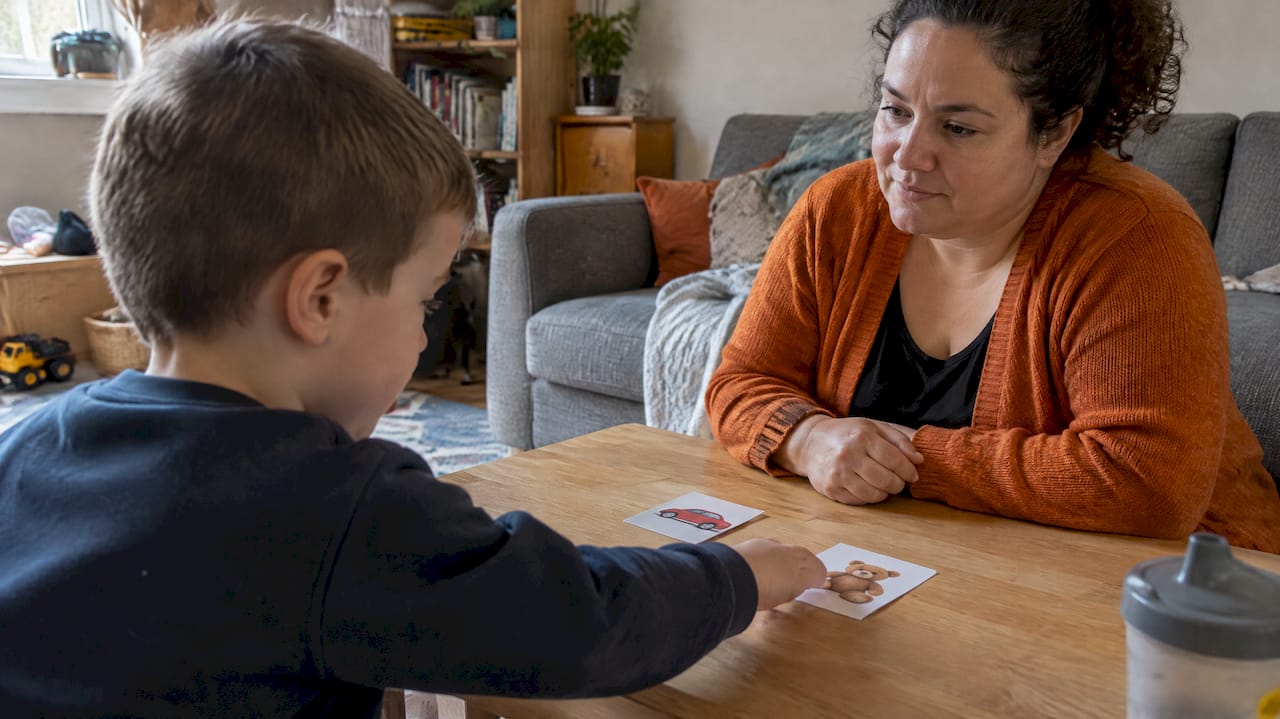
Use a choice board with three or four options. Pictures of "headphones," "squeeze toy," "quiet corner," and "break" give a nonverbal or minimally verbal person a fast way to communicate a need.
Rehearse the exact short phrases you'll use in crisis. If you plan to say "squeeze hands" during a meltdown, practice that same phrase during calm play so it's already recognized.
A simple sticker chart or self-management tracker adds a layer of ownership, letting the person see their own progress rather than relying only on caregiver praise. The AFIRM coping and calming strategy packet offers ready-made templates for exactly this kind of teaching cycle.
Pro Tip: Keep a shared notes app or notebook between all caregivers so everyone uses the same words and cues. A skill practiced one way with mom and a different way with a teacher just creates confusion at the worst possible moment.
What Are the Five Stages of a Meltdown?
Meltdowns rarely appear out of nowhere. Most follow a recognizable arc, and catching it early changes everything about how it plays out.
Rumble stage: Fidgeting, pacing, repetitive questions, or a shift in tone of voice. This is your best window to remove the trigger quietly.
Agitation stage: Increased movement, covering ears, verbal repetition, or withdrawal. Minimal prompting works better here than conversation.
Escalation stage: Yelling, crying, or physical movement toward or away from people. Reasoning and demands almost always backfire at this point because the reasoning part of the brain has gone offline.
Crisis stage: Full loss of control, possible self-injury or property damage. Safety is the only priority here.
Recovery stage: Exhaustion, confusion, or shutdown. Slow, low-demand re-engagement is what helps, not immediate debriefing.
Removing triggers during the rumble stage can prevent a full crisis from developing at all. If the person doesn't respond to a prompt, wait at least 60 seconds before trying again. Silence is doing work even when it looks like nothing is happening. Adults experience this same arc, though the triggers and outward signs often shift, which is worth reading about in this guide for adult meltdowns.
What Happens After a Meltdown Ends?
Recovery deserves as much care as the meltdown itself. The person is often exhausted, embarrassed, or disoriented, and pushing for an immediate conversation about what happened usually backfires.
Allow rest and low stimulation. A dark, quiet room or a favorite show at low volume both work.
Skip the "let's talk about what happened" conversation until they show they're ready.
When they are ready, offer validation and follow their lead rather than launching into a lecture about triggers or behavior.
Keep a simple antecedent-behavior-consequence diary noting what happened right before, during, and after, so patterns become visible over weeks rather than staying invisible in the moment.
Pick one small, specific change to test before the next similar situation, and bring in a professional if the pattern isn't improving.
What Does the Research Say About Meltdowns?
Clinical sources agree on the fundamentals here, which matters because so much of the internet still treats meltdowns as behavior to correct rather than a nervous system to support.
Medical News Today confirms meltdowns are involuntary autonomic responses, not manipulation, and that calm presence with reduced input is the effective immediate response.
The Child Mind Institute explains that early intervention at the first signs can stop escalation before it starts.
The AFIRM strategy packet offers structured templates for teaching and practicing coping skills.
NCBI/PMC reviews support sensory-based interventions and occupational therapy as part of ongoing prevention plans.
Caregiver guides, videos, and calming sound libraries are often built around this same clinical framing, giving families a place to practice these strategies without treating them as a one-time fix.
A Note From Our Editor
Most advice about meltdowns focuses on the crisis itself, which is understandable but backwards. The families who see real change aren't the ones who master the perfect in-the-moment script. They're the ones who practice coping skills on a boring Tuesday afternoon when nothing is wrong.
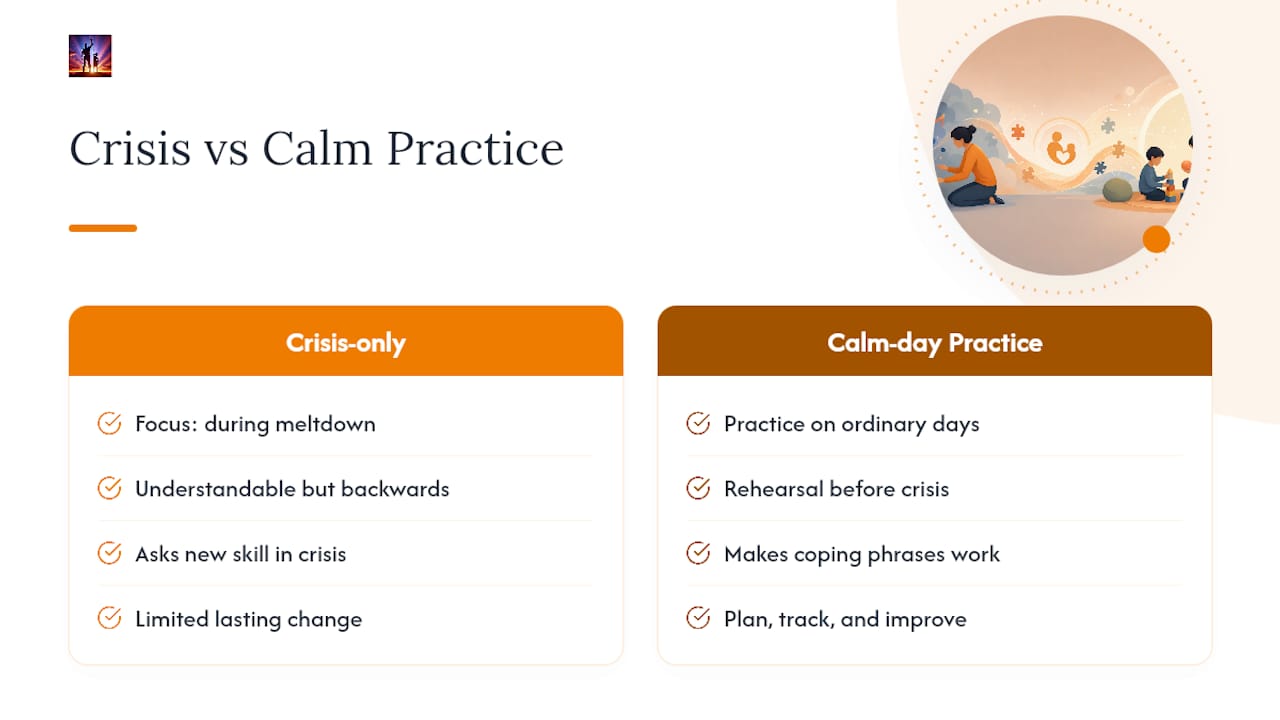
That's the uncomfortable part of this guide. It asks you to do work when things are calm, which is exactly when most caregivers feel too relieved to bother. But rehearsal is what makes a coping phrase mean anything during a crisis. Without it, you're asking someone in crisis to learn a brand-new skill under the worst possible conditions.
Caregivers need more than a crisis script. They need a place to practice, plan, and track progress on ordinary days, which is where the real gains happen.
— Ronnie Talent
Can an App Actually Help With Meltdown Practice?
Some apps offer personalized AI guidance, calming sound libraries for building sensory routines, state-specific funding and support resources, and caregiver communities that support families through recovery stages.

Where it fits into what you just read: the app helps you build and track the visual schedules and sensory diets covered above, offers guided practice for teaching coping skills one at a time, and stores your resource searches so you're not starting over every time a new need comes up. None of this replaces an occupational therapist or a crisis plan from your care team, but it gives you a steady place to do the calm-day work that actually reduces meltdown frequency. Start a free trial through Autism Victory App and set up your first visual schedule or sensory routine today.
Where to Learn More
For deeper reading beyond this guide, these sources are worth bookmarking:
The AFIRM coping and calming skills packet for ready-to-use teaching templates and choice boards.
Child Mind Institute's de-escalation guide for a clinician-written breakdown of early intervention timing.
Medical News Today's meltdown overview for a plain-language explanation of causes and immediate response.
The NCBI clinical review on escalation cycles for a closer look at when restraint is and isn't appropriate.
PMC reviews on sensory interventions for the evidence behind occupational therapy and sensory diets.
This article is general information, not a substitute for advice from a qualified doctor. Consult a qualified healthcare professional about your own circumstances before acting on anything here.
Sources
Autistic meltdown: Symptoms, causes, and what to do | Medical News Today
How to de-escalate an autistic meltdown | Child Mind Institute
Prioritize coping and calming skills — AFIRM strategy packet
Frontiers and NCBI review articles on sensory processing and interventions (PMC8992913)
Recommended