A calm autism-friendly morning uses a short, predictable sequence combined with a visible checklist and sensory-aware transitions. The core tools are simple: a visual schedule or mini-schedule, a timer, and a gentle wake-up that doesn't rush the nervous system. Below, we walk through why this works, how to build the visuals, a sample routine you can adapt tonight, and what to do when a step stalls.
TL;DR:
Match the schedule to the child’s communication level, break difficult tasks into small steps, and place each checklist where the task happens.
Before bed, set out two clothing options, prepare a choice board with two breakfast options, pack the school bag, and leave the schedule within reach.
Use soft light, a quiet pause before speaking, familiar clothes without tags, and movement such as wall pushes when those inputs suit the child.
When a step stalls, break it into smaller actions, add a calming pause if overload appears, and log triggers for one to two weeks.
For sleep difficulties, start with behavioral strategies; clinical guidance places melatonin after those approaches and dosing counseling with a clinician.
Table of Contents
Why routines help autistic children in the morning
Visual schedules and mini-schedules: how to make and use them
Sensory-aware strategies for smoother mornings
Sample step-by-step autism-friendly morning routine
Night-before preparation that makes mornings easier
Troubleshooting common morning challenges
A caregiver's honest take on morning routines
Build a personalized routine with the Autism Victory app
Sources
Why routines help autistic children in the morning
Mornings ask a lot of a child: wake up, process verbal instructions, switch tasks, and tolerate sensory input, often all within minutes. Predictability lowers that load. When a child knows what comes next, there is less to guess and less to resist.
Sleep quality plays a direct role here too. Clinical guidelines point to behavioral strategies as the first-line treatment for sleep disturbance in children with autism, with melatonin considered only after behavioral approaches and counseling about dosing, because a rough night almost always shows up as a rough morning.
A few behavioral principles make routines stick:
Predictability reduces anxiety because the child isn't bracing for the unknown.
The Premack Principle, doing a less-preferred task right before a preferred one, builds in motivation without a lecture.
Antecedent strategies, like setting up the environment before a demand is made, head off resistance rather than reacting to it.
A practice guideline from Neurology recommends behavioral sleep strategies before considering medication for children with autism who struggle with sleep, which reinforces why night-before prep and consistent wake routines matter as much as what happens after the child is up.
Visual schedules and mini-schedules: how to make and use them
A full-day schedule maps the whole day. A mini-schedule zooms in on one stretch, like "getting dressed" or "bathroom routine," and breaks it into the smallest steps a child needs to follow it independently. Individual schedules should match developmental level: objects for very young or pre-symbolic learners, photos or icons for many preschool and school-age children, and written lists or digital apps for stronger readers.
Here's how to build one for a task that often causes friction, brushing teeth:
Pick up the toothbrush.
Put toothpaste on the brush.
Brush top teeth.
Brush bottom teeth.
Rinse and spit.
Put the toothbrush away.
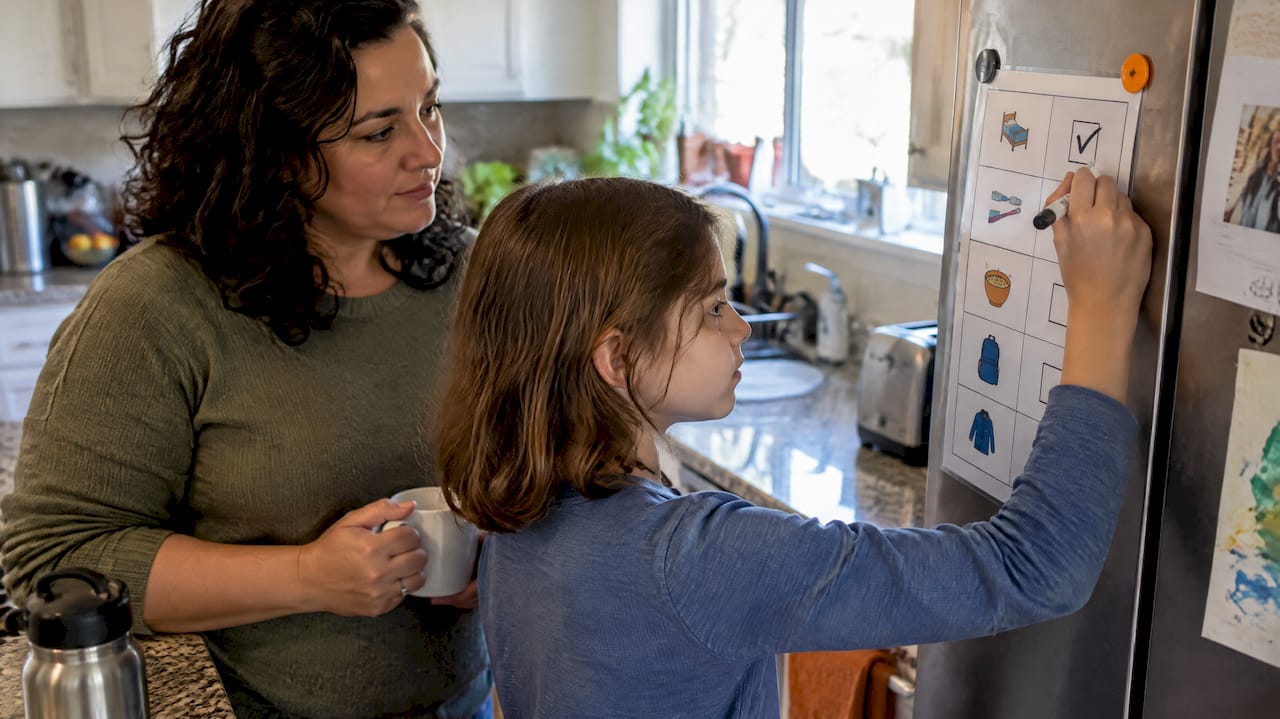
This kind of breakdown is called task analysis, and mini-schedule guidance describes it as the foundation of an effective visual routine: complex tasks become a series of small, checkable steps instead of one vague instruction. Place the schedule where the child actually stands for that task, not just on a bedroom wall, and pair it with a visible timer or a check-off box so completing a step feels concrete. Our guide to building visual schedules walks through templates for several formats if you want a head start.
Pro Tip: Laminate the schedule and use a dry-erase marker so your child can check off each step and you can reuse it daily.
Sensory-aware strategies for smoother mornings
How a child's body feels in the first ten minutes often decides how the next hour goes. A handful of adjustments make the wake-up itself less jarring:
Use a gradual light alarm or open the curtains slowly instead of flipping on overhead lights.
Choose a soft chime or vibration alarm over a loud buzzer when sound sensitivity is a factor.
Build in a few quiet minutes before any demand, even if that just means sitting together before talking.
Pre-select tag-free, familiar clothing the night before so texture isn't a fight at 7 a.m.
Offer proprioceptive input early, like a bear hug, wall pushes, or a short bounce on a trampoline, to help the nervous system settle into the day.
A neurodiversity-affirming sensory tool designed for autistic children and adults supports exactly this kind of planning: collaborative, card-sort style exercises that translate a child's sensory preferences into practical daily accommodations, rather than leaving a sensory profile sitting in a file that never reaches the morning routine. Our sensory processing strategies guide has more ideas for matching input to a child's specific needs.
Pro Tip: If your child seeks movement, schedule proprioceptive input as the very first "step" on the visual schedule, before clothing or breakfast.
Sample step-by-step autism-friendly morning routine
Build extra time into the plan on purpose. A morning that allows buffer time causes far fewer meltdowns than one built around the fastest possible exit.
The night before:
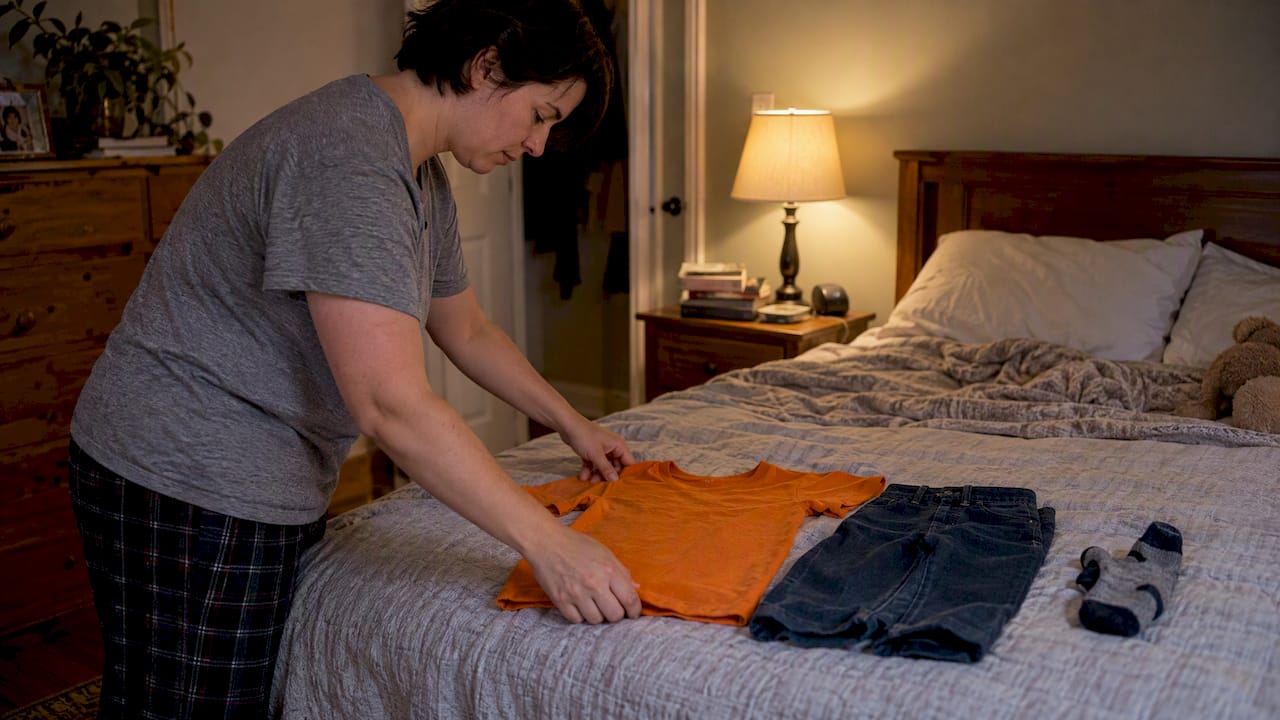
Lay out two pre-approved clothing options so there's a choice, not a decision from scratch.
Set out a simple breakfast choice board with two items.
Pack the school bag and place it by the door.
Put the visual schedule somewhere the child can see and reach it on their own.
A sample routine for a younger child (roughly an hour with buffer time):
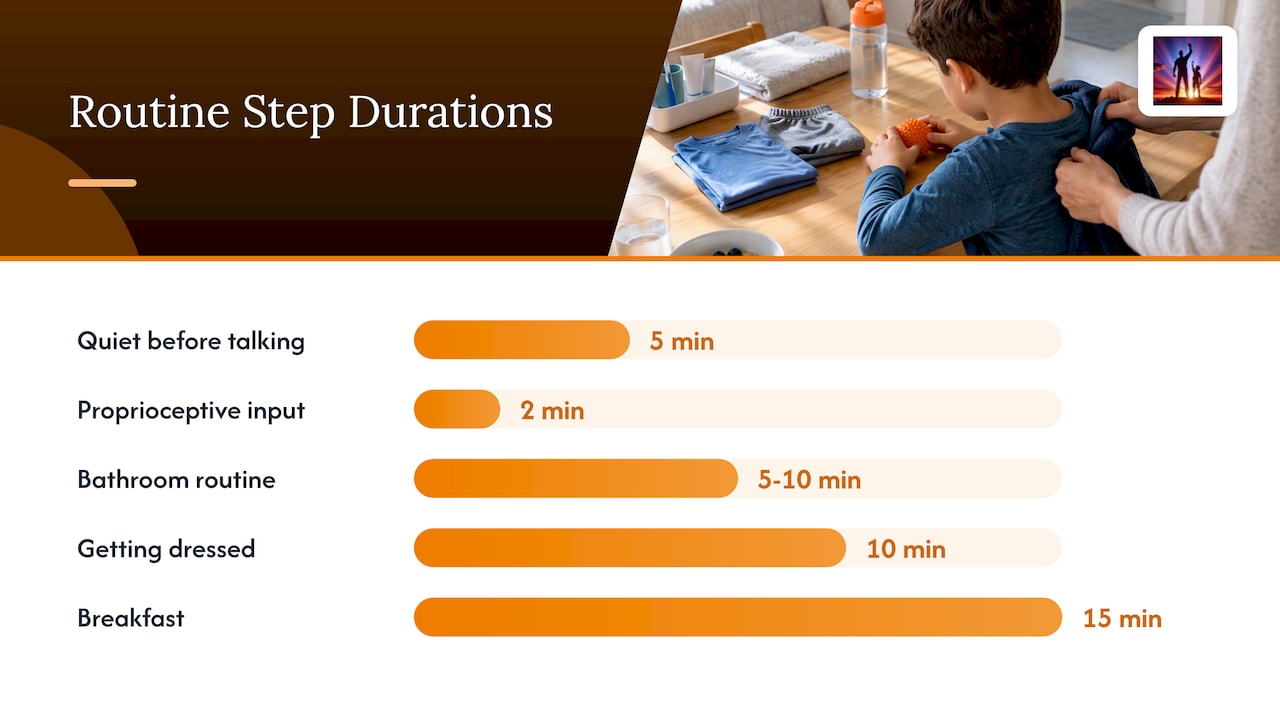
Gentle wake-up with soft light, five minutes of quiet before talking.
Proprioceptive input: bear hug or wall pushes, two minutes.
Bathroom routine using the mini-schedule, five to ten minutes.
Get dressed from the two pre-selected options, ten minutes.
Breakfast from the choice board, fifteen minutes.
Teeth brushing with the micro-step card, five minutes.
Shoes and bag, check off the final box, five minutes.
For a school-age child, the same sequence works with shorter buffers and a First-Then card tying a less-preferred step, like getting dressed, to a preferred one, like five minutes of a favorite show before leaving. A short visual timer on step three or four keeps the pace visible without a caregiver nagging through it.
Night-before preparation that makes mornings easier
Most of what makes a morning smooth actually happens the evening before. The goal is to shift the morning from a string of verbal prompts to a plan the child can follow with their own eyes.
Lay out two or three sensory-friendly clothing options so mornings involve a choice, not a negotiation.
Prep a simple breakfast choice board and pack the school bag completely.
Set the visual schedule in its spot, within reach, before bed.
If sleep problems are part of the picture, behavioral strategies are the recommended starting point before medication, and our autism sleep problems guide covers practical steps for improving sleep hygiene. A consistent, calming sleep environment also supports this; sleep environment tips from Guestly Sleep cover lighting, bedding, and room setup that pair well with a wind-down routine.
Troubleshooting common morning challenges
When a routine stalls, small adjustments usually fix more than starting over does.
If rushing triggers meltdowns, add buffer time and cut any step that isn't essential that day.
If one task consistently causes resistance, break it into smaller micro-steps or try a video model showing the task done start to finish. Video-enhanced activity schedules paired with Premack contingencies have been linked to increased on-task behavior and more independent task completion in young children with autism.
If sensory overload shows up mid-routine, insert a short calming activity, like a weighted blanket moment or dim lighting, before the next demand.
Keep a simple log for one to two weeks noting what triggered resistance and when; patterns often point to the exact step to adjust, and a clear log is useful if you decide to consult a clinician. Our meltdown strategies guide has quick de-escalation steps for the mornings that go sideways anyway.
A caregiver's honest take on morning routines
Routines are not about winning the clock. They're about giving a child's nervous system something solid to stand on before the day asks anything else of it. Some mornings the schedule works perfectly, and some mornings it doesn't, and that's not a failure of the plan.
Track the small wins, the day shoes went on without a fight, the first time a visual check-off actually got used. Those add up faster than they feel like they do.
— Ronnie Talent
Build a personalized routine with the Autism Victory app

Building and adjusting visual schedules by hand works, but it takes time most caregivers don't have on a hard morning. Inside the app, we offer ready-made visual schedule templates, bilingual caregiver content, personalized AI guidance for working through specific morning sticking points, a calming sound library for sensory breaks, and state-specific resources when a routine issue points to a bigger support need. It's built to sit alongside what you're already doing, not replace your judgment about your own child.
If you want one place to hold the templates, reminders, and guidance as your routine evolves, you can start with our Annual or Monthly plan, both starting with a 5-day free trial.
This article is general information, not a substitute for advice from a qualified doctor. Consult a qualified healthcare professional about your own circumstances before acting on anything here.
FAQ
How does autism affect big life changes?
Big transitions, like a new school, a move, or a change in caregivers, often raise anxiety for autistic individuals because they disrupt predictability. Preparing with visual supports, advance notice, and smaller practice steps ahead of the change tends to ease the adjustment, the same logic behind a predictable morning sequence.
What are the symptoms of High-Functioning Autism in male adults?
Presentation varies widely, but common traits include difficulty with social reciprocity, a strong preference for routine, sensory sensitivities, and intense focus on specific interests. A qualified clinician is the appropriate source for an individual assessment rather than a checklist read online.
What are effective coping strategies for autism-related anxiety?
Strategies with support behind them include predictable routines, visual schedules, and antecedent-based approaches like video modeling paired with the Premack Principle, which research on video-enhanced activity schedules links to reduced challenging behavior and more independent task completion. Sensory-focused tools that identify specific triggers and preferred calming inputs also help translate anxiety into a manageable plan.
Will my autistic son live a normal life?
Outcomes vary enormously and depend on individual strengths, support, and services, so there's no single answer that applies to every child. Many autistic adults live full, independent, or supported lives that reflect their own goals rather than a fixed trajectory, and early, consistent support such as predictable routines plays a part in building those skills.
Sources
Recommended