Autism Sleep Problems: A Practical Guide for Parents
Behavioral and environmental changes are the first-line treatment for autism sleep problems, and you can start three of them tonight. First, set a fixed lights-out time and stick to it every night, including weekends. Second, begin a quiet, predictable 20–30 minute wind-down routine before bed (dim lights, low noise, calming activity). Third, make one sensory adjustment to the sleep space, such as blackout curtains, a white noise machine, or softer bedding. Give these behavioral strategies a genuine trial of several weeks before considering melatonin or requesting a specialist referral. If you see no meaningful improvement after six weeks, or if red flags appear sooner (see Section 10), escalate to your pediatrician.
Quick stat: Sleep disturbances affect an estimated 44%–83% of children and adolescents with autism spectrum disorder, compared to roughly 20%–30% of typically developing children. You are not alone, and this is not a parenting failure.
Pro Tip: Keep a simple sleep diary from night one. A single notepad entry each morning (bedtime, time asleep, number of wakings, wake time) gives your clinician far more useful data than memory alone.
Key Takeaways
Behavioral and environmental strategies are the proven first-line approach to autism sleep problems, and most families can begin them tonight with no cost and no prescription.
Point | Details |
|---|---|
Behavior first, medication second | Clinical guidelines recommend a behavioral trial for several weeks before considering melatonin or other medications. |
Prevalence is high | Sleep disturbances affect a substantial proportion of children and adolescents with ASD, so this is a recognized clinical problem, not a parenting issue. |
Track sleep from day one | A two-week sleep diary gives clinicians the data needed to guide treatment and helps you spot real improvement. |
Melatonin: start low, consult first | Meta-analytic evidence supports melatonin for sleep onset and duration in ASD; start at a low dose and always involve your pediatrician. |
Autism Victory App | Provides personalized guidance, visual schedules, calming audio, and state-specific resources to support caregiver implementation of evidence-based sleep strategies. |
Table of Contents
What do autism sleep problems actually look like?
Why do sleep problems occur in autism?
How poor sleep affects your child and your family
How to assess sleep at home and when to see a specialist
Evidence-based behavioral strategies to try first
What the evidence says about melatonin and other medications
A realistic 6-week parent plan
Practical sleep tips for autistic teens and adults
Red flags that need urgent or specialist attention
How Autism Victory App supports your sleep plan
What one caregiver’s 6-week experience looks like
Autism Victory App makes the sleep plan easier to follow
A note from the editorial team
Sources
What do autism sleep problems actually look like?
Sleep difficulties in autism spectrum disorder (ASD) are not one single problem. They cluster into several recognizable patterns, and most families deal with more than one at a time.
Common sleep problems seen in ASD:
Long sleep-onset latency: Taking a prolonged time to fall asleep after lights out
Frequent night wakings: Waking two or more times per night, sometimes for extended periods
Early morning waking: Rising at 4–5 AM and being unable to return to sleep
Delayed sleep phase: The body’s internal clock is shifted late, so the child is genuinely not sleepy until 11 PM or midnight
Parasomnias: Night terrors, sleepwalking, or confusional arousals
Irregular sleep-wake cycles: No consistent pattern from night to night
Age shapes which problems dominate. Young children (ages 2–6) most often struggle with bedtime resistance, prolonged sleep onset, and night wakings. School-age children tend to show a mix of delayed sleep phase and frequent wakings. Adolescents increasingly present with a pronounced delayed phase, partly biological and partly driven by screen use and social schedules. Adults on the spectrum report high rates of insomnia and circadian misalignment, though research on adult-specific interventions remains limited.
At bedtime, watch for: refusing to stay in the bedroom, repeated requests for a parent, visible physical restlessness, and distress at sensory aspects of the sleep environment (sheets, pajamas, room temperature). Overnight, listen for prolonged wakefulness, repetitive vocalizations, or the child appearing fully alert at 3 AM.
Why do sleep problems occur in autism?
Three overlapping drivers explain most of the sleep disruption families see: biology, sensory reactivity, and learned behavioral patterns.
Biological contributors
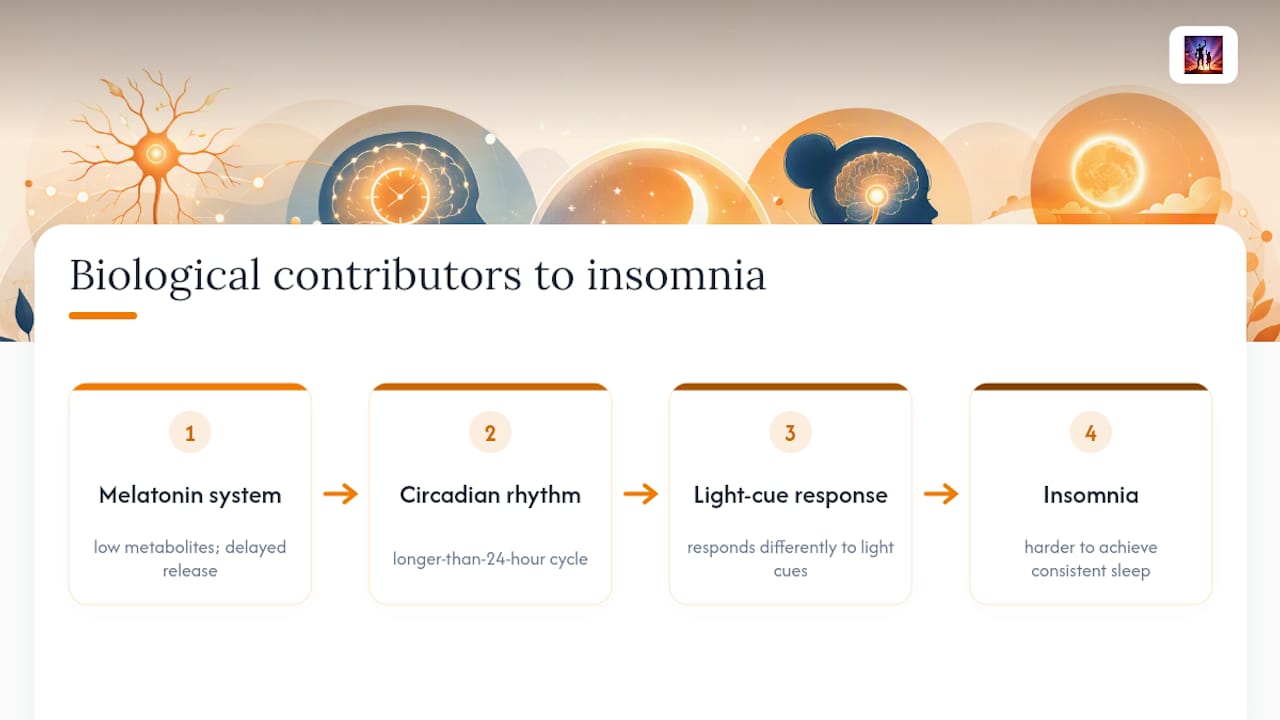
Multiple reviews identify melatonin system abnormalities and circadian rhythm differences as plausible biological contributors to insomnia in ASD. Some individuals with autism show lower levels of melatonin metabolites and a delayed timing of melatonin release, meaning the chemical signal that normally triggers sleepiness arrives late. Circadian rhythm differences compound this: the internal body clock may run on a longer-than-24-hour cycle or respond differently to light cues, making consistent sleep timing harder to achieve without deliberate environmental support.
Sensory hyper-reactivity
Many autistic individuals process sensory input more intensely than neurotypical peers. At bedtime, this translates into real obstacles:
The texture of sheets or pajama seams triggers discomfort
Low-level sounds (a fan, traffic, a sibling’s TV) feel intrusive and alerting
Overhead lighting or the glow of a nightlight registers as too bright
Room temperature that feels neutral to others feels too warm or too cold
Building a sensory-friendly sleep environment is not optional for many families. It is a prerequisite for any behavioral strategy to work.
Behavioral and learned patterns
Biology and sensory factors do not act alone. Over time, families develop coping patterns that unintentionally reinforce wakefulness. A parent who lies down with a child until they fall asleep teaches the child that parental presence is required for sleep onset. When the child wakes at 2 AM, they cannot return to sleep without recreating that condition. Inconsistent bedtimes, naps that run too late, and screen exposure close to bed all layer onto the biological vulnerabilities.
“Sleep disturbances in autism often form a self-reinforcing cycle: sensory hyper-arousal or anxiety worsens sleep, poor sleep increases behavioral dysregulation the next day, and that dysregulation further impairs the following night’s sleep.” Practice guideline, Neurology
Co-occurring conditions drive sleep problems too. Anxiety, ADHD, epilepsy, and gastrointestinal issues frequently cluster with ASD, and each can independently disrupt sleep. GERD causes nighttime discomfort; anxiety fuels a racing mind at bedtime; ADHD makes winding down genuinely difficult. Treating the comorbidity is often as important as any sleep-specific strategy. For a closer look at how ADHD and autism interact, that overlap is worth understanding before you design a sleep plan.
How poor sleep affects your child and your family
Poor sleep does not stay in the bedroom. The daytime consequences are measurable and significant.
For the child or autistic adult, chronic sleep loss tends to amplify the very symptoms that are already challenging:
Increased irritability and emotional dysregulation
Greater frequency and intensity of meltdowns
Reduced attention span and slower learning in school
Lower frustration tolerance and higher anxiety
Worsened repetitive behaviors in some individuals
For caregivers, the toll is equally real. Parents of children with ASD report significantly higher rates of sleep disruption themselves, which compounds stress, reduces patience, and increases the risk of caregiver burnout. The good news is that sleep disturbances are linked to worse daytime behavior and family stress, and that relationship runs in both directions. Families consistently report that when sleep improves, daytime behavior often follows within weeks, sometimes before any other intervention changes.
Set realistic expectations: you are unlikely to see a complete turnaround in two weeks. Partial improvements (falling asleep 20 minutes faster, one fewer night waking) are real progress and worth tracking.
How to assess sleep at home and when to see a specialist
Before any appointment, gather two weeks of sleep diary data. Clinicians can do far more with documented patterns than with a caregiver’s general impression.
What to record each morning:
Bedtime (when the child got into bed)
Lights-out time (when screens and lights went off)
Estimated sleep-onset time (how long until they fell asleep)
Number of night wakings and approximate duration
Final wake time
Nap times and lengths (if applicable)
Any medications given and timing
Pre-sleep activities (screen time, exercise, food)
The Stanford Center for Sleep in Autism Spectrum Disorder (CSASD) offers parent-facing toolkits with structured forms and intervention guides that complement clinician visits. Validated questionnaires such as the Children’s Sleep Habits Questionnaire (CSHQ) can help your pediatrician screen for specific sleep disorder categories. For older children and adults, actigraphy (a wrist-worn device that tracks movement and light) provides objective sleep-wake data. Polysomnography (an overnight sleep study) is reserved for cases where sleep-disordered breathing or seizure activity is suspected.
Refer promptly if you observe any of the following:
Loud snoring, gasping, or witnessed pauses in breathing during sleep (possible obstructive sleep apnea)
Unusual movements or behaviors that could indicate seizure activity
Excessive daytime sleepiness that impairs functioning despite adequate time in bed
Sudden, unexplained changes in sleep or behavior
Self-injurious behavior during night wakings
No improvement after a full 6-week behavioral trial
Evidence-based behavioral strategies to try first
Clinical practice guidelines recommend behavioral and environmental strategies as the first-line treatment for sleep problems in children and adolescents with autism. Medication comes second, not first.
Core behavioral techniques
Bedtime fading works by temporarily setting bedtime to match the child’s actual (late) sleep onset time, then gradually moving it earlier by 15 minutes every 2–3 nights once sleep onset becomes consistent. This approach is well-suited for children with delayed sleep phase and works best for ages 3 and up.
Graduated extinction (sometimes called “checking in”) involves placing the child in bed awake, then returning at progressively longer intervals if they call out, rather than staying until they fall asleep. It requires consistency from all caregivers and is most effective for children ages 2–8.
Visual schedules give children a concrete, predictable map of the bedtime sequence. A simple picture-based chart showing bath, pajamas, teeth, book, lights out removes the need for verbal negotiation at every step. Visual schedules for bedtime routines are one of the most accessible, low-cost tools available.
Consistent response to night wakings means every caregiver responds the same way, every time. Inconsistency teaches children that persistence eventually works.
Environmental and sensory adjustments
Light: Use blackout curtains and remove or cover any LED indicators in the room. A dim red-spectrum nightlight is less alerting than blue or white light.
Sound: White noise or pink noise machines mask unpredictable environmental sounds. Test at low volume first.
Bedding and clothing: Seamless pajamas, tagless clothing, and softer sheet materials can reduce tactile discomfort. For guidance on tactile defensiveness at bedtime, specific fabric and texture strategies are worth reviewing.
Weighted blankets: Some families report benefit, but clinical reviews note that the evidence for weighted blankets is mixed and high-quality studies do not show routine benefit. If you try one, use appropriate weight for the child’s size and monitor for discomfort.
For additional sensory play ideas that can reduce pre-bedtime arousal, sensory resources for neurodiverse children offer practical starting points.
Sample 20–30 minute bedtime routine
Time before bed | Activity |
|---|---|
30 minutes | Dim lights throughout the house; turn off screens |
20 minutes | Bath or shower (warm water is calming for most children) |
15 minutes | Pajamas, teeth brushing, any sensory comfort items |
10 minutes | One quiet activity: reading, calm music, or a simple puzzle |
0 minutes | Lights out, brief goodnight phrase, leave room |
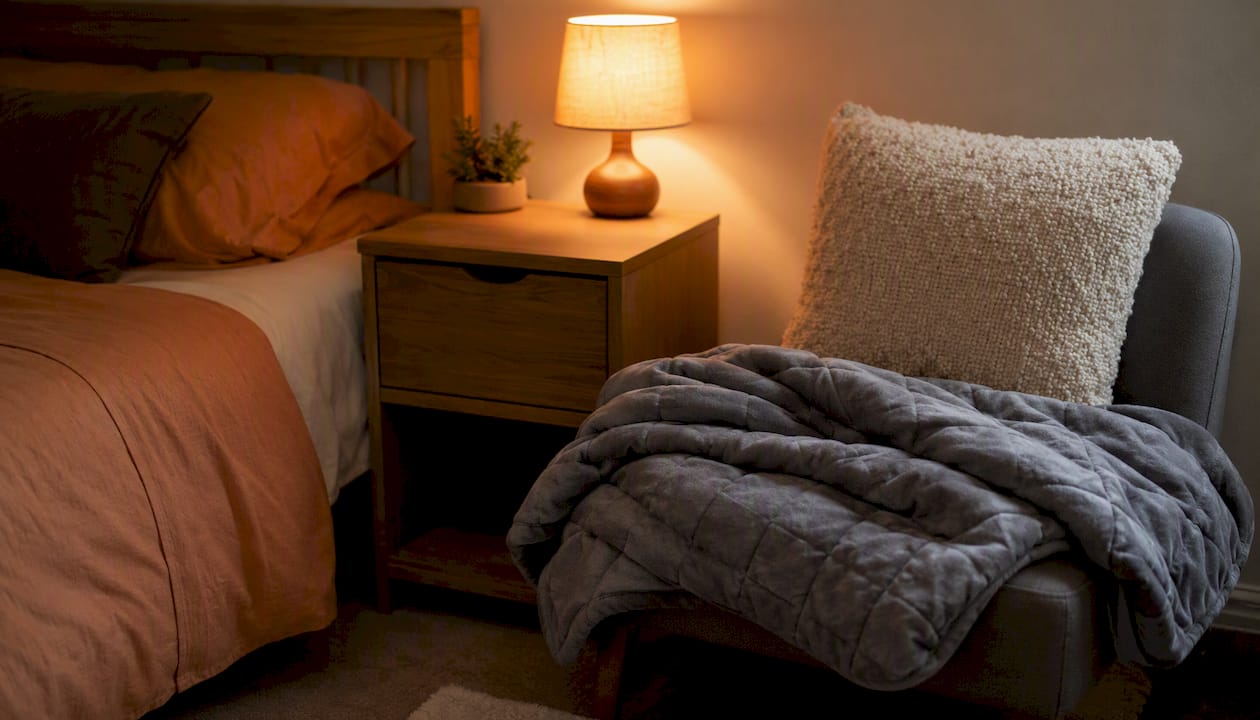
Behavioral interventions including bedtime fading and parent-led routines show measurable benefits in controlled trials, though the overall evidence base has some limitations in trial quality. The Stanford CSASD toolkit provides additional parent-facing implementation guides.
Pro Tip: Pick one behavioral strategy and run it consistently for a sustained period before adding another. Stacking multiple new techniques simultaneously makes it impossible to know what is working.
What the evidence says about melatonin and other medications
Melatonin is the most studied pharmacological option for sleep problems in autism. Meta-analytic evidence supports melatonin’s effect on sleep duration and sleep-onset latency in children with ASD, with moderate-to-large pooled effects, though results vary by formulation, dose, and individual response.
Practical guidance for melatonin use:
Start low: Studies typically use doses in the 1–3 mg range for children; some trials use up to 6 mg, but starting at 0.5–1 mg is a reasonable, conservative approach
Timing matters: Immediate-release melatonin is given 30–60 minutes before the target bedtime to help with sleep onset. Controlled-release formulations may help with night wakings but are less studied in pediatric ASD populations
Pharmaceutical-grade vs. OTC: Over-the-counter melatonin supplements in the United States are not regulated as drugs by the FDA, meaning actual content can vary significantly from the label. Discuss pharmaceutical-grade options with your clinician
Always consult your pediatrician before starting melatonin, especially if the child takes other medications or has a seizure disorder
Clinical guidelines advise melatonin when behavioral strategies are insufficient, starting at a low dose with monitoring for side effects. Common side effects include morning grogginess and headache; these often resolve with dose adjustment.
Other medications sometimes used off-label:
Clonidine: An antihypertensive sometimes used for sleep onset in children with ADHD and ASD; requires cardiac monitoring and clinician oversight
Antihistamines (diphenhydramine): Frequently used by families but tolerance develops quickly and evidence in ASD is limited
Antidepressants (e.g., trazodone, mirtazapine): Occasionally prescribed for adolescents and adults; limited pediatric approval data and significant side effect profiles require careful clinician management
None of these options should be started or adjusted without medical supervision.
A realistic 6-week parent plan
An update on sleep disturbance treatment in children with ASD confirms that behavioral interventions and melatonin are the most supported options. Here is how to sequence them.
Week 1: Baseline and environment. Start the sleep diary. Make one sensory adjustment (blackout curtains, white noise, or bedding change). Set a consistent wake time and stick to it every day.
Week 2: Establish the bedtime routine. Implement the 20–30 minute routine template above. Use a visual schedule if helpful. Remove screens 30 minutes before lights out.
Week 3: Address sleep onset. If the child takes more than 45 minutes to fall asleep, try bedtime fading. Set bedtime 30 minutes later than their actual average sleep onset, then move it earlier by 15 minutes every 3 nights.
Week 4: Address night wakings. Introduce a consistent response protocol. Brief check-ins, same script, same caregiver behavior every time.
Week 5: Review and adjust. Compare week 5 diary data to week 1. Look for: shorter sleep onset, fewer wakings, less bedtime resistance. If one strategy is not working, swap it; do not add more layers.
Week 6: Decision point. Meaningful improvement? Continue and consolidate. No improvement or worsening? Contact your pediatrician. Discuss melatonin, rule out comorbidities, and consider a referral to a sleep specialist or behavioral therapist.
What to measure: Sleep-onset latency (target: under 30 minutes), number of night wakings (target: one or fewer), and total sleep time appropriate for age (9–12 hours for school-age children; 8–10 hours for teens).
Cost reality: The behavioral strategies above cost nothing beyond your time. A white noise machine runs $20–$50. Blackout curtains run $15–$40. If you need a behavioral sleep therapist, sessions typically run $100–$200 each without insurance; many behavioral health plans cover sleep-related behavioral therapy when prescribed. Check your insurer’s mental health parity coverage.
Practical sleep tips for autistic teens and adults
Adult evidence is thinner than pediatric evidence, but several approaches have meaningful support.
CBT-I (Cognitive Behavioral Therapy for Insomnia): This is the gold-standard treatment for insomnia in adults, including autistic adults. It addresses the thought patterns and behaviors that perpetuate sleeplessness. Seek a therapist trained specifically in CBT-I; the Society of Behavioral Sleep Medicine maintains a provider directory at behavioralsleep.org.
Timed morning light: Bright light exposure (natural sunlight or a 10,000-lux light therapy lamp) for 20–30 minutes within an hour of waking helps anchor the circadian clock and is particularly useful for delayed sleep phase.
Melatonin timing for adults: Taking 0.5–1 mg of melatonin 30–60 minutes before the target bedtime (not the actual current bedtime) can shift the circadian clock earlier. Higher doses do not produce proportionally better results and may cause next-day grogginess.
Consistent wake time: This is the single most powerful circadian anchor available without medication. Keep it the same seven days a week, even after a bad night.
Sensory-friendly wind-down: Weighted blankets, specific fabric preferences, earplugs or noise-canceling headphones, and dimmed lighting are all legitimate tools. Build a personal sensory toolkit that works for your specific sensory profile.
Pro Tip: For autistic adults with delayed sleep phase, the combination of morning bright light and low-dose evening melatonin is more effective than either alone. Give it three weeks before evaluating.
Red flags that need urgent or specialist attention
Some sleep problems require more than a routine adjustment. Contact your child’s pediatrician promptly, or go to an emergency room if needed, when you observe:
Loud snoring, gasping, or breathing pauses during sleep: these suggest obstructive sleep apnea (OSA), which requires a sleep study and possibly ENT evaluation
Unusual repetitive movements or stiffening during sleep that could indicate seizure activity: neurologist referral is needed
Excessive daytime sleepiness that impairs school or daily function despite adequate time in bed
Sudden, unexplained changes in sleep pattern or overnight behavior with no clear trigger
Self-injurious behavior during night wakings
Complete sleep reversal (sleeping all day, awake all night) persisting beyond a few days
While waiting for an appointment: keep the sleep diary running, note the exact time and duration of concerning events, and if possible, record a short video of any unusual nighttime behaviors. That documentation will significantly speed up the diagnostic process.
How Autism Victory App supports your sleep plan
Managing sleep challenges takes consistent effort across many fronts: tracking patterns, building routines, understanding sensory needs, and knowing when to ask for help. Autism Victory App brings several of those tools together in one place.
Relevant features for sleep planning include:
Personalized AI guidance that helps you think through behavioral strategies and sensory adjustments specific to your child’s profile
Visual schedule tools to build and customize a bedtime routine your child can follow independently
Calming sound library with audio options to use during wind-down or overnight
State-specific resource navigator to find local behavioral sleep therapists, ABA providers, and funding sources in your state
Caregiver community where families share what has worked and what has not
Autism Victory App is designed to complement, not replace, medical advice. Medication decisions, diagnostic evaluations, and clinical referrals belong with your healthcare team.
What one caregiver’s 6-week experience looks like
Six weeks feels like a long time when your child has not slept through the night in months. The first two weeks of a structured plan often feel like nothing is changing, and that is normal. The sleep diary is doing its job even when the nights feel identical. Around week three, most families start to see one metric shift, usually sleep onset getting shorter or bedtime resistance decreasing. That small shift matters because it confirms the approach is working.
Setbacks happen. A school break, an illness, or a stressful week can reset progress by several days. The plan does not fail when that happens; you simply return to the last stable point and continue. Sharing your sleep diary data with your child’s care team at every appointment keeps everyone aligned and prevents the frustration of starting over from scratch each visit.
Small wins are real wins. Falling asleep 20 minutes faster is a meaningful clinical improvement. Track it, acknowledge it, and build on it.
Autism Victory App makes the sleep plan easier to follow
Putting a 6-week behavioral sleep plan into practice is harder than reading about it. Autism Victory App gives caregivers the structure and support to actually follow through.
With Autism Victory App, you get personalized guidance tailored to your child’s specific needs, a calming sound library for wind-down routines, visual schedule tools to build a bedtime sequence your child can follow, and a community of caregivers who have been through the same nights you are having right now. State-specific resource tools help you find behavioral sleep therapists and funding options in your area.
Start your 7-day free trial at Autism Victory App and build your family’s sleep plan with the right tools behind you. Before adjusting any medications or starting melatonin, consult your child’s pediatrician or a licensed clinician.
A note from the editorial team
Sleep is one of the most urgent and most solvable problems many autism families face. The evidence is clear enough to act on, the first steps cost nothing, and the payoff extends well beyond the bedroom.
This article is general information, not a substitute for advice from a qualified doctor. Consult a qualified healthcare professional about your own circumstances before acting on anything here.
Sources
Interventions | Center for Sleep in Autism Spectrum Disorder
Management of sleep problems in people with autism: an updated review
Recommended