A weighted blanket may help some autistic children feel calmer, and many kids and parents like them. The research does not show that they reliably improve sleep. The best way to think about one is as an optional comfort tool: try it safely, pick one goal, and keep it only if it helps.
That answer can feel deflating when you are exhausted and a product promises a quiet bedtime. We would rather give you an honest picture than another promise. Below you will find what the studies found, who is most likely to benefit, how to choose a safe weight, and what to do if sleep (or safety at night) is the bigger problem.
TL;DR
A large 2020 American Academy of Neurology guideline found no evidence to recommend weighted blankets routinely for autism-related sleep problems, though they can be a reasonable option for some children.
In the best-known trial, children and parents preferred the weighted blanket, but measured sleep did not improve.
Blankets make the most sense for kids who seek deep pressure (tight hugs, being wrapped up). They are a poor fit for kids who avoid touch or feel trapped.
Safety rules: no more than about 10% of body weight as a starting ceiling, the child can remove it alone, never as restraint, never in a crib.
If your child sleeps badly or wanders at night, a blanket is not the fix. See a clinician and secure the home first.
Table of Contents
What the research actually found
The study most parents hear about is a randomized crossover trial of children with autism and severe sleep problems. Each child used a weighted blanket and a regular blanket in turn. The weighted blanket did not significantly improve total sleep time, time to fall asleep, sleep efficiency, awakenings or daytime behavior. A commentary in Nature Reviews Neurology summarized the result as no evidence of benefit for sleep.
There is a twist. The children and their parents still preferred the weighted blanket. The authors reported good tolerance over the two-week periods, and no serious problems, though one child may have had a brief skin rash.
Other evidence is more hopeful but weaker:
A retrospective study of 85 people with ADHD and/or autism found that users reported perceived improvements in sleep and everyday routines. Because people looked back and reported on their own experience, it cannot prove the blanket caused the change.
The Royal College of Occupational Therapists guide calls the evidence mixed. It notes that a review of eight studies with 244 participants suggested weighted blankets may reduce anxiety, but was not enough to show they improve insomnia. It also cautions that better sleep habits introduced alongside the blanket may explain some gains.
The fair reading: the sleep benefit is unproven, the calming benefit is plausible but thinly studied, and personal preference is real.
Possible benefits, and how strong the evidence is
Claimed benefit | What we can say |
|---|---|
Better sleep | Not shown in the main trial or the neurology guideline. Some families report it. |
Less anxiety | Possible. A review of eight small studies pointed that way, but the evidence is limited. |
Calmer after sensory overload | Plausible for pressure-seeking kids. Few controlled studies. |
Easier routines (bedtime, meals, homework) | Clinicians describe these as reasonable uses. Success is judged by participation. |
Cure or treatment for autism | No. Weighted blankets do not treat autism. |
Occupational therapists often judge a tool by participation rather than sleep charts. If a blanket helps your child stay seated for dinner, get through a bedtime routine or recover after a loud store, that has practical value, even if a sleep tracker shows no change. The goal is a calmer, more comfortable child, not a number.
Who is most likely to benefit
Bradley Hospital's clinic, part of Brown University Health, explains the idea: the blanket gives deep pressure to joints and muscles, which can help a child feel more aware of their body and calmer. That points to who might respond.
A blanket may be worth trying if your child:
Asks for tight hugs, squeezes into small spaces or likes being wrapped in blankets
Lies under pillows, cushions or heavy coats
Becomes overstimulated easily and settles with firm pressure
It is probably a poor match if your child:
Avoids touch or dislikes the feel of heavy fabrics
Overheats easily or gets distressed when covered
Feels trapped when something holds them down
If touch is a hard area, our guide to tactile defensiveness in autism walks through gentler ways to introduce new textures. For a wider view, sensory processing strategies and a sensory diet show where a blanket fits among other options such as movement breaks, chewing tools or quiet spaces.
How to choose a safe weight and use it
This is the part where mistakes can cause harm, so go slowly.
Weight and age
Clinical guidance commonly uses no more than 10% of body weight as a starting ceiling. Brown University Health gives an example: a 60-pound child should have a blanket under 6 pounds. Some product instructions also say the blanket should not exceed 10% of body weight unless an occupational therapist advises otherwise.
Minimum age rules differ between clinicians and manufacturers. Brown's clinic discusses considering a blanket for children older than 2. Follow the specific product label, and ask your child's pediatrician or occupational therapist about your child's size, age and health. Do not rely on one universal age rule.
Safety rules
Your child must be able to move and take the blanket off alone.
Keep it away from the face and airway.
Never use it as restraint or to keep a child in bed.
Never use it in a crib.
Choose a blanket with weight spread evenly.
Talk to your child's clinician or occupational therapist before overnight use if your child cannot tell you when they are uncomfortable, or has breathing, muscle, circulation or sleep-related medical concerns.
A simple trial plan
Pick one goal. For example: "falls asleep without a long bedtime struggle" or "stays at the table for 10 minutes."
Start awake and supervised. Let your child touch it, drape it over their legs and decide how it feels.
Confirm they can remove it easily, with no help.
Use short periods. Try 10 to 20 minutes during a calm activity such as reading or TV.
Watch closely. Check breathing, heat, distress, skin changes and movement. Stop if anything looks wrong.
Track for one to two weeks. A simple note each evening is enough: used or not, how the goal went, any problems.
Decide. Keep it if the goal improved and your child is comfortable. Drop it if not. A cast-off blanket is not a failure; it is information.
When a weighted blanket is not enough: persistent sleep trouble
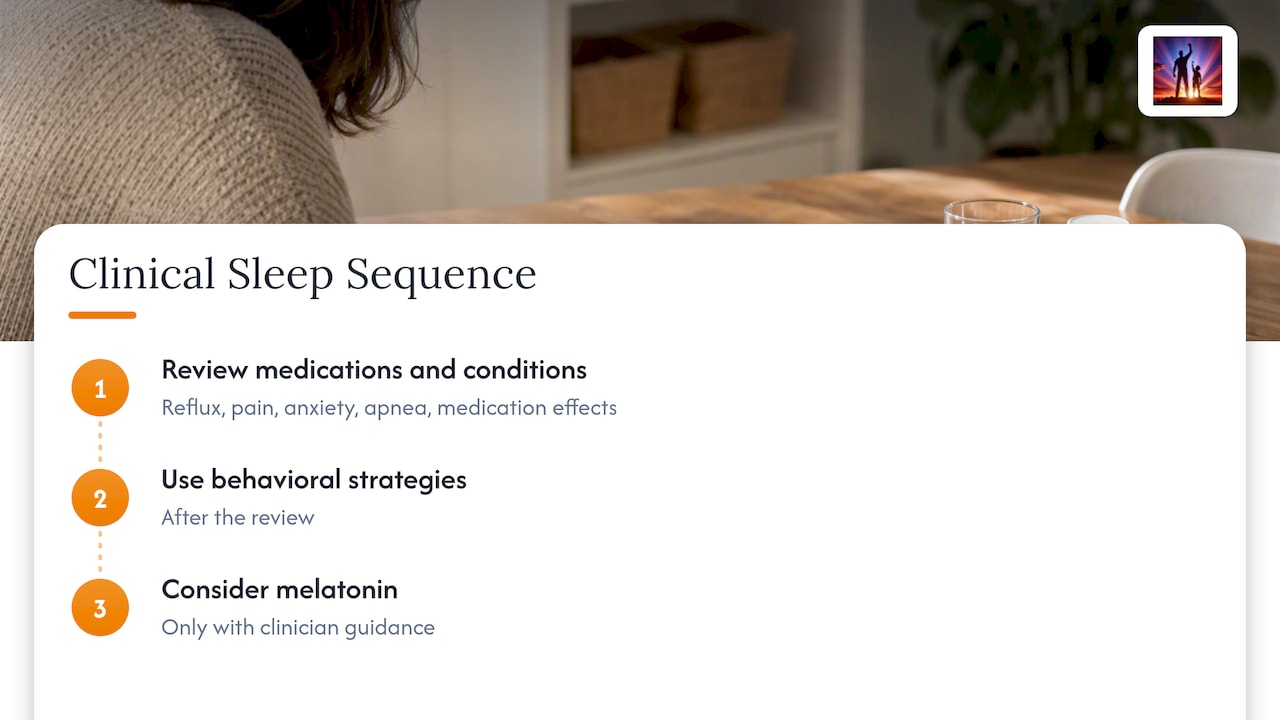
If your child has long-running insomnia, a blanket should not delay a proper look at the causes. The neurology guideline recommends that clinicians first review medications and coexisting conditions that may disrupt sleep, then use behavioral strategies. Melatonin may be considered once those steps have been addressed, under a clinician's guidance. Reflux, pain, anxiety, sleep apnea and medication side effects are the kinds of things a sensory product cannot fix. Ask your pediatrician which apply to your child.
A predictable routine often makes more difference than any product. Our practical guide to autism sleep problems covers routines, light, noise and bedtime steps. Spanish-speaking families can read Problemas de sueño en el autismo.
Routines also wobble when schedules shift. If the fall clock change throws off bedtime, this piece from a counseling practice on ADHD and daylight saving time may give you ideas for easing the transition, and much of it applies to neurodivergent kids more broadly.
Night safety: wandering and elopement
Sleep and safety often come up together. Many parents who search for blankets are really asking how to get through nights safely, particularly if their child leaves the house or a safe space without warning. A weighted blanket will not stop that, and it should never be used to keep a child in place.
The CDC's page on wandering and elopement suggests a practical set of steps:
Watch your child's behaviors and triggers.
Make an emergency plan so everyone knows what to do.
Keep a current photo and description on hand.
Secure your home with fences and door locks.
Have identification on your child, such as an ID bracelet or an information card.
The Cleveland Clinic adds a small, useful tip: if your child elopes often, dress them in memorable, easy-to-spot clothing, even if that means the same bright jersey every day. Tell neighbors, your school and local first responders ahead of time, and ask your local police department how it handles missing-person reports for children with disabilities. If your child is missing, call 911 immediately.
Tracking apps and devices exist, but we do not recommend choosing one on marketing claims alone. Look for what your family needs, such as battery life, whether your child will tolerate wearing it, and who gets notified. Ask your child's team or a local autism organization what has worked nearby.
Our perspective
We built Autism Victory for caregivers who are making hard decisions with limited time and a lot of conflicting advice. Weighted blankets are a good example. The internet tends to land on two extremes: this will transform your child's sleep, or it is a gimmick. Neither fits the evidence.
Our view is simpler. Your child's sensory preferences are real information. If your child leans into pressure, trying a safe, properly sized blanket is a low-risk experiment, as long as you set a goal, watch closely and are willing to stop. If it does not work, that does not mean you did something wrong, and it does not mean your child is out of options.
We also want families to avoid a common trap: spending weeks on a product while a treatable cause of poor sleep goes unexamined. A weighted blanket belongs alongside, not instead of, a conversation with your pediatrician, an occupational therapist and a consistent routine.
— Ronnie Talent
Keep track of what works with Autism Victory
If you are testing a blanket, a bedtime routine or a new calming strategy, it helps to have trusted guidance in one place. The Autism Victory app brings together AI-powered guidance, caregiver-focused books and audiobooks in English and Spanish, educational videos, a calming sound library, state-specific funding and support resources, and a caregiver community.
Plans are $6.95 per month or $49.95 per year, and there is a 5-day free trial. Not sure where to begin? Start at autismvictory.app and ask the AI guide about sensory tools for your child's age and needs. It supports your decisions and does not replace your child's clinician.
FAQ
Are weighted blankets good for autism?
Sometimes, for some children. Trials have not shown a reliable improvement in measured sleep, but many children and parents prefer them and clinicians consider them reasonable for pressure-seeking kids. Treat one as an optional comfort tool, not a treatment.
How heavy should a weighted blanket be for a child with autism?
A common starting ceiling is no more than 10% of your child's body weight, so a 60-pound child would use one under 6 pounds. Your child must be able to remove it alone. Check the product label and ask an occupational therapist or pediatrician about your child's size and health.
Can a weighted blanket help my autistic child sleep through the night?
It might make bedtime feel easier for some, but the evidence does not show it improves total sleep time or night waking. If your child has ongoing insomnia, talk to a clinician about contributing medical issues and behavioral sleep strategies before relying on a blanket.
Is a weighted blanket safe for overnight use?
That depends on your child. Start with supervised daytime use, and confirm that your child can move it off easily. Ask your clinician before overnight use if your child cannot communicate discomfort or has breathing, muscle, circulation or sleep-related health concerns. Never use one in a crib or as restraint.
Does a weighted blanket help with wandering at night?
No. Wandering safety comes from supervision, secured doors and windows, ID for your child and an emergency plan. A blanket should never be used to keep a child in bed.
Sources
Weighted blankets and sleep in autistic children, randomized controlled trial (PubMed)
Nature Reviews Neurology: No evidence for efficiency of weighted blankets
AAN practice guideline on insomnia in children with ASD (PubMed)
Retrospective follow-up study on weighted blankets, ADHD and ASD
Royal College of Occupational Therapists guide to weighted blankets
Recommended