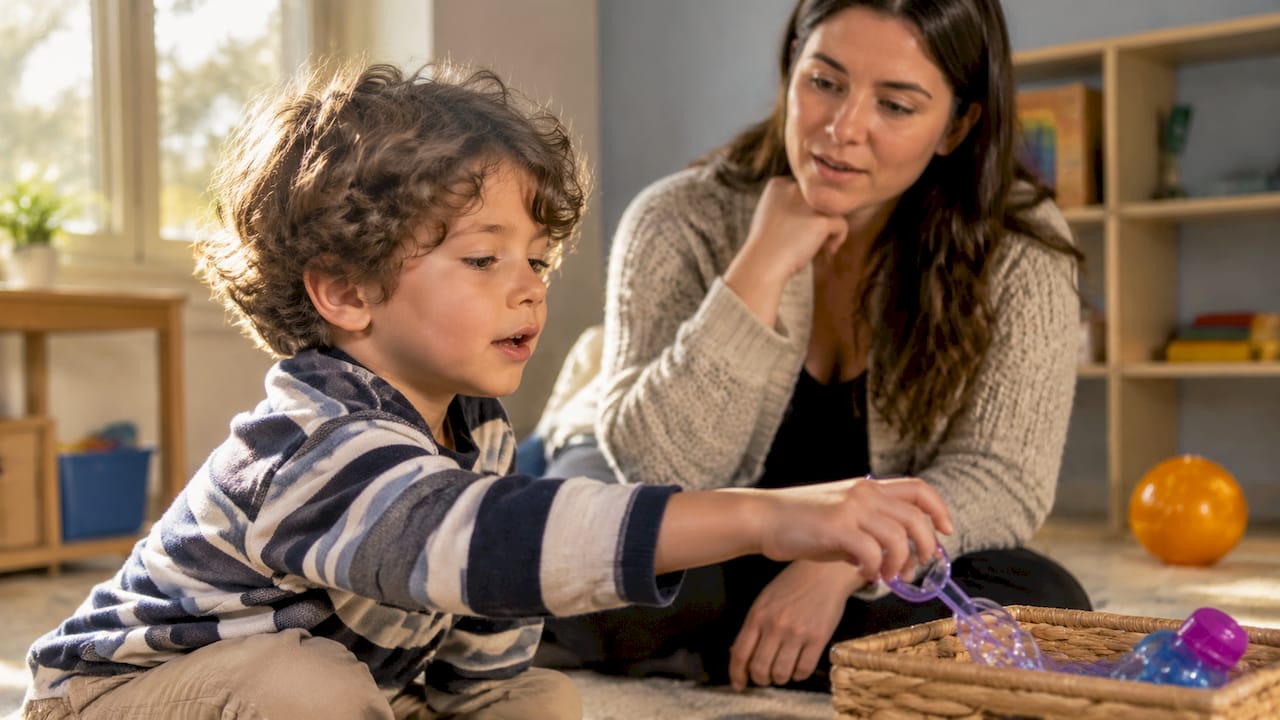
Tactile Defensiveness in Autism: Strategies That Work
Tactile defensiveness in autism is an atypical, often distressing over-responsiveness to touch that causes real pain-like reactions, avoidance, or meltdowns in many autistic people. Clinicians most effectively manage it through individualized occupational therapy (OT) plans built around sensory profiling, graded exposure, and structured sensory diets. Studies consistently report that sensory differences affect more than half of autistic individuals, with many studies estimating the prevalence is above 53% depending on the measure and sample. This makes it one of the most common and most disruptive challenges families and educators face daily.
If you are reading this because a child in your care recoils from clothing tags, refuses haircuts, or melts down at the lunch table, here is where to start:
Reduce the trigger load first. Identify the specific textures, pressures, or contexts that cause distress and remove or modify them before anything else.
Offer a predictable calming option. Heavy work activities (carrying a backpack, pushing a cart, wall push-ups) provide proprioceptive input that many autistic people find regulating.
Document every incident. Note what touched the person, where on the body, the context, and the reaction. This log becomes the foundation for a formal OT evaluation using tools like the Sensory Profile (Dunn) or the Sensory Processing Measure (SPM).
Pro Tip: Ask your pediatrician for a referral to an occupational therapist who specializes in sensory processing. Bring your trigger log to the first appointment. It will cut weeks off the assessment process.
Table of Contents
Why does tactile defensiveness happen in autism?
How tactile defensiveness looks across ages and settings
How clinicians assess tactile defensiveness
What interventions actually work?
Practical strategies for caregivers and educators to use now
Which professionals belong on the team, and when should you refer?
What the research actually shows (and where it falls short)
How Autism Victory App helps families manage tactile defensiveness
Key Takeaways
Tactile defensiveness is neurological, and that changes everything
Autism Victory App: your next practical step
Useful sources
Why does tactile defensiveness happen in autism?
The short answer: the autistic brain processes touch differently at a neurological level, not a behavioral one. Research using neuroimaging and neurophysiology points to a failure to habituate to repeated tactile stimuli, meaning the nervous system keeps responding to touch as if it were new and potentially threatening, even after many exposures. Typically developing people filter out familiar, non-threatening touch quickly. Many autistic people do not.

The underlying mechanism involves excitatory-inhibitory (E/I) imbalance. In a well-regulated somatosensory system, inhibitory neurons dampen incoming touch signals so the brain can prioritize what matters. Studies of autistic children show impaired feed-forward inhibition in the somatosensory cortex, meaning the filtering system is weaker. The result is that light, incidental touch (a shirt seam, a classmate brushing past) can register with the same urgency as a genuinely painful stimulus.
Research published in Nature Reviews Neuroscience adds another layer: peripheral mechanosensory neuron dysfunction and changes in GABAergic inhibition can both contribute to tactile hypersensitivity. This is not just a cortical processing problem. It can start at the skin itself, particularly in body regions with dense C-tactile fiber innervation such as the forearms and the area around the mouth.
Key neurobiological points clinicians and caregivers should understand:
Somatosensory cortex hyperreactivity. Functional MRI studies show increased activation in the primary somatosensory cortex and insular cortex in autistic individuals during tactile stimulation compared to non-autistic controls.
Reduced GABA concentration. Lower GABAergic activity in sensory cortex regions is associated with reduced inhibitory control over incoming touch signals.
Habituation failure. Children with autism show an absence of the normal effect of subthreshold stimulation on detection threshold, suggesting impaired feed-forward inhibitory mechanisms.
Sensory traits as a primary autism domain. The DSM-5 formally includes hyper- or hypo-reactivity to sensory input as a diagnostic criterion for autism spectrum disorder, not a secondary feature.
Statistic to know: Clinical reviews and population surveys estimate that sensory differences affect more than half of autistic individuals, with many studies reporting figures above 53% depending on the measure and sample used.
Tactile hyper-reactivity also correlates with higher rates of anxiety, social withdrawal, and feeding difficulties. A 2024 review in Brain Sciences links tactile hyper-reactivity to internalizing and externalizing behavioral problems, as well as oral sensitivity that can contribute to restricted eating patterns. Understanding this biology matters because it reframes the conversation: a child who screams during a haircut is not being defiant. Their nervous system is genuinely overwhelmed.
How tactile defensiveness looks across ages and settings
Tactile defensiveness does not look the same at every age, and it does not always look like what you expect. Recognizing it across contexts is the first step toward getting the right support.
In infants and toddlers, the signs are often mistaken for colic or general fussiness. Watch for:
Arching away from being held or bathed
Distress during diaper changes or face-wiping
Refusal to touch grass, sand, or food with their hands
Extreme reactions to clothing textures, particularly seams, tags, or tight waistbands
In school-age children, the picture shifts toward avoidance of social and academic participation:
Refusing to sit near classmates because of accidental contact
Meltdowns during art projects involving glue, paint, or clay
Avoiding the cafeteria or playground because of crowding
Refusing to wear certain fabrics, shoes, or socks with seams
Gagging or refusing foods based on texture rather than taste
In adolescents and adults, tactile defensiveness often becomes internalized. The person may avoid handshakes, hugs, or crowded spaces without being able to explain why. Clothing sensitivity in autism frequently intensifies during adolescence when social pressure to conform to dress codes conflicts with sensory needs.
It is also worth knowing that tactile defensiveness rarely exists in isolation. Research shows three distinct tactile responsiveness patterns in autism: hyper-responsiveness (defensiveness), hypo-responsiveness (reduced awareness), and sensory seeking. Many autistic people show a mixed profile, which changes how the behavior looks. A child who seeks deep pressure (bear hugs, tight clothing) but recoils from light touch is showing both seeking and defensive patterns simultaneously.
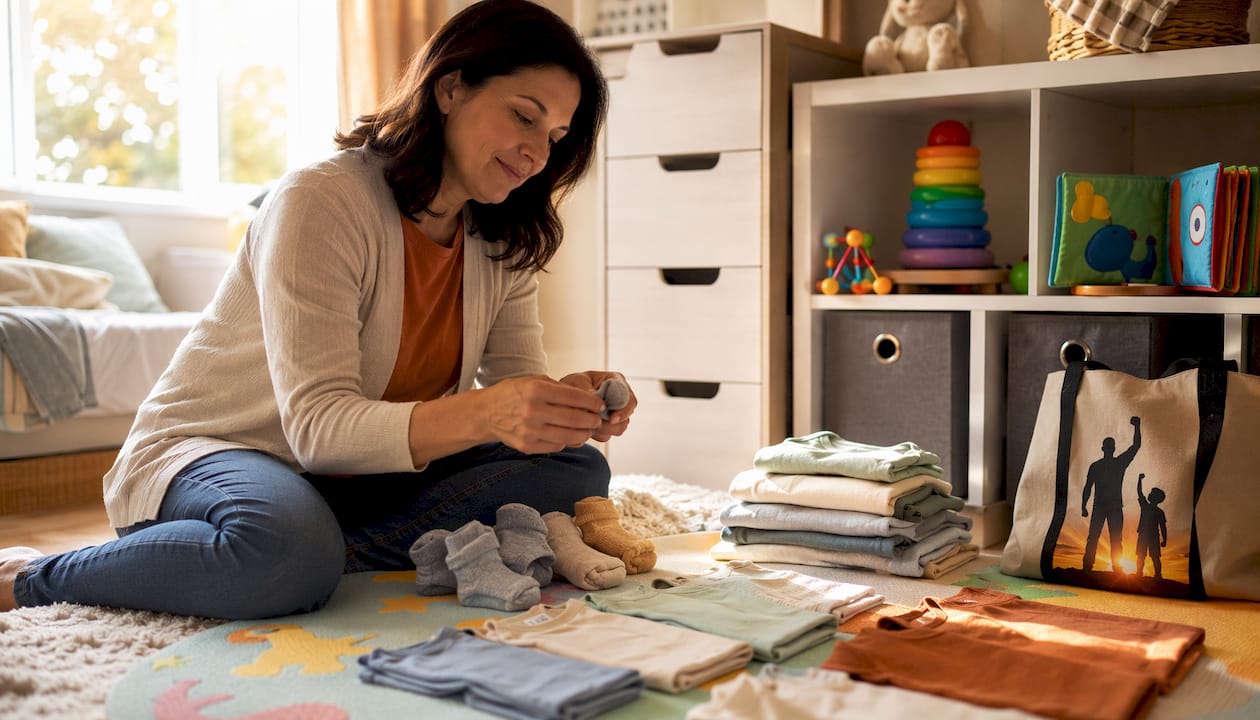
Pro Tip: Keep a simple trigger log for two weeks before any clinical appointment. Record: what touched the person, where on the body, the setting, the time of day, and what the reaction looked like. Patterns in this data often reveal triggers that neither you nor the clinician would have guessed.
Feeding and oral defensiveness deserve special attention. Oral tactile hyper-reactivity is directly linked to restricted eating patterns and, in some cases, presentations that resemble Avoidant/Restrictive Food Intake Disorder (ARFID). If a child’s diet is severely limited by texture, a referral to a feeding specialist alongside OT is warranted. When a sensory-driven meltdown looks like a tantrum, understanding the neurological trigger makes all the difference in how you respond.
How clinicians assess tactile defensiveness
A thorough assessment does three things: it maps where and how the person responds to touch, it captures functional impact across daily routines, and it produces a plan. No single tool does all three alone.
Standard caregiver and teacher report tools
Tool | Setting | Primary Use |
|---|---|---|
Sensory Profile (Dunn) | Home/clinic | Caregiver report; maps sensory patterns across modalities including tactile |
Sensory Processing Measure (SPM) | Home and school | Parallel caregiver and teacher forms; tracks sensory processing and social participation |
Short Sensory Profile (SSP) | Clinic/screening | Abbreviated version of the Sensory Profile; useful for initial screening |
Tactile Defensiveness and Discrimination Test-Revised (TDDT-R) | Clinic | Structured observational assessment using textured materials and experimenter-administered touch |
The Sensory Profile (Dunn) is a standardized caregiver questionnaire that captures how a child responds to sensory experiences across daily life. Research shows that a large proportion of young children with autism scored lower than non-autistic peers on at least one element of the Sensory Profile, particularly on tactile sensitivity and auditory filtering subscales. The Sensory Processing Measure (SPM) adds a school-based teacher form, making it particularly useful for documenting how sensory needs affect classroom participation, which matters when building an IEP or 504 plan.
What an OT evaluation typically produces
A comprehensive OT evaluation for tactile defensiveness includes:
Sensory profile summary. A map of the person’s sensory thresholds across modalities, with tactile patterns highlighted.
Functional impact statements. Specific descriptions of how touch sensitivity affects dressing, grooming, eating, and social participation.
Prioritized goals. Two to four measurable short-term goals tied to daily routines (e.g., tolerating a 10-minute haircut without distress within 12 weeks).
Sensory diet recommendations. A personalized daily schedule of regulatory activities, including heavy work, tactile play, and environmental modifications.
Frequency and duration recommendations. Many OTs recommend a few sessions per week for an initial period of several months, with reassessment at intervals.
Pro Tip: Request both the home and school forms of the SPM before the OT evaluation. Bringing completed forms to the first appointment gives the therapist a cross-context picture immediately, rather than relying on recall alone.
Objective research measures such as quantitative sensory testing and neurophysiology studies help explain the mechanisms behind tactile defensiveness, but they are rarely used in routine clinical practice. Clinicians rely on functional assessment and caregiver report for day-to-day therapy decisions. Early sensory profiling, ideally during or shortly after the diagnostic process, accelerates access to services and reduces the time families spend waiting for targeted support.
What interventions actually work?
Occupational therapy is the primary clinical pathway for managing tactile defensiveness in the United States. Within OT, the most structured and researched approach is Ayres Sensory Integration (ASI), developed by occupational therapist and neuroscientist A. Jean Ayres. ASI uses child-directed, play-based activities in a specially equipped clinic to provide controlled sensory experiences that challenge the nervous system to organize and respond more adaptively. It is not the same as general sensory activities or a sensory room, though those can be useful adjuncts.
The evidence base for OT and ASI is growing but uneven. Systematic reviews show meaningful improvements in goal attainment, daily participation, and caregiver-reported distress when ASI is delivered with fidelity. Evidence for sensory diets as standalone interventions is less robust, largely because they are highly individualized and difficult to study in controlled trials. That said, sensory diets remain a cornerstone of clinical practice because they give families a structured, daily framework for regulation.
Common intervention components include:
Heavy work and proprioceptive input. Carrying weighted items, climbing, pushing, and pulling provide deep pressure that many autistic people find calming and organizing before or after tactile challenges.
Graded tactile exposure. Starting with textures the person tolerates and systematically introducing more challenging ones, always at the person’s pace and with their consent.
Deep pressure techniques. Firm, predictable touch (not light stroking) tends to be better tolerated. Weighted blankets and compression garments are common tools.
Predictable tactile play. Activities like kinetic sand, putty, or vibrating toys that the person controls themselves build tolerance without triggering defensiveness.
Environmental modifications. Removing fluorescent lighting, reducing background noise, and decluttering tactile surfaces in the environment lower the overall sensory load before any direct touch intervention begins.
Adjunctive supports matter too. Behavioral strategies help caregivers respond consistently without inadvertently reinforcing avoidance. Parent coaching, often delivered alongside OT, is one of the highest-leverage investments a family can make. For oral defensiveness, a speech-language pathologist (SLP) with feeding therapy training works alongside the OT. When anxiety is prominent, a psychologist or behavior analyst joins the team.
Pro Tip: A sensory diet that is too stimulating can increase defensiveness rather than reduce it. If a child seems more dysregulated after a sensory activity, tell the OT immediately. The dose matters as much as the activity type.
Typical therapy cadence is 1–3 sessions per week, with measurable short-term goals reviewed every 6–12 weeks. Progress is usually incremental. Families who expect rapid change are often disappointed; families who track small gains consistently are better positioned to sustain the effort.
Practical strategies for caregivers and educators to use now
You do not need to wait for a formal OT evaluation to start helping. The following steps are safe, evidence-informed, and immediately applicable.
Step-by-step approach
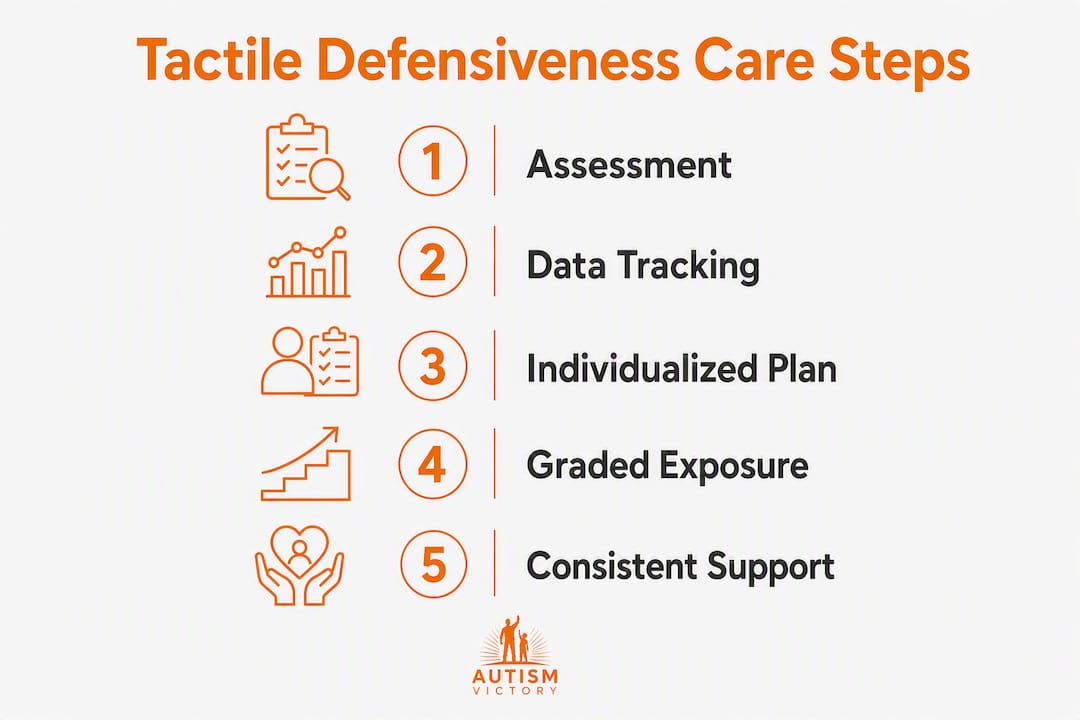
Identify and log triggers. For two weeks, record every tactile incident: what touched the person, where, the context, the time of day, and the reaction. Look for patterns.
Create predictable routines. Unpredictability amplifies sensory distress. Announce touch before it happens (“I’m going to put your shirt on now”), use consistent sequences for dressing and grooming, and avoid surprises.
Pair tolerable touch with calming supports. Schedule grooming tasks (haircuts, nail trimming, toothbrushing) after heavy work or deep pressure activities, when the nervous system is better regulated.
Use graded exposure with OT guidance. Do not force contact with aversive textures. Instead, work with the OT to build a hierarchy from least to most challenging, moving only when the person is ready.
Build in heavy work breaks. Before transitions, meals, or grooming tasks, offer 5–10 minutes of proprioceptive input: wall push-ups, carrying books, or jumping on a trampoline.
Specific daily-life strategies
Clothing: Remove tags, choose seamless socks, offer soft fabrics (bamboo, modal), and let the person choose between two pre-approved options. Compression garments work well for some children.
Haircuts: Use a vibrating trimmer rather than scissors if scissors cause distress. Practice with the trimmer off first. Schedule appointments at low-traffic times and bring a preferred activity for distraction.
Toothbrushing: Use a soft-bristle brush or an electric toothbrush (some children prefer the predictable vibration). Apply toothpaste to the brush before handing it over so the person controls the contact.
Mealtime textures: Introduce new textures alongside accepted foods, never as a replacement. A feeding therapist can build a systematic texture ladder. Never force a child to eat a texture that causes a gag or distress response.
Classroom accommodations: Preferred seating away from high-traffic areas, a quiet signal the student can use when overwhelmed, scheduled sensory breaks, and access to a calming corner with deep-pressure tools. Document these in an IEP or 504 plan to make them enforceable.
Pro Tip: Tactile avoidance is a neurological reaction, not defiance. Punitive or forced-exposure approaches do not build tolerance; they build fear and erode trust. Always work within the person’s window of tolerance and give them a way to signal “stop.”
Dignity and consent are non-negotiable. Teach the person a clear signal (a hand gesture, a word, a card) that means “I need a break from touch.” Honoring that signal consistently is what makes graded exposure safe rather than traumatic.
Which professionals belong on the team, and when should you refer?
Tactile defensiveness rarely needs just one clinician. Here is who belongs on the team and what each person contributes.
Occupational therapist (OT). The lead clinician for tactile defensiveness. Conducts the sensory evaluation, designs the sensory diet, delivers ASI-based therapy, and coordinates with school and home.
Speech-language pathologist (SLP). Essential when oral defensiveness is affecting feeding, speech articulation, or oral hygiene. Works alongside the OT on texture desensitization for the mouth.
Pediatrician. Rules out medical causes (skin conditions, pain disorders), provides referrals, and manages diagnostic coding for insurance purposes. Also coordinates early intervention referrals for children under age 3.
Psychologist or behavior analyst. Joins the team when co-occurring anxiety, ADHD, or significant behavioral challenges are present. Provides behavioral support strategies and, when needed, cognitive-behavioral approaches for anxiety related to touch.
When to refer urgently: Seek immediate evaluation if the person is refusing all solid foods, losing weight, injuring themselves to avoid touch, or rapidly losing participation in daily routines they previously managed. These are not “wait and see” situations.
For most families, the pathway starts with the pediatrician, who refers to an OT for evaluation. The OT evaluation typically takes 1–2 sessions and produces a written report with goals and recommendations. Therapy then begins at a frequency the OT recommends based on severity and family capacity.
Cost and insurance: OT for autism-related sensory needs is often billed under ASD or related neurodevelopmental diagnosis codes. Many private insurance plans cover OT when medically necessary, though prior authorization is common. Medicaid covers OT for children with autism in most states, and early intervention programs (for children under 3) provide services at no cost to families in the United States. Sensory processing disorder as a standalone diagnosis is not always recognized by insurers, so billing under the autism diagnosis code typically improves coverage. Ask your OT’s billing department about this specifically.
Coordinated care means shared goals. The OT, school team, and family should use the same language for goals, the same data-collection format, and regular check-ins. Documentation for an IEP or 504 plan should include the OT’s functional impact statements and specific accommodation language the school can implement.
Pro Tip: If your child is under age 3, contact your state’s early intervention program directly. You do not need a physician’s referral in most states, and services are free. Early sensory profiling accelerates access to support significantly.
What the research actually shows (and where it falls short)
The evidence for OT-based sensory interventions is real, but it is not as strong as families and clinicians sometimes hope. Being honest about that helps everyone set realistic expectations.
Where the evidence is clearest:
Goal attainment in OT programs using ASI with fidelity shows consistent positive signals in multiple trials.
Caregiver-reported reductions in distress during daily routines (dressing, grooming, mealtime) are among the most reliably documented outcomes.
Parent coaching alongside OT improves generalization of gains from the clinic to home.
Where the evidence is limited:
Most trials have small sample sizes and short follow-up periods, making it hard to know whether gains persist.
Interventions vary widely across studies, so comparing results is difficult.
Outcome measures are inconsistent: some studies use caregiver report, others use direct observation, and few use the same standardized tools.
Long-term follow-up data beyond 12 months is sparse.
What this means in practice: Clinicians and families can reasonably expect incremental improvements in participation and distress reduction with consistent, individualized OT. They should not expect a “cure” or rapid normalization of touch responses. Progress is real but slow, and it requires sustained effort across home, school, and clinic.
Emerging technologies are worth watching but not yet ready for routine clinical use. Virtual reality (VR) environments are being studied as a way to deliver graded tactile exposure in controlled, adjustable settings. Wearable sensory devices that provide on-demand deep pressure or vibration are in early development. Both show conceptual promise, but the evidence base is still thin. For now, OT-led, individualized programs remain the standard of care.
How Autism Victory App helps families manage tactile defensiveness
Tracking sensory triggers consistently is one of the hardest parts of managing tactile defensiveness, and it is also one of the most important. Autism Victory App is built specifically for this challenge.
Here is what the app gives you:
Trigger logging. Record touch incidents in real time: what happened, where on the body, the context, and the reaction. Over time, the log reveals patterns that are invisible in memory alone.
Sensory diet templates. Structured daily activity schedules you can customize with your OT’s input, so the plan is always accessible and easy to follow.
State-specific funding and support resources. Find OT providers, early intervention programs, and Medicaid waiver information specific to your state, without spending hours searching.
Educational videos and caregiver coaching content. Short, practical videos on sensory strategies, IEP documentation, and daily routine modifications, available in both English and Spanish.
Calming sound library. Auditory regulation tools that complement tactile sensory strategies during transitions or high-stress moments.
Caregiver community. Connect with other parents and caregivers navigating the same challenges, share what works, and get support between clinical appointments.
Pro Tip: Start your trigger log on day one, before you have an OT referral. Two weeks of consistent data gives the OT a head start and can shorten the evaluation process.
Pro Tip: Use the sensory diet template to build your child’s daily schedule and share it directly with the school team. Consistent language between home and school is one of the strongest predictors of generalization.
Pro Tip: The bilingual content in Autism Victory App is particularly useful for Spanish-speaking families who may struggle to find culturally appropriate sensory resources in their language.
Pro Tip: Generate a shareable summary from your trigger log before each OT session. It takes minutes and gives the therapist objective data rather than relying on your recall of a stressful week.
Pro Tip: Use the state-specific resource navigator to check whether your state’s Medicaid waiver covers OT for autism. Many families are eligible for more coverage than they realize.
Pro Tip: If your child was recently diagnosed, the first 30 days after diagnosis are critical for setting up the right supports. Autism Victory App walks you through that process step by step.
Pro Tip: Review your trigger log monthly, not just before appointments. Patterns that emerge over 4–6 weeks often reveal seasonal or routine-based triggers that shorter windows miss.
Key Takeaways
Individualized OT-led plans, respectful graded exposure, and consistent data tracking are the three pillars of effective tactile defensiveness management in autism.
Point | Details |
|---|---|
Tactile defensiveness is neurological | Over-responsiveness to touch reflects impaired somatosensory inhibition, not willful behavior; avoid punitive responses. |
Request the right assessment tools | Ask your OT for the Sensory Profile (Dunn) and Sensory Processing Measure (SPM) to map sensory needs across home and school. |
OT is the primary clinical pathway | Ayres Sensory Integration, sensory diets, and graded exposure delivered by an OT are the most evidence-supported interventions available. |
Start practical strategies now | Log triggers, create predictable routines, offer heavy work before grooming tasks, and document accommodations in an IEP or 504 plan. |
Autism Victory App supports tracking | Use the app to log sensory triggers, follow sensory diet templates, and generate shareable reports for your OT and school team. |
Tactile defensiveness is neurological, and that changes everything
The most important shift caregivers and educators can make is this: stop asking “why won’t they just tolerate it?” and start asking “what does their nervous system need right now?” That is not a soft reframe. It is a clinical one, grounded in what neuroimaging and neurophysiology actually show about how autistic brains process touch.
What I find most underappreciated in conversations about tactile defensiveness is the cumulative load problem. A child who manages their shirt seam, the cafeteria noise, and the hallway crowd separately might fall apart when all three happen in sequence. The nervous system has a finite capacity for sensory regulation, and tactile defensiveness does not exist in a vacuum. It interacts with anxiety, sleep quality, hunger, and the emotional demands of the school day. Interventions that treat touch sensitivity as an isolated variable will always underperform.
The other thing worth saying plainly: progress in this area is genuinely slow, and that is okay. A child who can tolerate a haircut in 12 months instead of 6 has still made real progress. Celebrate the specific, measurable wins. Document them. They are the evidence you need for IEP meetings, insurance appeals, and your own sense of whether the work is worth it. It is.
Autism Victory App: your next practical step
Managing tactile defensiveness takes consistent data, a clear plan, and a team that communicates well. Autism Victory App gives caregivers the tools to do all three without adding hours to an already full day.
Start with the sensory triggers log on day one. Within two weeks, you will have objective data your OT can use immediately. From there, build your child’s sensory diet inside the app using structured templates, share a summary with the school team, and use the state-specific resource navigator to find OT providers and funding options in your state. All content is available in English and Spanish, and the caregiver community is there when you need support between appointments.
The 7-day free trial gives you full access to every feature: trigger logging, sensory diet templates, educational videos, AI-powered guidance, and the resource navigator. No commitment required to start. Download Autism Victory App today and bring your first trigger log to your next OT appointment.
Useful sources
The following sources were used throughout this article and are recommended for deeper reading:
Nature Reviews Neuroscience: Sensory perception in autism (2017). The most authoritative review of peripheral and central mechanisms underlying tactile hypersensitivity in autism. Essential reading for clinicians and researchers.
PMC: Neurobiological review of sensory processing differences. Covers excitatory-inhibitory imbalance and habituation failure; foundational for understanding why tactile defensiveness occurs.
PMC: Impaired tactile processing in children with autism spectrum disorder. Psychophysical study documenting specific inhibitory deficits in autistic children’s somatosensory processing; useful for clinicians explaining mechanisms to families.
PMC: Tactile responsiveness patterns in autism. Distinguishes hyper-responsiveness, hypo-responsiveness, and sensory seeking patterns and their associations with core autism features.
MDPI Brain Sciences: Sensory phenotypes in autism (2024 review). Current review linking tactile hyper-reactivity to anxiety, feeding difficulties, and behavioral outcomes; practical for clinical planning.
Cleveland Clinic: Sensory Processing Disorder. Accessible clinical overview of SPD, OT approaches, and sensory diets; useful for caregivers and as a patient-facing resource.
National Autistic Society: Sensory processing. Practical guidance on sensory differences in autism, including prevalence estimates and recommendations for creating calmer environments.
FamilyDoctor.org: Sensory Processing Disorder. Patient-facing overview of SPD co-occurring with autism; useful for explaining diagnostic and insurance coding considerations to families.
Sensory Profile (Dunn) manual and Sensory Processing Measure (SPM) manual. The primary clinical references for administering and interpreting these tools; available through Pearson Assessments and WPS Publishing respectively.
Recommended