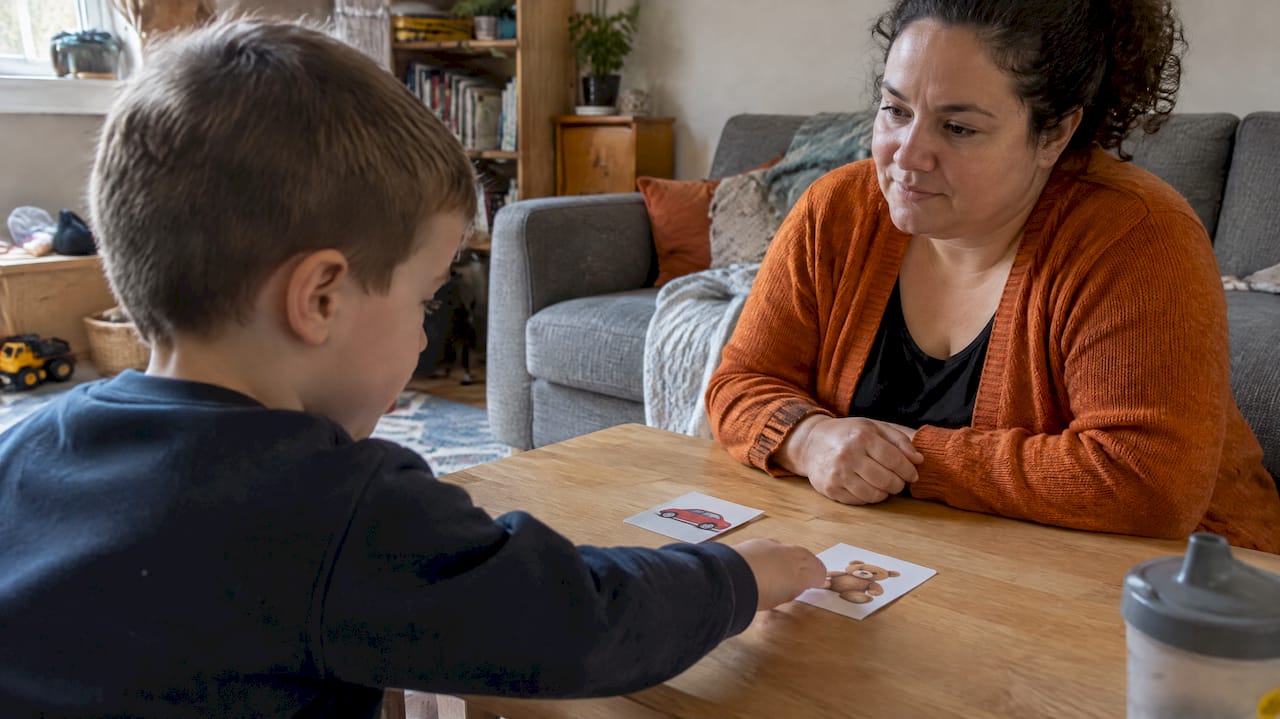
A dental social story is a short, first-person picture script that tells your child what will happen at the dentist, step by step. Research links these stories to lower distress and better cooperation. Start today: add real photos of the clinic, read the story together every day, and tell the dental office you are using one.
TL;DR:
Start the story one to two weeks before the appointment, using six to twelve short first person sentences and real photos of the clinic.
Practice toothbrush sounds for two to five minutes, moving the electric brush from your child’s hand to cheek and then near the mouth.
Ask the dental office for a quiet appointment, extra time, dimmed lights, and a staff briefing; share triggers, calming tools, and your child’s stop signal.
For a nonverbal child, use one photo per page with a single word or symbol, and offer a break card to communicate discomfort.
Table of Contents
What is a dental social story and when should you use one?
How do you write a short, personalized dental social story?
How should you practice and add sensory supports?
What should you tell the dental office?
Which quick tools and home routines help most?
A caregiver's note on advocacy
How can we help you prepare?
Sources
What is a dental social story and when should you use one?
A social story is a brief, visual script written in the child's own voice. It explains what will happen, how the child might feel, and what to do. The rule of thumb: write in the first person ("I sit in the big chair"), keep sentences short, and stay positive and literal.
Evidence supports the approach. HeadStart.gov explains that these stories set clear expectations, and research shows they help reduce physiological and behavioral distress. In a randomized crossover trial, tailored stories were given 1–2 weeks before dental cleanings, and parents read them several times before each visit.
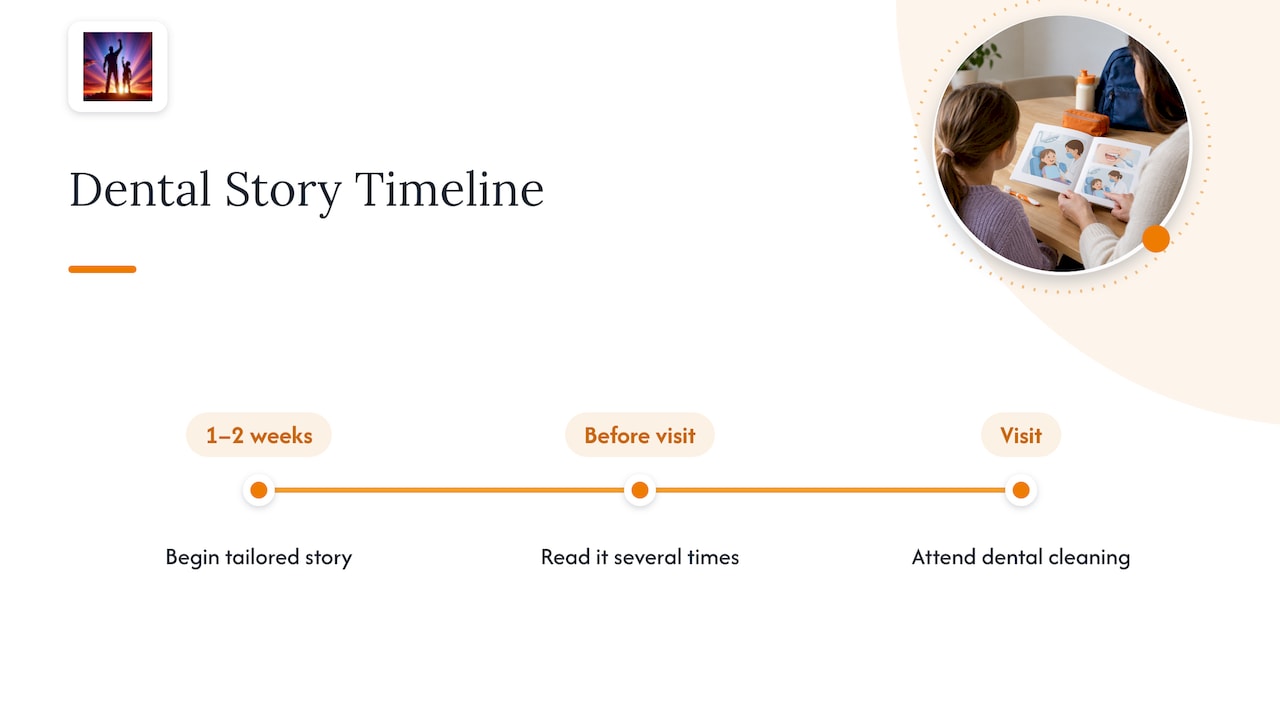
Use one for a first visit, for a new dentist, or before a specific step such as X-rays or a cleaning. Start two weeks ahead when you can.
How do you write a short, personalized dental social story?
You do not need special software. Paper and a phone camera are enough to get started. Follow this structure: a simple title, 6 to 12 short first-person sentences, and a clear cue for when it ends.
Title: "I Am Going to the Dentist," plus a photo of your child's own toothbrush.
Photos: Take real pictures of the building, the front door, the waiting room, the chair, and the dental team if the office allows it.
Sensory notes: Mention the bright light, the buzzing sound, and the cool water in plain words.
Ending cue: "When the dentist says all done, I go home," paired with a photo of the car or door.
Sentence stems: "First, I sit in the chair." "The dentist counts my teeth." "I can raise my hand if I need a break." "Then it is all done."
Nonverbal children: Use one photo per page and a single word or symbol.
Older children: Add their questions and a choice, such as which music to pick.
Keep the tone calm. Avoid words like "brave" or "don't worry," which can sound like pressure.
How should you practice and add sensory supports?
Preparation works best when it is short, daily, and predictable. Here is a simple schedule for the two weeks before the visit:
Read the story once a day at a calm time, not in the car on the way there.
Role-play at home. Let your child lean back in a chair while you count their teeth with a clean toothbrush, then swap roles.
Visit in small steps. Start in the parking lot, then the waiting room, then peek into the exam room if the office agrees.
Rehearse sensory moments. Try the supports you plan to bring, such as headphones, a weighted blanket, or sunglasses.
Review the story the morning of the visit, then stop.
Sensory supports matter because the setting itself can overwhelm. The Sensory Adapted Dental Environment project tests dimmed lights, calming music, visual projections, and a weighted butterfly wrap, and earlier work found these changes reduced physiological anxiety and behavioral distress. NIDCR guidance recommends pairing a social story with these accommodations and discussing your child's sensory profile before booking.
Pro Tip: Before you walk in, do something your child finds calming, such as deep pressure hugs or slow breathing with a favorite toy, and use the same routine every time.
Our guide to a sensory diet for autism has more calming activities you can use before the visit.
What should you tell the dental office?
Call ahead. A short conversation changes the whole visit, and good offices expect it. AAPD guidance points to custom pathways such as shorter appointments, hours that avoid crowds, or a quieter environment.
Ask for these basics:
The first or last appointment of the day, so the waiting room is quiet
Extra time and a brief meet-and-greet before any treatment
Dimmed lights and minimal waiting
A staff briefing so everyone hears your child's needs before they walk in
Phone script: "My child is autistic and prepares with a social story. Could we book a quiet slot with extra time, and could the team know about sensory triggers beforehand?"
Email script: "Hello, we are booking a first visit. My child responds well to predictable routines and dim lighting. I have attached a one-page summary. May we schedule a short introductory visit?"
Your one-page summary should list triggers, calming tools, how your child communicates "stop," and what rewards work.
Which quick tools and home routines help most?
A one-page visual is the easiest support to carry. A good one includes a photo of the office, three or four picture steps, and a clear "all done" cue. Our guide to visual schedules for autism shows how to build one.
Include these items on your visual:
One real photo of the dentist's door or chair
Three to five picture steps in order
An "all done" image paired with the next activity
A "break" card your child can hand over
Then add two short practice routines:
Sound practice (2 to 5 minutes): Let your child hold an electric toothbrush near their hand, then their cheek, then their mouth. Y-Brush shares sensory-friendly options and tips for introducing the buzzing sound.
Touch practice (5 to 10 minutes): Tap each tooth gently with a clean finger or soft brush while counting aloud.
Our post on building communication at home offers more daily routines that pair well with this practice. For general planning, see our autism dentist visit prep guide.
A caregiver's note on advocacy
Asking for accommodations is not being difficult. It is part of your child's health care. Small steps count: a child who touches the dental chair has made progress. Keep a short note on what calmed your child, which words worked, and what to skip next time, and share it with the dental team. Over time, your notes become the plan. Other caregivers are walking this road too, and their experience can help you.
— Ronnie Talent
How can we help you prepare?
Your free social-story steps work on their own, and we built Autism Victory to add support around them. Inside our app you get personalized guidance, bilingual English and Spanish content, educational videos, a calming sound library, and a caregiver community. Our Monthly plan is $6.95 per month and our Annual plan is $49.95 per year, and we offer a free trial. Try it when you want extra templates and practice ideas beside you.
This article is general information, not a substitute for advice from a qualified doctor. Consult a qualified healthcare professional about your own circumstances before acting on anything here.
FAQ
How early should I start reading a dental social story?
Start one to two weeks before the appointment and read it daily. In the randomized crossover trial, tailored stories were provided 1–2 weeks ahead and read several times by parents. Short, calm sessions work better than one long one.
Do social stories work for nonverbal children?
Yes, with adjustments. Use one real photo per page and a single word or symbol, and let your child point or hand you a card to show feelings. Visual supports are part of the behavioral approaches described for autistic children.
What if my child still struggles at the appointment?
Ask the team to pause, shorten the visit, or reschedule an introductory visit. Dental teams are encouraged to screen for special health care needs at scheduling and adjust visits. Add what helped to your notes for next time.
Should I use a social story along with sensory supports?
Yes. Stories prepare your child for what will happen, and sensory supports ease how the room feels. NIDCR guidance recommends pairing both and raising your child's sensory profile with the clinic before booking.
Sources
Recommended