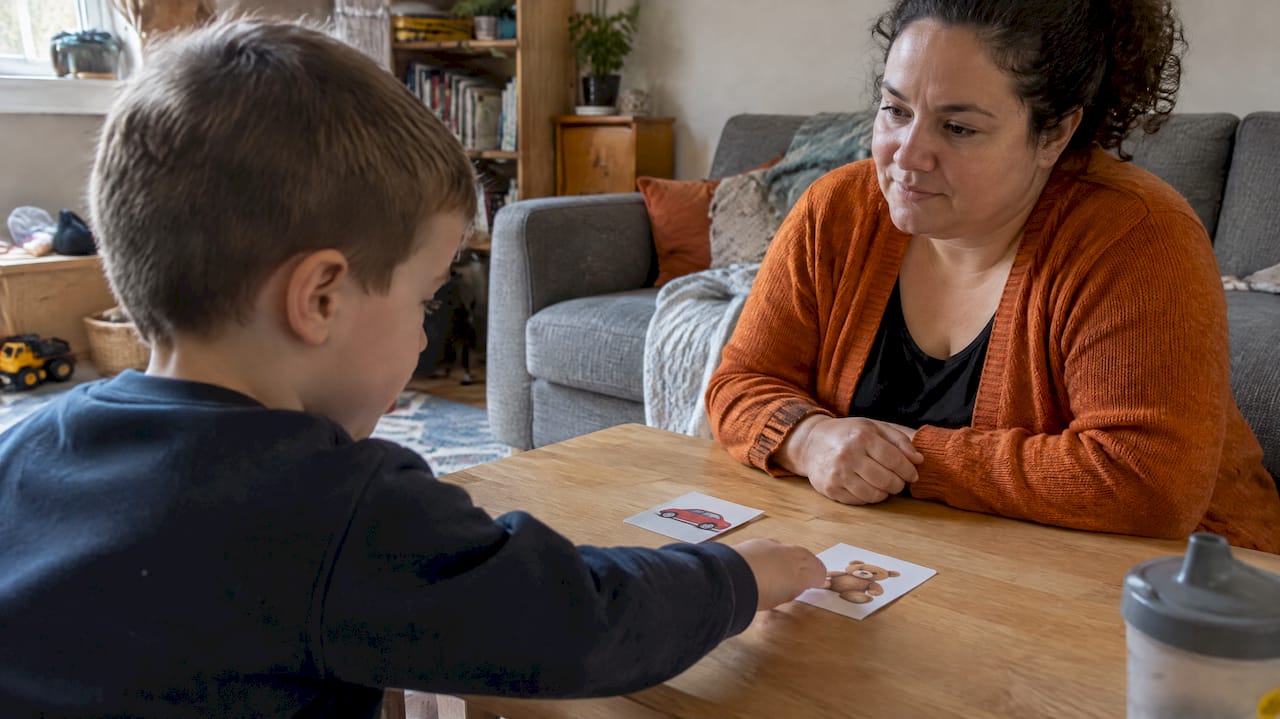
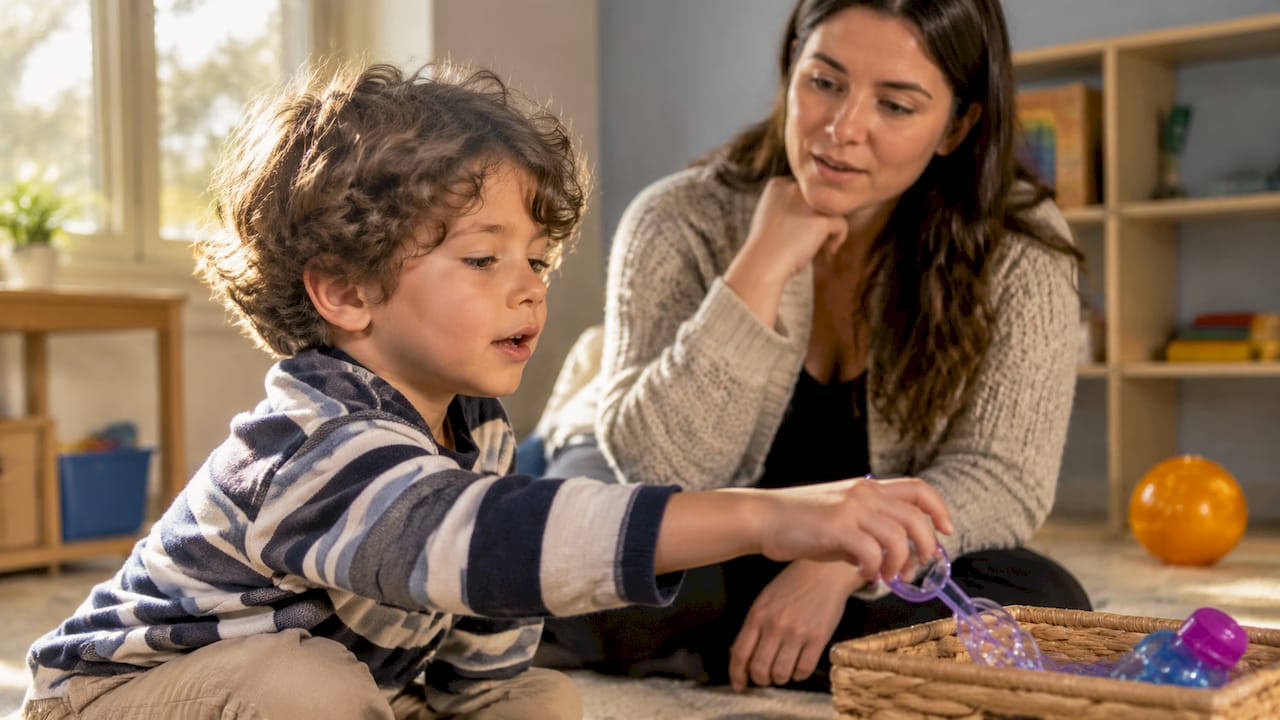
Start with three things: regular judgment-free check-ins, dedicated one-on-one time, and a chance to meet other siblings. Reviews of sibling support groups back this approach, and a centralized caregiver app can keep tools in one place. Below you will find emotional support, daily routines, and clear signs that it is time to bring in a professional.
TL;DR:
Reviews report gains in self-esteem, coping, autism knowledge, and sibling relationships, but methods varied, effects were small, and many programs met in person.
Tailor support by age: play for young children, peer activities for ages 7 to 12, and honest discussions of responsibility and mental health with teens.
During supportive play, keep sessions brief, model turn taking, supervise role play, and let siblings decline every time; they are not therapists.
Seek counseling if anxiety or low mood persists for several weeks or disrupts school and friendships; watch for withdrawal, irritability, or stomachaches.
Table of Contents
1. Practical ways to support siblings of autistic children
2. What research says about sibling support groups
3. Age-based guidance for young children, school-age kids, and teens
4. How to include siblings in supportive play, safely
5. How to start a sibling support routine at home or join a group
6. Why mixed feelings are okay, and why guilt gets you nowhere
7. Where to find structured caregiver tools and ongoing support
Sources
1. Practical ways to support siblings of autistic children
Small, steady habits do more than one big talk. Try these this week:
Normalize every feeling. Tell your child that love, anger, embarrassment, and jealousy can all show up together. Sooner Success puts it simply: all feelings are normal.
Run a short weekly check-in. Ask about their day, their friends, and their worries, and leave the autism topic out unless they raise it.
Protect one-on-one time. Put it on the calendar and keep it, even if it is only a short while. Do not let siblings slide into an unpaid caregiver role.
Explain autism in plain words. Use play, picture books, or an analogy that fits their age.
Teach quick coping tools. Deep breaths, a "safe space" in their room, a stress ball, and a simple script for nosy questions from friends all help.
Keep routines predictable. A visual schedule on the fridge lowers anxiety for everyone. Our guide on short daily routines at home shows how to build them.
Connect them with peers. Look for sibling groups, Sibshops, or a matched playdate with another sibling.
Make a safety plan. Agree on clear steps for meltdowns or aggression, including when your other child leaves the room for a break.
Protect their own identity. Praise hobbies, grades, and friendships that have nothing to do with caregiving.
Pro Tip: Pick the same weekly slot for check-ins, like Sunday after dinner. Predictability makes it feel safe to open up.
If jealousy is the main struggle at your house, our article on sibling jealousy in autism goes deeper (it is written in Spanish).
2. What research says about sibling support groups
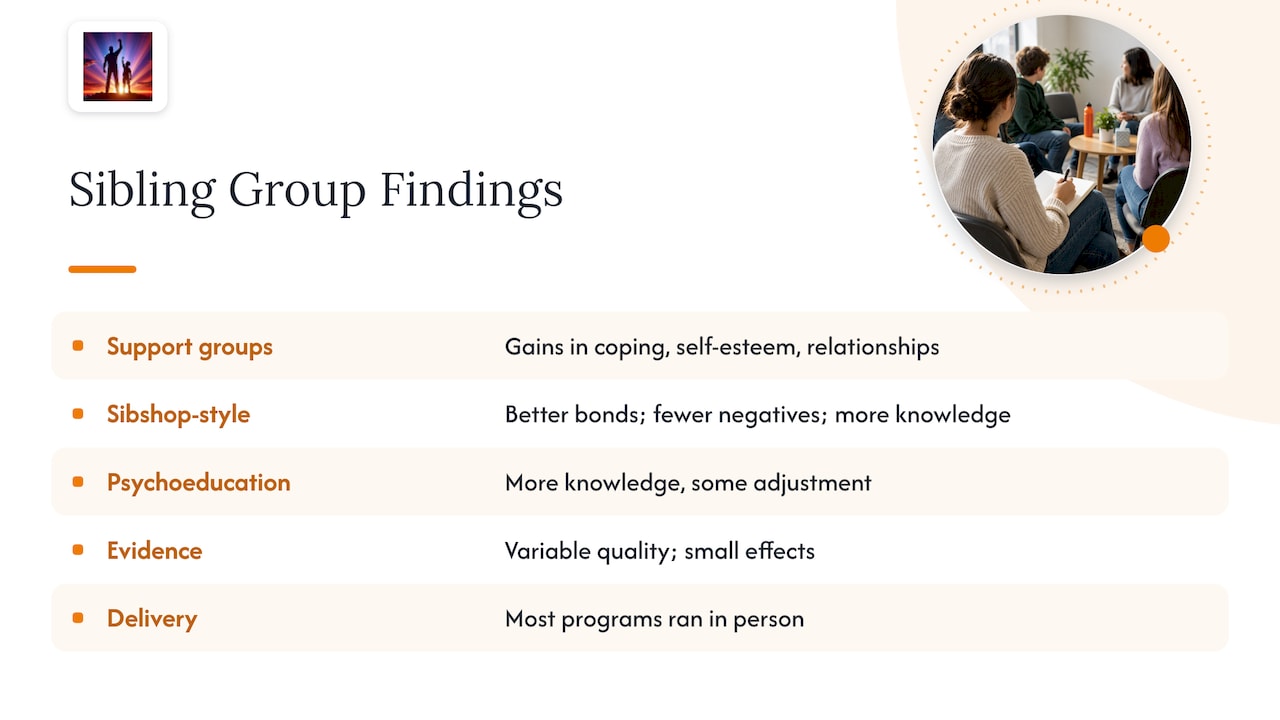
The evidence is encouraging but uneven. A mixed-methods systematic review found that support groups and psychosocial programs improved self-esteem, social wellbeing, knowledge, coping, and sibling relationships in many studies. It also noted that methods differed a lot and effect sizes were small.
A multi-site study of Sibshop-style groups reported better sibling relationship satisfaction, fewer parent-reported negative behaviors, and more knowledge about autism.
That result means a group can do two jobs at once: teach and connect. A scoping review added that groups are feasible and acceptable to families, and give children a place to express feelings and build a peer network.
A narrative review of sibling interventions points the same way: groups and psychoeducation raised knowledge and some aspects of adjustment. Quality varied, though, and most programs ran in person.
Not every sibling reacts the same way. Research on siblings of children with complex care needs shows that many report real warmth alongside strain. Groups help, but they are one support among several.
3. Age-based guidance for young children, school-age kids, and teens
What works for a young child may feel childish to a teen. Match your approach to the age:
Young children: Keep explanations short and playful. Use games, puppets, and a visual routine. Skip worksheets.
School-age (7 to 12): Peer groups and role-play work well. Practice a one-line answer for friends, such as "My brother's brain works differently, and he's great at puzzles." A school-based project for this age group found children valued talking with peers and preferred shared activities to worksheets.
Teens: Talk openly about responsibilities, privacy, and the future. Check in on their mental health, and let them know a trusted adult or counselor is available.
For discussion prompts, try "What was the hardest part of today?" for kids and "What do you need from me this week?" for teens.
4. How to include siblings in supportive play, safely
Sibling-mediated approaches teach brothers and sisters to support skills through play. A systematic review of family-mediated interventions found that studies on siblings are limited but promising for increasing social engagement and back-and-forth interaction. Small clinic and home studies using behavioral skills training also saw gains in starting conversations, though samples were small.
Keep it light and low pressure:
Run brief play sessions.
Model turn-taking before asking your child to try it.
Give simple scripts, like "Do you want the red car or the blue one?"
Stay nearby and supervise any role-play.
Make participation voluntary, every time.
Your child is a sibling, not a therapist. Their wellbeing and their right to say no come first.
Pro Tip: Choose games your children already enjoy. Hide the "practice" inside the fun.
5. How to start a sibling support routine at home or join a group
Follow these steps to get started:
Assess. Watch for stress signals such as withdrawal, irritability, or stomachaches, and ask your child directly what would help.
Plan. Set a weekly one-on-one slot, pick two coping tools, choose a play activity, and name a safe space at home.
Join or launch. Look for groups with a peer focus, trained facilitators, and hands-on activities. Ask your child's school, local autism organizations, or a pediatric clinic.
Track. Notice whether coping improves over a few weeks. If anxiety or low mood persists, seek counseling. Mental health tips for parents can help you decide when to reach out.
6. Why mixed feelings are okay, and why guilt gets you nowhere
Siblings can adore their brother or sister and still feel angry, tired, or left out. Telling them that is normal takes away the shame. Small supports, like time, peers, and routines, can make a difference over time. Take care of yourself too, and lean on community when you are stretched thin. A calmer parent is the best support a sibling can have.
— Ronnie Talent
7. Where to find structured caregiver tools and ongoing support
We built Autism Victory so caregivers have one place to turn. Alongside local groups and professional care, our app gives you:
Step-by-step guides and caregiver-focused books and audiobooks
A state-by-state resource navigator
Educational videos and a supportive caregiver community
Try the free trial, or see our monthly and annual plans: $6.95 per month or $49.95 per year. Our guide to autism caregiver strategies is a good place to start.

This article is general information, not a substitute for advice from a qualified doctor. Consult a qualified healthcare professional about your own circumstances before acting on anything here.
FAQ
How can I best support my autistic child's siblings?
Give them regular, judgment-free check-ins and protected one-on-one time with you. Add peer connection, such as a sibling support group, and explain autism in simple terms for their age.
Does having a sibling help autism?
It can. Sibling-mediated approaches may increase play and social engagement, according to a systematic review, though the evidence is still small. Participation should always be voluntary.
What is the 6 second rule in autism?
There is no single, established "6 second rule" in the research we reviewed. A common idea is to pause and wait a few seconds after speaking, giving a child time to process before you repeat or rephrase.
When should I seek professional help for a sibling?
Reach out if anxiety, sadness, withdrawal, or behavior changes last for several weeks or interfere with school and friendships. A counselor can help, and mental health resources for parents can guide your first step.
Recommended