An autism caregiver’s first job today is simple to name, harder to do: build one predictable routine and lock in one source of outside support. That is the starting point, according to guidance from Caregiver Action Network and the Centers for Disease Control and Prevention. A recent scoping review found that nearly every informal caregiver of an autistic adult reports significant time and emotional strain. Autism Victory App builds its entire platform around this exact reality: caregivers need structure and backup, not just information.
Do these three things today:
Set one 24 hour routine you can repeat tomorrow without renegotiating it.
Identify your family member’s preferred way to communicate right now (words, gestures, a device, or pictures).
Book one respite hour or one peer support call this week.
If you are in crisis right now, call or text 988 and press or say the option for a mental health emergency. That line connects you to trained crisis support, not just a hotline recording.
Statistic to hold onto: the same scoping review found that all caregivers studied experienced time-dependence and emotional burden, with a significant portion also facing financial burden. You are not overreacting to your workload.
Key Takeaways
Reducing caregiver strain requires a predictable routine, one active source of outside support, and state-specific benefit knowledge working together, not separately.
Point | Details |
|---|---|
Build routine first | A repeatable 24 hour schedule reduces daily behavioral stress more than any single tool. |
Regulate before reasoning | Use sensory or movement tools to calm a dysregulated moment before discussing what happened. |
Guard against isolation | Peer support and respite protect against the emotional and social burden the research documents. |
Document for systems | Written needs summaries speed up IEP meetings, medical referrals, and benefit applications. |
Use Autism Victory App | Its state-specific navigator and caregiver community target the exact gaps this guide covers. |
Table of Contents
What Does an Autism Caregiver Actually Do?
A family caregiver and a paid professional caregiver both manage the same core job: helping someone communicate, stay safe, and access services they cannot access alone. What changes is scope and duration. A parent caregiver often carries this role for decades. A professional caregiver, such as a trained aide or respite worker, steps into defined shifts.
Needs shift hard at transition points:
Early intervention. School entry and IEP meetings. Adolescence and puberty. The move from school to work or higher education. Housing and independent living decisions. Aging, both the caregiver’s and the person’s.
Daily responsibilities typically include:
Supporting communication, whether verbal, gestural, or through an augmentative and alternative communication (AAC) device.
Helping with personal care tasks that may extend well beyond childhood.
Advocating with schools, doctors, and benefit agencies, often repeatedly.
Managing sensory environments at home and in public.
No two autistic people need the same plan. Co-occurring conditions like ADHD, anxiety, or epilepsy change what “support” looks like, so treat every strategy in this guide as a starting template, not a script.
What Daily Strategies Actually Reduce Stress?
Routines, clear communication, and sensory adjustments reduce daily behavioral stressors and make the day more predictable for both of you. These aren’t abstract ideas. Trualta’s caregiver-facing daily care guidance points to the same short list of tactics that show up again and again in caregiver reports.
Build a visual routine this week:
Pick three fixed daily anchors (wake up, meal, bedtime) and photograph or draw each one.
Sequence them on a simple chart, physical or digital, and walk through it together once.
Add one new step per week rather than overhauling the whole day at once.
Keep the same chart visible in the same spot. Consistency matters more than polish.
Our guide to visual schedules for autism walks through this in more detail, and a Spanish-language version covers the same ground for bilingual households.
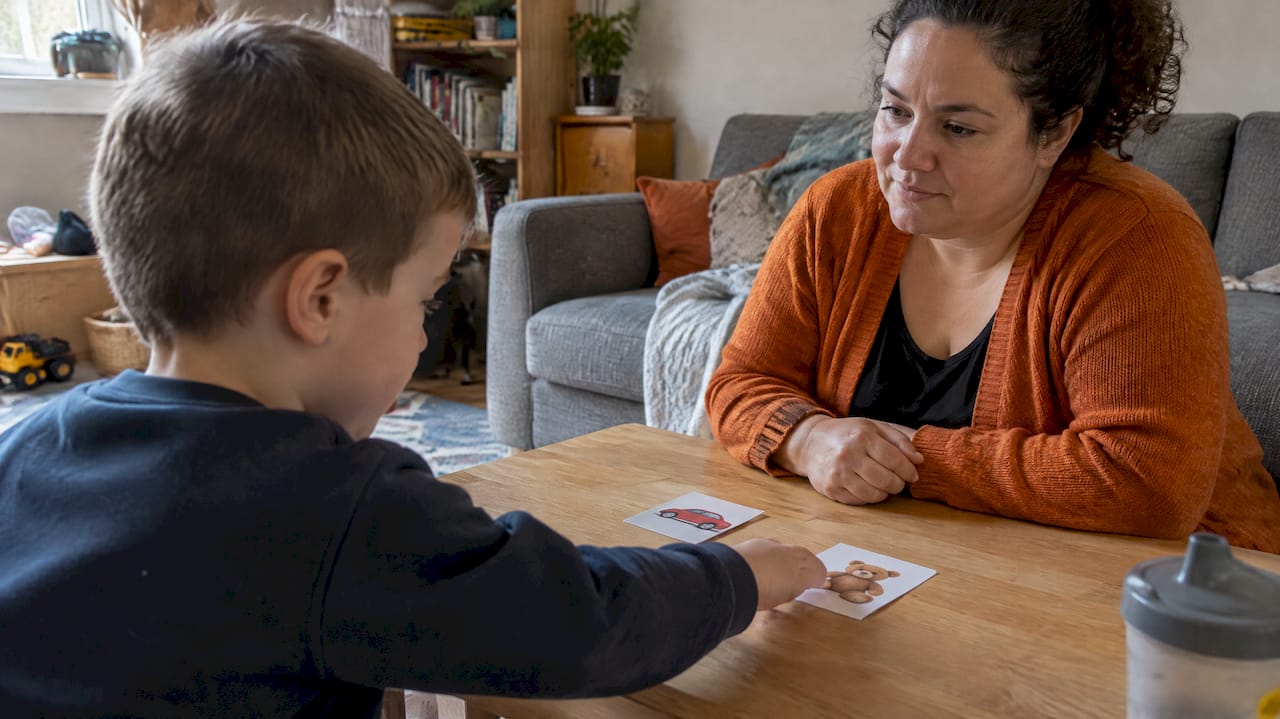
Communication support starts with observation, not assumption. Watch what mode your family member already reaches for: spoken words, pointing, an AAC device, or picture cards. Support that mode instead of pushing toward one you prefer.
For sensory load, walk your home once a week and note what triggers a reaction: fluorescent lighting, background noise, certain fabrics. Small fixes (a dimmer switch, noise-canceling headphones, a designated quiet corner) often do more than a full room redesign.
When dysregulation hits, regulation comes before reasoning. Pro Tip: Bottom-up strategies work faster than talking. Try deep pressure (a weighted blanket, a firm hug if welcomed), movement (jumping, walking), or a sensory break before attempting any conversation about what happened.
Notice the early signs (pacing, covering ears, repetitive speech).
Reduce demands immediately rather than adding more instructions.
Offer the sensory tool that has worked before, not a new one.
Picture a Tuesday evening meltdown over a canceled TV show. Instead of explaining the schedule change, a caregiver hands over noise-canceling headphones, steps back, and waits three minutes before saying anything. The explanation comes after the body calms down, not before.
How Do You Prevent Caregiver Burnout?
Caregiver wellbeing is not optional self-care; it is a planned requirement, the same way medication schedules or IEP meetings are. A qualitative study on caregiver burnout among adults with autism found consistent themes of emotional fatigue, isolation, and unmet need for adult-focused respite.
Watch for these warning signs and respond immediately, not eventually:
Snapping at small things that never used to bother you.
Skipping meals or sleep for multiple days in a row.
Feeling numb rather than stressed, which often signals deeper exhaustion.
Avoiding calls or messages from friends and family.
Isolation compounds burnout faster than the caregiving tasks themselves. Clinical guidance tied to the same scoping review stresses that connection through peer networks is one of the most effective protective factors available.
Respite comes in several forms: hourly in-home relief, weekend programs, or matched volunteer support through organizations like Community Care Corps. The ARCH Respite Locator is a solid starting point for finding programs by state.
How Do You Access Benefits and Paid Support?
Document your family member’s needs, find the right point of contact for each system, and use state-specific resources instead of generic national advice. Autism Victory App’s built-in state navigator exists precisely because benefit rules vary so much by state.
Education: Request an evaluation in writing, gather existing reports, and prepare a one-page needs summary before any IEP meeting.
Health care: Ask your pediatrician or primary doctor for a written referral and keep a running folder of diagnostic reports.
Financial supports: Look into SSI, SSDI for adult dependents, and Medicaid waiver programs in your state, which often fund in-home care hours.
Some states let caregivers get paid directly through consumer-directed Medicaid programs, where a family member can be hired as a paid support worker. Rules vary sharply by state, so treat this as a lead to investigate with your state Medicaid office, not a guarantee.
Helpful resource categories to bookmark:
State-specific financial assistance programs.
Job and life-skills training programs for older individuals.
Autism-specific training certification for professional and paid caregivers.
What Should Be In Your Family Crisis Plan?
Every family needs a one-page crisis plan, shared with anyone in the care circle, including babysitters and extended family. Build it before you need it, not during an emergency.
Cover these basics:
Home safety fixes: door alarms, water safety, secured medications.
ID and location tools: a medical ID bracelet, a GPS tracker if elopement is a risk.
A written contact list: primary doctor, local crisis line, and one trusted neighbor.
The 988 Lifeline’s autism-specific crisis guidance recommends first responders and caregivers use calm, simple language and avoid touching an autistic person without warning during a crisis.
Regulation still comes first here too: reduce stimulation, lower your voice, and give space before attempting to talk through what happened. The Autistic Self Advocacy Network’s safety toolkit offers autistic-led guidance worth reading in full.
Which Organizations Should Every Caregiver Know?
Start with these six. Each fills a different gap:
Caregiver Action Network: general caregiver support and autism-specific guidance.
Autism Speaks: toolkits, screening information, and family resources.
Autism Society of America: local affiliate networks and advocacy.
Autistic Self Advocacy Network: autistic-led perspective and safety resources.
Kennedy Krieger Institute: clinical research and family-facing autism resources.
Use their local affiliate directories to find respite providers and support groups near you, and verify any new provider through a state licensing board before you commit.
What Does the Research Say About Caregiver Burden?
Research consistently shows caregiver burden for adults with autism is high and hits nearly every area of life at once, not just one or two.
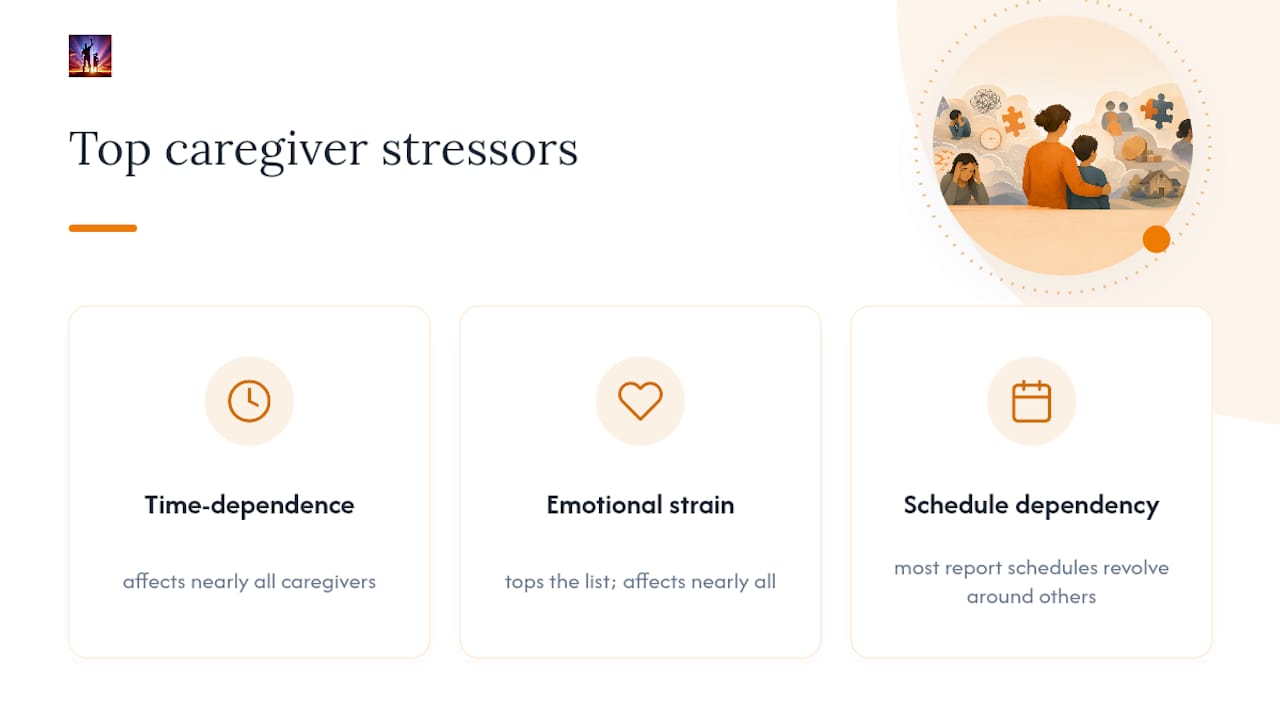
The 2026 scoping review breaks it down by dimension: time-dependence and emotional burden each affected 100% of caregivers studied, social burden 97%, physical burden 94%, developmental burden 87%, and financial burden 68%.
The same review found education and training programs were the most recommended intervention, at a 90% recommendation rate, followed by social support systems at 84%. Structured programs outperform ad hoc coping.
That distinction matters for how you spend limited time and energy: joining a structured training or support program tends to beat trying to solve every problem alone through trial and error.
Why We Built Autism Victory Around These Findings
The research kept pointing to the same gap: caregivers get generic advice when they need something specific to their state, their child, and their week. That gap is what shaped this guide and what shapes Autism Victory App’s product decisions, from state-specific benefit navigators to a caregiver community built around the isolation research keeps flagging.
Autism Victory App exists because information alone doesn’t reduce burnout. Structured support, tailored to your state and your family, does.
How Autism Victory App Supports You Day to Day
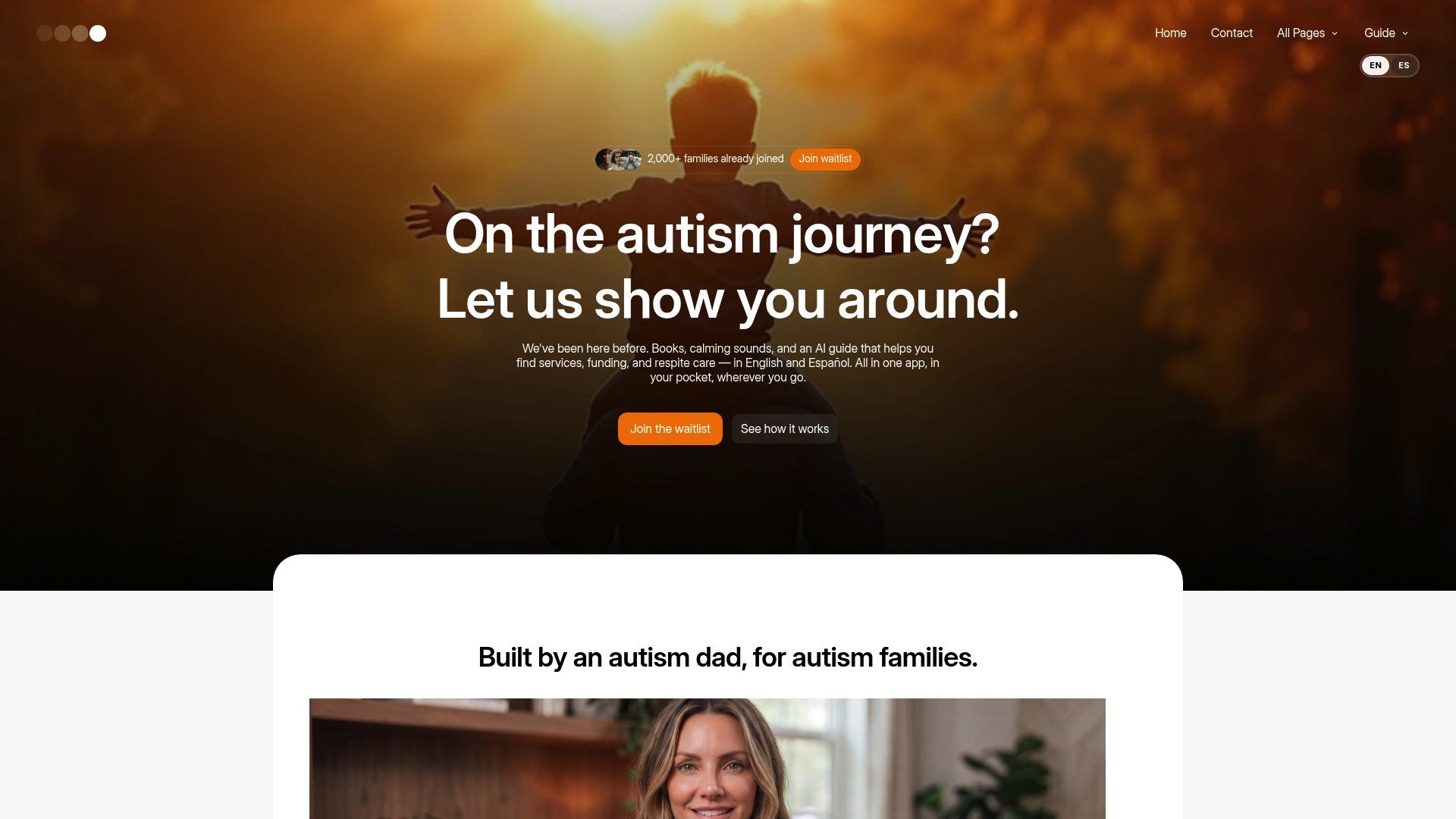
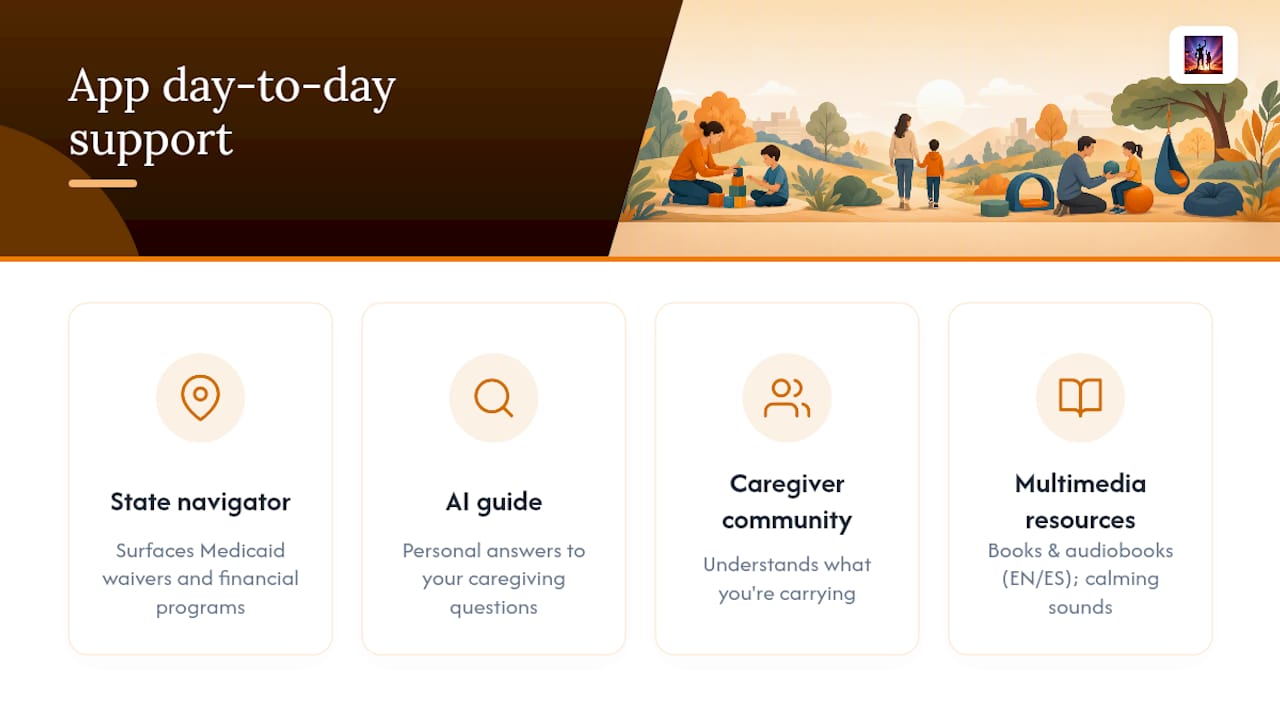
Autism Victory App gives you one place to find what usually takes hours of separate searching: state-specific funding programs, a personal AI guide for your specific questions, and a caregiver community that understands what you’re carrying.
Inside the app, you get a state-by-state resource navigator that surfaces Medicaid waivers and financial programs specific to where you live, caregiver books and audiobooks in English and Spanish, and a calming sound library for the moments regulation needs to come first. None of this replaces your doctor or your school’s IEP team, but it replaces the hours you’d otherwise spend guessing which state program applies to you.
Start with the 7-day free trial and see whether the state navigator surfaces a benefit you haven’t applied for yet. For many families, that alone is worth the download.
Frequently Asked Questions
What is the biggest challenge for an autism caregiver? Time-dependence and emotional strain top the list, affecting nearly all caregivers studied in the 2026 scoping review. Most caregivers report their own schedule revolves entirely around someone else’s needs.
Can an autism caregiver get paid? In many states, yes, through consumer-directed Medicaid waiver programs that allow a family member to become a paid support worker. Rules and pay rates vary by state, so contact your state Medicaid office directly to confirm eligibility.
What training programs exist for autism caregivers? Certification programs like the one offered through IBCCES train professional caregivers and nannies in autism-specific skills. Family caregivers can also access free training through organizations like Autism Speaks and local Autism Society of America chapters.
How do I find respite care near me? Start with the ARCH Respite Locator or Community Care Corps, both of which connect families to vetted local respite providers by state.
What should be in an autism crisis plan? Include home safety fixes, an ID or GPS tracking method if elopement is a risk, and a written contact list covering your doctor, a local crisis line, and 988. Share the plan with anyone who spends time with your family member.
This article is general information, not a substitute for advice from a qualified doctor. Consult a qualified healthcare professional about your own circumstances before acting on anything here.
Sources
Find local respite and support groups through your state’s developmental disability agency or the national directories listed above.
Recommended