If your autistic child is a picky eater, start here: rule out medical causes with your pediatrician if you see red flags, keep meals low-pressure and structured, and begin tiny, repeated food exposures paired with something they already eat. Expansion happens gradually, and it can take 13 or more exposures before a new food feels safe. Patience and consistency matter more than any single mealtime win.
TL;DR:
A review found food selectivity in 21% to 77% of autistic children and linked restricted diets with vitamin D, calcium, and fiber shortfalls.
Seek immediate medical care for weight loss, faltering growth, dehydration, gagging or choking, severe mealtime distress, or reliance on one food or supplement.
At predictable meals, pair one familiar food with a tiny new portion, keep pressure low, and repeat exposure; acceptance may take 13 or more tries.
Track food intake across a week, then ask the pediatrician about nutrient testing or a registered dietitian if the diet remains narrow.
Table of Contents
Why picky eating is common in autism: sensory, behavioral, and medical contributors
Health and nutrition risks of restricted eating
Step-by-step, low-pressure mealtime strategies to try at home
When to get professional help and what each specialist does
Small-step examples: micro-scripts and a short sample week of experiments
Addressing hydration and drink preferences
Impact of comorbid conditions on eating behaviors
Caregiver affirmation and author credentials
How the Autism Victory app can support your next steps
Sources
Why picky eating is common in autism: sensory, behavioral, and medical contributors
Selective eating in autism rarely comes from stubbornness. It usually comes from how a child's body and brain process food itself. Texture, smell, temperature, and even the sound a food makes can register as overwhelming or alarming rather than neutral. Research on dietary patterns in ASD shows that children often gravitate toward bland, predictable, processed foods and avoid fruits and vegetables, largely because sensory input from those foods is harder to tolerate.
Behavioral rigidity plays a role too. A preference for sameness, a reliance on routines, and reinforcement patterns built over years of mealtime stress can all lock in a narrow list of "safe" foods.
Before assuming the issue is purely sensory or behavioral, it's worth ruling out physical causes by considering options for non-celiac gluten sensitivity testing:
Gastrointestinal pain, reflux, or chronic constipation that makes eating uncomfortable
Swallowing or oral-motor difficulties that make certain textures hard to manage
Undiagnosed allergies or celiac disease that cause avoidance without an obvious reason
A visit to your pediatrician is the right first step whenever something about eating seems to cause real distress, not just preference.
Health and nutrition risks of restricted eating
A narrow diet doesn't just limit meal variety. It can leave real gaps in nutrition that affect growth and daily functioning. A narrative review on selective eating in ASD found food selectivity affects an estimated 21% to 77% of autistic children across studies, and it's commonly linked to shortfalls in vitamin D, calcium, and fiber.
Up to 77% of autistic children show some degree of food selectivity, according to that review, which also links restricted diets to both undernutrition and overweight outcomes depending on the pattern of foods avoided.
Common concerns to watch for include:
Constipation from low fiber and fluid intake
Growth that trends toward underweight or, in some cases, overweight
Reduced variety across food groups, raising the risk of multiple micronutrient gaps
Tracking what your child eats over a week, not just a single day, gives you and your pediatrician a clearer picture. If intake looks consistently narrow, ask about nutrient testing or a referral to a registered dietitian.
Step-by-step, low-pressure mealtime strategies to try at home
The goal at every mealtime is to lower pressure, not raise expectations. Pediatric guidance points to structured family meals, repeated neutral exposure, and modeling as the most reliable long-term levers, even though progress is slow.
Set a predictable structure. Scheduled family meals, limited grazing between them, and no screens at the table help your child know what to expect.
Pair known with new. Always include one food your child already eats alongside one small, new option, with zero pressure to taste it.
Repeat without pushing. Calm, repeated exposure, often 13 or more times per federal dietary guidance, builds familiarity faster than any single big push.
Use food chaining. Shift one sensory feature at a time, such as moving from a crunchy cracker to a slightly softer one, a technique extension nutrition specialists describe as effective because it keeps most of the food familiar.
Adjust the sensory experience. Try temperature changes, a different plate or utensil, or simply arranging food the same way each time to reduce visual surprise.
Praise effort, not amount. Acknowledge your child for sitting at the table or touching a new food, since clinical feeding guidance recommends reinforcing mealtime behavior rather than how much gets eaten.
Practice outside mealtimes. Food play, smelling, touching, cooking together, or choosing produce at the store lowers anxiety before a food ever reaches the plate.
Pro Tip: Let your child control how much they eat while you control what's offered and when, a simple division of roles that caregiver guidance credits with reducing mealtime power struggles.
Pairing these strategies with a broader sensory diet approach can make new textures and smells feel more manageable across the day, not just at the table.
When to get professional help and what each specialist does
Some signs call for more than a strategy shift at home. Seek immediate medical care if you notice weight loss or faltering growth, signs of dehydration, frequent gagging or choking, complete dependence on one food or a supplement, or mealtimes marked by severe distress.
From there, different specialists address different pieces:
Pediatrician: rules out medical causes, tracks growth, and coordinates referrals
Speech-language pathologist: evaluates swallowing and oral-motor skills and can guide feeding therapy
Occupational therapist: builds sensory-based strategies and adjusts the mealtime routine itself
Registered dietitian: assesses nutrient intake and recommends safe supplementation if gaps show up
Gastroenterologist: investigates persistent pain, severe constipation, vomiting, or suspected celiac disease or allergy
A feeding disorders overview from clinical researchers recommends stepwise exposure, moving from look to touch to smell to lick to bite, rather than demanding a full bite right away. If your child shows signs of oral sensitivity around routine care too, preparing ahead for dental visits can prevent that sensitivity from compounding at mealtimes.
Small-step examples: micro-scripts and a short sample week of experiments
Big changes rarely work. Small, repeatable ones do.
Neutral exposure script: Place a tiny piece of the new food next to a preferred one. Say something like, "Here's a piece of pepper if you want it, no pressure," then move on. No follow-up questions, no watching to see if they touch it.
Food-chaining step: If your child only eats a particular cracker, try one that's nearly identical but slightly less crunchy. Expect this shift to take several attempts across a week or two, not one sitting.
Day one: Outside of mealtime, let your child smell or touch the new food during play, with zero expectation of eating it.
Day two: Offer the same food as part of a snack, still with a preferred item nearby.
Day three: Place a very small portion on the dinner plate, again next to something familiar.
Adjust pacing based on your child's sensory profile. A child with strong tactile sensitivities may need more touch-based practice before smell or taste ever enters the picture.
Addressing hydration and drink preferences
Hydration deserves its own attention, since many autistic children show strong preferences or aversions around drinks the same way they do with food. Some children fixate on a single beverage, refuse plain water, or react strongly to temperature and carbonation.
If your child drinks only one type of beverage, start by varying it slightly rather than switching entirely: a different cup, a slightly different temperature, or a small addition of flavor to water. Consistency in cup type and routine can also help, since an unfamiliar cup sometimes derails an otherwise willing child.
If you notice signs of low fluid intake, such as infrequent urination, dry lips, or constipation, seek immediate medical care. If your child relies heavily on milk or juice instead of food, discuss this with your pediatrician, who can help you decide what changes may be appropriate.
As with food, change drink habits gradually and without pressure. Offering water in a familiar cup alongside a meal, without comment, builds tolerance the same way repeated food exposure does.
Impact of comorbid conditions on eating behaviors
Anxiety shows up often alongside autism, and it frequently intensifies food-related struggles. A child who already feels on edge about unpredictability may experience new foods as a bigger threat than sensory input alone would explain. Mealtime itself can become a source of dread rather than something neutral.
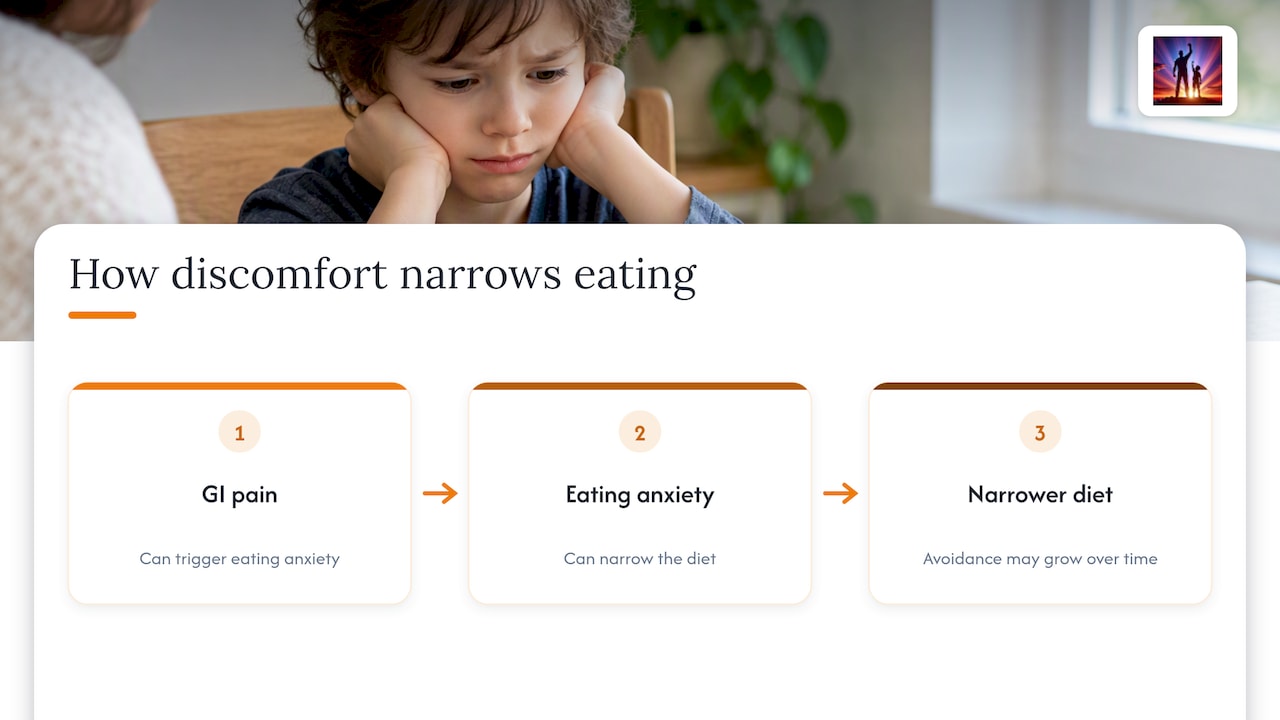
Systematic review evidence supports addressing feeding difficulties through combined behavioral, sensory, and nutritional approaches, particularly because anxiety, GI discomfort, and sensory sensitivity often overlap and reinforce each other. A child in GI pain may develop anxiety specifically around eating, which then narrows their diet further.
If you notice anxiety driving mealtime behavior, whether through rigid food rules, meltdowns at the sight of unfamiliar food, or avoidance that seems to grow over time, that's worth raising with your pediatrician alongside any feeding concerns. Addressing the anxiety component often makes the sensory and behavioral strategies described above work better, since a calmer child has more capacity to tolerate novelty in the first place.
Caregiver affirmation and author credentials
If mealtimes feel exhausting most days, you're not doing anything wrong. Progress with selective eating is slow by nature, and small wins count. We built this guide around the same evidence-informed, multidisciplinary approach that pediatricians, therapists, and dietitians recommend, and we bring caregiver-focused resources, bilingual content, and personalized guidance to families navigating exactly this.
— Ronnie Talent
How the Autism Victory app can support your next steps
We built Autism Victory to sit alongside your pediatrician and therapy team, not replace them. Inside the app, you'll find:
Personalized AI guidance you can return to between appointments
State-specific funding and support resources
Bilingual (English and Spanish) books, audiobooks, and videos
A caregiver community that understands what mealtime stress actually feels like

You can try these resources with a free trial, then choose Monthly at $6.95 or Annual at $49.95 depending on what fits your family.
This article is general information, not a substitute for advice from a qualified doctor. Consult a qualified healthcare professional about your own circumstances before acting on anything here.
FAQ
What are some important life skills for autistic teenagers?
Mealtime independence is one of several life skills worth building alongside communication, self-care routines, and safety awareness. Teaching a teen to prepare a simple snack or recognize hunger cues often grows naturally out of the same low-pressure exposure strategies used earlier in childhood.
How does high-functioning autism affect chores?
Executive functioning differences can make multi-step chores harder to start or complete without a visual checklist or broken-down steps. Many autistic individuals manage chores well once routines are predictable and expectations are clearly defined.
Is autism considered a disability?
Autism may qualify someone for disability-related accommodations and services. Eligibility depends on the applicable rules and individual circumstances. The specific supports available depend on an individual's needs and diagnostic evaluation.
Can level 2 autism live independently?
Some individuals with level 2 autism live independently, especially with structured supports in place, while others need ongoing assistance with daily tasks. Independence depends heavily on individual strengths, support systems, and access to services like occupational therapy.
How many times does a child need to try a new food before accepting it?
Research on repeated exposure suggests it can take 13 or more tries before a child accepts a new food, and autistic children may need even more. Patience and consistency matter more than any single mealtime attempt.
Sources
Recommended