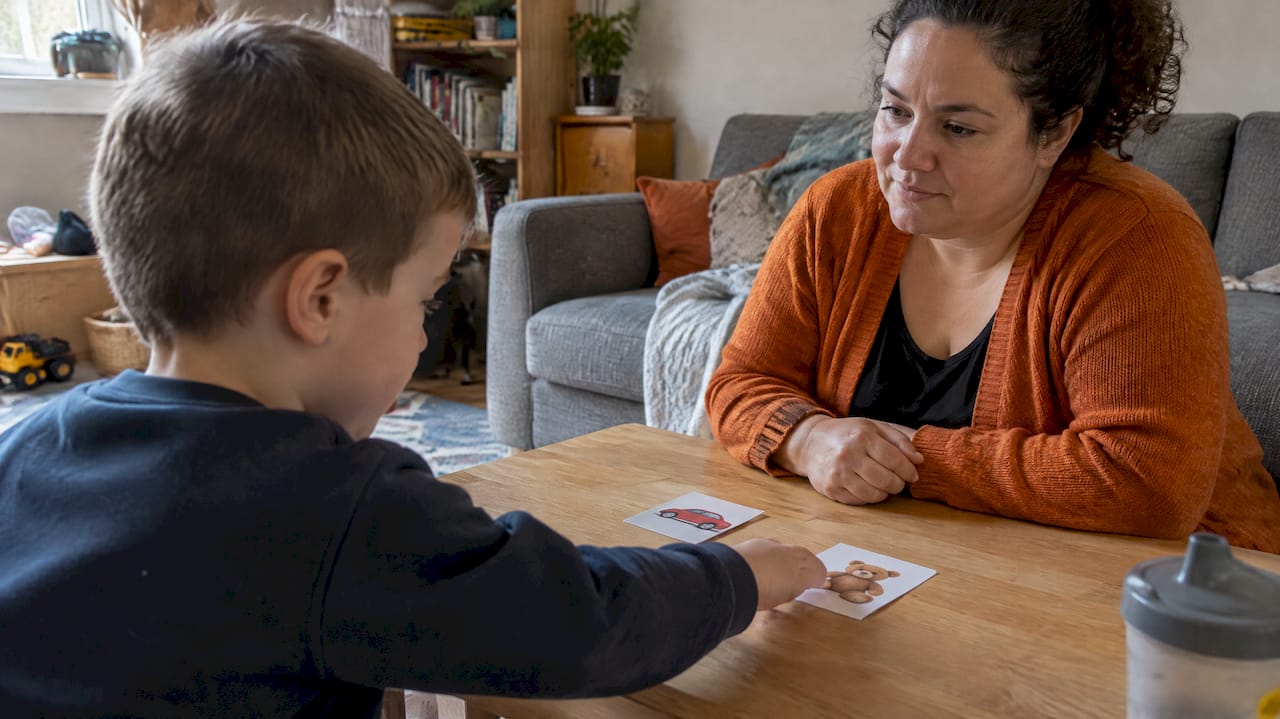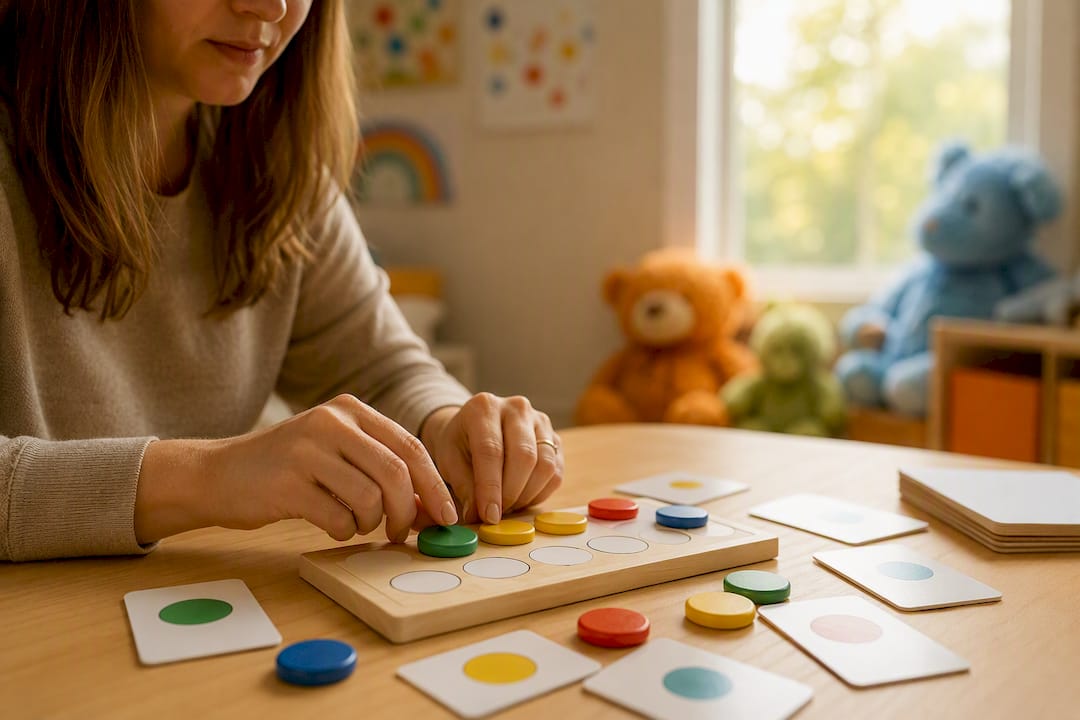
A token board is a visual reinforcement system where a child earns a token, like a sticker or star, for a specific behavior and trades a set number of tokens for a real reward. For many autistic learners, it works reliably when the target behavior is clear, the tokens come fast, and the reward is worth earning. Evidence backs this up, but no board works the same way twice.
Increases task completion and on-task attention in structured settings
Teaches the harder skill of waiting for a delayed reward
Needs individual tuning: tokens, pace, and prizes all matter more than the board itself
Key Takeaways
Token boards work when target behaviors are specific, tokens arrive immediately, and rewards are genuinely motivating to the individual child.
Point | Details |
|---|---|
Start short | Begin with 3 to 5 tokens; a 10-token board often overwhelms new learners. |
Deliver instantly | Hand over the token within seconds of the behavior and name it out loud. |
Never remove tokens | Taking back earned tokens as punishment erodes trust in the system. |
Fade gradually | Increase behavior per token and tokens per reward slowly, backing off if performance drops. |
Use guided tools | Autism Victory App offers printable boards and preference assessments to individualize setup. |
This article is general information, not a substitute for advice from a qualified doctor. Consult a qualified healthcare professional about your own circumstances before acting on anything here.
Table of Contents
Why a Token Board Works for Autistic Learners
A token by itself means nothing to a child. It becomes valuable only after repeated pairing with something the child already wants, like a snack, a video, or five minutes of trampoline time. Behavior analysts call this a conditioned reinforcer, and it’s the entire engine behind why a token board works. Once the token itself starts to feel rewarding, it bridges the gap between “do this now” and “get that later.”
Every board runs on four parts:
Target behavior – the specific, observable action you’re reinforcing
Tokens – the physical markers (stickers, stars, poker chips)
Schedule – how many tokens earn one exchange
Exchange – the moment tokens convert to the real reward
Picture a 6-year-old who struggles to stay seated during homework. Each two minutes of seated work earns a star. Five stars trade for three minutes of tablet time. The board makes an abstract goal (“focus longer”) into something the child can see and count.
Pro Tip: Keep the first few tokens ridiculously easy to earn. A child who fills the board in under two minutes on day one will trust the system a lot faster than one who works ten minutes for the first sticker.

When Should You Use a Token Board?
Token boards fit best in structured moments where you can watch and reward behavior right away: homework time, therapy sessions, classroom transitions, or getting through a store trip. They’re particularly strong for building attention span, finishing multi-step tasks, and teaching a replacement skill for something disruptive.
Home routines: getting dressed, brushing teeth, homework blocks
School and therapy: circle time, work tasks, transitions between activities
Community outings: waiting in line, staying near a caregiver
They fit less well for behaviors driven by sensory overload, pain, or fatigue, where the issue isn’t motivation. Token boards work best when they’re part of a broader plan, ideally one grounded in a functional behavior assessment, since research on token economies shows they perform best when tied to a documented plan rather than used as a standalone fix.
How to Set Up a Token Board Step by Step
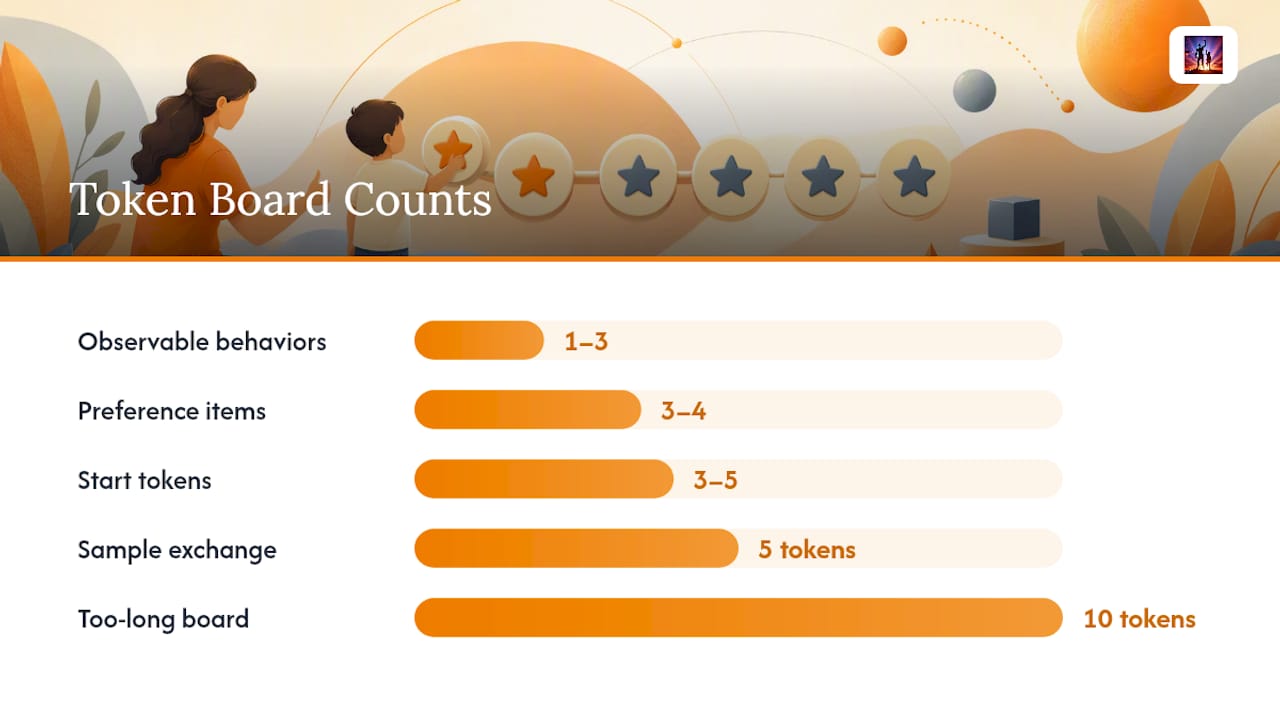
Start narrow. Pick one to three observable behaviors, things you can literally see happening, like “sits in chair” or “hands toy to sibling,” not vague goals like “behaves well.” Vague targets are the number one reason token systems stall out.
Run a quick preference check. Lay out three or four items or activities and watch what the child reaches for first. That’s your backup reinforcer, at least for now.
Pick a short board. Begin with 3 to 5 tokens. A 10-token board is often too long for a new learner and one of the most common reasons families give up early.
Deliver tokens immediately, with a label. The instant the behavior happens, hand over the token and name what earned it. A practical script: “Star for waiting your turn!” not just a silent sticker.
Exchange the moment the board fills. Don’t make the child wait once all the spots are covered. Immediate exchange keeps the token meaningful.
Track outcomes simply. A basic tally, tokens earned per session, tasks completed, tells you if the system is working within a few days.
Here’s a sample exchange for a first attempt at the dinner table: “First bite, then a star.” Child takes a bite, you hand the token and say, “Star for taking a bite!” Repeat for four more bites, then immediately trade the full board for two minutes of a favorite show.
Pro Tip: If a child loses interest halfway through the board, don’t add more tokens to “make it fair.” Shorten the board instead. A 3-token win rebuilds momentum faster than a stalled 5-token attempt.
Board Variations You Can Try Today
Not every child needs the same board. A few tested layouts:
Starter board: 3 tokens, snack-based reward, ideal for first-time users or very young children
Play board: 5 tokens leading to a preferred toy or activity, good once the child understands the exchange concept
Chained board: 10 tokens for multi-step routines like a full morning get-ready sequence, appropriate once shorter boards are mastered
Themed tokens: dinosaurs, trains, or favorite characters tied to a child’s special interest tend to boost engagement more than plain neutral stickers for some children
Classroom mystery motivator: instead of a fixed prize, the reward is hidden in an envelope, which some studies suggest sustains attention better than one predictable prize over time
Does the Research Actually Support Token Boards?
The evidence is genuinely solid, with a caveat. Studies on children with autism show token systems increase task completion and attending behavior when the schedule of reinforcement thins as the child masters the skill. Classroom and single-case research also links token economies to fewer problem behaviors when they’re combined with a proper reinforcer assessment and variable schedules, like a mystery motivator instead of a fixed reward every time.
Effectiveness varies by child, so results from one study don’t guarantee the same outcome for your kid
Study designs differ widely, some are strong single-case experiments, others are smaller classroom trials
Pairing tokens with a backup reinforcer the child actually wants matters more than the board’s design
If you run a token board for two to three weeks with simple data tracking and see no movement, that’s a signal to loop in a board-certified behavior analyst rather than keep pushing the same setup.
Common Token Board Mistakes and Quick Fixes
Most token board failures trace back to timing or trust, not the concept itself.
Delayed delivery: If tokens don’t arrive within a few seconds of the behavior, shorten the board and re-check whether the backup reward is actually motivating right now
Removing tokens as punishment: Taking a token away after it’s earned wrecks the predictability the whole system depends on; once trust erodes, rebuilding it takes far longer than setting it up did
Ignoring plateaus: If a child stops responding after weeks of steady use, it’s time to enrich the schedule or bring in a behavior specialist rather than assume the child is “just not trying”
Pro Tip: If you’re tempted to pull a token back mid-session, pause instead. Redirect verbally and let the board stand. The token stays earned; consequences for the next behavior start fresh.
How to Fade the Token Board Over Time
Fading happens along two tracks at once, and rushing either one usually backfires.
Increase behavior per token. Instead of a star for every bite, move to a star every three bites, then five.
Increase tokens per reward. Stretch from 3 tokens per exchange to 5, then 8, as the child shows consistent success.
Shift toward natural reinforcement. Replace some token exchanges with verbal praise or the natural payoff of the task itself, like the satisfaction of a finished puzzle.
Watch the data before advancing. If performance drops when you thin the schedule, back off one step and hold steady until behavior stabilizes again.
Where to Find Templates and Complementary Tools
You don’t need to design a board from scratch. Portable Velcro boards, wallet-sized laminated cards, and printable PDF templates all work, start with a portable version if your child needs the system across home, school, and outings. Pair the board with a visual schedule for transitions, or video modeling to teach the target behavior before you start reinforcing it.
Portable Velcro boards for home-to-school consistency
Wallet-sized cards for community outings
The Vanderbilt Kennedy Center tipsheet for a caregiver-tested implementation checklist
A Note From Autism Victory App on What Actually Moves the Needle
Most families don’t fail at token boards because they picked the wrong stickers. They fail because they try to fix five behaviors at once, or they give up in week one before the token has time to become meaningful. Autism Victory App builds its guidance around exactly this pattern: printable boards, guided preference assessments, and a caregiver community sharing what actually worked for their kids. Start with one behavior. Track it for two weeks. That’s the whole trick.
— Ronnie Talent
Set Up Your First Token Board With Autism Victory App
Autism Victory App gives you the pieces most families cobble together from scattered blog posts: printable token boards, a guided preference assessment to find real backup reinforcers, and a caregiver community where you can ask “is this normal?” and get an answer from someone who’s been there.
Instead of guessing at token counts or downloading five mismatched templates, you get printables, step-by-step guided assessments, and peer troubleshooting inside one app built for autism caregivers. If a token board doesn’t fit your child’s needs, the platform also covers alternatives to ABA-based strategies worth exploring. Start the 7-day free trial today and set up your first board this week.
Sources
Recommended