Toilet Training Regression in Autism: A 2026 Parent Guide
Toilet training regression in autism means a child who was previously using the toilet successfully starts having accidents again, refuses the toilet, or reverts to earlier habits. This is one of the most common and frustrating setbacks parents face, but it is almost always temporary and almost always has a specific, identifiable cause. Research on autistic children shows that while the average age of daytime toileting is around 3.3 years, some still have accidents at age 12, which tells you this is a long road for many families. Regression is not a failure. It is a signal.
Key contributors to potty training regression in autistic children include:
Sensory sensitivities to the sound of flushing, cold seats, or bathroom lighting
Communication challenges that make it hard to express discomfort or urgency
Routine disruptions such as a new school year, travel, or a change in caregivers
Medical issues, especially constipation, which is the single most overlooked trigger
Anxiety tied to past painful experiences or fear of the toilet itself
Inconsistent expectations across home, school, and therapy settings
Understanding what is driving the regression is the first step toward fixing it. The sections below walk through causes, signs, strategies, and prevention in practical terms your whole caregiving team can use.
What causes toilet training regression in autistic children?
Regression in potty training rarely comes out of nowhere. Most of the time, something changed, and your child’s nervous system responded.
Untreated constipation is the most common cause of sudden toileting regression, and it is frequently missed because parents assume the accidents are behavioral. Constipation can be triggered by illness, a change in diet, a new medication, or simply not drinking enough water. When passing a bowel movement becomes painful, children begin withholding, which worsens the constipation and creates a cycle that feeds more accidents and more anxiety.
Beyond the physical, autism-specific factors create a uniquely challenging picture:
Routine changes: A new classroom, substitute teacher, illness, family move, or even daylight saving time can destabilize a child who depends on predictability.
Sensory overload: Bathrooms are sensory-intense environments. Loud flush sounds, cold toilet seats, bright fluorescent lights, and unfamiliar smells can make the toilet feel genuinely threatening.
Difficulty generalizing skills: An autistic child may toilet perfectly at home but not recognize the school bathroom as the same activity. This is not stubbornness; it is how the brain processes context.
Communication barriers: If a child cannot reliably signal urgency, accidents happen before they can act. This is especially true during high-stimulation periods like recess or transitions.
Co-occurring ADHD: Children with both autism and ADHD may struggle to attend to body cues, may not fully empty their bladder, and often see accidents spike in the late afternoon when stimulant medication wears off.
Emotional stress and anxiety: Family stress, a new sibling, or even a change in a parent’s work schedule can temporarily suppress a child’s ability to access learned skills.
Mixed messages from caregivers: Reintroducing pull-ups at school after home training has been established is one of the most common and preventable causes of regression.
Pro Tip: Before assuming a behavioral cause, schedule a pediatric visit to rule out constipation or a urinary tract infection. A medical issue masked as a behavioral problem will not respond to behavioral strategies, no matter how consistent you are.
How to recognize the signs of toileting regression
Catching regression early gives you a much better chance of resolving it quickly. The signs are usually clear once you know what to look for.
The most obvious indicator is a sudden increase in accidents after a period of reliable toileting. If your child was dry for weeks or months and then starts wetting daily, something changed. That shift deserves attention, not punishment.
Watch for these specific behaviors:
Refusing to go to the bathroom or actively running away when prompted
Asking for a diaper or pull-up when they had moved past that stage
Showing distress near the bathroom, including crying, freezing, or meltdown-level resistance
Reduced communication about toileting needs, such as no longer signaling urgency or ignoring familiar cues
Increased accidents at specific times or locations, like only at school or only during transitions
Withholding bowel movements, which often shows up as unusual posturing, crossing legs, or going rigid
Accidents often communicate unmet needs like anxiety or physical discomfort rather than defiance. When you read them that way, your response shifts from correction to investigation.
Evidence-based strategies for managing and recovering from regression
Getting back on track after a toileting setback requires a calm, structured approach. Pressure and frustration make regression worse; consistency and patience move it forward.
A calm, consistent routine with visual supports helps children re-master toileting by lowering anxiety and improving predictability. Start by rebuilding the routine rather than trying to push past the regression. Go back to basics: scheduled toilet sits, no pressure to produce, and a calm, neutral reaction to accidents.
Practical strategies that work:
Address medical issues first. If constipation is present, work with your pediatrician on a stool-softening protocol before doing anything else. A child in pain will not toilet successfully regardless of your strategy.
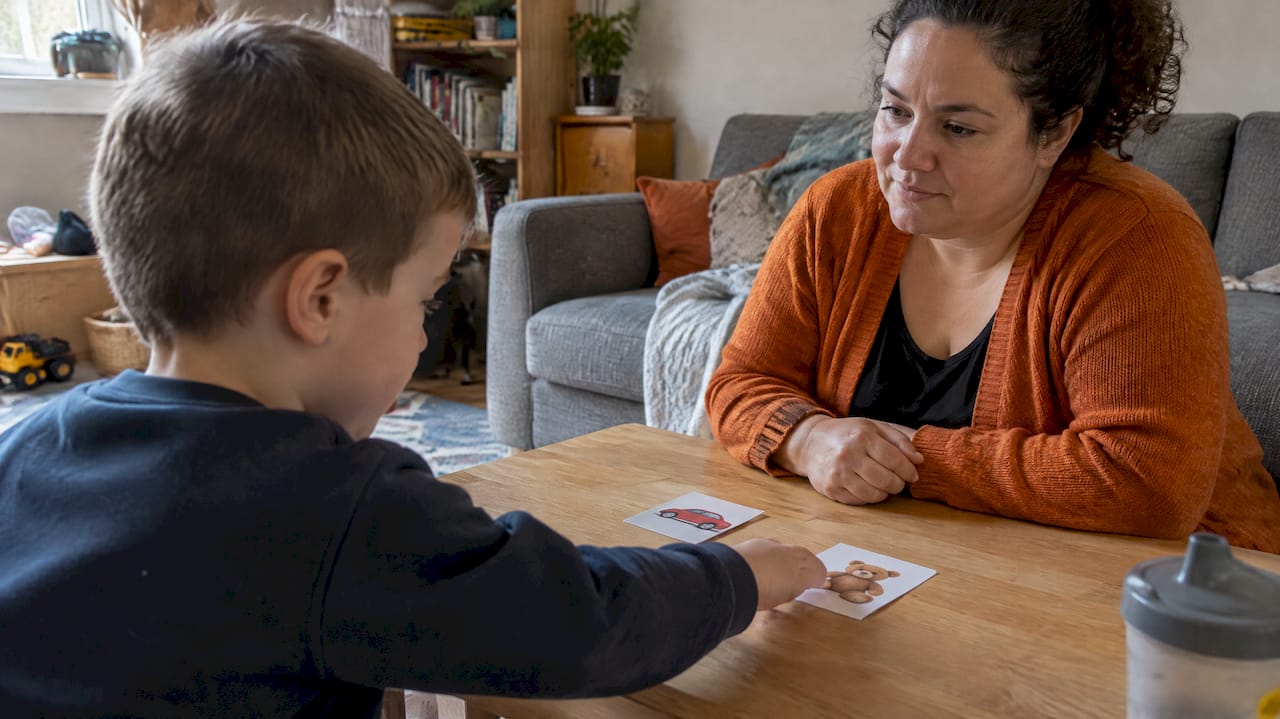
Use visual supports. Picture schedules showing each step of the toileting process (walk to bathroom, pull down pants, sit, wipe, flush, wash hands) reduce cognitive load and anxiety. Social stories that normalize accidents and explain the steps can also help.
Apply ABA-informed techniques. Structured toilet sits at predictable intervals, task analysis, and positive reinforcement for each step (not just the end result) are all evidence-based approaches that work well for autistic children.
Reinforce small wins. Praise sitting on the toilet even if nothing happens. Use a preferred reward immediately after the behavior, not minutes later.
Never punish accidents. Punitive responses worsen regression by adding shame and anxiety to an already dysregulated child.
Support interoceptive awareness. Some autistic children genuinely do not feel the physical signals of a full bladder. Sensory-based activities that build body awareness, like yoga, deep pressure, or proprioceptive play, can help over time.
Coordinate across settings. If your child toilets at home but not at school, the environments need to be aligned. Share your home routine, visual supports, and reward system with the school team.
Pro Tip: If your child’s school is using pull-ups during the day while you are training at home without them, request an IEP team meeting immediately. Inconsistent diaper policies between home and school are one of the most preventable causes of prolonged regression. A toileting goal in the IEP can align expectations across both settings.
Regression often resolves within 1–4 weeks once the underlying trigger is addressed. If it persists beyond that window, a more thorough evaluation by a behavioral analyst, occupational therapist, or pediatric gastroenterologist is warranted.
How to prevent future toileting regression
Prevention is mostly about consistency and early action. You cannot eliminate every trigger, but you can build a foundation that makes your child more resilient when disruptions happen.
Prepare for transitions in advance. Before a new school year, a move, or a family change, walk your child through what will be different. Use social stories, photos of the new bathroom, and practice visits when possible.
Monitor diet and hydration consistently. Adequate fiber and fluid intake prevent the constipation cycle from restarting. A pediatrician or dietitian familiar with autism can help you build a sustainable plan.
Use AAC and communication tools proactively. If your child uses augmentative and alternative communication (AAC), make sure a toileting symbol or phrase is accessible and practiced regularly, not just during training phases.
Create a sensory-friendly bathroom. Swap harsh lighting for softer bulbs, add a toilet seat insert for stability, use a step stool for foot support, and consider noise-canceling options for children sensitive to flush sounds.
Maintain consistent expectations across all caregivers. Grandparents, babysitters, and after-school staff need the same information your school team has. A one-page visual summary of your child’s toileting routine travels well.
Watch for early warning signs. An uptick in accidents, increased bathroom avoidance, or new constipation symptoms are all signals to act before a full regression sets in.
Avoid punitive responses to accidents. Even a frustrated tone can increase a child’s anxiety around toileting and make the next accident more likely.
Starting toileting preparation early improves outcomes, but for children older than four who have not yet achieved reliable toileting, a formal structured plan becomes critical rather than optional.
The emotional toll of regression on your child and your family
Toileting regression does not just affect your child. It affects your whole household, and acknowledging that honestly is part of managing it well.
For the child, regression often comes with shame, confusion, and heightened anxiety. A child who was proud of using the toilet independently may become withdrawn or distressed when accidents return. Stress can temporarily inhibit skill access in autistic children, meaning the regression itself creates more stress, which deepens the regression. Breaking that cycle requires the adults around the child to stay regulated first.
For parents and caregivers, regression brings exhaustion, self-doubt, and sometimes real grief over lost progress. Those feelings are valid. What matters is not letting them drive your response to accidents. A child who sees a calm, matter-of-fact reaction to an accident learns that accidents are manageable. A child who sees frustration or disappointment learns to fear the next one.
Practical coping strategies for families:
Debrief with your co-caregiver or support network after hard days rather than in front of your child.
Track progress in writing so you can see patterns and small improvements that are easy to miss in the daily grind.
Connect with other autism families who have navigated this. Shared experience reduces isolation and often surfaces practical solutions you have not tried.
Use respite care when available. Caregiver burnout directly affects the consistency your child needs.
The impact of delayed toileting extends beyond hygiene. It affects peer relationships, sleep, self-esteem, and family participation in community activities. Taking regression seriously, without catastrophizing it, is the right frame.
How autism-specific factors shape toileting and regression
Autism does not cause toileting regression directly, but several core features of autism increase the risk and complicate recovery.
Sensory processing differences are among the most underestimated factors. The bathroom is one of the most sensory-dense rooms in any home or school. Echoing acoustics, cold surfaces, the unpredictable sound of a flush, and the physical sensation of sitting on a toilet seat can all register as genuinely aversive. For a child with tactile hypersensitivity, the toilet seat may feel painful. For a child with auditory sensitivity, the flush may be terrifying. These are not overreactions; they are real sensory experiences that require real accommodations.
Interoception, the ability to sense internal body states like a full bladder or the urge to have a bowel movement, is frequently impaired in autistic children. This means a child may not feel the signal until it is too late, or may not connect the internal sensation to the action of going to the bathroom. This is why timed toilet sits work better than waiting for the child to initiate, especially during regression.
Difficulty generalizing skills means a child who toilets reliably at home may not recognize that the same behavior is expected in a different bathroom. The toilet at school looks different, smells different, and sounds different. From a neurological standpoint, it may feel like a completely new skill. Practicing in multiple settings, with consistent visual supports and routines, addresses this directly.
Rigidity and resistance to change mean that once a regression pattern is established, it can become its own routine. A child who has been wearing pull-ups at school for three weeks may resist returning to underwear even after the original trigger is resolved. This is why catching and addressing regression early matters so much.
For families navigating autism meltdowns alongside toileting challenges, understanding the difference between a meltdown and a behavioral refusal helps you respond to bathroom resistance more effectively.
What recent research tells us about toileting regression in autism
The research picture on autism and toileting has sharpened considerably in recent years, and the findings are both sobering and practical.
A study of 500 autistic children found that a minority were daytime trained by 36 months, with 5% still experiencing accidents at age 12. That range is wider than most parents expect, and it underscores why comparing your child to neurotypical milestones creates unnecessary pressure.
Key clinical insight: Regression in autistic children most often reflects disrupted regulation, not skill loss. Once the underlying trigger, whether constipation, a routine change, or sensory overload, is identified and addressed, the skill typically returns. The child did not forget how to use the toilet. They lost access to it under stress.
Parents must avoid attributing every toileting difficulty to autism alone, because doing so can mask treatable medical conditions. Constipation, urinary tract infections, and other physical issues require medical evaluation, not behavioral intervention. The American Academy of Pediatrics guidance from 2025 specifically flags constipation as the most common and most overlooked driver of sudden regression in autistic children.
Research also supports the value of multisensory learning tools and structured visual supports in building and maintaining toileting skills. Children who have consistent visual cues across settings show better generalization and faster recovery from regression. The evidence for early preparation is equally clear: starting before age two improves outcomes, and a formal structured plan becomes critical if reliable toileting has not been established by age four.
For families who want to go deeper on special education audio resources, these tools can support the kind of routine-based learning that makes toileting skills more durable across environments.
When to seek professional help
Most toileting regression resolves within a few weeks once the trigger is addressed. When it does not, professional support is the right next step, not a last resort.
Reach out to a professional when:
Regression persists beyond 4 weeks despite consistent intervention
You suspect constipation but dietary changes are not helping
Your child shows significant anxiety or fear around the bathroom
Accidents are affecting school placement or peer relationships
You are unsure whether the issue is behavioral, sensory, or medical
The right professional depends on the presentation. A pediatrician or pediatric gastroenterologist handles constipation and medical evaluation. A board-certified behavior analyst (BCBA) develops structured toileting plans using ABA-informed methods. An occupational therapist (OT) addresses sensory processing barriers and interoceptive awareness. A speech-language pathologist (SLP) supports communication of toileting needs, including AAC programming.
These professionals can also help you build a toileting goal into your child’s IEP, which creates accountability and consistency across the school day.
Autism Victory App can support you through this
Navigating toileting regression while managing every other aspect of autism caregiving is genuinely hard. You should not have to piece together guidance from a dozen different sources.
Autism Victory App brings together personalized AI guidance, caregiver-focused books and audiobooks, educational videos, and a supportive community of parents who have been exactly where you are. The app includes state-specific resources to help you find the right professionals, from BCBAs to OTs, and tools to help you stay consistent when the days are long.
Start your 7-day free trial and get the support your family deserves.
Key Takeaways
Toilet training regression in autistic children is almost always temporary and almost always has a specific, addressable cause, most often constipation, a routine disruption, or sensory overload.
Point | Details |
|---|---|
Medical evaluation comes first | Constipation is the most common cause of sudden regression; rule it out before applying behavioral strategies. |
Regression resolves with the trigger | Once the underlying cause is addressed, regression typically resolves within 1–4 weeks. |
Consistency across settings matters | Mixed messages between home and school, especially around pull-up use, are a leading cause of preventable regression. |
— | In a study of 500 autistic children, 35% achieved daytime training by 36 months, and 5% still had accidents at age 12. |
Punishment worsens outcomes | Punitive responses to accidents increase anxiety and deepen regression; calm, neutral reactions support recovery. |
Recommended