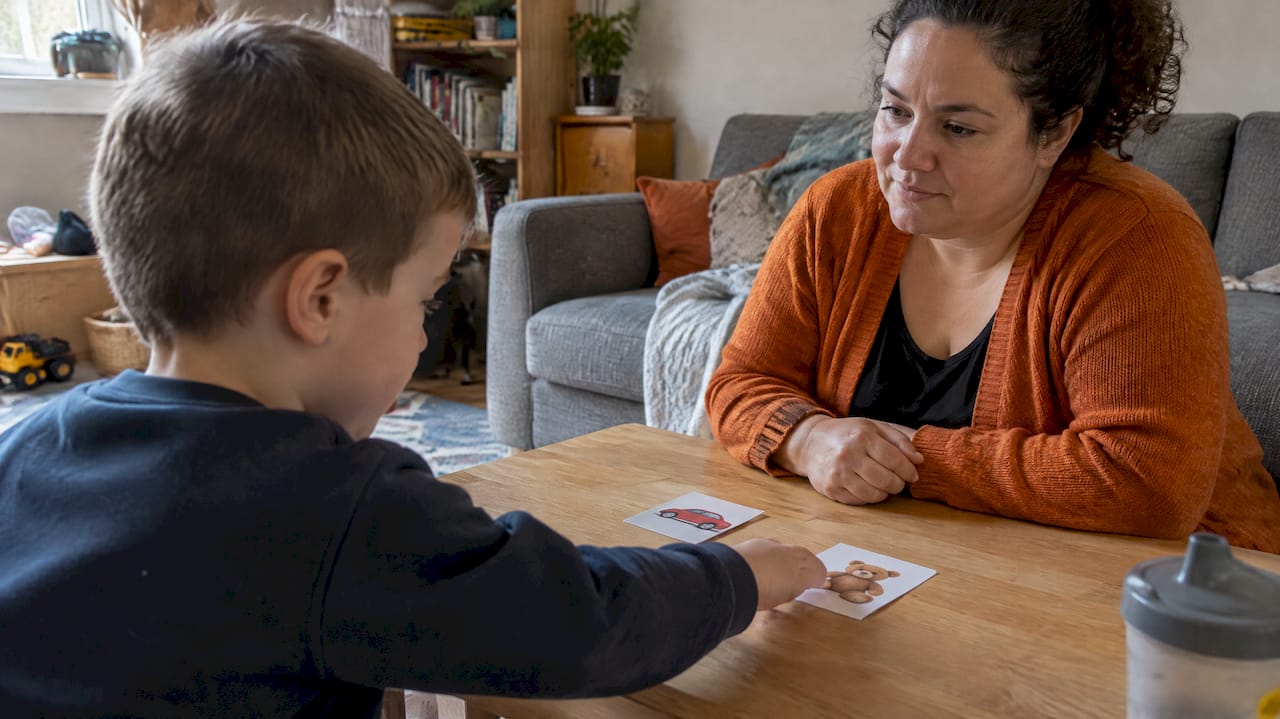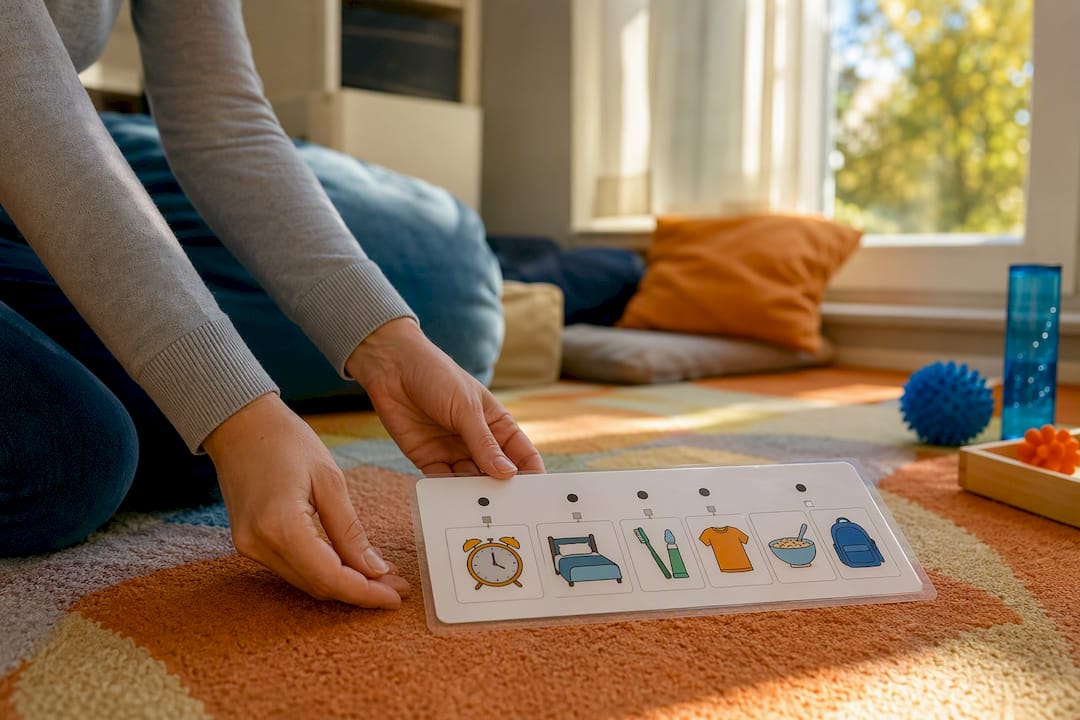
A first-then board is a two-step visual tool that shows a child exactly what to do now ("first") and what comes right after ("then"), usually a preferred activity or reward. It works by making expectations concrete instead of verbal, and it typically cuts down on meltdowns during transitions and non-preferred tasks. You can build one from:
Photographs or real objects
Printed icons or written words
A laminated card, binder, or app on a tablet
The format matters less than the consistency. A first-then board only works if the "then" always happens.
Key Takeaways
A first-then board works because it replaces verbal negotiation with a consistent visual promise, and it only holds up if the "then" reward is delivered immediately every time.
Point | Details |
|---|---|
Start proactive, not reactive | Present the board before a transition begins, never mid-meltdown, to teach predictability instead of resistance. |
Follow through immediately | Deliver the "then" reward the instant the "first" task is done, even if it required physical assistance. |
Match the format to the child | Use photos or objects for non-readers, words for readers, and apps only if screens aren't the sole reward. |
Fade support gradually | Shift from hand-over-hand prompts to verbal cues to independent use, and let the child flip or remove cards. |
Use Autism Victory App as a shortcut | Autism Victory App offers printable visuals, modeling videos, and a caregiver community for building boards faster. |
Table of Contents
What Does a First-Then Board Look Like at Home, School, and Therapy?
Why First-Then Boards Deserve Their Place in Every Caregiver's Toolkit
A Digital Option for Building and Managing First-Then Boards
When Should You Use a First-Then Board?
Use a first-then board before a problem starts, not after your child is already melting down. Reactive use, pulling out the board mid-tantrum, teaches a child that resistance gets attention. Proactive use, showing the board before the transition even begins, teaches the child what to expect and removes the guesswork that fuels anxiety.
Here are the situations where a first-then board earns its keep:
Transitions between activities — leaving the park, ending screen time, switching from recess to class.
Non-preferred tasks — brushing teeth, homework, a haircut (a classic trigger point covered in our autism haircut tips).
Group or classroom settings — helping one child follow a routine without singling them out verbally in front of peers.
Travel and appointments — waiting rooms, car rides, doctor visits where the sequence of events is unfamiliar.
At home, a parent might use the board every morning before school: "first shoes, then bus." At school, a teacher might use it before a fire drill or an unscheduled assembly, anywhere the routine breaks from what the child expects.
How Do You Introduce a First-Then Board?
The first few sessions decide whether your child trusts the system. Get this part right and everything else gets easier.
Pick an easy "first." Choose a task your child can complete quickly with little resistance, like putting a toy in a bin or taking three bites of a snack.
Pick a genuinely motivating "then." This isn't the time to test broccoli against dessert. Use something you already know your child loves: a specific toy, two minutes of a favorite song, or a sensory break like jumping on a trampoline. Movement-based rewards work well for a lot of children and reduce your dependence on screens or snacks as the only options.
Introduce it with a short, consistent script. Point to the "first" image and say, "First [task], then [reward]." Keep your language identical every time so the pattern becomes predictable. The TEA Instructional Support Toolkit recommends labeling the visuals directly as you present the card, rather than just handing it over silently.
Prompt only as much as needed, then back off. Some kids need a hand-over-hand prompt the first time; others just need a verbal reminder. Start with the amount of support your child actually needs, and pull back the moment they show they can do a step alone.
Deliver the "then" immediately. The instant the first task is done, even if it took physical assistance to get there, hand over the reward. Delay breaks trust in the system faster than almost anything else you can do wrong.
Let the child physically remove or flip the "first" card. This small action builds a sense of completion and ownership, and it is often the first sign a child understands the sequence rather than just complying with an adult.
Pro Tip: Start with a task your child already does with minimal complaint. The goal of session one isn't to teach a new skill. It's to teach the board itself, so your child learns that "first" always leads to "then."
What Formats and Materials Work Best?
The right format depends on how your child processes information, not on what looks the most polished on Pinterest.
Photos or real objects work best for non-readers or younger children who need something concrete rather than abstract. A photo of an actual toothbrush communicates faster than the word "brush teeth."
Written words suit readers and older kids who process text as fast as, or faster than, images.
Mixed formats (a photo plus a word label) bridge the gap for kids who are learning to read.
Portable options like a small binder, a dry-erase card, or sticky notes on a clipboard let you carry the system into the car, a restaurant, or a waiting room.
Digital apps on a tablet or phone can work well and often travel more easily than paper. The VKC-TRIAD tip sheet notes that first-then boards adapt to photographs, objects, text, or digital interfaces without losing effectiveness. Just be careful that the screen itself doesn't become the reinforcer instead of the task, a caution the Autism Internet Modules also raises.
Whatever format you choose, visuals should be unambiguous. A blurry or cluttered photo defeats the purpose of a visual support in the first place.
Why Do First-Then Boards Fail, and How Do You Fix It?
Most first-then boards don't fail because the concept is wrong. They fail because of a handful of predictable execution mistakes.
The "then" gets delayed. Even a 90 second wait for the reward can undo weeks of trust-building. Fix: have the "then" ready and in hand before you present the board.
The "first" task is too hard. Asking for ten minutes of handwriting practice in session two sets your child up to fail. Fix: shrink the task until success is close to guaranteed, then build up slowly.
The board gets overused. Pulling it out for every single request turns a helpful tool into a constant negotiation. Fix: reserve it for transitions and genuinely non-preferred tasks, not every moment of the day.
Behavior escalates during the "first" task. Fix: stay calm, use a physical prompt to help your child complete the task if needed, and still deliver the "then." Rewarding refusal by skipping straight to the reward teaches the wrong lesson entirely.
If behaviors keep escalating despite consistent, correct use, that's a signal to loop in a behavior analyst or your child's care team rather than keep adjusting the board on your own. Our guide on severe autism support covers how to find that next level of help.
How Do You Fade Prompts and Expand the System?
A first-then board is a starting point, not a permanent fixture. The goal is always to hand more responsibility to your child as they succeed.
Reduce your prompts gradually. If your child needed a hand-over-hand prompt in week one, aim for a verbal reminder by week three, then just a point, then nothing at all.
Give your child small jobs within the system, like flipping the card themselves or moving it to a "done" pocket. This single change often marks the moment a child shifts from complying with you to understanding the routine.
Expand to First → Next → Then only after consistent success, not before. Adding a third step too early usually causes the whole system to break down again.
Generalize across settings and people. Use the same board language with a grandparent, a substitute teacher, or a babysitter so the skill transfers instead of staying tied to one adult.
A planned fading approach, like reducing prompts by one level every few successful trials, works better than guessing, and tracking short data notes across sessions tells you when your child is ready to move forward.
How Do You Customize a Board for Your Child?
No two children respond to the same board the same way, and that's the whole point of using a visual support instead of a one-size-fits-all script.
Some kids need large, high-contrast images because smaller details get lost. Others do better with minimalist icons because busy photos are distracting. A child with strong preferences for specific characters or colors might stay more engaged with a board built around those interests, as long as the images stay clear enough to convey the actual task.
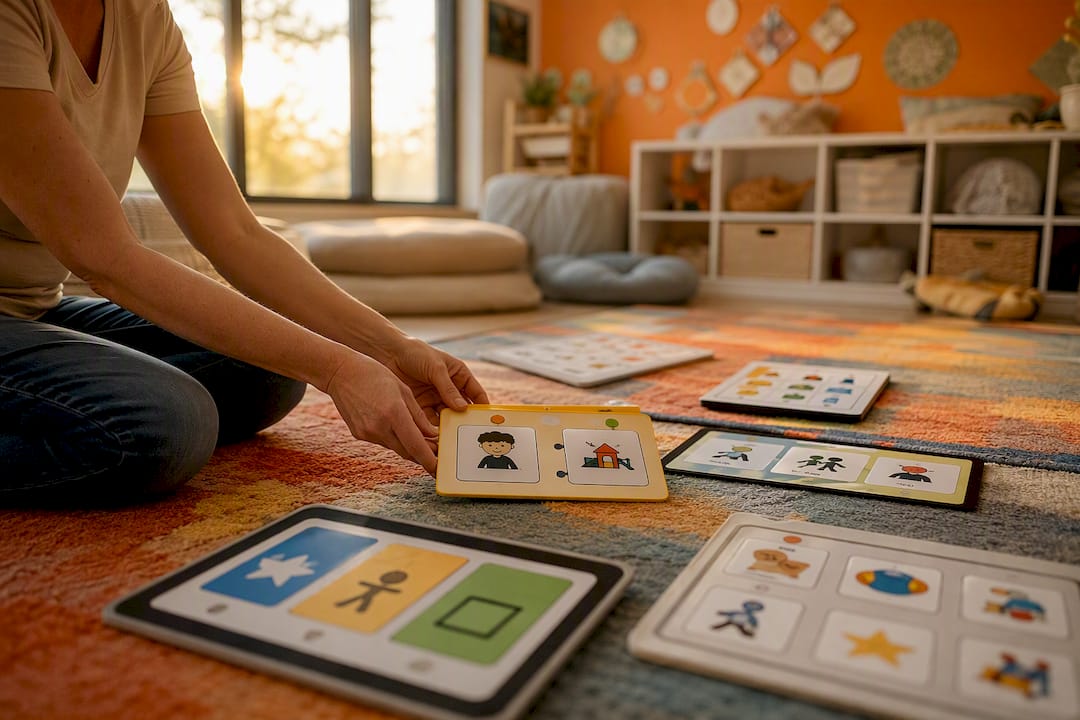
Attention span matters too. A child who struggles to sit still may need the board mounted somewhere they pass by often, like a hallway or the back of a bedroom door, rather than a card you pull out only at the moment of a task. A child who gets anxious about unpredictability might benefit from seeing the board earlier in the day, giving them time to mentally prepare rather than being surprised by a transition.
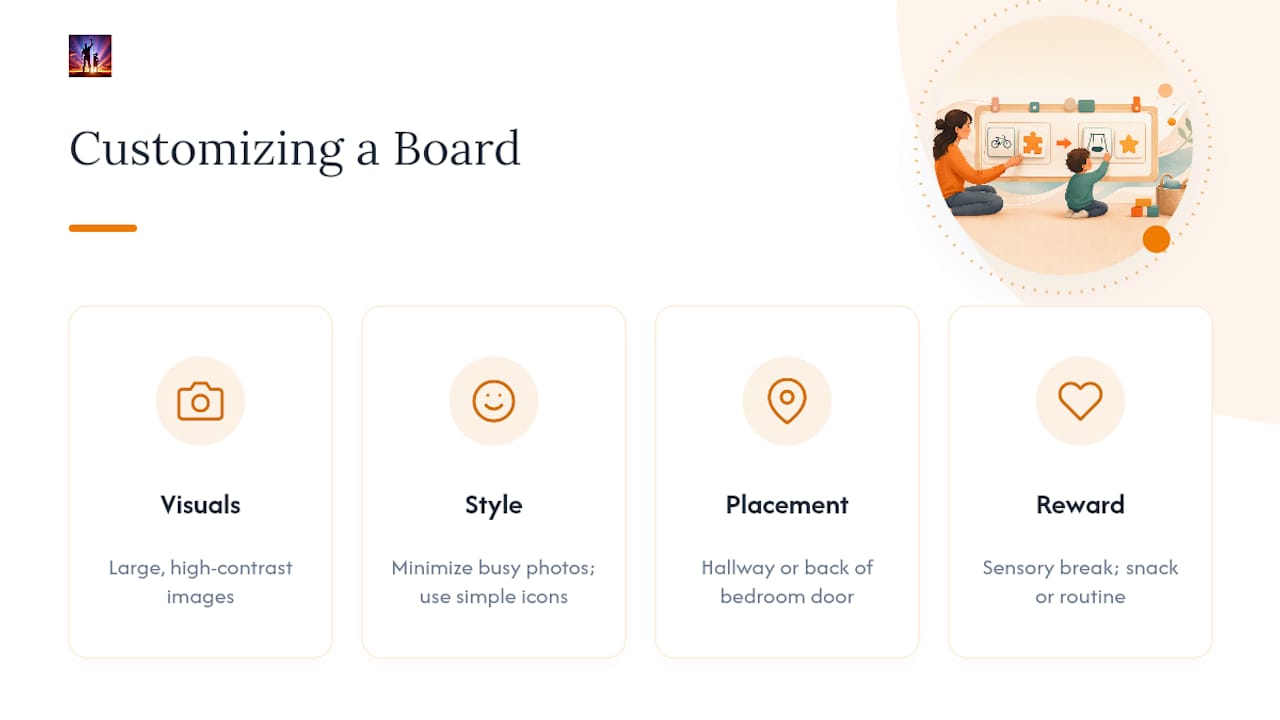
Sensory needs play a role in reward selection, too. If your child regulates through movement, a sensory break tends to work better as the "then" than a toy or snack, an approach covered in more depth in our sensory diet guide. If your child is highly motivated by routine itself, simply finishing the sequence and moving to the next predictable event might be reward enough.
The customization process is ongoing. What motivates a five-year-old rarely motivates the same child at nine, so revisit your choices every few months rather than assuming the original setup will hold forever.
What Does a First-Then Board Look Like at Home, School, and Therapy?
The bones of a first-then board stay the same everywhere. The application shifts based on the environment and who's using it.
At home, a parent might mount a laminated card on the refrigerator for the morning routine: "first breakfast, then TV," or keep a smaller version in a bag for errands. Home use tends to be the most flexible, since parents can adjust the "then" reward on the fly based on what's motivating that day.
In classrooms, teachers often use a first-then board privately at a student's desk to avoid drawing attention from classmates, especially during a task the child finds difficult, like a worksheet or transition to a new subject. The OCALI resource gallery offers downloadable templates built specifically for this kind of classroom adaptation, with photo, object, and symbol versions.
In therapy settings, a board might support a specific skill being targeted in a session, like sitting for a set number of minutes before a preferred activity, with the therapist gradually increasing the "first" task's length as the child succeeds. Therapy use tends to be the most data-driven of the three, since therapists are often tracking success rates trial by trial.
Across all three environments, the underlying rule doesn't change: the "then" has to happen, every time, or the whole system loses its credibility.
How Should Parents, Teachers, and Therapists Work Together?
A first-then board loses power fast if it means one thing at home and something completely different at school. Consistency across adults is what turns a tool into a trusted routine.
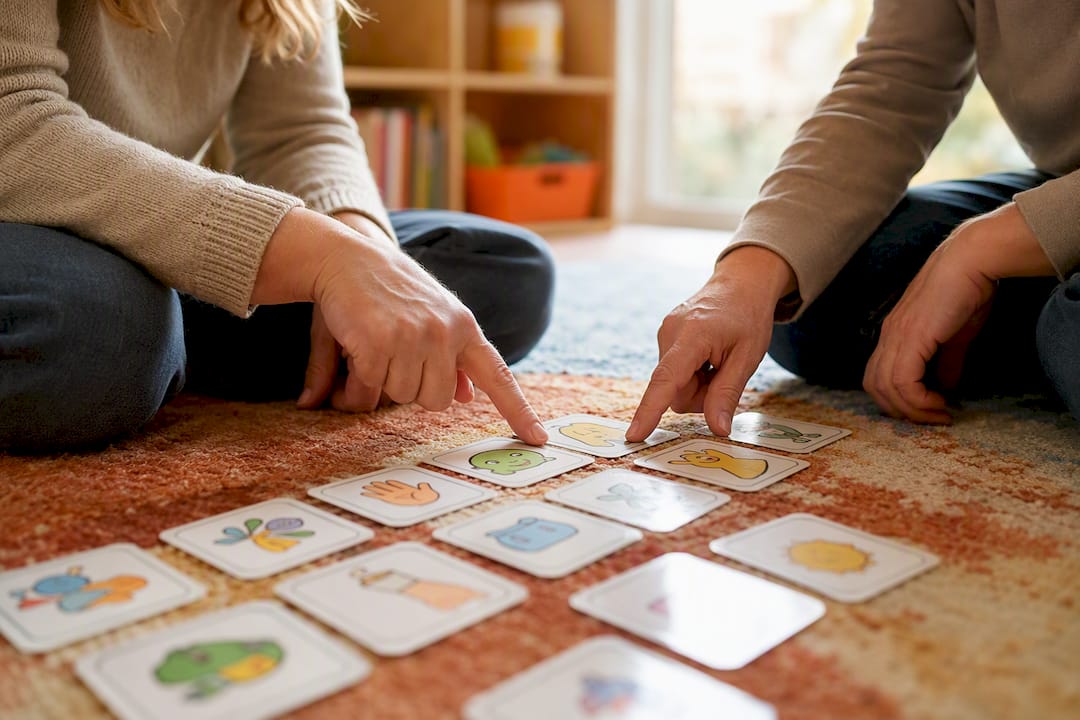
Start by agreeing on shared language. If a teacher says "first, then" and a parent says "when you finish, you get," a child has to relearn the pattern in every setting instead of applying it automatically. Pick one phrasing and use it everywhere.
Share what's working. If a therapist finds that a particular "then" reward gets strong results in session, that information should travel home and to the classroom rather than staying siloed. The same goes in reverse: if a teacher notices a child responds better to object-based visuals than photos, that detail is worth passing to parents and therapists alike.
Keep a simple communication log, even something as basic as a shared notebook or messaging thread, noting which tasks succeeded, which failed, and any changes made to the board. This lets every adult in the child's life build on what's already working instead of starting from scratch.
How Do You Track Progress With a First-Then Board?
Progress with a first-then board shows up in small, specific ways before it shows up in big ones. Track those small signals and you'll know when to fade support or expand the system, rather than guessing.
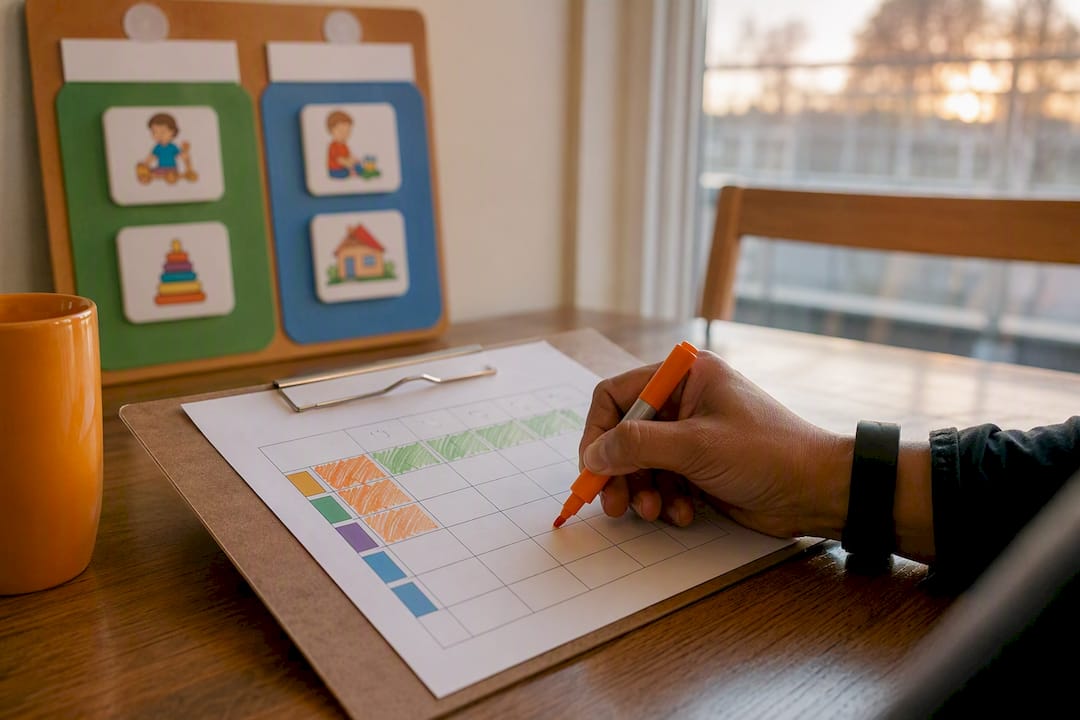
Note how many prompts a task requires each time you use the board. A child who needed three prompts in week one and needs one prompt by week four is making real progress, even if the task itself hasn't changed. Track how long it takes between presenting the board and the child beginning the "first" task. A shrinking gap usually means growing trust in the system.
Watch for the moment your child starts anticipating the "then" without being told, reaching for the reward or moving toward it unprompted. That's often the clearest sign the sequence has become internalized rather than externally enforced.
A short data point after each session, even a single word like "independent," "prompted," or "resisted," builds a record over weeks that tells you far more than memory alone. That record is also exactly what a behavior analyst or teacher will want to see if you bring in outside support later.
Why First-Then Boards Deserve Their Place in Every Caregiver's Toolkit
The evidence behind first-then boards isn't flashy, but it's consistent. Tip sheets from VKC-TRIAD, OCALI, and Texas's TEA program all converge on the same core mechanics: pick a motivating reward, present the visual consistently, and follow through without exception. That convergence across independent resources is a stronger signal than any single study, because it reflects decades of applied classroom and clinical experience rather than one narrow trial. Visual supports broadly are considered an evidence-informed strategy for improving predictability and cutting down on verbal prompting, according to AFFIRM's summary.
What gets underestimated is how much the board's success depends on adult follow-through rather than the visual itself. A cheap sticky note used consistently outperforms a beautifully designed laminated card used inconsistently, every time. If your child shows escalating behavior that doesn't improve with consistent, correct use, that's a cue to bring in a behavior analyst rather than a sign the board itself has failed.
A Digital Option for Building and Managing First-Then Boards
Building a first-then board from scratch works fine with paper and a laminator, but plenty of caregivers want something faster, especially at 7 a.m. before school. Autism Victory App gives you printable visual supports and step-by-step guides you can pull up in minutes, alongside videos that model exactly how to introduce a board to a resistant child.
The app also includes a caregiver community where you can ask how other parents chose their "then" rewards, plus state-specific funding and support resources if you're also navigating services beyond visual tools. None of this replaces a paper card taped to your fridge. It's there for the days you need a template fast, a script to read out loud, or reassurance from other caregivers doing the same work. You can start a free trial and see which resources fit your routine before committing to anything.
Frequently Asked Questions
What age can a child start using a first-then board? There's no strict minimum age. Many caregivers introduce a simple version as early as toddlerhood, as long as the child can understand that one object or picture represents a task and another represents a reward.
Can a first-then board be used for more than two steps? Yes, but only after the two-step version is working consistently. Expanding too soon into a "first, next, then" format usually backfires and confuses a child who hasn't mastered the basic sequence yet.
What if my child doesn't seem motivated by anything on the board? Try rotating rewards more often, and pay attention to sensory preferences like movement or pressure, not just toys or snacks. A reward that felt motivating last month can lose its pull quickly.
Is a paper board better than an app? Neither format is inherently better. Paper is often faster to make and more portable without a device; apps travel well and can hold multiple boards for different routines. Choose based on what your child responds to and what you'll actually keep up with.
How long should I keep using a first-then board? Keep using it as long as it's helping, and fade prompts as your child shows readiness. Some children graduate to independent routines within months; others benefit from the visual structure for years, especially during new or stressful transitions.
This article is general information, not a substitute for advice from a qualified doctor. Consult a qualified healthcare professional about your own circumstances before acting on anything here.
Sources
Recommended