
Autism Mom: Practical Support, Real Stories, and Hope
An “autism mom” is any mother who is autistic herself, or who is raising an autistic child — or both at once, which is more common than most people realize. If you just got a diagnosis (yours or your child’s), or if you’ve been in this for years and you’re running on empty, here are three things to do right now.
Write down your three most urgent questions before your next appointment. One sheet of paper, three questions. Providers move fast; you need to walk in ready.
Find one peer — a single other autism mom in a forum, a local group, or an app community — and introduce yourself. Isolation is the fastest route to burnout.
Check your state’s early intervention or autism services portal (search “[your state] autism services” or use a state-specific resource navigator) to understand what’s available and what has a waitlist.
Mixed emotions are normal here. Relief, grief, love, and exhaustion can all show up in the same afternoon. If you’re in crisis right now, the 988 Suicide and Crisis Lifeline is free, confidential, and available 24/7 by call or text. For a step-by-step starter checklist after a new diagnosis, the first 30 days guide at Autism Victory App walks you through exactly what to prioritize.
Key Takeaways
Being an autism mom is hard in specific, documented ways — and the right combination of peer support, caregiver-focused mental health care, and practical tools makes a measurable difference.
Point | Details |
|---|---|
Caregiver mental health is a clinical issue | Nearly 30% of parents in one study scored above clinical thresholds; caregiver-focused support is not optional. |
Stress operates at three levels | Child behaviors, family finances, and service gaps all contribute — addressing only one level leaves the others unmanaged. |
Resilience is built, not innate | Access to information, peer connection, and rest are the specific conditions that build long-term resilience. |
Advocacy requires preparation | Pre-appointment checklists, written follow-ups, and knowing IEP vs. 504 basics change outcomes in meetings. |
Autism Victory App | Provides AI guidance, state-specific resources, caregiver community, and books in one app with a 7-day free trial. |
Table of Contents
What autism moms want you to know
What living it actually looks like
Everyday challenges autism moms face
Coping strategies that actually work day to day
How to work with doctors, schools, and therapists
Where to find support that actually fits
What research says about caregiver mental health
What I’ve learned from working with autism families
Autism Victory App offers tools built for caregivers like you
Sources
What autism moms want you to know
These are the things that actually help — and the things that quietly make everything harder. Share this list with anyone who wants to support you.
1. “I’m not overreacting.” Sensory meltdowns, rigid routines, and communication differences are neurological realities, not parenting failures. When someone says “all kids do that,” it erases the real gap between typical behavior and what autism moms manage daily.
2. Unsolicited advice lands hard. If someone offers a cure, a diet, or a “have you tried just…” suggestion, a calm response that works: “We’re working closely with our care team. What I actually need right now is [specific help].” Redirect to the concrete.
3. Grief and joy coexist. Mourning a path you expected and celebrating your child’s wins are not contradictions. Both are true at the same time.
4. Masking is exhausting for everyone. Autistic moms who mask their own traits at school meetings, medical appointments, and family gatherings often come home completely depleted. That’s not weakness; it’s a real neurological cost.
5. Respite is not a luxury. It’s a clinical necessity. If you need to say this out loud to a family member: “I need three hours on Saturday with no caregiving responsibilities. Can you cover that?” Specific, time-bounded asks work better than general requests for “help.”
6. Financial and time costs are structural, not personal. Therapy co-pays, waitlists, IEP meetings, and lost work hours add up to thousands of dollars and dozens of hours per year. This is a systemic problem, not a sign that a family is struggling to cope.
7. Unpredictability is the norm. A good week does not mean the hard weeks are over. Planning around that reality — building buffer time, having a crisis plan — is smart, not pessimistic.
8. “No” is a complete sentence. Autism moms often over-explain their limits to avoid judgment. You don’t owe anyone a detailed justification for protecting your energy.
9. Sensory needs belong to the whole family. An autistic child’s sensory environment affects everyone in the house. Noise levels, lighting, and textures are legitimate household considerations, not accommodations to apologize for.
10. We need caregiver-focused support, not just child-focused support. Asking for therapy, coaching, or a support group for yourself is not selfish. Research consistently shows that caregiver mental health directly affects child outcomes.
Copy-ready script for immediate practical support: “I’m managing a lot right now. The most helpful thing you could do this week is [specific task: bring dinner Tuesday, take the kids for two hours Saturday, help me find a respite provider]. I’ll let you know what else comes up.”
What living it actually looks like
Lived experience varies widely across autism moms, but certain themes come up again and again. The stories below are anonymized composites drawn from widely reported community experiences.
Identity and self-understanding
Many autistic women receive their diagnosis in adulthood, often after their child is diagnosed first. The pattern is well-documented: a mother spends years advocating for her child, then recognizes herself in the evaluation criteria. One late-diagnosed autistic mom described the experience as finally having a framework for a lifetime of feeling out of step — and then channeling that clarity into building a resource community for other autistic parents. The diagnosis didn’t change who she was. It changed how she understood herself.
Daily logistics and overwhelm
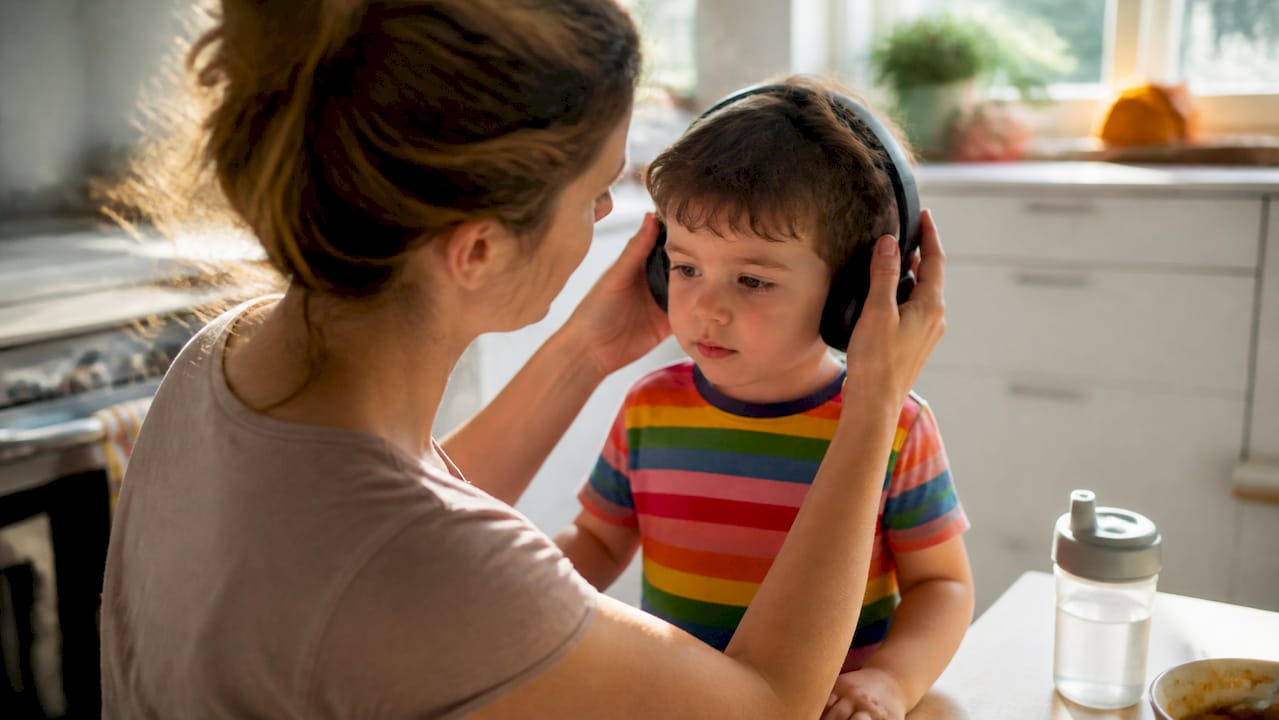
For moms of autistic children, the daily load often includes managing sensory environments, coordinating multiple therapies, communicating with schools, and absorbing emotional dysregulation from a child who has no other safe outlet. One mother described her mornings as “running a small emergency room before 8 AM.” The logistics are real. So is the fatigue.
Disclosure and boundaries
Deciding who to tell — about your child’s diagnosis, or your own — is a recurring tension. Disclosure at school can open doors to services but also invite unwanted scrutiny. Disclosure to extended family can bring support or unsolicited opinions. Most autism moms develop a tiered approach over time: full disclosure with the IEP team, selective disclosure with family, and almost none in casual social settings.
Meaning and growth
Qualitative research using interpretative phenomenological analysis found that parents of autistic children often move through an initial period of existential crisis toward meaning-making and, eventually, post-traumatic growth. That arc is real. It doesn’t erase the hard parts, but it does show up consistently in the research and in community accounts.
Everyday challenges autism moms face
The stress autism moms carry isn’t one thing. An umbrella review synthesizing 41 separate reviews organized parental stressors across three levels, and the framework holds up in everyday experience.
Microlevel stressors (the daily grind):
Managing meltdowns, elopement risk, and sleep disruption
Sensory needs that affect the whole household
Communication barriers and safety concerns
Constant monitoring and hypervigilance
Mesolevel stressors (family and social):
Marital strain from unequal caregiving loads
Social isolation as friendships drift away
Financial pressure from therapy costs, reduced work hours, and out-of-pocket expenses (see the autism therapy costs breakdown for what families actually pay)
Sibling needs going unmet when one child requires intensive support
Macrolevel stressors (systems and services):
Long waitlists for diagnosis, therapy, and school evaluations
Fragmented or poorly coordinated services that increase burden instead of reducing it
The “services cliff” — the sharp drop in available adult services when a child ages out of child-focused programs
Inconsistent insurance coverage and confusing eligibility rules
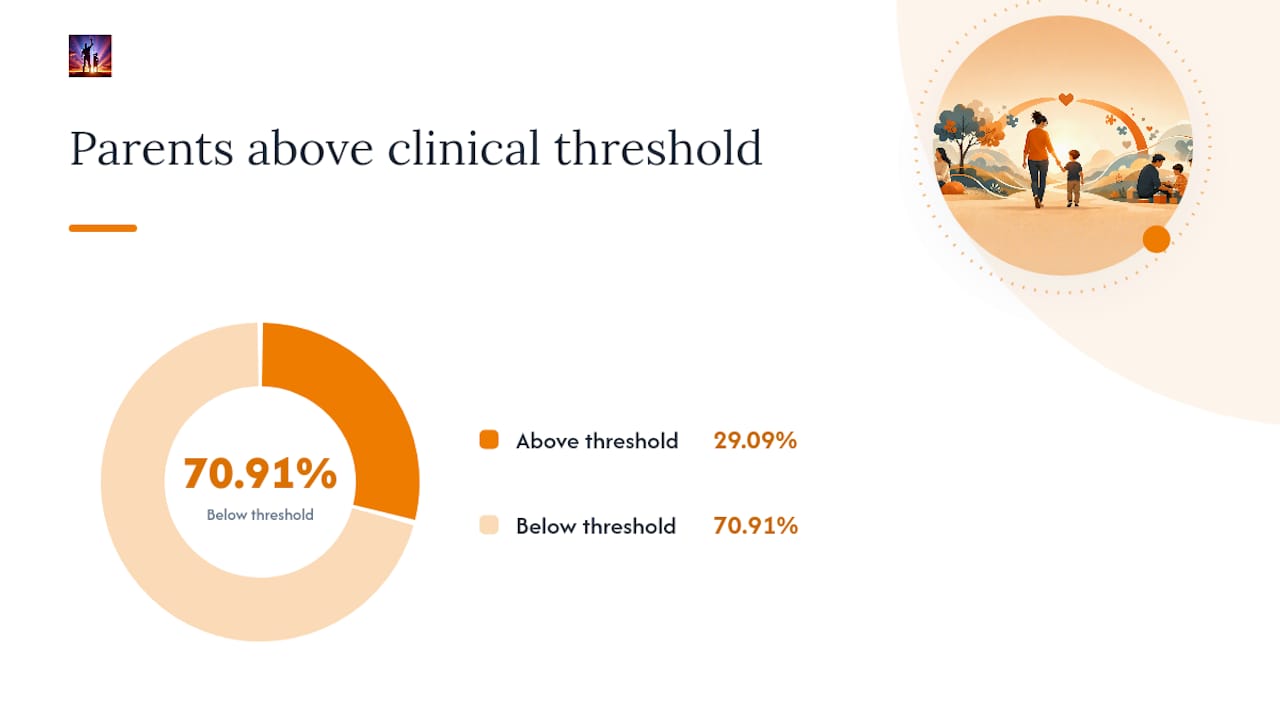
Statistic: Among 464 parents in one study, 29.09% scored above clinical thresholds on at least one mental-health subdomain — a rate that underscores why caregiver mental health deserves direct attention, not just child-focused intervention.
Balancing multiple children adds another layer. When one child’s needs dominate the household schedule, guilt about the other children is nearly universal. So is the guilt about feeling relief on a calm day. Both responses are normal, and naming them helps.
Coping strategies that actually work day to day
These are practical, tested approaches — not aspirational advice. Pick two or three to try this week.
Build a sensory toolkit for yourself. Noise-canceling headphones, a weighted blanket, or a five-minute outdoor reset can interrupt a stress spiral before it compounds. See tactile defensiveness strategies for specific sensory tools.
Use visual schedules for the whole household. Predictability reduces everyone’s anxiety, including yours. A posted morning routine cuts the number of decisions you make before 9 AM.
Throttle your demand load. On high-sensory days, drop optional tasks entirely. “Good enough” is a legitimate standard.
Build 15-minute buffers between transitions. Rushing a child with sensory or transition difficulties creates cascading stress. Buffer time is not wasted time.
Write a one-page crisis plan. Who to call, what helps, what makes things worse. Keep it somewhere visible. Update it quarterly.
Practice physiological sighing. Two short inhales through the nose followed by a long exhale activates the parasympathetic nervous system faster than most cognitive techniques. Do it three times when you feel your nervous system spike.
Schedule sleep protection, not just sleep. Decide in advance which nights a partner, family member, or respite provider covers early-morning needs. Reactive sleep loss is harder to recover from than planned short nights.
Set a “no new information after 9 PM” rule. Late-night research spirals on diagnosis, therapies, or school law are a common anxiety driver. Close the tabs.
Name your emotional state out loud. “I’m in fight-or-flight right now” activates the prefrontal cortex and reduces the intensity of the stress response. It sounds simple because it is.
Use a grounding script for medical appointments. Before you walk in: three things you can see, two you can hear, one you can feel. It takes 30 seconds and reduces the chance of leaving the appointment having forgotten your main question.
Batch administrative tasks. IEP paperwork, insurance calls, and therapy scheduling in one weekly block rather than scattered throughout the week reduces cognitive switching costs.
Ask for respite in writing. A text or email to a family member is easier to follow up on than a verbal ask, and it creates a record.
Sample script for requesting respite from a family member: “I need a break from caregiving this weekend. Could you take [child’s name] from 10 AM to 1 PM on Saturday? I’ll have everything they need ready. This would really help me recharge.”
Sample script for explaining accommodations to a teacher: “[Child’s name] does best with [specific accommodation: advance notice of transitions / a quiet corner for regulation / written instructions alongside verbal ones]. Can we add that to their daily plan and check in after two weeks?”
Pro Tip: When negotiating respite with extended family, frame it as a specific, time-limited ask rather than an open-ended request for help. “Three hours on Saturday” gets a yes far more often than “I need more support.” Pair it with a concrete handoff plan so the other person feels confident, not overwhelmed.

How to work with doctors, schools, and therapists
Advocacy is a skill. These steps make appointments and meetings more productive.
Pre-appointment checklist
Write your top three concerns in order of priority.
Bring a one-page summary of current medications, therapies, and recent changes in behavior or routine.
Note any regression or new symptoms with approximate dates.
Ask specifically: “What is the next step, and who is responsible for it?”
Request written follow-up or a visit summary if the provider offers one.
If you’re autistic yourself, tell the provider what communication style works best for you (written summaries, no interruptions, extra processing time).
IEP vs. 504: the short version
An IEP (Individualized Education Program) is a legally binding document under IDEA (Individuals with Disabilities Education Act) that provides specialized instruction and related services. It requires eligibility under one of 13 disability categories, including autism.
A 504 Plan falls under Section 504 of the Rehabilitation Act and provides accommodations (not specialized instruction) for students whose disability substantially limits a major life activity. It’s often faster to obtain and covers a wider range of students.
For most autistic students who need both accommodations and specialized instruction, an IEP is the stronger document. If your child has an IEP, you have the right to request a meeting at any time, bring an advocate, and disagree with the team’s recommendations in writing.
Before an IEP meeting:
Read the current IEP and write down every goal you want to discuss.
Gather recent teacher reports, therapy notes, and any independent evaluations.
Bring a support person if you need one — a partner, advocate, or trusted friend.
Ask for the draft IEP at least 48 hours before the meeting so you’re not reading it cold.
Confirm that all required team members will be present.
Sample email to a teacher: “Hi [Teacher’s name], I wanted to follow up on [child’s name]’s transition accommodations. Could you confirm that [specific accommodation] is in place and let me know how it’s going so far? I’d love a quick update by [date]. Thank you.”
Sample request to a provider: “I’d like to request written documentation of today’s recommendations so I can share them with [child’s name]’s school team. Is that something you can send within a week of our appointment?”
Document every interaction. A brief email after a phone call (“Just confirming what we discussed: [summary]”) creates a paper trail that protects you in disputes.
Where to find support that actually fits
Support for autism moms falls into several categories, and the right mix depends on where you are in the process.
Peer groups and moderated forums are often the fastest source of practical, lived-experience advice. The key word is “moderated.” Unmoderated groups can drift toward misinformation, conflict, or harmful advice. Before joining any group, check whether it has active moderation, clear community guidelines, and a stated policy on medical misinformation.
Professional coaching and teletherapy fill a different need. A therapist who specializes in caregiver burnout or autism-related family stress offers something a peer group cannot: clinical skill. Look for providers with specific experience in autism family systems, not just general family therapy.
Apps and digital platforms can provide on-demand support between appointments. Evaluate them on: data privacy (especially for any information about your child), whether content is evidence-informed, cost and trial options, and whether Spanish-language access matters to your family (see autism resources in Spanish for vetted options).
Local respite and nonprofit resources vary widely by state. Before sharing personal information or donating to an organization, verify its credentials. Charity Navigator lets you check a nonprofit’s financial transparency and accountability rating using its EIN number — a two-minute check that can save you from organizations that spend more on overhead than services.
Evaluation checklist for any support option
Is the group or platform actively moderated?
Is there a clear privacy policy, and does it cover child data?
Are credentials or qualifications listed for coaches or clinicians?
Is there a free trial, single session, or low-cost entry point?
Does it serve the US specifically, or is content jurisdiction-generic?
Is Spanish-language access available if your family needs it?
Is the community focused on parents/caregivers, or is it mixed with other audiences?
For autism financial assistance — Medicaid waivers, state-funded respite, SSI — the rules vary significantly by state. A state-specific resource navigator is worth using before assuming you don’t qualify.
What research says about caregiver mental health
The research picture is consistent and worth knowing.
A study of 464 parents found that nearly 30% scored above clinical thresholds on at least one mental-health measure. Researchers identified two distinct maternal mental-health profiles: one characterized by high sensitivity and one by depressive dysregulation. Critically, parent-related autistic traits predicted worse outcomes even after controlling for child-related factors. That finding matters because it means child-focused interventions alone won’t fully address parental distress.
The umbrella review of 41 studies confirmed that stress operates at every level simultaneously: child behaviors, family finances, social isolation, and systemic service gaps all contribute. No single intervention addresses all of them.
Qualitative research adds the dimension that numbers miss: parents describe moving from existential crisis through meaning-making toward resilience. That trajectory isn’t guaranteed, but it is documented — and therapeutic approaches that include meaning-making (not just symptom reduction) tend to support it better.
Research finding | Source |
|---|---|
29.09% of parents scored above clinical thresholds on at least one mental-health subdomain | Journal of Autism and Developmental Disorders |
Stressors span micro, meso, and macro levels across 41 synthesized reviews | Review Journal of Autism and Developmental Disorders |
Parents report post-traumatic growth alongside distress; meaning-making supports resilience | BMC Psychology |
What this means for you: If you’ve been managing everything for your child while putting your own mental health last, the research supports doing the opposite. Caregiver-focused therapy, peer support, and respite aren’t extras. They’re the infrastructure that makes long-term caregiving sustainable. Ask your child’s care team specifically about caregiver-focused referrals — not just child-focused ones. Many providers won’t offer them unless you ask.
What I’ve learned from working with autism families
There’s a version of this conversation that stays polite and general. This isn’t that version.
The thing most articles get wrong about autism moms is the framing of resilience as a personality trait. Resilience isn’t something you either have or don’t. It’s built through specific conditions: access to accurate information, at least one person who understands your situation, and enough rest to think clearly. Remove any one of those, and the most capable mother will start to crack. That’s not a character flaw. That’s physiology.
What I’ve seen consistently, both in the research and in community experience, is that the mothers who fare best over the long term are not the ones who push hardest. They’re the ones who got honest about their limits early, built a small but reliable support network, and stopped waiting for the system to hand them what they needed. They went and found it, or built it themselves.
The late-diagnosed autistic mom who turned her own diagnosis into a resource community isn’t an outlier. She’s a pattern. Diagnosis, clarity, connection, contribution. That sequence shows up over and over. If you’re early in the process, that arc is available to you too.
One practical note: if you’re autistic yourself and parenting an autistic child, you may need accommodations at IEP meetings and medical appointments just as much as your child does. You’re allowed to ask for them. Written agendas in advance, extra processing time, a support person in the room — these are reasonable requests, and a good team will honor them without making it a negotiation.
Clinical care still matters. This article is not a substitute for a therapist, a psychiatrist, or a pediatric specialist. If you’re in a mental-health crisis, please contact the 988 Lifeline or go to your nearest emergency room. What peer support and good information can do is fill the space between appointments and help you show up to those appointments better prepared.
Autism Victory App offers tools built for caregivers like you
Most support platforms are built for clinicians or for autistic individuals. Autism Victory App is built specifically for caregivers. It gives you AI-powered guidance tailored to your situation, a state-specific resource navigator so you’re not guessing what’s available where you live, caregiver-focused books and audiobooks in both English and Spanish, educational videos, a calming sound library, and a community of parents who understand what you’re actually dealing with.
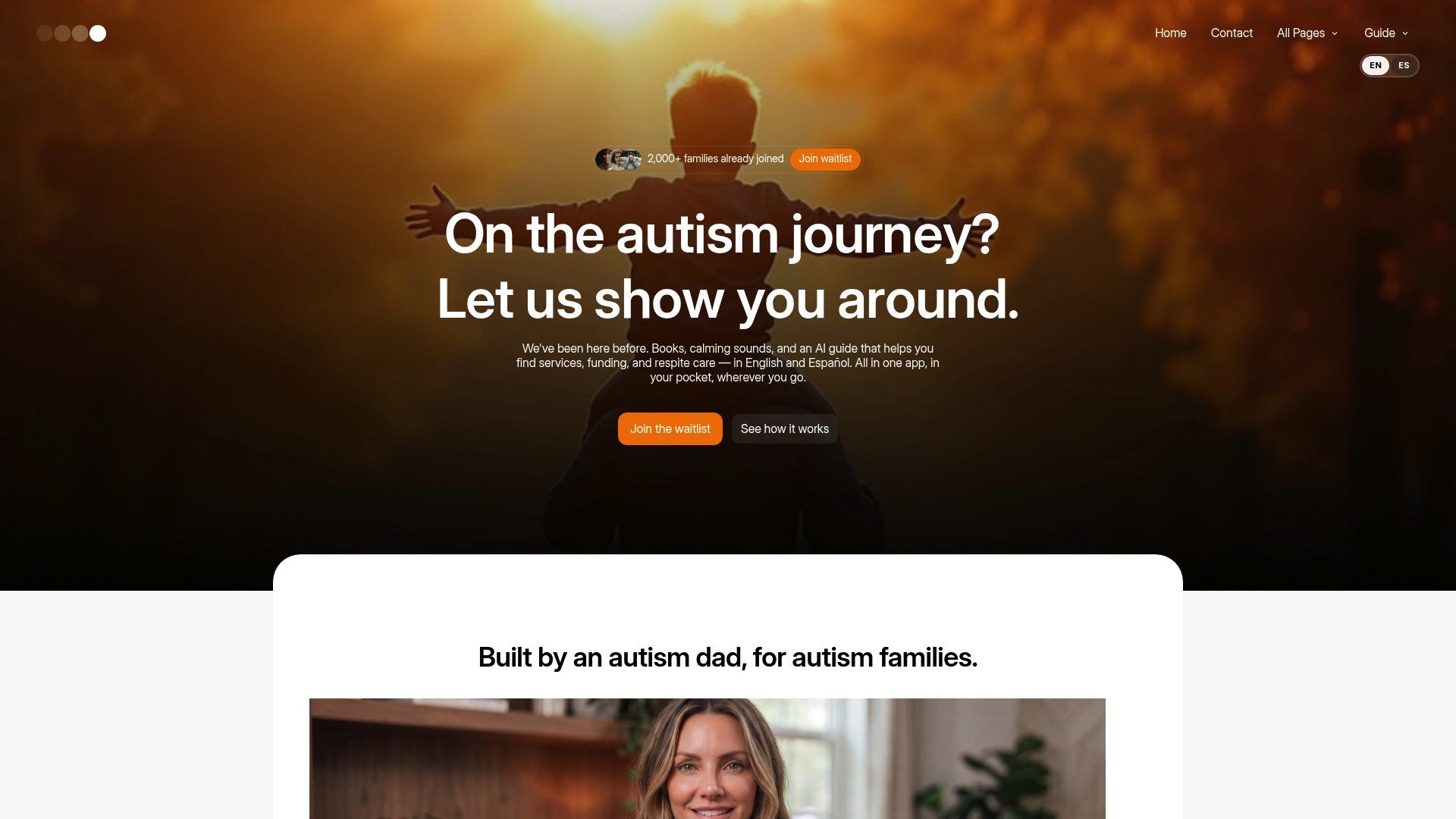
It doesn’t replace your child’s therapy team or emergency services. What it does is reduce the hours you spend hunting for information, help you walk into appointments better prepared, and give you a place to connect with other autism moms at 11 PM when no one else is awake. A 7-day free trial is available so you can see whether it fits before committing to a subscription. Start your free trial at Autism Victory App and see what having the right tools in one place actually feels like.
Sources
These are reputable, US-focused resources worth bookmarking.
Recommended