
Severe Autism: Signs, First Steps, and U.S. Resources
Severe autism means your child or loved one needs very substantial support in communication, daily living, and safety — what clinicians call DSM-5 Level 3, and what federal policy is increasingly calling “profound autism.” If that description fits your situation, the two most urgent priorities are safety planning at home and getting a multidisciplinary evaluation scheduled as soon as possible.
Start here — immediate next steps:
Do a home safety audit today (door locks, window alarms, ID bracelet, pool/water barriers).
Call your pediatrician and ask for a referral to a developmental pediatrician or autism specialist.
Request a multidisciplinary evaluation in writing (school district for ages 3+, early intervention for under 3).
Begin a behavior and medical log — dates, triggers, duration, and any physical symptoms.
Red flags that make this urgent:
Elopement (running away without awareness of danger)
Severe self-injurious behavior (head-banging, biting, scratching that causes wounds)
Uncontrolled or suspected seizures
Inability to eat safely or significant feeding refusal
Sudden regression in skills previously mastered
If any of these are happening right now, contact your pediatrician today and discuss whether an emergency evaluation or crisis support is needed.
Key Takeaways
Severe autism (DSM-5 Level 3) requires very substantial support in communication, safety, and daily living — and early, multidisciplinary evaluation is the most important first step any caregiver can take.
Point | Details |
|---|---|
DSM-5 Level 3 is the clinical anchor | “Severe autism” maps to Level 3, meaning very substantial support needs across communication, social interaction, and daily functioning. |
Safety and communication come first | Prioritize home safety measures and a reliable AAC system before any other intervention goal. |
A substantial proportion of autistic individuals are minimally speaking | This group faces the highest support needs and is the focus of the emerging “profound autism” policy designation per IACC data. |
Services follow a federal sequence | Part C (under 3) feeds into IEP services (ages 3–21), then Medicaid HCBS waivers and SSI for adults — get on waiver waitlists early. |
Autism Victory App | The app’s state resource navigator, caregiver guides, and AI guidance help families find and apply for the right supports faster. |
Table of Contents
What does “severe autism” actually mean clinically?
What are the signs of severe autism across different ages?
What medical conditions commonly occur alongside severe autism?
How is severe autism evaluated in the U.S.?
What treatments and supports work for severe autism?
How do you manage safety crises at home and in the community?
Practical day-to-day strategies for caregivers
Why “profound autism” is now part of the policy conversation
How to get help in the U.S.: a step-by-step roadmap
Autism Victory App gives you the tools to take the next step
Sources
What does “severe autism” actually mean clinically?
The phrase “severe autism” is widely used by families and caregivers, but clinicians work from the DSM-5 (Diagnostic and Statistical Manual of Mental Disorders, Fifth Edition), which classifies autism spectrum disorder (ASD) across three support levels:
Level 1 (“requiring support”): Noticeable difficulties in social communication; some inflexibility in behavior, but able to function with minimal support.
Level 2 (“requiring substantial support”): Marked deficits in verbal and nonverbal communication; restricted, repetitive behaviors that are obvious and interfere with daily functioning.
Level 3 (“requiring very substantial support”): Severe deficits in verbal and nonverbal communication; very limited initiation of social interaction; restricted and repetitive behaviors that significantly interfere with functioning across all areas.
When caregivers say “severe autism,” they almost always mean Level 3 — or a presentation that functions at that level even if the formal paperwork uses different language.
You will also hear several alternative terms in clinical reports, school documents, and agency paperwork:
Minimally verbal or non-speaking: Describes communication ability, not a separate diagnosis.
High support needs: A functional descriptor used in care plans and waiver applications.
Profound autism: An emerging administrative and research term (explained in detail later in this article) that the National Autism Center at May Institute describes as a functional grouping for people who require lifelong, 24-hour care and are nonverbal or have significant intellectual disability.
None of these phrases change the DSM-5 diagnostic code. They describe the level of support a person needs, and that description is what drives eligibility for services, school placements, and Medicaid waivers.
What are the signs of severe autism across different ages?
Severe autism affects five core domains, and the signs look different depending on the person’s age. CDC guidance on ASD signs and symptoms lists age-specific red flags and recommends speaking to a provider whenever those flags appear.
Communication
Little to no functional speech (may have sounds, words, or scripted phrases that do not serve communication)
No reliable way to make needs known (pointing, gestures, pictures, or a device)
Echolalia (repeating words or phrases without communicative intent)
No response to name by 12 months; no words by 16 months; no two-word phrases by 24 months
Social interaction
Minimal or no eye contact
No interest in other children; does not initiate or respond to social bids
Does not point to share interest or show objects to caregivers
Appears to “look through” people rather than at them
Restricted and repetitive behaviors
Intense, hours-long repetitive motor movements (rocking, hand-flapping, spinning)
Extreme distress at any change in routine or environment
Rigid insistence on sameness that disrupts daily activities
Unusual, intense focus on specific objects (wheels, lights, textures)
Sensory responses
Extreme reactions to sounds, textures, lights, or smells that interfere with eating, dressing, or leaving the home
Self-stimulatory behavior (stimming) that is difficult to interrupt
Apparent insensitivity to pain, which can mask injuries or illness
Cognition and adaptive functioning
Significant delays in self-care skills (dressing, toileting, feeding) well below age expectations
Limited ability to generalize skills from one setting to another
Difficulty following multi-step instructions even with visual supports
Age-specific examples:
Infant (0–12 months): No babbling by 12 months, no social smile, does not reach for caregivers.
Toddler (1–3 years): No words by 16 months, no pretend play, significant meltdowns with any transition.
School-age (6–12 years): Unable to follow a classroom routine independently; requires one-on-one support for all tasks; self-injury during transitions.
Adolescent/adult: Persistent need for full support in hygiene, meals, and safety; communication limited to a device or picture system.
Callout: CDC surveillance data provides population-level figures on autism prevalence and subgroup breakdowns, including estimates of minimally speaking and non-speaking individuals who require the highest levels of support.
What medical conditions commonly occur alongside severe autism?
Individuals with severe autism are at higher risk for several medical and mental-health conditions that require their own treatment plans. Missing these conditions often explains why behavior escalates or why a child seems to plateau in therapy.

Co-occurring condition | What to watch for | When to seek medical follow-up |
|---|---|---|
Epilepsy/seizures | Staring spells, sudden falls, repetitive movements, post-event confusion | Any suspected seizure episode — urgent referral to neurology |
Sleep disorders | Chronic difficulty falling or staying asleep, early waking, extreme daytime fatigue | Persistent sleep disruption lasting more than 2–3 weeks |
Gastrointestinal problems | Constipation, diarrhea, food refusal, apparent abdominal pain without verbal report | Unexplained behavior changes, especially aggression or self-injury |
Anxiety | Escalating meltdowns, new avoidance behaviors, physical symptoms (racing heart, sweating) | When anxiety significantly limits daily activities or causes injury |
Self-injurious behavior | Head-banging, biting, scratching, hair-pulling causing wounds | Any self-injury that breaks skin or poses immediate physical risk |
Clinical signals that warrant urgent referral:
Any seizure-like episode, even if brief
Sudden regression in skills (loss of words, loss of toileting, loss of motor skills)
Significant unexplained weight loss or feeding refusal lasting more than a few days
Self-injury that causes wounds, bruising, or poses a risk of serious harm
Marked sleep disruption (sleeping fewer than 4–5 hours per night consistently)
Epilepsy deserves particular attention. Seizure risk is elevated in individuals with severe or profound autism, and seizures can be subtle — a brief staring spell or a sudden behavioral change may be the only visible sign. If you suspect seizures, request a neurology referral and an EEG without delay.
How is severe autism evaluated in the U.S.?
A thorough evaluation is multidisciplinary. No single test diagnoses autism or determines severity. The process typically involves a developmental pediatrician, pediatric neurologist, or child psychiatrist; a speech-language pathologist; an occupational therapist; and a psychologist or neuropsychologist who administers standardized instruments.
The two most widely used standardized tools are the ADOS-2 (Autism Diagnostic Observation Schedule, Second Edition) and the ADI-R (Autism Diagnostic Interview-Revised). Research on diagnostic instruments confirms that ADOS and ADI-R, used together within a multidisciplinary evaluation, provide the most reliable basis for diagnosis and severity documentation.
How to prepare for an evaluation appointment:
Bring a written medical history (birth complications, hospitalizations, medications, prior diagnoses).
Bring a behavior log with specific examples, dates, and durations.
Bring short video clips of concerning behaviors at home (meltdowns, self-injury, communication attempts).
Bring any prior school reports, IEP documents, or therapy notes.
Write down your top three safety concerns to raise at the start of the appointment.
Ask the evaluating team to document functional descriptions in their report (“requires constant supervision for safety,” “minimally verbal”) — not just a diagnostic code.
What the results mean:
A DSM-5 Level 3 designation opens the door to the most intensive school-based services (IEP with full-time support, specialized classroom placement).
Functional statements in the report (“requires 1:1 support for all daily living tasks”) are what Medicaid waiver programs and disability agencies use to determine eligibility and funding levels.
If your child is under 3, the evaluation also triggers eligibility for Part C Early Intervention services, which are federally mandated and provided at no cost to families.
What treatments and supports work for severe autism?
The core supports for severe autism span behavior therapy, communication, therapies targeting daily living skills, and education. No single approach covers everything, and the goal for severe presentations is different from what you may read about milder cases: the focus is on safety, reliable communication for basic needs, and meaningful participation in daily life.
Core supports:
Individualized behavior therapy: Programs targeting specific skills (safe eating, tolerating hygiene, reducing self-injury) rather than broad developmental goals. Applied behavior analysis (ABA) is one framework used to structure these programs, though the specific techniques should be tailored to the individual.
Augmentative and Alternative Communication (AAC): PECS (Picture Exchange Communication System) for early communicators; speech-generating devices (SGDs) for those who can learn to use them. AAC does not prevent speech development — it supports it.
Speech-language therapy: Focused on functional communication (requesting, protesting, commenting) rather than articulation alone.
Occupational therapy: Addresses sensory processing, fine motor skills, self-care, and feeding. A sensory diet developed with an OT can reduce meltdowns and improve daily participation.
Feeding therapy: Often needed for severe texture aversions, unsafe swallowing, or extreme food restriction.
IEP with related services: The Individualized Education Program is the legal document that guarantees a free appropriate public education (FAPE). For Level 3 presentations, this typically includes a specialized classroom, 1:1 paraprofessional support, and speech, OT, and behavior services built into the school day.
Medications do not treat the core features of autism. They target co-occurring symptoms: antiepileptics for seizures, SSRIs or other agents for severe anxiety, and in some cases, risperidone or aripiprazole (FDA-approved for irritability associated with autism) for severe aggression or self-injury. Any medication decision should involve a developmental pediatrician or child psychiatrist who knows the individual’s full medical picture.
How services typically connect:
Early intervention (Part C, birth to age 3) feeds into school-based services (IDEA Part B, ages 3–21) via an IEP. After age 21, the pathway shifts to adult services through state developmental disability agencies, Medicaid Home and Community-Based Services (HCBS) waivers, and Supplemental Security Income (SSI). For a full breakdown of autism financial assistance options, including waiver programs and SSI, that resource covers the specifics by program type.
Pro Tip: When prioritizing interventions, start with safety and communication. A child who can reliably signal “stop,” “help,” or “I’m in pain” — by any means — has a foundation for everything else. Measure progress in small, concrete units: number of successful meal bites, number of independent toileting attempts, number of times a device was used to make a request. Small wins are real progress.
How do you manage safety crises at home and in the community?
Safety is the first priority for families living with severe autism. Elopement, severe self-injury, and seizures are the three risks that most often lead to emergency department visits, and all three can be reduced with proactive planning.
Immediate home safety steps:
Install door alarms and deadbolt locks that require a key or code from the inside.
Add window locks and pool fencing with self-latching gates.
Register your child with your local police department’s special needs registry (most departments have one).
Get a medical ID bracelet or GPS tracker your child will tolerate wearing.
Remove or secure items that could be used for self-injury during a meltdown.
Crisis plan checklist:
Write a one-page crisis summary: diagnosis, communication method, known triggers, de-escalation strategies, medications, and emergency contacts.
Share it with your child’s school, therapists, and any respite providers.
Ask your behavior therapist or regional center about a behavioral crisis team — many states have mobile crisis units that can respond to the home.
Know your local emergency department’s autism-friendly protocols; call ahead when possible.
Keep a copy of the crisis summary in your wallet and as a photo on your phone.
When to call 911 or go to the emergency department:
Active seizure lasting more than 5 minutes, or any seizure in a person with no prior seizure history
Self-injury that has caused a wound requiring medical attention
Aggression that poses immediate physical danger to the individual or others
Suspected ingestion of a harmful substance
Elopement where the child cannot be located within a few minutes
What to bring to the emergency department:
Medication list (name, dose, frequency)
One-page behavior summary (triggers, communication method, what helps)
Diagnosis documentation
Name and phone number of the treating developmental pediatrician or neurologist
Practical day-to-day strategies for caregivers
Predictable routines are the single most effective daily tool for reducing distress in severe autism. When a child knows exactly what comes next, the nervous system has less to react to.
Building structure into the day:
Use a visual schedule with photos or symbols for each activity, posted at eye level.
Give a transition warning before every activity change (“5 more minutes, then bath”).
Keep the sequence of morning and bedtime routines identical every day.
Use a first-then board (“First shoes, then iPad”) for resistant transitions.
Sleep strategies:
Keep a consistent bedtime and wake time, even on weekends.
Reduce screen exposure in the 60 minutes before bed.
Consider weighted blankets or blackout curtains if sensory sensitivity disrupts sleep.
Ask the pediatrician about melatonin if behavioral strategies alone are not enough — it is commonly used and generally well-tolerated, but confirm dosing with a clinician.
Mealtime and feeding:
Serve meals at the same time and place every day.
Introduce new foods alongside accepted foods without pressure.
Work with a feeding therapist if your child has fewer than 20 accepted foods or gags/chokes regularly.
School advocacy:
Request an IEP meeting any time your child’s needs change — you do not have to wait for the annual review.
Ask for a Functional Behavior Assessment (FBA) if self-injury or aggression is interfering with learning.
Put all requests in writing and keep copies.
Caregiver wellbeing:
Caring for a child with severe autism is one of the most demanding roles a person can take on. Research on caregiver experiences documents that families of profoundly autistic individuals frequently face service gaps, difficulty finding trained staff, and long-term planning stress. Respite care is not a luxury — it is a clinical necessity for sustainable caregiving. Ask your state developmental disability agency about respite funding, and look into ARCH National Respite Network for local options.

Why “profound autism” is now part of the policy conversation
“Profound autism” is not a new DSM diagnosis. It is an administrative and research descriptor intended to make the highest-support group more visible in federal data, research funding, and service design.
The IACC (Interagency Autism Coordinating Committee) recommends using “profound autism” as a standardized functional designation for research and policy purposes, specifically for individuals age 8 and older who have minimal or no functional speech and require continuous supervision. The IACC is explicit that this designation does not change DSM-5 diagnostic codes or automatically alter legal eligibility rules for any program.
A 2026 Delphi consensus study published in Molecular Autism produced a research definition emphasizing adaptive functioning well below age level, need for adult supervision for safety, and minimal verbal ability and/or severely impaired cognitive ability as the core markers. The researchers also noted that IQ testing has real validity limitations for this group, which is why clinicians often document functional descriptions rather than relying solely on a score.
“Profound autism” is meant to improve visibility in research and federal planning, not to replace DSM-5 criteria or automatically change program eligibility. Families should ask clinicians and caseworkers to document functional needs explicitly — phrases like “requires 24-hour supervision for safety” carry more weight in waiver applications than a level number alone.
What this means for your family:
Ask every evaluator to include functional statements in written reports.
When applying for Medicaid HCBS waivers or SSI, submit documentation that describes what your child cannot do safely without support.
Advocate for your child to be included in research studies — historically, exclusion of severely affected individuals from research has produced evidence gaps that leave the highest-support group underserved by the programs designed to help them.
How to get help in the U.S.: a step-by-step roadmap
The U.S. service system is fragmented, but there is a logical sequence to follow. Start with the contacts closest to you and work outward.
Step-by-step action plan:
Call your pediatrician today. Request a referral to a developmental pediatrician or autism evaluation center. Ask specifically for a multidisciplinary evaluation.
Contact your state’s early intervention program (Part C) if your child is under 3. You do not need a diagnosis to request an evaluation. Call your state’s Part C coordinator — find the contact at the NICHD’s early intervention resource page.
Contact your local school district’s special education office if your child is 3 or older. Submit a written request for an evaluation under IDEA. The district has 60 days to complete it in most states.
Apply for SSI (Supplemental Security Income). SSI provides monthly income support for children with disabilities whose families meet financial criteria. Apply at ssa.gov or call 1-800-772-1213.
Contact your state’s developmental disability agency. Ask about Medicaid HCBS waivers for autism or developmental disabilities. Waitlists can be long — get on them now, even before services are needed.
Find a local autism advocacy organization. The Autism Society of America and state-level chapters can connect you with local navigators who know your state’s specific programs.
What to bring to every intake appointment:
Written diagnosis or evaluation report (if available)
Behavior log with specific examples
Current medication list
School records or prior IEP
List of your top three safety concerns
State-specific note: Medicaid waiver programs vary significantly by state in terms of eligibility criteria, funding levels, and waitlist length. Some states have autism-specific waivers; others use broader developmental disability waivers. Ask your state agency specifically about the waiver that covers behavioral supports and respite. For families navigating ABA insurance coverage, state mandates differ, and knowing your state’s specific requirements matters.
The weight caregivers carry is real
If you have read this far, you are probably carrying more than most people around you understand. The grief of watching your child struggle with things other kids do effortlessly, the exhaustion of managing safety around the clock, the frustration of a system that was not built with your family in mind — all of that is real, and it is not a sign of weakness to feel it.
What the research also shows is that families who connect with other caregivers in similar situations, who use respite when it is available, and who focus on small, concrete wins tend to sustain the long haul better than those who try to carry everything alone. You do not have to have every answer today. Document what you see, ask for functional statements in every report, and take the next step in front of you.
Autism Victory App gives you the tools to take the next step
Navigating severe autism support in the U.S. means tracking waiver waitlists, decoding IEP language, finding state-specific respite programs, and doing it all while managing daily caregiving. Autism Victory App puts those resources in one place, built specifically for families in your situation.
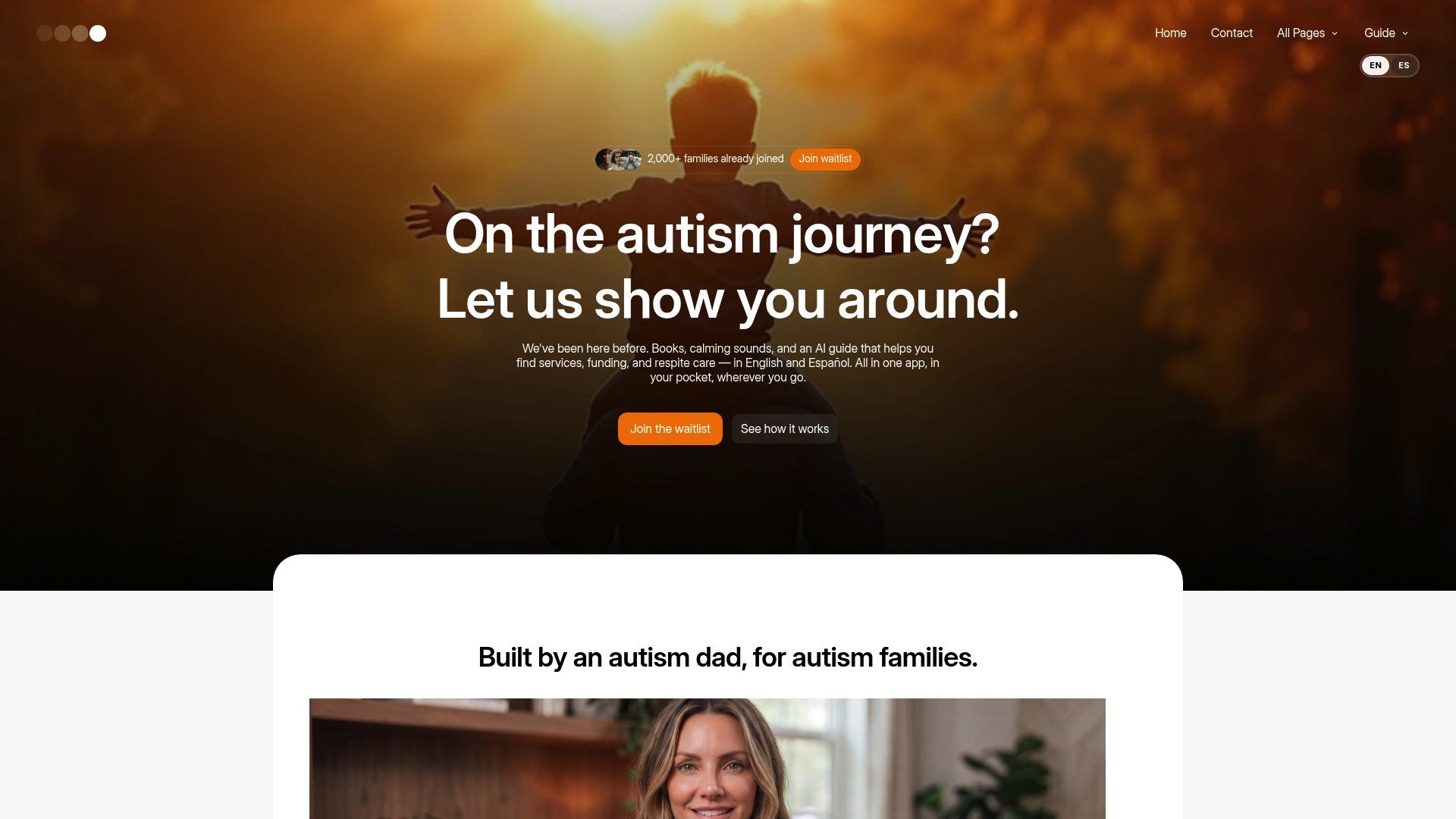
The app includes a state-specific resource navigator that surfaces the programs, waivers, and funding sources available where you live. Caregiver guides in both English and Spanish walk you through intake processes, IEP meetings, and crisis planning. Personalized AI guidance helps you ask the right questions at your next appointment. A calming sound library and community of caregivers who get it round out a platform designed for the long haul, not just the first diagnosis.
The 7-day free trial costs nothing. Start your free trial at Autism Victory App and see what changes when you have the right information at the right moment.
Sources
This article is general information, not a substitute for advice from a qualified doctor. Consult a qualified healthcare professional about your own circumstances before acting on anything here.
Recommended