
Female Autism: Why Signs Are Missed and What to Do Next
Female autism refers to how autism spectrum traits commonly show up in girls and women. It’s a presentation that’s often subtler, more socially camouflaged, and easy for even experienced clinicians to miss. If you’re recognizing patterns in yourself or your daughter after reading a list of “typical” autism signs and thinking, “that’s not quite it, but something’s not adding up,” you’re not imagining things.
The single most important next step is this: seek a gender-aware clinical assessment, ideally with a clinician or team who has specific experience evaluating autism in females. Ask directly whether they screen for camouflaging and social masking, not just overt repetitive behaviors. A narrative review of diagnostic challenges confirms that female presentations often include subtler social differences and higher rates of compensatory strategies, which lowers the sensitivity of standard screening tools built and validated on male samples.
Quick fact: Females often need to show more additional difficulties than males before clinicians identify autism, and many receive their diagnosis later in life, according to a narrative review on the female autism phenotype and camouflaging.
Before your appointment, start gathering:
A developmental history, including early social and language milestones, even the ones that seemed “fine.”
Specific examples of masking, like rehearsing conversations, forcing eye contact, or copying peers’ mannerisms.
School records, report cards, and any past evaluations for anxiety, ADHD, or learning differences.
Notes on sensory triggers, such as certain fabrics, sounds, or lighting that cause distress.
Key Takeaways
Female autism often presents through masking and social effort rather than obvious withdrawal, and recognizing it early requires gender-aware assessment and documented behavioral evidence.
Point | Details |
|---|---|
Definition matters | Female autism describes subtler, often camouflaged presentations of core autism traits, not a separate condition. |
Masking delays diagnosis | Scripting, forced eye contact, and mimicry hide symptoms during short clinical evaluations. |
Diagnosis often comes late | Many women aren’t diagnosed until adulthood, frequently after a life disruption prompts reevaluation. |
Co-occurring conditions complicate care | Anxiety, depression, ADHD, and eating disorders can overshadow the underlying autism if treated in isolation. |
Preparation improves accuracy | Bringing developmental history and concrete masking examples helps clinicians assess more accurately. |
Support fills the gap | Autism Victory App offers state-specific funding navigation, caregiver books, and community support alongside clinical care. |
Table of Contents
What Is the Female Autism Phenotype?
Why Does Autism in Females Get Missed So Often?
How Do Signs Show Up at Different Ages?
What Does Masking Actually Look Like?
What Conditions Commonly Co-Occur With Female Autism?
How Does Diagnosis Usually Work, and What Improves Accuracy?
How Do You Actually Get Assessed?
What Support and Accommodations Actually Help?
How Do Caregiver Resources Fit Into the Bigger Picture?
A Personal Note on Why This Recognition Matters
How Autism Victory App Supports Your Next Step
Frequently Asked Questions
Sources
What Is the Female Autism Phenotype?
The female autism phenotype describes a pattern of traits that map onto the same core areas of autism, social communication, restricted interests, and sensory processing, but express themselves differently on the surface. A girl or woman with this phenotype may want social connection intensely and work hard to get it, rather than appearing withdrawn or indifferent. Her restricted interests might look like obsessions with horses, a particular book series, or a celebrity, topics that read as age-typical until you notice the intensity and the singular focus never shifts.

Decades of autism research built its diagnostic tools around boys, largely because early studies simply had more male participants. That’s measurement bias in practice: the checklists, interview scripts, and observational tools clinicians still use were normed on a population that doesn’t reliably represent how autism looks in females. One line of research even points to the outdated “extreme male brain” theory as having shaped clinical expectations for years, skewing how gender bias entered diagnostic criteria in ways that are only now being corrected.
Clinicians at major centers increasingly describe autistic girls as having stronger social motivation and less overt repetitive behavior than the textbook image suggests, which means the “aloof” stereotype rarely fits. According to a clinical explainer from the University of Rochester Medicine, girls with autism often present with interests and social behaviors that resemble their peers’ on the surface, just carried out with unusual intensity or effort underneath.
Pro Tip: If you’re a clinician or a parent preparing for an evaluation, push past the standard checklist. Ask about the effort behind the behavior, not just whether the behavior exists. “Does she rehearse conversations beforehand?” reveals more than “Does she make eye contact?”
Why Does Autism in Females Get Missed So Often?
Several forces stack on top of each other to delay or prevent diagnosis, and none of them are the fault of the person experiencing them.
Measurement bias. Screening tools built and tested primarily on boys have lower sensitivity for the female-typical presentation, so a girl can score below the clinical cutoff while still meeting criteria under closer evaluation.
Masking in real time. A clinic visit lasts an hour. If a girl can hold it together, make appropriate small talk, and maintain eye contact for that hour, an evaluator observing only that window may see nothing unusual.
Gendered socialization. Girls are often coached from an early age to be polite, accommodating, and socially smooth, which reinforces camouflaging and makes internalized struggles like anxiety more visible than the autism underneath.
Diagnostic overshadowing. When anxiety, depression, an eating disorder, or a personality disorder diagnosis arrives first, clinicians frequently treat that condition and stop looking further, missing the autism that may be driving it.
The scale of this gap shows up in outcome studies, not just clinical anecdotes. Research on women who report autistic traits but never received a formal diagnosis found elevated anxiety, depression, and other internalizing symptoms that had gone unconnected to autism for years, sometimes decades. Prevalence data collected from broader community samples, rather than clinic referrals alone, shows the male-to-female diagnosis ratio narrows considerably once researchers look beyond who happens to walk through a clinic door.
How Do Signs Show Up at Different Ages?
Autism doesn’t look the same at age six as it does at age thirty-six, and the shifts matter for recognizing it in yourself or your child.
Childhood
Young girls with autism often want to play with peers and even succeed at surface-level interaction, but the effort behind it is invisible. Watch for:
Copying a friend’s tone, phrases, or mannerisms almost like a script rather than spontaneous conversation.
Refined, quiet stimming, hair-twirling, finger-tapping, or picking at clothing, that reads as fidgeting rather than a repetitive behavior.
Intense interests that look ordinary (animals, drawing, a specific book series) but consume disproportionate time and don’t easily shift to new topics.
Adolescence
Middle and high school raise the social stakes, and masking gets harder to sustain. Teen girls often show increasing exhaustion after school, a sudden drop in academic performance despite no change in ability, or the emergence of anxiety, depression, or disordered eating that seems to appear out of nowhere. Peer dynamics grow more implicit and less rule-based right when masking demands peak, which is a common tipping point for burnout.
Adulthood
Many women reach their thirties or forties before anyone suggests autism, often after a relationship breakdown, a job loss tied to sensory overwhelm or communication friction, or a child’s own diagnosis that prompts a moment of recognition. According to UCLA Health, many people assigned female at birth go undiagnosed until adulthood because assessments lean on developmental history and behaviors that were masked for years. Common adult signs include sensory intolerance to noise or crowds, difficulty with executive functioning tasks like planning or transitions, and chronic emotional regulation struggles alongside anxiety or depression.
Seek an assessment if you notice: a lifelong pattern (not just a stressful season), impairment across more than one setting, like work and home, and genuine sensory distress rather than simple pickiness.
One woman might describe herself as “fine at work but wiped out by 6 p.m. every single day.” Another might recall a childhood spent mimicking a more socially fluent cousin just to get through birthday parties. Neither story fits the outdated image of autism, and that’s exactly the point.
What Does Masking Actually Look Like?
Masking, also called camouflaging, is the conscious or semi-conscious effort to suppress natural autistic traits and perform neurotypical behavior instead. It’s exhausting, and it’s a major reason autism in females stays hidden from the people meant to notice it.
Concrete masking behaviors include:
Scripting conversations in advance, sometimes rehearsing responses to common questions the night before a social event.
Forcing eye contact even when it causes physical discomfort.
Mimicking a friend’s gestures, laugh, or speech patterns to blend in.
Suppressing stims like rocking or hand-flapping in public and releasing them only in private.
Using rehearsed small talk phrases that sound natural but are essentially memorized scripts.
Some of this masking is even linguistic. Research on social-pragmatic behavior has documented camouflage through speech patterns, where autistic women adopt typical speech rhythms and filler phrases specifically to sound neurotypical during short conversations, the exact length of most diagnostic interviews.
People mask because the alternative often means exclusion, bullying, or being labeled “weird” by peers and even teachers. It works, in the sense that it hides the autism. It also carries a cost. A narrative review on diagnostic challenges links high camouflaging to elevated rates of anxiety, depression, and burnout, and some late-diagnosed women describe chronic social exhaustion, not visible withdrawal, as their primary complaint for years before diagnosis.
Pro Tip: When assessing for masking, ask “What does it cost you to get through a normal day?” rather than “Do you have trouble socializing?” The first question surfaces the invisible effort; the second invites a rehearsed, socially acceptable answer.
What Conditions Commonly Co-Occur With Female Autism?
Autism rarely shows up alone in females, and the conditions that ride alongside it often get treated as the whole story instead of one piece of it.
Anxiety disorders, frequently generalized or social anxiety tied directly to the effort of masking.
Depression, sometimes rooted in chronic exhaustion or a sense of never quite fitting in.
ADHD, which shares traits with autism and is commonly diagnosed alongside or instead of it.
Eating disorders, particularly restrictive patterns tied to sensory sensitivities around food texture or a need for control.
OCD, where rigid routines can overlap with or mask autistic need for predictability.
Sleep disorders, often connected to sensory sensitivity and difficulty winding down.
Elevated suicidal ideation risk, especially among women whose autism went unrecognized for years while they struggled to explain why nothing seemed to help.
This overlap creates a real diagnostic trap. When a clinician sees an eating disorder or severe anxiety walk through the door, that becomes the treatment focus, and the underlying autism gets overshadowed. Treating the visible condition without recognizing the autism underneath often means therapy doesn’t fully work, because it isn’t addressing why the anxiety or eating patterns exist in the first place. Coordinated care, where a treatment team recognizes autism as part of the clinical picture rather than a separate issue, tends to produce far better outcomes than treating each diagnosis in isolation.
How Does Diagnosis Usually Work, and What Improves Accuracy?
A thorough autism evaluation typically includes a detailed developmental history, structured caregiver interviews, direct observation using tools like the ADOS-2, and sometimes neuropsychological testing to rule out or identify co-occurring conditions. Multi-disciplinary teams, often a psychologist, speech-language pathologist, and occupational therapist working together, tend to produce more reliable results than a single-provider evaluation, especially for females.
The limitation worth naming plainly: most of these tools were built and validated on male samples. That’s measurement non-invariance in practice, and it means a woman who masks well during a one-hour observation can score below the threshold even though she meets full criteria in daily life.
To prepare for an evaluation, bring:
A written developmental history covering early milestones, social patterns, and any past evaluations.
Specific, concrete examples of masking behaviors, not just “I struggle socially,” but what you actually do to get through a conversation.
Documentation of sensory sensitivities and how they affect daily functioning.
A list of co-occurring diagnoses and how symptoms have shifted over time.
Ask your clinician directly: “How do you account for camouflaging in your assessment?” and “What experience do you have diagnosing autism in girls or women specifically?” Their answers tell you quickly whether the evaluation will be gender-aware or whether you’re walking into the same male-centered framework that missed you before.
A note on limitations: no single assessment definitively rules autism in or out, particularly for someone who masks well. If the results feel incomplete or contradict your lived experience, a second opinion from a clinician with specific female-autism expertise is a reasonable and common next step.
How Do You Actually Get Assessed?
Getting from suspicion to appointment is often the hardest part. Here’s the practical sequence.
Gather your history first. Collect school records, old report cards, any prior mental-health evaluations, and specific written examples of masking and sensory struggles.
Identify the right provider for your age. For children, start with a pediatrician for a referral to a developmental pediatrician or child psychologist. For teens and adults, look for a neuropsychologist or an ASD-specialist clinic; adult psychiatric services can also provide referrals.
Ask about telehealth. Many specialist clinics now offer remote developmental interviews and caregiver questionnaires, which can shorten the wait for an in-person observation slot.
Request the evaluation in writing. Whether it’s a school counselor or a pediatrician, put your concerns in writing so there’s a paper trail.
When talking to a clinician or school, try language like: “I’d like a gender-aware autism evaluation. I’m concerned that masking may be affecting how my symptoms present, and I want that factored into the assessment.” That single sentence often changes how seriously a request gets taken.
Clinicians consistently say the most useful documentation is specific and behavioral: not “she’s anxious,” but “she rehearses what she’ll say at lunch every morning” or “she can’t function after a full day of forcing eye contact.” Concrete examples move faster through triage than general descriptions.
What Support and Accommodations Actually Help?
Diagnosis matters less than what happens after it. The right supports can reduce daily distress substantially, whether or not a formal diagnosis is in hand yet.
Therapy adapted for autism, particularly CBT modified to account for autistic thinking patterns rather than standard neurotypical-focused protocols.
Occupational therapy for sensory regulation, especially useful when tactile sensitivities or sound intolerance disrupt daily life.
Social skills coaching that teaches strategies without demanding constant masking.
Executive-function coaching for planning, transitions, and task initiation, common trouble spots in undiagnosed adults.
Peer support groups, ideally ones specific to autistic women and girls rather than general autism spaces still shaped by male-typical framing.
At school, IEPs or 504 plans can include extended test time, sensory breaks, or reduced sensory load in the classroom. At work, reasonable adjustments might mean noise-canceling headphones, flexible scheduling, or written instructions instead of verbal-only communication. At home, predictable visual routines reduce the cognitive load of constant social decision-making, which is often where masking burnout starts.
Watch for masking burnout specifically: increased irritability after socially demanding events, a sudden need for total isolation, or physical symptoms like headaches after a “normal” day. That’s not laziness. That’s exhaustion from a full day of camouflage.

How Do Caregiver Resources Fit Into the Bigger Picture?
Clinical assessment and ongoing caregiver support work best together, not as substitutes for each other. Diagnostic teams identify what’s happening; the daily work of navigating school meetings, state benefits, and household routines is a separate, ongoing job that most families are handed with almost no instructions.
That’s the gap Autism Victory App was built to close. Its state-specific resource navigator helps families locate financial assistance programs they’d otherwise spend weeks searching for, while its library of caregiver books, audiobooks, and educational videos translates clinical language into something you can actually use between appointments.
Accessibility matters here too. Families who need support in Spanish can access dedicated Spanish-language resources, and many community clinics and university-affiliated centers offer sliding-scale evaluation fees for families facing cost barriers to formal diagnosis.
None of this replaces a clinical team. A caregiver support platform can’t diagnose autism, and it shouldn’t try to. What it can do is make the space between “I suspect something” and “we have a diagnosis and a plan” less isolating and less confusing.
A Personal Note on Why This Recognition Matters
The gap between what the research now confirms and what most families were told a decade ago is wide, and it’s costly. Women who spent years masking, getting misdiagnosed with anxiety or a personality disorder, or simply being told they were “too sensitive,” deserve better than a diagnostic framework built without them in mind.
If you’ve read this far because something about your daughter, or yourself, doesn’t fit the old checklist but still feels true, trust that instinct. The clinical evidence increasingly backs it up: subtler presentation isn’t a lesser form of autism, it’s a different expression of the same core traits, hidden by effort that shouldn’t have been necessary in the first place.
The next concrete step hasn’t changed: start gathering developmental history and specific examples of masking now, before your first appointment. That preparation is often what separates a dismissive fifteen-minute visit from an evaluation that actually sees what’s there.
How Autism Victory App Supports Your Next Step
Once you’ve decided to pursue an assessment, the waiting and searching in between is where most families feel stuck, digging through state websites for funding programs, hunting for a therapist who actually understands masking, or just wanting to talk to someone who gets it. Autism Victory App is built for exactly that gap: it puts personalized AI guidance, state-specific funding navigation, and a caregiver community in one place, so you’re not rebuilding your own research process from scratch every time a new question comes up.
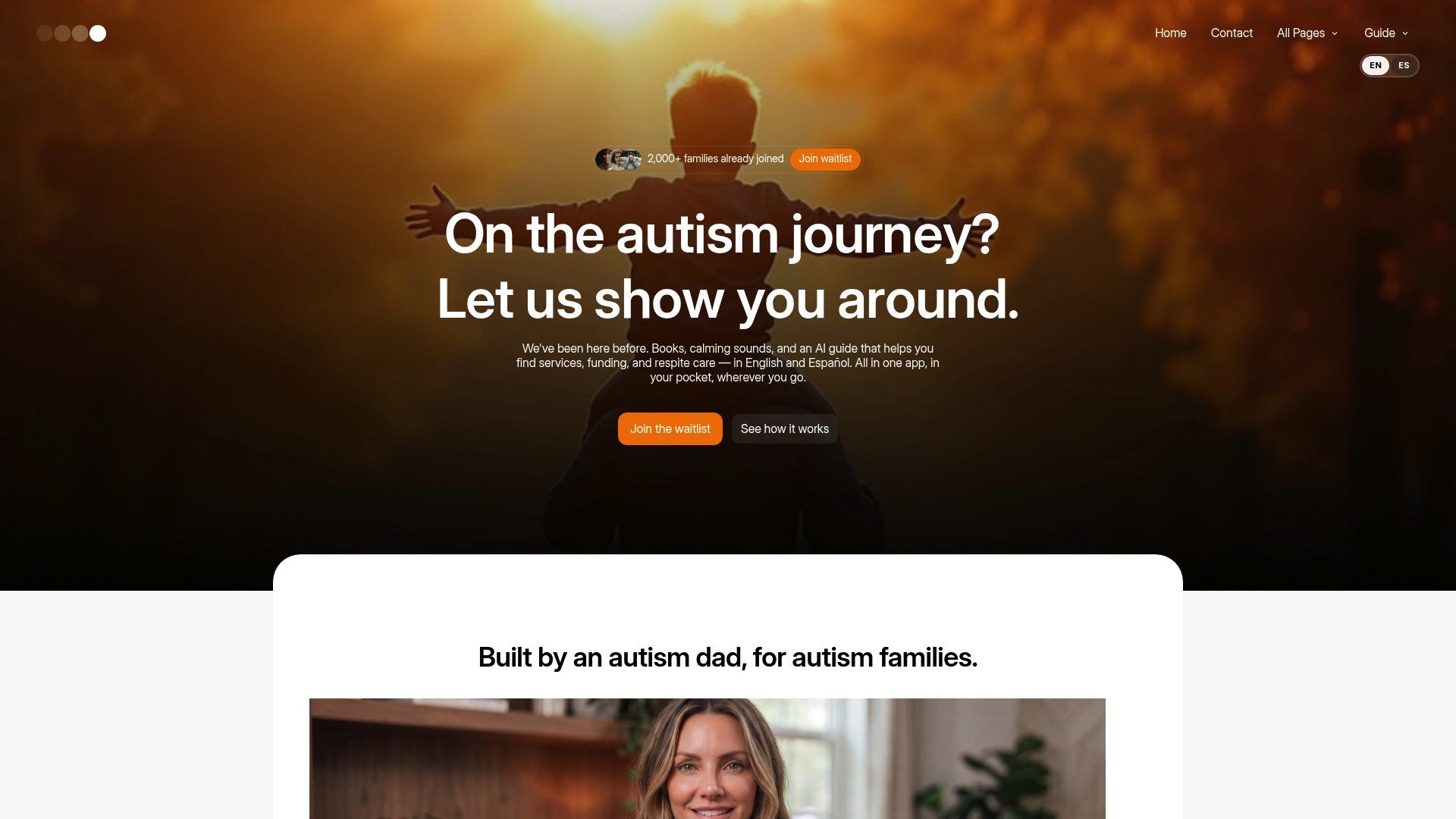
Inside the app, you get:
Caregiver-focused books and audiobooks in English and Spanish, written for the questions that come up between clinical visits.
Educational videos that break down complex topics like masking, sensory processing, and school accommodations into digestible guidance.
A state-specific resource navigator to find funding and support programs without hours of searching.
A calming sound library and a caregiver community for the days that are harder than others.
A 7-day free trial gives you full access to see whether it fits your family’s situation before you commit to a subscription. If you’re heading into an assessment or supporting someone who just got diagnosed, start your free trial at Autism Victory and get the state-specific resources and guidance moving while the clinical process is still underway.
Frequently Asked Questions
What is the female autism phenotype? It’s the pattern of autism traits that commonly appear in girls and women, including stronger social motivation, more masking, and restricted interests that resemble peer-typical topics but with unusual intensity. It reflects the same core condition, expressed differently on the surface.
Why is autism in girls harder to diagnose than in boys? Diagnostic tools were historically built and tested on male samples, which lowers their sensitivity to female-typical traits. Masking during short clinical observations further hides symptoms that show up more clearly in daily life over time.
Can adult women get diagnosed with autism for the first time? Yes, and it happens often. Many women reach their thirties or forties before an evaluation, sometimes after a child’s diagnosis or a major life disruption prompts them to seek one for themselves.
What are common signs of masking in autistic females? Scripting conversations in advance, forcing eye contact despite discomfort, copying peers’ speech and gestures, and suppressing stims in public are among the most documented masking behaviors.
Does autism in females often co-occur with anxiety or eating disorders? Yes. Anxiety, depression, ADHD, and eating disorders frequently appear alongside female autism, and clinicians sometimes treat these conditions without recognizing the underlying autism driving them.
How do I find a gender-aware autism evaluation? Ask potential clinicians directly whether their assessment accounts for camouflaging and whether they have specific experience diagnosing autism in girls or women. A multi-disciplinary team is often more reliable than a single-provider evaluation.
This article is general information, not a substitute for advice from a qualified doctor. Consult a qualified healthcare professional about your own circumstances before acting on anything here.
Sources
The female autism phenotype and camouflaging: a narrative review (Hull et al., 2020)
What Is Autism? Early signs and what it looks like in girls | University of Rochester Medicine
Understanding undiagnosed autism in adult females | UCLA Health
Recommended
Tactile Defensiveness in Autism: Strategies That Work | Autism Victory Blog
Toilet Training Regression in Autism: A 2026 Parent Guide | Autism Victory Blog
Your Child Was Just Diagnosed with Autism: What to Do in the First 30 Days | Autism Victory Blog
Autism Job Training Programs: A Parent’s Guide | Autism Victory Blog