
When possible, start with supported decision-making and other less-restrictive legal tools; reserve guardianship for situations where safety, exploitation risk, or a real inability to communicate make those lighter options unsafe or unworkable. Supported decision-making preserves your loved one's legal rights; guardianship hands that authority to a court-appointed guardian instead. State laws on both differ widely, so check your state's specific rules before you commit to either path.
TL;DR:
Supported decision-making allows autistic adults to retain full legal authority, using trusted supporters and tailored tools to understand and voice choices.
Guardianship grants court-appointed guardians nearly complete decision-making power, often required only when safety or communication inability is urgent and uncontested.
Reversing guardianship is typically more complex and costly than adjusting or establishing supported decision-making arrangements.
Precise, state-specific legal tools like powers of attorney and advance directives are easier and faster to implement than guardianship, often without court involvement.
Testing supported decision-making through low-risk decisions over weeks builds convincing evidence to avoid unnecessary guardianship petitions.
Table of Contents
Guardianship vs Supported Decision Making Autism: What Guardianship Actually Means
How Does Supported Decision-Making Work for Autistic Adults?
Guardianship vs Supported Decision Making Autism: What Guardianship Actually Means
Guardianship is a legal process where a court transfers decision-making authority from a person to a guardian, and it can strip away civil rights like voting, marrying, or signing a contract. Many state laws require courts to treat it as a last resort, not a default. The U.S. Department of Justice frames guardianship as the most restrictive option on the table, one courts are supposed to avoid when a lighter alternative would do the job.
Guardianship isn't one fixed arrangement. It usually breaks down into:
Full (plenary) guardianship — the guardian controls nearly all major life decisions.
Limited guardianship — the court restricts authority to specific areas, like medical consent or housing.
Guardian of the person — covers healthcare, living arrangements, and daily welfare.
Guardian (or conservator) of the estate — covers money, property, and benefits.
Getting to guardianship means filing a petition, presenting evidence of incapacity, and attending a hearing and guardians typically must file regular reports with the court afterward. Courts tend to grant it when there's a genuine safety concern, when someone truly cannot communicate preferences, or when the exploitation risk is high, according to the Disability Law Center, which also notes courts can tailor a guardianship narrowly rather than granting full authority by default.
How Does Supported Decision-Making Work for Autistic Adults?
Supported decision-making, or SDM, lets your loved one keep full legal authority over their own choices while a trusted network of supporters helps them understand options and voice a decision. Nobody signs anything away. The person remains the legal decision-maker; supporters just make the process accessible, according to the Texas Council for Developmental Disabilities.
In practice, SDM supports can look like:
A trusted communication partner who helps translate choices into plain language.
Visual schedules, social stories, or decision boards for concrete choices.
Assistive technology or AAC devices for expressing preferences.
A written SDM agreement naming specific supporters for specific decision areas (medical, financial, housing).
SDM can stay informal, a simple family arrangement, or it can be formalized in a written agreement. Many states recognize some form of SDM, though the level of legal weight it carries varies by state, so an agreement that holds up cleanly in one state may carry less practical force in another.
Pro Tip: Draft your SDM agreement in plain, specific language, "Maria helps with medical appointment decisions," not vague phrases like "assists as needed." Courts and doctors respond better to specifics.
Which Option Should You Choose: A Direct Comparison
Here's the core tradeoff, stripped down to what actually changes for your loved one day to day.
Rights and control. SDM leaves legal authority with the individual. Guardianship transfers it to the guardian, sometimes fully, sometimes for limited areas only.
Oversight. Guardians typically answer to the court through periodic reporting. SDM arrangements carry no built-in court oversight, which is a feature for autonomy and a gap for accountability.
Flexibility. SDM agreements can be adjusted or dropped as needs change. Guardianship is far stickier.
Reversibility. This is where families get caught off guard. Restoring rights after guardianship generally requires filing a petition and proving regained capacity, a process that's typically slower and more expensive than moving the other direction, from SDM into a more protective arrangement, according to Swanson Special Education Law.
Cost and timeline. SDM agreements can often be drafted with modest legal help or free templates. Guardianship petitions involve court filing fees, sometimes an attorney for the individual, evaluations, and a hearing date, adding weeks or months before anything is finalized.
Consider two rough scenarios. A young adult who communicates clearly but needs help weighing options is usually a strong SDM candidate. Someone with no reliable communication method and a documented history of exploitation may need guardianship, ideally limited in scope rather than full. Guardianship's real-life reach into daily autonomy is significant enough that the Harvard Adult Autism Program urges families to weigh alternatives carefully before filing.
Legal Tools to Try Before Guardianship
Full guardianship solves a specific problem: total incapacity. Most families don't have that problem. They have narrower ones, like "who signs off on a medical procedure" or "who talks to the bank." These tools handle that without touching your loved one's overall legal status:
Financial power of attorney (POA) — authorizes someone to handle specific financial tasks.
Medical/healthcare POA — authorizes medical decisions in defined circumstances.
HIPAA authorization — lets a designated person receive medical information from providers.
Advance directive — states treatment preferences in advance.
Representative payee — manages Social Security or SSI benefit payments.
Special needs trust — holds assets without jeopardizing means-tested benefits like SSI, a concern worth reviewing alongside broader autism financial assistance options.
Any of these can run alongside an SDM agreement. Families often stack two or three tools, an SDM agreement plus a medical POA plus a special needs trust, to cover the actual gaps without full guardianship, according to Autism Parent Resources. Costs vary by state and attorney, but many of these documents cost far less than a guardianship proceeding and take days, not months.
Your Step-by-Step Decision Checklist
Work through this in order. Skipping steps is exactly what leads families into guardianship petitions they didn't need to file.
Assess functional capacity honestly. Document how your loved one communicates, what decisions they've made independently, and where they've struggled. Bring in a clinician's input if you're unsure.
Pick supporters and write a simple SDM agreement. Name specific people for specific decision areas. Keep the language concrete.
Trial SDM on low-risk decisions first. Start with something like meal choices or a schedule change, not a major medical decision, and track how it goes.
Record outcomes over weeks, not days. Courts and family members alike want to see a pattern, not a single data point.
Escalate only if evidence demands it. If trials show a real safety gap, a documented inability to communicate, or repeated exploitation, that's the evidence a court will expect to see for a guardianship petition.
Advocates consistently advise families to slow down and document trial SDM outcomes before pursuing guardianship, because courts increasingly want proof that less-restrictive options were genuinely considered first, not just mentioned in a filing.
Pro Tip: Keep a simple log, date, decision, who was involved, outcome. Three months of this record is worth more in front of a judge than any statement about how your loved one "seems capable."

What Changes Legally When Your Child Turns 18
Your parental authority to make decisions for your child doesn't carry forward automatically. At 18, the law treats your child as an adult with full decision-making rights, whether or not guardianship or SDM is in place. If nothing has been set up in advance, you can lose access to medical records, school planning meetings, and financial accounts overnight.
Prepare before that birthday, not after:
Draft a medical POA and HIPAA authorization if some level of support will be needed.
Set up an SDM agreement if your child can communicate preferences with support.
Pull together IEP transition notes documenting current supports and goals.
Review the timeline in the year before your child turns 18, since some paperwork needs a signature before that date, not after.
Why This Decision Deserves More Patience Than Panic
Caregivers come to this decision scared, usually after a scare, a bad medical visit, a financial mistake, a close call. That fear pushes toward guardianship because it feels like the safer, more thorough option. It often isn't. Person-centered planning, built around your loved one's actual communication style and actual risks, tends to produce better outcomes than a blanket legal status chosen out of anxiety.
The presumption of competence matters here: decision-making supports should aim to expand autonomy, not just manage risk. That's not a reason to rule out guardianship when it's genuinely needed. It's a reason to make sure you've tested the lighter option first and can point to real evidence either way.
— Ronnie Talent
How Autism Victory App Supports This Decision
Figuring out whether SDM or guardianship fits your family shouldn't mean starting from a blank page. A mobile app offers caregivers state-specific resource guides, document checklists, and step-by-step planning tools, alongside AI-powered support tailored to autism caregiving situations.
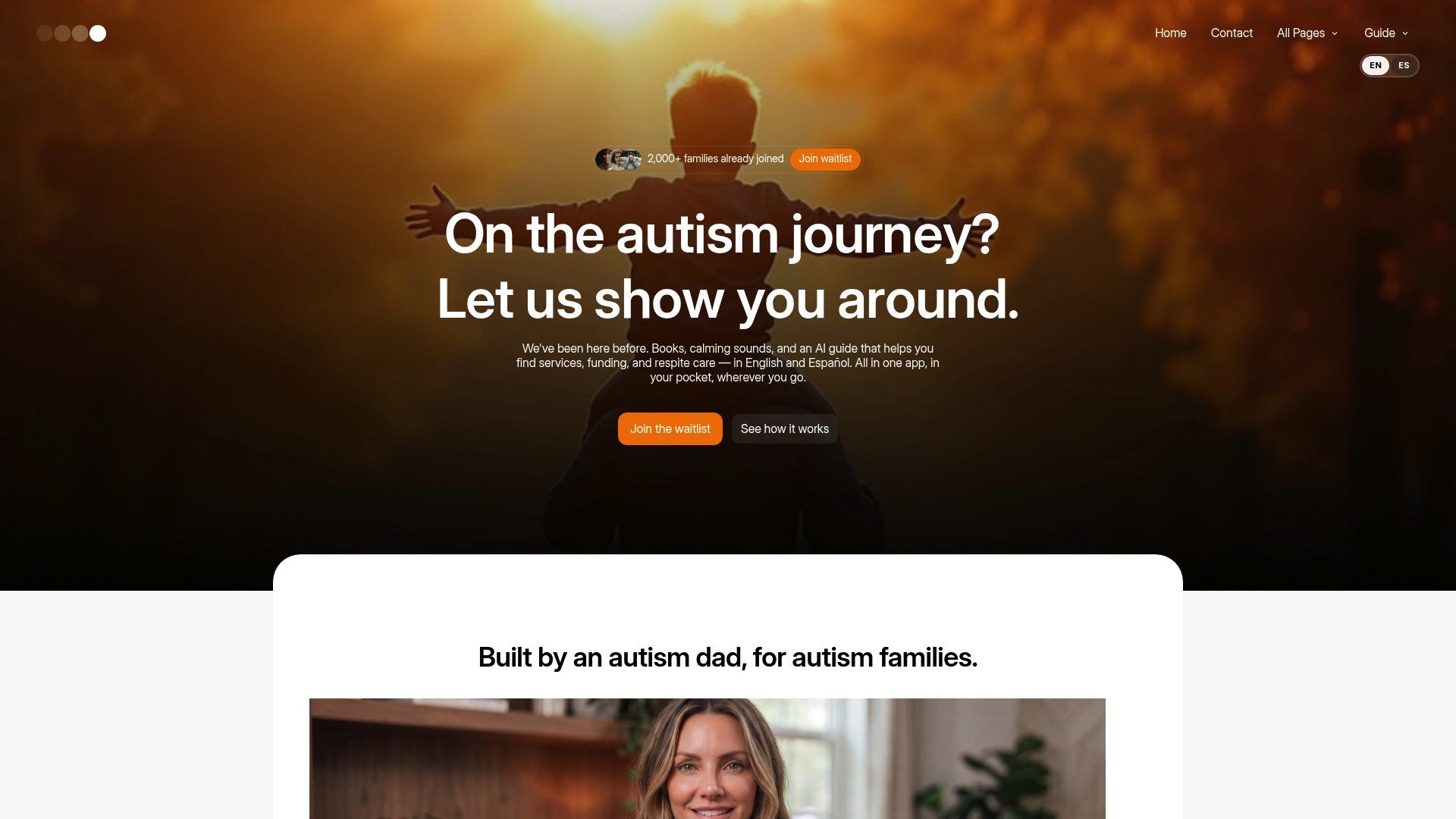
The app won't replace an attorney, and nothing here substitutes for legal advice specific to your state. What it does is help you organize the groundwork: tracking SDM trial outcomes, keeping documents in one place, and pointing you toward the right state resources before you ever sit down with a lawyer. Current pricing and trial details are available on the provider's pricing page. Check the Autism Victory pricing page or explore the full Autism Victory app to start your trial today.
Where to Go for Authoritative Guidance and Legal Help
Start with the ACL's guidance on supported decision-making and your state's SDM resource directory. For an actual legal filing, contact your state's protection and advocacy agency or a disability attorney directly.
This article is general information, not a substitute for advice from a qualified lawyer. Consult a qualified legal professional about your own circumstances before acting on anything here.
Sources
Guardianship: Key concepts and resources (U.S. Department of Justice)
Preserving the right to self-determination through supported decision-making (ACL)
Supported decision-making and guardianship comparison (Disability Law Center)
Guardianship for autistic adults (Harvard Adult Autism Program)
FAQ
What Are the Key Differences Between Guardianship and Supported Decision-Making?
Guardianship transfers legal decision-making authority to a court-appointed guardian and can remove civil rights like voting or contracting. Supported decision-making leaves that authority with the individual, who uses trusted supporters to help understand and communicate choices, according to the Texas Council for Developmental Disabilities.
Do Autistic People Find It Hard to Make Decisions?
Difficulty varies enormously across autistic individuals and isn't a given for the diagnosis itself. Some autistic adults make complex decisions independently, while others benefit from communication supports or simplified formats to weigh options clearly, which is exactly what SDM is designed to provide.
Do Autistic Adults Need a Legal Guardian?
Not automatically, and many don't. Guardianship is typically considered only when someone cannot communicate preferences at all or faces a serious safety or exploitation risk, with courts expected to weigh less-restrictive alternatives like SDM first, per the Disability Law Center.
What Are the Disadvantages of Guardianship?
Guardianship can remove civil rights and daily autonomy, requires ongoing court reporting, and comes with real cost and time to establish. Reversing it later is usually harder than starting there in the first place, since restoring rights typically means filing a petition and proving regained capacity in court.
Can Autism Victory App Help Me Decide Between These Options?
Autism Victory App gives you state-specific resources, planning checklists, and AI-guided support to organize your decision, though it doesn't replace legal advice from an attorney. You can explore the tools with a 5-day free trial through the pricing page.
Recommended