
Autism Job Training Programs: A Parent’s Guide
The most effective starting point for most families is a call to your state’s Vocational Rehabilitation (VR) agency. From there, the right program type depends on where your family member is right now. Here is a quick map:
Recent high school grad (18–21, still in transition age): Project SEARCH or a school-district transition program. These are designed exactly for this window.
Young adult with solid soft skills and interest in tech: Aspiritech Academy or Specialisterne USA Academy, both of which offer remote, cost-free training.
Adult who needs ongoing support to stay employed: Supported employment (Individual Placement and Support model) through a local provider, funded through VR or a Medicaid waiver.
First step: Call your state VR office (find it at careeronestop.org) and say: “I’m looking for employment services for my adult child with an autism diagnosis. Can you tell me how to open a case?”
Table of Contents
What kinds of autism job training programs exist in the U.S.?
What does a high-quality program actually include?
How to find programs in your state and choose the best fit
How are these programs paid for, and who qualifies?
What to expect: timelines and realistic outcomes
National model programs worth researching
Practical strategies to build workplace stamina at home
Key Takeaways
The part of this process most families underestimate
Autism Victory App can help you search smarter, not harder
Authoritative sources to consult next
What kinds of autism job training programs exist in the U.S.?
The term “autism job training programs” covers several distinct program types, and they are not interchangeable. Knowing the category helps you search smarter.
State Vocational Rehabilitation (VR): Federally funded through the Workforce Innovation and Opportunity Act (WIOA), VR agencies in every state provide individualized plans for employment, job coaching, and funding for training. VR is often the payer behind other programs on this list.
Supported Employment / IPS (Individual Placement and Support): A model focused on placing adults in competitive, integrated employment quickly, then providing on-the-job coaching. Best for adults who are ready to work but need ongoing support.
Project SEARCH: A one-year, employer-hosted internship program typically based in hospitals or large businesses. Designed for transition-age youth (18–21) finishing high school. Participants rotate through real departments and receive daily job coaching.
Community college and vocational certificate programs: Programs like Dallas College’s Uniquely Abled Academy offer hands-on, industry-specific training (machining, CNC operation) with eligibility requirements including a high school diploma or GED and the ability to attend independently.
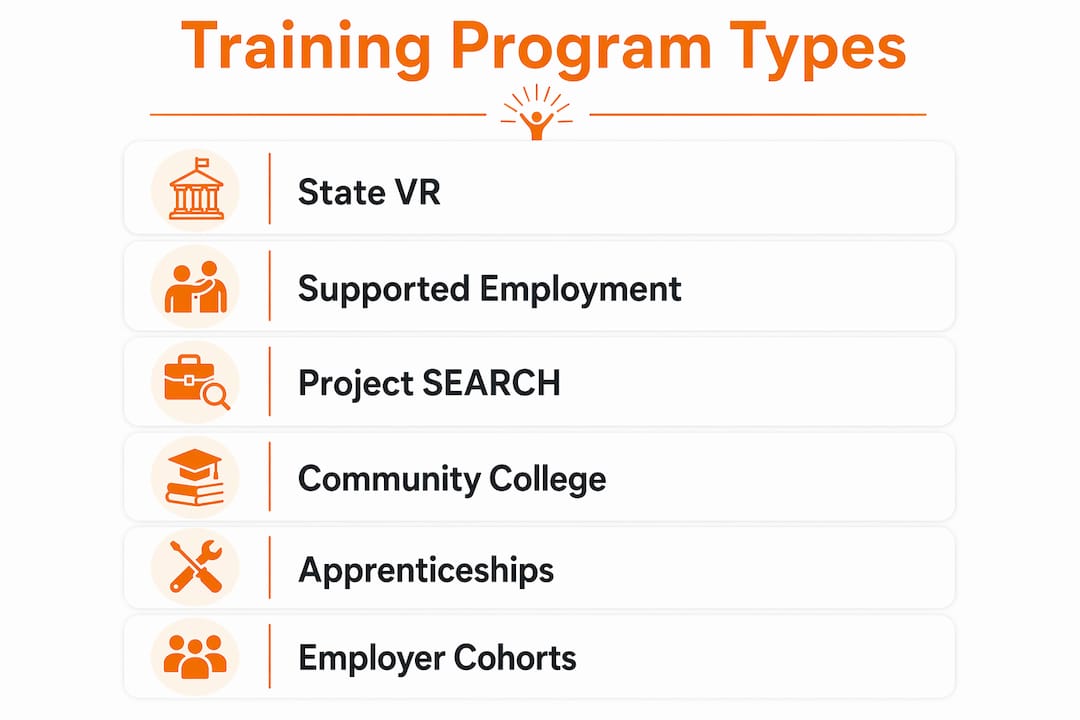
Apprenticeships and pre-apprenticeships: Aspiritech Academy offers cost-free remote training in QA and cybersecurity, with a registered pre-apprenticeship in cybersecurity approved by the U.S. Department of Labor.
Employer-run cohort programs: University-based and nonprofit programs such as Towson University’s Autism Hiring Program and the PATHS program at the University of Florida pair technical training with employer mentorship.
Pro Tip: If your family member has strong focus and attention to detail but struggles with unstructured social settings, start with a structured cohort program (tech, machining, or QA) rather than an open job-search approach. The structure itself is part of the support.
What does a high-quality program actually include?
Good programs balance soft-skill coaching with real work practice and treat the employer as a second client, not just a placement destination. Employer training on ADA compliance and neurodiversity is one of the clearest signs a program is serious about retention, not just placement.

Feature | Green Flag | Red Flag |
|---|---|---|
Employer involvement | ADA training, on-site coaching, post-hire mentorship | No named employer partners |
Workplace simulation | Real tasks, timed shifts, stamina-building | Worksheets only, no real work practice |
Staff credentials | Certified job coaches, defined staff-to-participant ratios | Vague staffing descriptions |
Outcome transparency | Placement rates, follow-up duration shared openly | “Guaranteed employment” promises |
Post-placement support | Ongoing coaching after hire | Support ends at job start |
Ask these questions on your first call or tour:
What is your staff-to-participant ratio? (NFAR Tech, for example, runs a 6:1 ratio)
Do you provide employer training on ADA and neurodiversity?
What is your placement rate, and how long do you follow participants after placement?
Which employers have hired your graduates in the last 12 months?
How to find programs in your state and choose the best fit
Use this numbered sequence. It is prioritized, not alphabetical.
Call your state VR office. Ask to open a case and request a list of approved employment service providers in your area. VR is the gateway to funding and referrals.
Contact your school district’s transition coordinator if your family member is still 21 or younger and enrolled in school. Transition teams can refer directly to Project SEARCH sites and other transition-to-work programs.
Visit your local American Job Center (One-Stop). Staff can connect you to WIOA-funded training and local employer partnerships.
Request program waitlist forms immediately. Many programs have waitlists of several months. Getting on a list does not commit you to anything.
Schedule a tour or intake call. Use the green-flag questions above. Ask for outcome data in writing.
Collect eligibility paperwork now. Most programs require diagnosis documentation and educational credentials before an application can move forward. Gather these months ahead of your target start date.
Pro Tip: Cohort programs often start on fixed dates, two or three times per year. Time your tour and application at least 60 days before the next cohort opens so paperwork delays do not cost you a full cycle.
How are these programs paid for, and who qualifies?
Funding Source | What It Covers | Key Eligibility Step |
|---|---|---|
State VR (Division of Vocational Rehabilitation) | Training costs, job coaching, transportation support | Open a VR case; provide diagnosis and employment goal |
Medicaid Home and Community-Based Waivers | Supported employment services, job coaching | Join your state’s waiver waitlist early |
WIOA / Workforce Development | Vocational training, American Job Center services | Enroll at local One-Stop; income or disability eligibility |
Ticket to Work (SSA) | Connects SSI/SSDI recipients to employment services | Assign your Ticket to an approved Employment Network |
Nonprofit / program scholarships | Tuition, materials, stipends | Varies by program; apply directly |
Private pay | Any program not covered above | No eligibility gate; cost varies widely |
If your family member receives SSI or SSDI, the Ticket to Work program lets them access employment services without immediately losing benefits. Assign the Ticket to an approved Employment Network, not just any provider.
One caution: a program’s brochure may list VR as a payer, but VR authorization takes time. Do not assume funding is confirmed until VR issues a written approval. Start the VR process months before the program’s target start date.
What to expect: timelines and realistic outcomes
Program lengths vary considerably. Short cohorts such as Towson’s Autism Hiring Program and Specialisterne USA Academy run for a duration of several weeks. Longer vocational pathways such as NFAR Tech run 8 months. Ongoing supported employment has no fixed end date by design.
Most reputable programs are employment preparation, not placement guarantees. Participants still apply and interview through standard hiring processes. Confirm whether a program includes post-hire coaching before you enroll, because support that ends on the first day of work is rarely enough.
Measurable milestones to track during training: attendance consistency, task independence scores, mock-interview performance, and the ability to handle schedule changes without significant distress. Meristem builds workplace stamina through real work tasks, including grounds-keeping, commercial kitchen work, and event support, precisely because tolerating a full workday is a skill that must be practiced, not assumed.
National model programs worth researching
Project SEARCH: Hospital and employer-hosted, one-year transition program for youth 18–21. Find local sites through the Project SEARCH website. Best for: transition-age youth who need structured, real-workplace experience.
Meristem: Residential and day programs for autistic young adults that emphasize experiential learning and stamina-building through real work tasks. Best for: young adults who need extended, supported preparation before competitive employment.
Els for Autism: Offers a 10-week Work Experience program, Career Exploration and Training (CET), and the U Can Employ employer training component. Industries covered include hospitality, healthcare, and warehousing. Best for: adults who benefit from vocational labs and employer mentorship.
Specialisterne USA Academy: An 8-week, fully online program covering IT and AI fundamentals with approximately 30 hours per week of commitment. Best for: adults with strong focus who want tech-sector preparation.
Aspiritech Academy: Remote, cost-free QA and cybersecurity training with a U.S. Department of Labor-registered pre-apprenticeship pathway. Best for: adults seeking a tech credential with a clear industry connection.
Towson University Autism Hiring Program: A no-cost 10-week cohort with weekly one-on-one and peer group meetings, plus employer training on ADA and workplace inclusivity. Explicitly labeled employment preparation, not a placement guarantee.
To find local Project SEARCH sites and state VR contacts, search “Project SEARCH [your state]” and “vocational rehabilitation [your state]” directly. The U.S. Office of Disability Employment Policy (ODEP) at dol.gov/odep and the Job Accommodation Network (JAN) at askjan.org are also authoritative starting points for employer accommodation guidance.
Practical strategies to build workplace stamina at home
Training programs expect participants to show up ready to work, not just ready to learn. These at-home practices close that gap.
Simulate a shift routine: Set a consistent start time, a defined break, and an end time. Practice this daily, even on weekends, for at least four weeks before program start.
Timed task practice: Assign a task (folding laundry, sorting items, data entry practice) and gradually increase the uninterrupted work period from 15 minutes to 45 minutes over four weeks.
Sensory break planning: Identify two or three sensory regulation strategies your family member can use independently. Practice using them on a schedule, not only when distress peaks.
Role-play customer or coworker interactions: Script common workplace exchanges (greeting a supervisor, asking for clarification, handling an unexpected change) and practice them weekly.
Use community settings as low-risk environments: Volunteer roles at a library, food bank, or community garden provide real task demands with lower social stakes than a paid job. Some simulated service environments used in disability support programs follow a similar logic.
Pro Tip: Coordinate your at-home practice timeline with the program’s intake date. If the cohort starts in 6 weeks, begin the shift-routine simulation now so the habit is already established when training begins.
Key Takeaways
State VR is the single most important first call for any family pursuing autism job training programs, because it unlocks funding, referrals, and an individualized employment plan.
Point | Details |
|---|---|
Call state VR first | VR is the gateway to funding and approved provider referrals in every state. |
Gather paperwork early | Diagnosis documentation and educational credentials are required by most programs; collect them months ahead. |
Programs prepare, not guarantee | Confirm post-hire coaching is included; placement rates and follow-up duration should be shared in writing. |
Build stamina before enrollment | Daily shift simulations and timed task practice at home increase readiness for program demands. |
Autism Victory App | Use the app’s state-specific resource navigator to find waiver waitlists, VR contacts, and program checklists in one place. |
The part of this process most families underestimate
The families who get the best outcomes from vocational programs are rarely the ones who found the “perfect” program. They are the ones who treated the search itself as a long-term project and kept showing up even when waitlists were long and paperwork was lost.
Here is what tends to get overlooked: soft skills are almost always the primary barrier to sustained employment for autistic adults, not technical ability. Programs know this. When a program spends half its curriculum on workplace communication, disclosure, and self-advocacy, that is not filler. That is the work. Parents who push back on soft-skill emphasis because their family member “already knows how to talk to people” often find out later that structured, observable practice in those areas was exactly what was missing.
Document every small win. Attendance streaks, completed mock interviews, a shift completed without a meltdown. These are data points you can bring to a VR counselor to justify continued funding or a program upgrade. Progress that is not documented tends to get discounted.
And when a program does not work out, that is information, not failure. It tells you something specific about what the next program needs to include.
Autism Victory App can help you search smarter, not harder
Finding the right program is only half the work. The other half is tracking waitlists, gathering paperwork, understanding how SSI interacts with employment income, and knowing which Medicaid waivers are open in your state right now. That is where Autism Victory App saves families real time.
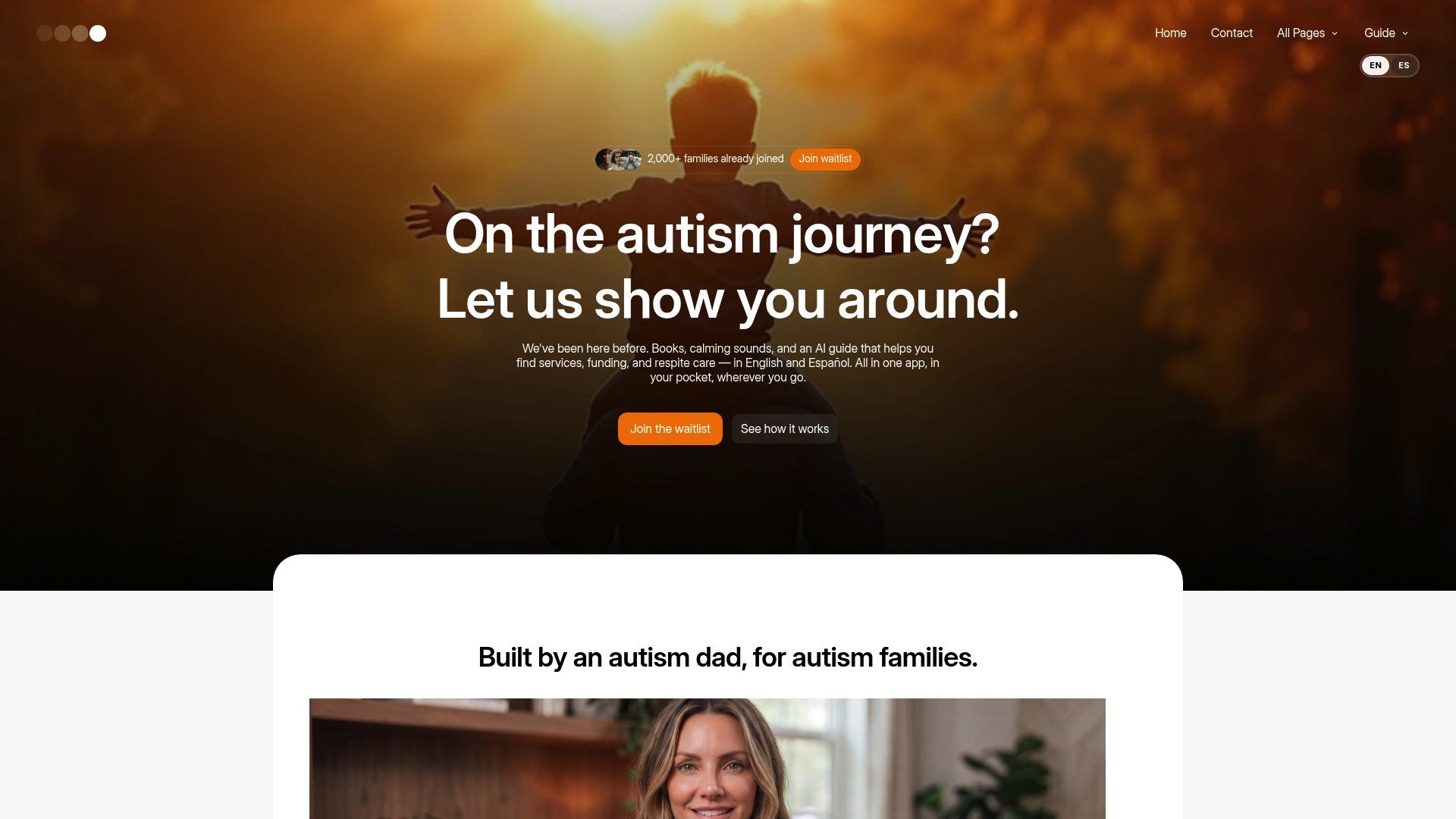
The app’s state-specific resource navigator pulls together VR office contacts, Medicaid waiver waitlist data, SSI guidance, and step-by-step checklists so you are not starting from scratch with every phone call. Caregiver-focused books, audiobooks, and educational videos are available in both English and Spanish. The community inside the app connects you with other parents who have already navigated this process and can tell you what actually worked in their state.
Start with a 7-day free trial and open the employment resources section first. The state-specific navigator is the fastest way to find your VR office contact and check current waiver availability without spending hours on hold.
Authoritative sources to consult next
State VR finder: careeronestop.org/LocalHelp/service-locator.aspx — find your state’s VR office and One-Stop centers
U.S. Office of Disability Employment Policy (ODEP): dol.gov/odep — employer guidance, policy resources, and neurodiversity hiring initiatives
Job Accommodation Network (JAN): askjan.org — free consultation on workplace accommodations under the ADA
Project SEARCH: projectsearch.us — locator for hospital and employer-hosted transition sites by state
Specialisterne USA Academy: us.specialisterne.com/academy — remote tech cohort enrollment and eligibility
Aspiritech Academy: aspiritech.org/aspiritech-academy — QA and cybersecurity training with apprenticeship pathways
Els for Autism Employment Programs: elsforautism.org — Work Experience, CET, and employer training resources
Meristem: meristem.pro — experiential programs for autistic young adults focused on stamina and real work
Save these links in a central folder, whether that is a browser bookmark, a notes app, or the resource section inside Autism Victory App, so you are not hunting for them again when a program’s next cohort opens.
This article is general information for educational purposes. Confirm current eligibility rules, funding availability, and program details directly with each program and your state VR agency.
Recommended