
Yes, you can join a Medicaid autism waiver waitlist in every state, and in most states you should register today, not after diagnosis paperwork is perfect. Call your state's Medicaid or developmental disabilities agency, or use a state-specific waiver guide, to find the registry phone number or online portal. Placement on the list starts a clock that, in some states, runs over a decade, so waiting to register costs you real time.
TL;DR:
Waiting times for Medicaid autism waivers can exceed ten years in states like North Carolina and Texas, with some lists lasting nearly two decades.
Registering promptly, even with incomplete paperwork, and documenting crises or evaluations can improve priority and reduce wait times.
States manage demand through either open interest lists or need-based screenings, affecting how families should approach registration and follow-up.
Building a detailed and current documentation trail can significantly impact the speed of moving through the waiting process once a slot becomes available.
Table of Contents
How Do I Get on the Waitlist, and Can I Improve My Priority?
What Does a Waiver Cover, and What Can You Do While You Wait?
How Autism Victory App's State Guides Help You Navigate This
What Is a Medicaid Autism Waiver, and Who Qualifies?
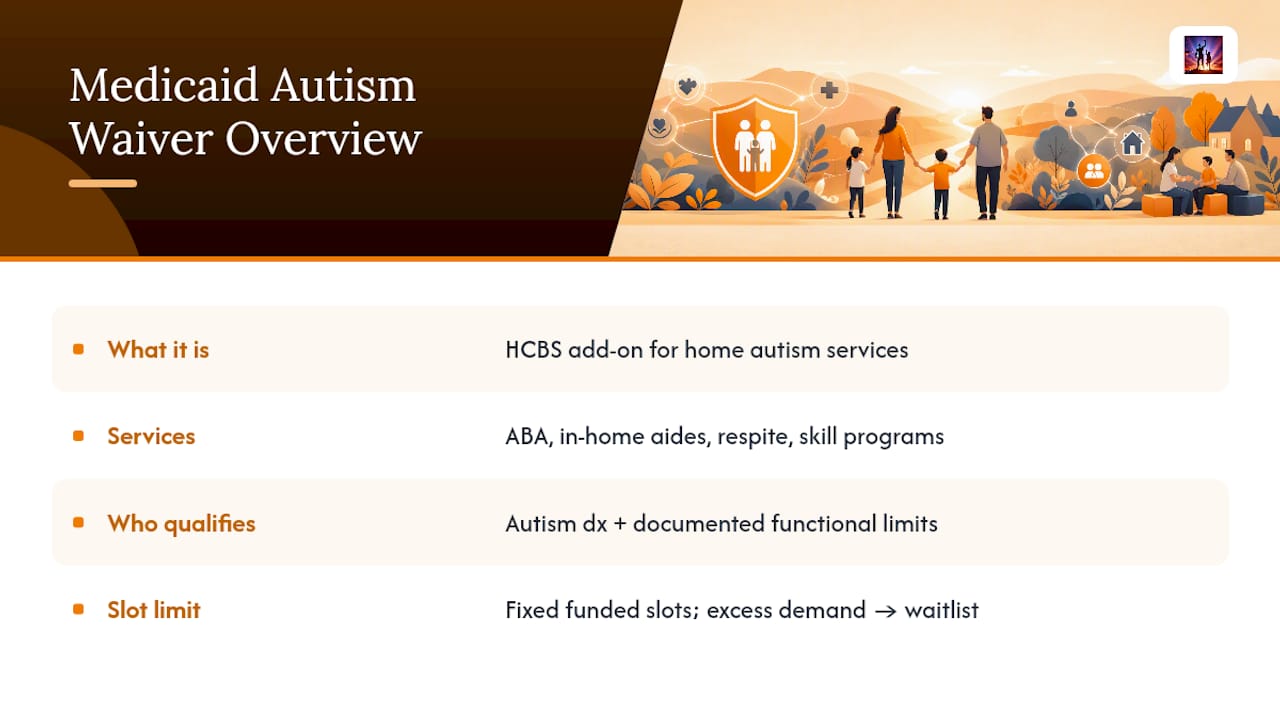
A Medicaid autism waiver is a version of Home and Community Based Services (HCBS) funding that lets your child receive therapy, respite, and behavioral supports at home instead of in an institution. Standard Medicaid covers medical care; the waiver adds the wraparound services autism families actually rely on, like applied behavior analysis, in-home aides, and skill-building programs.
Some states run autism-specific waivers. Others fold autism into a broader intellectual and developmental disability (I/DD) waiver. Eligibility usually hinges on a formal autism diagnosis, documented functional limitations in daily living, and sometimes an age cutoff or IQ threshold, depending on the state's waiver design.
Here's the part most parents don't expect: waivers are capped by a fixed number of "slots" that state legislatures fund each year. Medicaid itself is not capped, but waiver slots are. When demand exceeds funded slots, a waitlist forms. That's the entire origin of the problem you're dealing with. It isn't red tape for its own sake. It's a budget line that hasn't kept pace with need. For a fuller breakdown of eligibility rules by category, Autism Victory App's waiver explainer walks through the specifics.
How Do State Waitlists Actually Work?
States manage waiver demand through one of two basic models, and knowing which one your state uses changes how you should approach registration.
Open interest lists: You register your name and wait in the order you signed up, with no clinical screening at intake.
Screened waitlists: The state evaluates need before or shortly after you register, then ranks you by urgency.
Six states, Florida, Iowa, Oklahoma, Oregon, South Carolina, and Texas, use non-screening interest lists and together account for more than half of everyone waiting nationally, according to a 50-state waitlist analysis. Pennsylvania takes the opposite approach: its Office of Developmental Programs sorts applicants using a Prioritization of Urgency of Need for Services (PUNS) style system, and more than 10,000 people currently sit in its Emergency or Critical categories on the state's autism services page.
Once you're placed, expect periodic reassessments, typically annually, to confirm your information is current and your priority level still fits your situation. Missing a reassessment notice is one of the most common reasons families lose their spot.
How Long Is the Wait for Autism Waiver Services?
Averages hide brutal extremes, and that's exactly why you need your state's real numbers, not a national estimate. North Carolina's Innovations Waiver waitlist held over twenty thousand people as of early 2026, with an average wait spanning more than a decade and a majority diagnosed with autism, per the state's dashboard data. Texas has reported waits stretching up to nearly two decades on some interest lists. Connecticut's legislature documented 2,249 people on its dedicated Autism Waiver waitlist, with only 217 actively receiving services at the time of its 2025 report to the General Assembly.
State | Waitlist Size | Reported Wait Time |
|---|---|---|
North Carolina | large waitlist | average wait over a decade |
Texas | large interest lists | wait times reported up to nearly two decades in some programs |
Connecticut | over two thousand on waitlist | about two hundred receiving active services |
Pennsylvania | over eleven thousand on waitlist | more than ten thousand in Emergency/Critical priority |
"On the list" and "receiving services" are not the same status, and state dashboards often blur that line. When you talk to your case worker, ask specifically where your child ranks within your priority category, not just your position on the overall list, since urgency tier moves faster than raw chronological order in screened states.
How Do I Get on the Waitlist, and Can I Improve My Priority?
Getting registered is simpler than most parents assume. Improving your position later takes documentation and persistence.
Find your state's registry. Search your state Medicaid agency or Department of Developmental Disabilities website, or call your county's intake office directly.
Register immediately, even with incomplete paperwork. Most states let you start the clock and submit supporting documents afterward.
Gather diagnosis and functional evidence: diagnostic letters, psychological evaluations, and school IEPs. Keep copies of everything you send.
Document any crisis or safety risk, such as a caregiver's health emergency or a behavioral incident requiring hospitalization, and ask explicitly how to request a priority reassessment.
Pro Tip: Every time you update your file or speak with a caseworker, ask for a reference number or written confirmation. A five-minute call today can save you weeks of proving you actually registered when your name finally comes up.
What Does a Waiver Cover, and What Can You Do While You Wait?
Waivers typically fund applied behavior analysis, respite care, in-home support staff, behavioral health services, and, for older individuals, employment and independent living supports.
While you wait, several supports can fill real gaps:
Supplemental Security Income (SSI) for households that meet income limits.
IDEA-mandated school services, including speech, occupational therapy, and behavioral supports delivered through your child's IEP.
Medicaid state-plan services, which exist separately from waivers and don't carry the same waitlist.
Local nonprofit grants and respite funding, often available through regional autism organizations.
Layering these supports isn't just a stopgap. Documenting what you've used and what's still missing builds the case file that matters when a reassessment or priority review comes up. The Autism Society recommends contacting local Information & Referral specialists specifically to map out what's available in your area beyond the waiver itself. For a fuller rundown of funding sources, see Autism Victory App's financial assistance guide.
What Happens When a Waiver Slot Finally Opens?
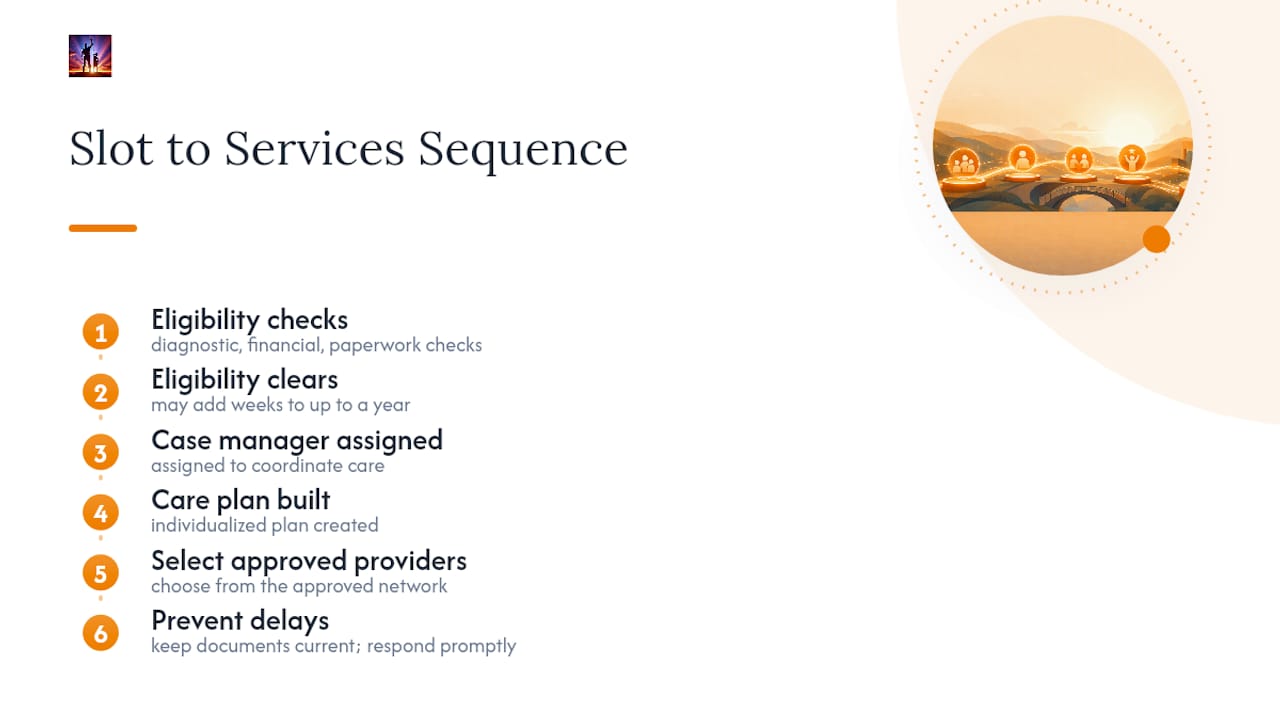
Getting the call is not the finish line. States run eligibility checks, including diagnostic confirmation, financial screening, and paperwork verification, that can add weeks or, in Connecticut's case, up to a year to actual service start, according to the state's legislative waitlist report.
Once eligibility clears, onboarding begins: a case manager gets assigned, a care plan gets built, and you select providers from the approved network. This stage moves faster when your paperwork is already current. Respond to every request within the deadline given, and keep updated evaluations on hand so nothing stalls the process on your end.
Where Do You Find Official Waitlist Data and Contacts?
Start with your state Medicaid agency and Department of Developmental Disabilities or Developmental Services website. Both typically publish waiver names, registry phone numbers, and sometimes live dashboards showing waitlist size. Medicaid is the federal index that points you to every state's approved waiver programs, a useful starting point if you're not sure what your state calls its program.
When you call, ask for your waitlist identification number and your current priority status in plain language. Save every confirmation email, screenshot the online portal after each update, and write down the name of whoever you spoke with. That paper trail becomes essential if your case gets questioned later.
How Autism Victory App's State Guides Help You Navigate This
Every state runs its waiver program differently, which is exactly why Autism Victory App's 50-state waitlist guide exists. It compiles registry contacts, program names, and waitlist context by state so you're not starting from a blank search. Paired with the app's AI guidance, checklists, and document trackers, it's built to help you prepare evidence and keep records straight, complementing, not replacing, your state's own official pages.
The Waitlist System Rewards Preparation, Not Patience
Most advice on this topic treats waiting as passive, something you endure while the system works through its queue. That framing is wrong, and it costs families time they don't get back. The states with the longest waits, North Carolina at over twelve years, Texas approaching eighteen, aren't waiting for you to be ready. They're waiting for funding that legislatures control, and your position in that queue is often more responsive to documentation than to luck.
The conventional advice, "register and wait," misses the real lever: screened states move people by urgency category, not just by sign-up date. If you never document a crisis, a regression, or a caregiver's health emergency, you stay in the same tier indefinitely, even as your child's needs grow. Connecticut's own legislative report shows the bigger bottleneck isn't demand alone, it's onboarding and paperwork delays that add months after a slot opens.
Prioritize two things: register now, in every waiver program your child might qualify for, and build a paper trail before you need it. Everything else is secondary.
— Ronnie Talent
Get State-Specific Help Instead of Guessing Alone
Autism Victory App is the alternative to piecing together registry numbers and eligibility rules from a dozen scattered government pages. Instead of hunting through your state's website while you're already stretched thin, you get state-by-state waitlist summaries, downloadable checklists for diagnosis and functional documentation, and AI guidance that walks through your specific situation.
A free trial period lets you explore these tools before deciding on a subscription. If you're currently staring down a waitlist call you've been putting off, start by downloading the state waitlist guide and visiting the Autism Victory App home page to see what fits your family's next step.
This article is general information, not a substitute for advice from a qualified financial advisor. Consult a qualified financial professional about your own circumstances before acting on anything here.
Sources
FAQ
What Is a Medicaid Waiver for Autism?
It's a Home and Community Based Services program that funds therapy, respite, and in-home support for autism outside standard Medicaid coverage, run through state-specific waivers with limited annual slots.
How Long Is the Waiting List for Autism Services?
It varies enormously by state. North Carolina's average sits at 12.26 years, Texas has reported waits up to 17 to 18 years in some programs, and Connecticut's dedicated Autism Waiver had 2,249 people waiting with only 217 receiving active services.
Can I Get a Medicaid Waiver in Florida If I Have Autism?
Yes, but Florida uses a non-screening interest list, meaning you register without an initial urgency evaluation, and it's one of six states accounting for over half the people waiting nationally.
Do You Automatically Get Medicaid If You Have Autism?
No. An autism diagnosis alone doesn't grant Medicaid or waiver enrollment; families must meet income and disability criteria and separately register for waiver waitlists, which run independently of standard Medicaid eligibility.
Recommended