Start with three moves this month: open an ABLE account if your child qualifies, talk to a special needs attorney about a trust before any inheritance or settlement arrives, and begin tracking every therapy, equipment, and care expense in one place. From there, check the Social Security Administration and IRS rules that govern your options. Below, we walk through programs, trusts, budgeting, transition planning, and who belongs on your team.
TL;DR:
Opening an ABLE account is essential before age 26, with a $19,000 annual contribution limit in 2026, and rollover options from 529 plans.
For inheritances or larger assets, establishing a third-party or first-party special needs trust is critical to protect benefits and avoid Medicaid payback requirements.
Early application to Medicaid waivers and diligent tracking of disability-related expenses can significantly improve access to support services and documentation.
Transition planning before age 18 should include gathering records, exploring work incentives, and considering guardianship or decision-making alternatives suited to your child's capacity.
Building a team of professionals, including attorneys, financial planners, and medical advisors, coupled with state-specific guidance, strengthens long-term financial and care planning.
Table of Contents
ABLE accounts, SSI, and Medicaid: the programs that anchor your plan
Special needs trusts: protecting benefits from larger assets
Budgeting and saving strategy from daily costs to long-term goals
Transition planning and work incentives before age 18
Building your planning team and gathering essential documents
How state-specific tools and bilingual guides help you plan
Estimating future care and housing costs for an autistic child
Planning for guardianship and decision-making support after childhood
Education savings options and funding special education needs
Building financial independence and skills for your child
Tax considerations beyond ABLE accounts and trusts
A caregiver's perspective: practical reassurance and priorities
How Autism Victory supports your next step
Sources
ABLE accounts, SSI, and Medicaid: the programs that anchor your plan
Three public programs form the foundation almost every family builds on. Understanding how they interact matters more than mastering any one of them in isolation.
An ABLE account is a tax-advantaged savings account for people whose disability began before age 26, and it lets your child save and spend money on qualified disability expenses without losing eligibility for SSI or Medicaid, as long as the balance stays under the program limit. In 2026, the annual contribution limit matches the federal gift tax exclusion of $19,000, and if your child works, they can add extra earnings on top of that limit, up to the federal poverty guideline for a one-person household. IRS Publication 907 also allows rollovers from a 529 college savings plan into an ABLE account, and some contributors may qualify for the saver's credit.
SSI for children works differently than most benefits parents have dealt with before. Because your child has no income of their own, the SSA counts a portion of your household income and resources against the child's eligibility, a process called deeming. In 2026, deeming thresholds begin affecting eligibility once a single parent with no other ineligible children earns $4,101 or more per month. Gather medical records, school evaluations, and income documentation before you apply, since incomplete files are the most common reason applications stall.
Medicaid and its Home and Community-Based Services (HCBS) waivers often matter more than SSI itself, since many therapies, respite care, and support services run through Medicaid rather than cash benefits. Waitlists for waivers can run for years in some states, so the earlier you apply, the better.
What to do now:
Open an ABLE account if your child's disability began before age 26 and document the diagnosis date.
Start collecting medical, educational, and financial records for an SSI application.
Search your state's Medicaid waiver portal and join any waitlist today, even before you're sure you'll need it.
Track every disability-related purchase so you can prove qualified expenses later.
One in-kind detail families miss: if relatives provide free housing or food, SSA counts that as in-kind support and maintenance, which can reduce a monthly SSI payment by up to $351.33 depending on living arrangements. Our SSI guide for autism breaks down payment amounts and appeal steps in more detail, and our ABLE account comparison walks through state-by-state program differences.
Special needs trusts: protecting benefits from larger assets
ABLE accounts have contribution caps, so when a grandparent leaves an inheritance, a life insurance policy pays out, or a lawsuit settlement arrives, you generally need a special needs trust instead.
A third-party special needs trust holds money that never belonged to your child, funded by parents, grandparents, or other relatives. It has no Medicaid payback requirement, so whatever remains when your child passes can go to other family members or causes you choose.
A first-party (self-settled) special needs trust holds money that legally belongs to your child, often from a settlement or an inheritance received directly. These trusts require a Medicaid payback provision: when your child passes away, the state must be reimbursed from remaining trust funds for Medicaid benefits paid during their lifetime.
Both trust types let your child benefit from the funds without disqualifying them from SSI or Medicaid, which is the entire point of using one.
Never name your child directly as a life insurance beneficiary; name the trust instead.
Have a special needs attorney draft or review trust language before any settlement or inheritance is finalized.
Choose a trustee carefully: a family member understands your child's needs but may lack administrative experience, while a professional or corporate trustee brings expertise but charges fees and knows your child less personally. Many families use both, a family co-trustee alongside a professional one.
Revisit trust documents every few years, especially after a move, a marriage, or a change in your child's needs.
Pro Tip: Ask any attorney you interview how many special needs trusts they've drafted in the past year, not just whether they "do estate planning."
Budgeting and saving strategy from daily costs to long-term goals
A workable budget for a family raising an autistic child looks different from a typical household budget because recurring costs like therapy co-pays, adaptive equipment, transportation to appointments, and respite care rarely show up in generic templates.
List every recurring disability-related cost separately from general household expenses, including therapy co-pays, specialized food or supplements, and respite care.
Build an emergency fund that covers at least three to six months of these specific costs, since gaps in therapy or support services can compound quickly.
Route day-to-day qualified expenses through the ABLE account, reserve trust funds for larger or long-term needs, and keep family savings for anything that doesn't fit either category.
Keep receipts and a simple log of every ABLE withdrawal, since the IRS and SSA can both request documentation proving an expense was disability-related.
Start with a spreadsheet; upgrade to dedicated budgeting software once you're tracking more than two or three account types regularly.
Transition planning and work incentives before age 18
Eligibility for adult SSI is not automatic once your child turns 18. SSA conducts a redetermination using adult disability criteria, which can differ from the childhood standard, and some families are surprised to learn benefits can be reduced or denied at this point.
A few programs soften the transition if your child is able to work. Ticket to Work connects beneficiaries with employment support while protecting benefits during a trial period, and a Plan to Achieve Self-Support (PASS) lets your child set aside income toward a work goal without it counting against SSI. Earnings above the Substantial Gainful Activity (SGA) threshold can affect eligibility, so any employment change is worth discussing with SSA beforehand.
Start transition planning in your child's IEP meetings by age 14 or 16, focusing on money skills and vocational referrals.
Request medical and school records well before the 18th birthday redetermination.
Loop in school transition staff for supported employment options.
Call SSA before your child accepts a job offer, not after.
Our turning-18 benefits checklist lays out this timeline two years ahead, which gives you room to fix documentation gaps before they become denials.
Building your planning team and gathering essential documents
No single person has every answer here, so the team you assemble matters as much as any individual decision.
A special needs attorney to draft trusts, powers of attorney, and guardianship alternatives.
A CFP® or financial planner with special-needs planning experience to coordinate ABLE, trust, and insurance strategy.
A tax advisor familiar with disability-related credits and ABLE rollover rules.
A trustee or professional case manager if your trust will be funded with significant assets.
Essential documents to have ready: a letter of intent describing your child's routines and preferences, signed trust documents, a will, a durable power of attorney, a health care proxy, updated beneficiary designations, and your ABLE account paperwork.
Pro Tip: When interviewing advisors, ask directly how many special needs cases they've handled and how they coordinate with benefits programs, not just what their fees are.
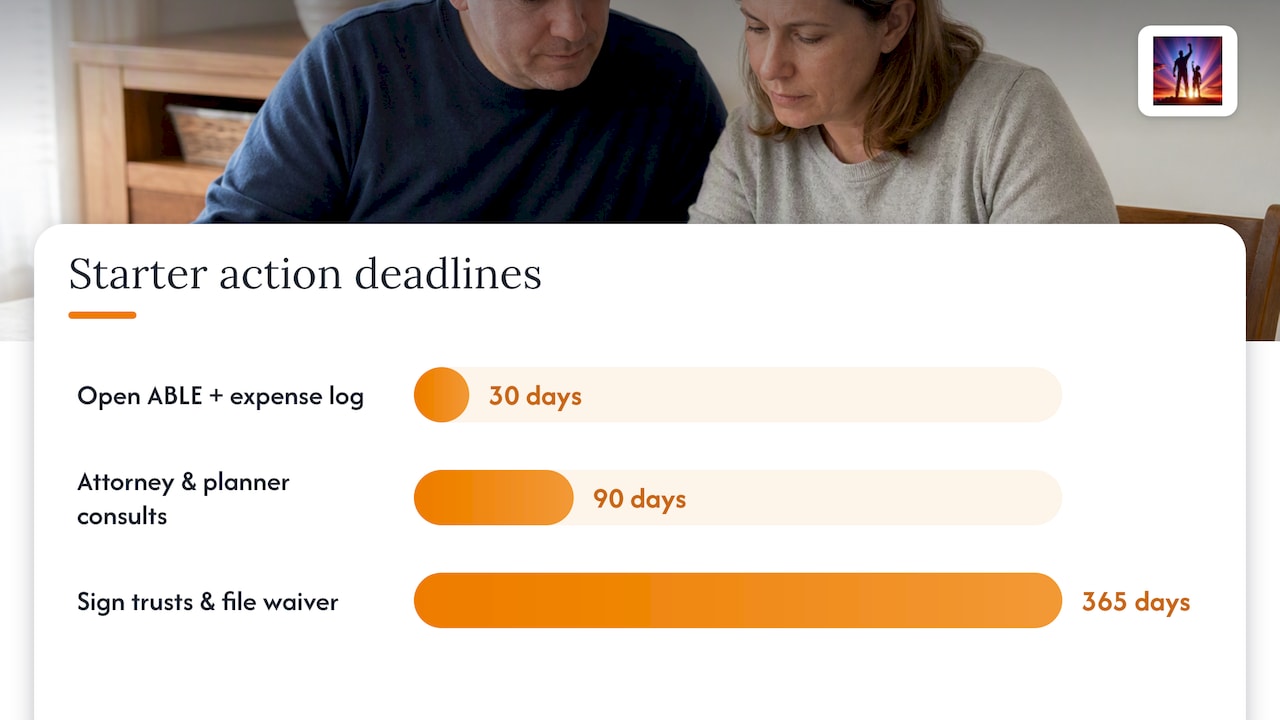
30/90/365-day starter checklist: open an ABLE account and start an expense log in 30 days; schedule attorney and financial planner consultations in 90 days; have trust documents signed and a Medicaid waiver application submitted within 365 days.
How state-specific tools and bilingual guides help you plan
Every state runs its own ABLE program and Medicaid waiver system, which means generic national advice only takes you so far.
Review SSI payment amounts and appeal steps tailored to autism cases.
Access bilingual guides, including Spanish-language financial planning content, if your family communicates best in Spanish.
Download checklists for ABLE setup and the turning-18 transition inside the app.
This article was prepared by Ronnie Talent for Autism Victory's caregiver resource library.
Estimating future care and housing costs for an autistic child
Long-term cost estimates vary enormously depending on your child's support needs, but the biggest driver for most families is adult living support, not childhood therapy. Housing alone can range from a supported apartment with part-time staff to a group home with round-the-clock care, and the gap between those options in annual cost is substantial.
Start by estimating three categories separately: daily living support (staffing, supervision, or independent living coaching), housing itself (rent, mortgage, or facility fees), and ongoing medical or therapeutic care. Research on lifetime costs for autistic adults consistently points to adult living arrangements as the largest and most unpredictable line item, which is why many families build in a wide planning range rather than a single number.
A practical approach: ask your child's current support team (school transition staff, a case manager, or a developmental pediatrician) what level of adult support they anticipate based on current functioning, then price out two or three local housing options at that support level. Revisit the estimate every few years, since your child's needs and local costs both shift over time. Building this into your trust and ABLE planning now, rather than guessing later, gives your financial team real numbers to plan around instead of a vague worry.
Don't skip the waiver question here either: many HCBS waivers specifically fund the staffing or day services that make community housing affordable, so a waiver waitlist position directly affects which housing options are realistic for your family.
Planning for guardianship and decision-making support after childhood
When your child turns 18, your legal authority to make decisions on their behalf does not continue automatically, even though you've been their parent and advocate their whole life.
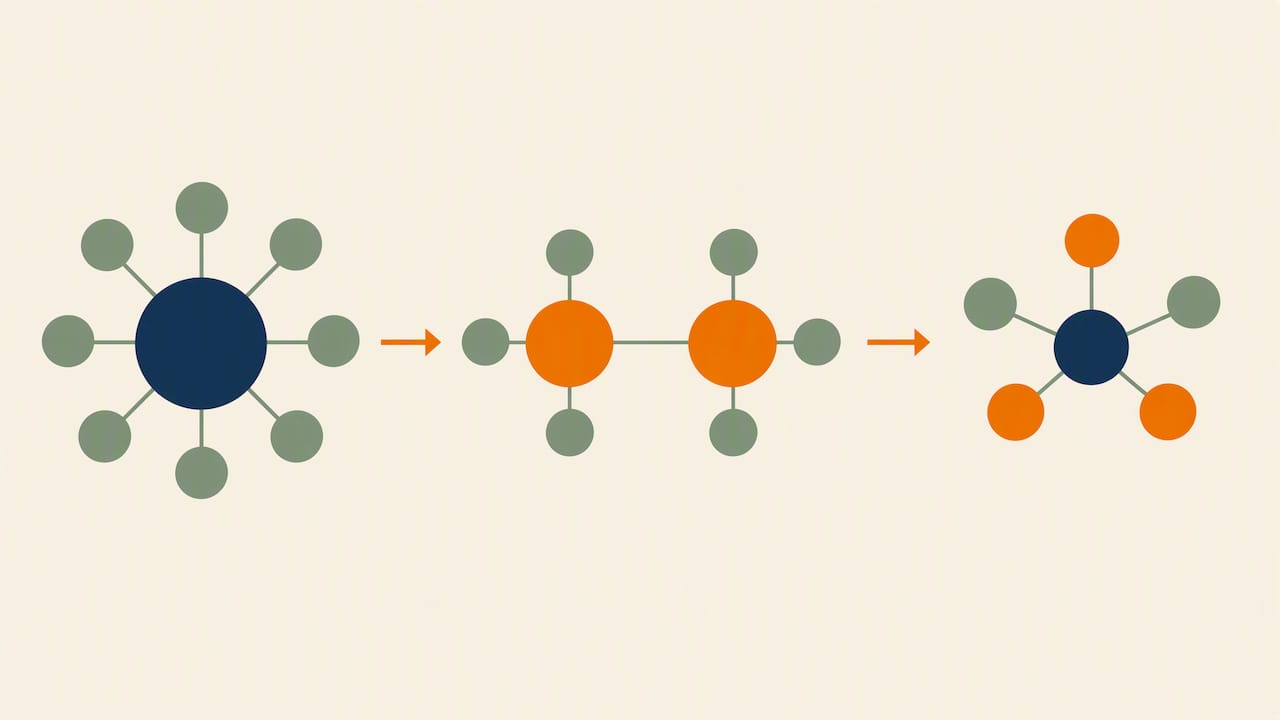
Full guardianship transfers legal decision-making power to you or another adult, but it also removes a significant amount of your child's legal autonomy, which is why many families and disability advocates now favor less restrictive alternatives when appropriate. A durable power of attorney lets your child designate someone to act on their behalf for financial or medical matters while retaining their own legal rights. Supported decision-making agreements, recognized in a growing number of states, let your child make their own choices with structured help from a trusted person, without a court removing any rights at all.
The right choice depends entirely on your child's capacity to understand and communicate decisions, which is worth discussing honestly with your child's medical team and a special needs attorney well before the 18th birthday. Whichever path you choose, name a backup decision-maker in your documents, since relying on a single person creates risk if that person becomes unavailable. Revisit the arrangement periodically. Capacity and needs can change, and a decision-making structure that fit at 18 may need adjusting at 25 or 35.
Education savings options and funding special education needs
A 529 college savings plan still works for some autistic young adults, particularly those pursuing postsecondary education or vocational certificate programs, and funds in a 529 can be rolled into an ABLE account under IRS rules if your child's plans shift toward disability-related expenses instead.
For costs tied to special education itself, start with what your child's school district already owes you. An Individualized Education Program (IEP) legally obligates the district to provide services at no cost to you, so private tutoring or therapy you're paying out of pocket may overlap with something the school should be funding. If the public school setting isn't working, some families pursue a due process complaint to secure private placement funding, though this route usually requires legal guidance.
Outside of the public system, ABLE account funds can cover education-related qualified disability expenses directly, including tutoring, assistive technology, or specialized curriculum materials. Coordinating between a 529, an ABLE account, and your IEP team keeps you from paying twice for something you're already entitled to receive.
Building financial independence and skills for your child
Financial planning for your child isn't only about accounts and trusts; it's also about what your child can learn to do for themselves over time.
Money skills belong in the IEP conversation starting in early adolescence, not just vocational training later. Simple, repeatable tasks, like using a debit card tied to a small allowance, reading a receipt, or comparing prices, build real capacity over years rather than becoming an overwhelming lesson taught too late. Some families use the ABLE account itself as a teaching tool, letting their child see deposits and withdrawals and gradually take part in deciding how funds get spent on qualified expenses.
Supported employment and vocational training referrals should start well before graduation, since waitlists for these services can be as long as the ones for Medicaid waivers. A Plan to Achieve Self-Support (PASS), mentioned earlier in the context of work incentives, can double as a skill-building tool, since it requires your child to work toward a specific, achievable goal with documented steps.
The aim isn't total independence for every child; it's matching the level of autonomy to what your child can realistically do, then building toward slightly more over time.
Tax considerations beyond ABLE accounts and trusts
ABLE accounts and special needs trusts carry their own tax rules, but a few additional provisions are worth knowing about.
Contributions to an ABLE account are not federally tax-deductible, but some states offer a state income tax deduction for contributions to their own ABLE program, so check your state's specific plan details. Qualified distributions used for disability expenses come out tax-free at the federal level, as confirmed in IRS guidance.
If you claim your child as a dependent, you may also qualify for the Child and Dependent Care Credit if you pay for care so you can work, and some families qualify for the Credit for Other Dependents even as their child ages into adulthood, as long as support and residency requirements are met. A trust, by contrast, has its own tax identification considerations: a properly drafted special needs trust is typically taxed as a grantor trust while the grantor is alive, shifting to different rules afterward, which is another reason an attorney and tax advisor should review trust language together rather than separately.
A caregiver's perspective: practical reassurance and priorities
We know this list can feel like a lot at once, especially alongside everything else caregiving already demands. Pick one action this week: open the ABLE account, start the expense log, or book the attorney consultation. Small, sequenced steps add up faster than waiting for the perfect comprehensive plan.
— Ronnie Talent
How Autism Victory supports your next step
We built Autism Victory around the exact gap parents hit here: knowing the rules exists in one place and knowing what applies to your specific state exists somewhere else entirely. Our app brings state-specific benefit lookups, plain-language SSI and ABLE explainers, downloadable checklists, and bilingual guidance into one place.
Search your state's waiver program and see current application steps.
Pull up SSI pre-application guidance matched to your child's situation.
Download the 30/90/365-day checklist and track your progress inside the app.
If you're coordinating care across multiple providers, platforms like Meddle show how digital tools can simplify scheduling and referrals alongside your financial planning. Start a 5-day free trial and see which checklist fits your family first, then move to the Annual plan at $49.95 per year or Monthly at $6.95 per month once you know what you need.
This article is general information, not a substitute for advice from a qualified financial advisor. Consult a qualified financial professional about your own circumstances before acting on anything here.
FAQ
What should I do if my autistic child is being bullied at school?
Document every incident in writing, including dates and witnesses, and request a meeting with the school's IEP team right away, since bullying related to a disability can trigger specific protections. Many districts have anti-bullying policies that require a formal response once you report it, so put your request in writing rather than relying on a verbal conversation alone.
What charities offer support for people with autism?
National organizations such as the Autism Society and various regional autism foundations offer financial assistance, respite grants, and family support programs, though eligibility and available funding vary significantly by location and organization. Check our state-specific assistance guide for programs available where you live.
What is autism spectrum disorder?
Autism spectrum disorder is a developmental condition that affects communication, social interaction, and behavior, with symptoms and support needs varying widely from one person to another. It's called a "spectrum" because two autistic individuals can have very different strengths and challenges, which is why individualized planning, rather than one-size-fits-all advice, matters so much.
What are some effective coping mechanisms for people with autism?
Coping strategies vary by individual, but many autistic people benefit from predictable routines, sensory tools like noise-canceling headphones or fidget items, and structured communication supports such as visual schedules. What works best typically depends on the specific sensory and communication profile of the person, so strategies are usually developed with input from occupational or behavioral therapists.
Do I need both an ABLE account and a special needs trust?
Many families use both, since ABLE accounts work well for day-to-day qualified expenses while trusts hold larger assets like inheritances or life insurance proceeds without exceeding ABLE's contribution limits. The two tools are generally complementary rather than interchangeable, and a special needs attorney can help you decide how to split funds between them.
Sources
Recommended