
Many families wait several months to a year or more to get an autism diagnostic evaluation, and starting therapy afterward can add several more months on top of that. The waiting itself is real, but it isn't a dead end. Getting on multiple waitlists at once, calling your state's early intervention program if your child is under three, and asking every provider about telehealth or cancellation lists can meaningfully cut that timeline. Keep reading for the tactics that make the biggest difference first.
TL;DR:
Most autism diagnostic wait times exceed four months, with some families waiting over a year, especially in rural areas or outside major cities.
Few outpatient facilities accept Medicaid or offer telehealth, which limits access for many families depending on their insurance and location.
Calling multiple providers, requesting cancellation lists, and expanding search radius can cut wait times significantly.
Starting early intervention services through preschool or school evaluations can provide support before a formal diagnosis.
Using resource apps that compile state-specific waiver programs, caregiver guides, and AI guidance can streamline navigating available services.
Table of Contents
How Long Do Autism Therapy Waitlists Usually Run?
The numbers are worse than most parents expect going in. A survey of 111 autism specialty centers found that 61% reported wait times longer than four months for diagnostic evaluations, and 15% reported waits stretching past a full year.
That's for the diagnosis alone. Therapy access afterward depends heavily on where you live and what insurance you carry.
By the numbers: Only 50.3% of outpatient mental health facilities reported offering care for children with autism at all, and facilities that accept Medicaid or offer telehealth were more likely to serve this population.
Waits vary by more than region alone:
Rural vs. urban: Diagnostic centers cluster in metro areas, leaving rural families driving far longer for an appointment.
Medicaid vs. private insurance: Facilities accepting Medicaid are unevenly distributed, and reimbursement rates shape which providers take new Medicaid patients at all.
Specialty vs. general practice: Developmental pediatricians and BCBA-run centers tend to book out further than general pediatric or community mental health providers.
Geographic access studies using tools like GapMap confirm diagnostic resources are the most unevenly distributed of any autism resource type, with some counties having none at all.
Why Do Autism Intervention Wait Times Stay So Long?
Three structural problems drive most of the delay, and it helps to know which ones you can work around and which ones you can't.
Workforce shortages. There simply aren't enough board-certified behavior analysts (BCBAs), developmental pediatricians, or child psychiatrists to match demand, especially outside major cities.
Reimbursement and paperwork. Medicaid reimbursement rates often don't cover the real cost of a diagnostic evaluation, and report-writing requirements eat into the hours a provider could spend seeing new patients.
Geographic clustering. Specialty centers concentrate near universities and children's hospitals, and nearly 70% of surveyed centers still require in-person evaluation, which limits how far telehealth can currently close the gap.
None of this is a reflection on your child or your effort. It's a supply problem, and understanding that changes how you approach the search: you're not waiting for one door to open, you're knocking on many at once.
How Can You Get Off Autism Waitlists Faster?
Speed comes from volume and specificity, not luck. Here's the order that tends to pay off fastest:
Build a tracker and get on every waitlist you qualify for. A simple spreadsheet with provider name, intake contact, date placed on the list, and follow-up date keeps you from losing track of five or six simultaneous applications.
Call early intervention immediately if your child is under three. State early intervention programs often move faster than diagnostic centers and can start services while a formal evaluation is still pending.
Ask your school district for an evaluation. Public schools must respond to a written request for an evaluation, and this can open IEP or 504 supports even before a medical diagnosis is finalized.
Ask specifically about cancellation lists, not just general waitlists. Providers often keep a separate short-notice list, and a polite monthly check-in call keeps you visible on it.
Expand your search radius and ask about telehealth. About 20% of surveyed centers now offer a hybrid of in-person and telehealth evaluation, and licensure rules sometimes allow providers licensed in a neighboring state to see you remotely.
Verify insurance details before you call. Confirm in-network status, ask what prior authorization the provider needs from your plan, and check whether your state's Medicaid waiver program has a separate, often shorter, waitlist for services.
Pro Tip: Call at the start of the month. Many practices update their cancellation lists after monthly scheduling reviews, and you're more likely to catch a fresh opening than if you call mid-cycle.
Families who track their outreach and keep calling back tend to land earlier cancellations than those who apply once and wait silently.
What Can You Do While Waiting for Therapy to Start?
Waiting doesn't mean doing nothing. Some of the most effective early supports cost nothing and don't require a diagnosis first.
Build simple, consistent routines. Visual schedules, predictable transitions, and consistent language around daily tasks support communication and reduce stress, no formal therapy required.
Look for free parent coaching and peer support. Caregiver survey data shows 44.8% of families report at least one access barrier like a waiting list, which is exactly why peer-led parent training programs have grown as a bridge option.
Request interim school services now. A written request for an evaluation starts the clock on IEP or 504 eligibility, and you don't need to wait for a private diagnosis to ask. A guide on school advocacy resources walks through how to organize that request.
Line up respite support if the wait is wearing your family down. Caregiver burnout is real, and respite care options exist specifically to give parents a break during long stretches of uncertainty.
Pro Tip: Escalate a stalled school request in writing. If you don't hear back within the legally required response window, a follow-up email that references your original request date often moves things faster than a phone call.
Where Can You Find Help Fast?
A handful of entry points can save you hours of scattered searching.
Autism Society's helpline connects families with information and referral specialists who know regional resources and can point you toward providers actively accepting new patients.
CDC's treatment overview page explains the major categories of evidence-based therapy, so you know what to ask for by name when you call.
Your state's Medicaid waiver waitlist often runs on a different timeline than private therapy waitlists. A state-by-state waiver waitlist directory lays out where each state stands.
When you call any provider, ask three things directly: current wait time, whether they keep a cancellation list, and whether they accept your insurance or offer a sliding scale.
How Autism Victory App Supports Families Through the Wait
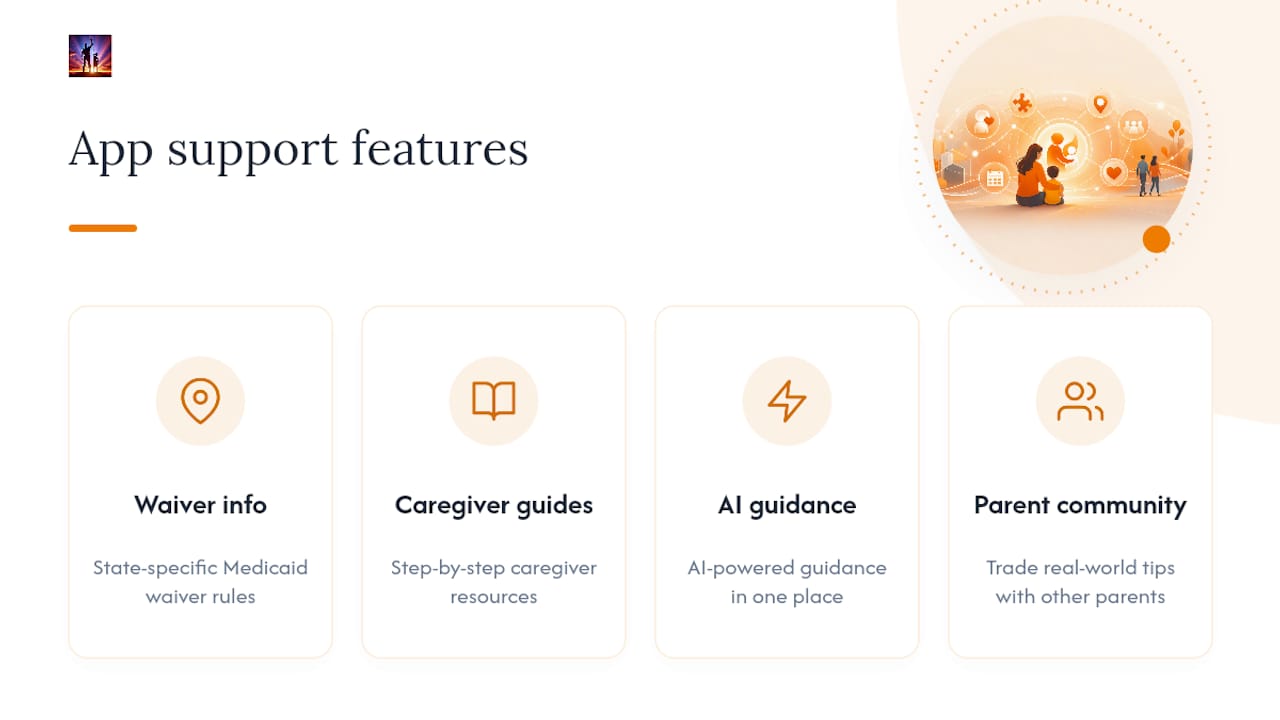
Calling a dozen agencies one by one is exhausting, which is exactly the gap a resource navigator app can help close. Instead of researching each state's Medicaid waiver rules from scratch, families can pull up state-specific waiver information, caregiver guides, and AI-powered guidance in one place. Combine that with the tactics above, a school evaluation request here, a cancellation-list call there, and community features for trading real-world tips with other parents further along the same path, and the waiting period stops feeling like a black hole.
An Editorial Take on Fixing Autism Therapy Waitlists
The conventional advice on autism therapy waitlists treats the wait as something to survive quietly. That's backwards. The data makes clear this is a supply and geography problem, not a queue you politely wait your turn in. Centers with fewer than half of outpatient facilities even offering autism care aren't going to solve themselves through patience.
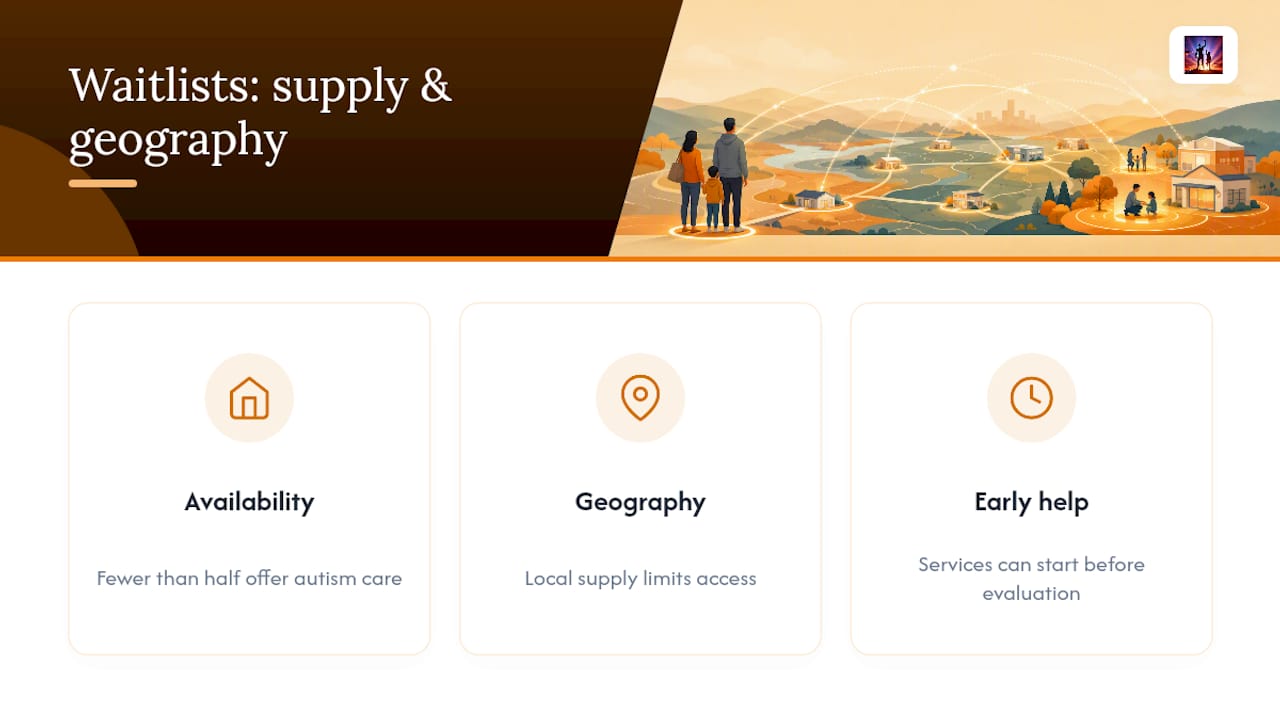
What gets underrated is early intervention. Parents fixate on landing a diagnosis first, when in many states, early intervention services for children under three can start before a formal evaluation is complete. That's not a workaround, it's the system working as designed, and too few families use it early enough.
What I'd prioritize differently than most guides: spend less energy hoping one provider calls back and more energy on volume, calling five providers instead of one, asking explicitly about cancellation lists, and checking your state's waiver waitlist alongside your private insurance options. The families who move fastest aren't the ones with the most severe case. They're the ones who made the most calls.
— Ronnie Talent
Find Your State's Autism Support Options Faster
There are other ways to chip away at this: calling agencies one by one, searching state Medicaid sites yourself, or asking around in Facebook groups for local leads. There are apps that serve as resource navigators pulling together state-specific waiver waitlists, caregiver guides in English and Spanish, AI-powered guidance for your specific situation, and communities of caregivers who've already navigated the same waitlists you may be facing.

Instead of researching all 50 states' waiver programs separately, you can open one app and search yours. A free trial period may give you time to pull your state's waiver information, review caregiver guides relevant to your child's age and needs, and explore AI guidance features that could save you time. Check available options for your state's autism support resources today.
Sources
This article is general information, not a substitute for advice from a qualified doctor. Consult a qualified healthcare professional about your own circumstances before acting on anything here.
Recommended