
Yes, respite care for autistic children and adults is available in Texas right now, and it's often funded through Medicaid waivers or state programs rather than paid entirely out of pocket. Start today: search HHSC's Take Time Texas directory, call 2-1-1 for local referrals, and ask your pediatrician or MCO for a respite authorization. The Texas Respite Resource Network is your backup if the first search comes up thin.
TL;DR:
Most respite care options in Texas are funded through Medicaid waivers like STAR Kids, TxHmL, and HCS, but waitlists can extend for years.
Families should apply to multiple programs simultaneously and seek short-term alternatives such as grants, vouchers, or caregiver co-ops while waiting.
In-home respite is suitable for children sensitive to transitions but may be harder to schedule with trained autism-specific providers, whereas out-of-home programs offer socialization benefits.
Verifying licensure, autism experience, emergency protocols, and requesting references are critical when vetting respite providers to ensure they meet support needs.
Use resources like Take Time Texas and 2-1-1 Texas for local referrals, and prepare necessary paperwork early to streamline waiver or funding approvals.
Table of Contents
Where Can You Find Autism Respite Care Providers in Texas?
Start with Take Time Texas, the HHSC-run search tool built specifically for this. You filter by zip code, age of your child, and the type of respite you need (in-home, out-of-home, or overnight), and the results pull from a database of licensed respite providers across the state. A short list doesn't mean anything exists nearby. It often means you need to widen your radius or call the providers directly, since not every contractor updates their availability in real time.
Beyond that one tool, you have several other doors to knock on:
2-1-1 Texas: dial it for a live referral specialist who knows local respite openings your online search might miss.
Local ADRCs (Aging and Disability Resource Centers): they connect families to community-based services county by county.
LIDDA (Local Intellectual and Developmental Disability Authority): your regional LIDDA office is often the gatekeeper for waiver-funded respite and can tell you where you stand on a waitlist.
Hospital and nonprofit programs: some children's hospitals and organizations like the Autism Society of Texas run their own respite weekends, camps, or caregiver-matching lists.
If your child has a behavior plan, loop in your BCBA or case manager before you hire anyone. They can help translate that plan into instructions a respite worker can actually follow.
How Do You Pay for Respite Care in Texas?
Most Texas families lean on Medicaid waivers to cover respite, and there are three worth knowing by name. STAR Kids is the Medicaid managed care program for children and young adults with disabilities, and it includes respite as a covered service for many members. Texas Home Living (TxHmL) and HCS (Home and Community-based Services) are separate waiver programs with their own enrollment lines and, notably, their own waitlists, some running years long. CLASS is another waiver option some autistic individuals qualify for depending on their support needs.
Getting authorized usually means a physician's note documenting the diagnosis and medical necessity, followed by your managed care organization (MCO) or LIDDA approving the respite hours. Paperwork typically goes through your MCO's care coordinator or directly to LIDDA, depending on which program you're enrolled in.
If a waiver isn't available yet, you're not stuck:
Ask local nonprofits and Autism Society of Texas chapters about respite grants or vouchers.
Check whether your employer offers a dependent care FSA or HSA that can offset private-pay respite.
Look into lifespan respite grant programs, which sometimes offer short-term vouchers outside the Medicaid system.
The HHSC Children's Autism Program caps ABA treatment at a defined number of hours within 12 months and a total lifetime limit for eligible services, a limit worth knowing before you build your care plan around it. Apply to every waitlist you qualify for the same week you decide you need help. You can always decline a slot later, but you can't back date an application.
Which Type of Respite Care Fits Your Child Best?
In-home respite keeps your child in their own space with their own routines, which matters enormously for kids who struggle with transitions. The tradeoff is supply: finding a worker trained in autism-specific behaviors, not just general babysitting, takes longer than most families expect. In-home respite is often delivered by attendants, LVNs, or RNs through licensed home and community support agencies, depending on your child's medical needs.
Out-of-home day programs trade some routine disruption for socialization and structure your child might not get otherwise. Many families use these for a few hours a week rather than as a full-time solution.
Overnight and residential respite, including autism-specific camps, gives caregivers the longest real break, but you need to plan months ahead. Camps fill early, and overnight placements often require more documentation than a daytime sitter visit.
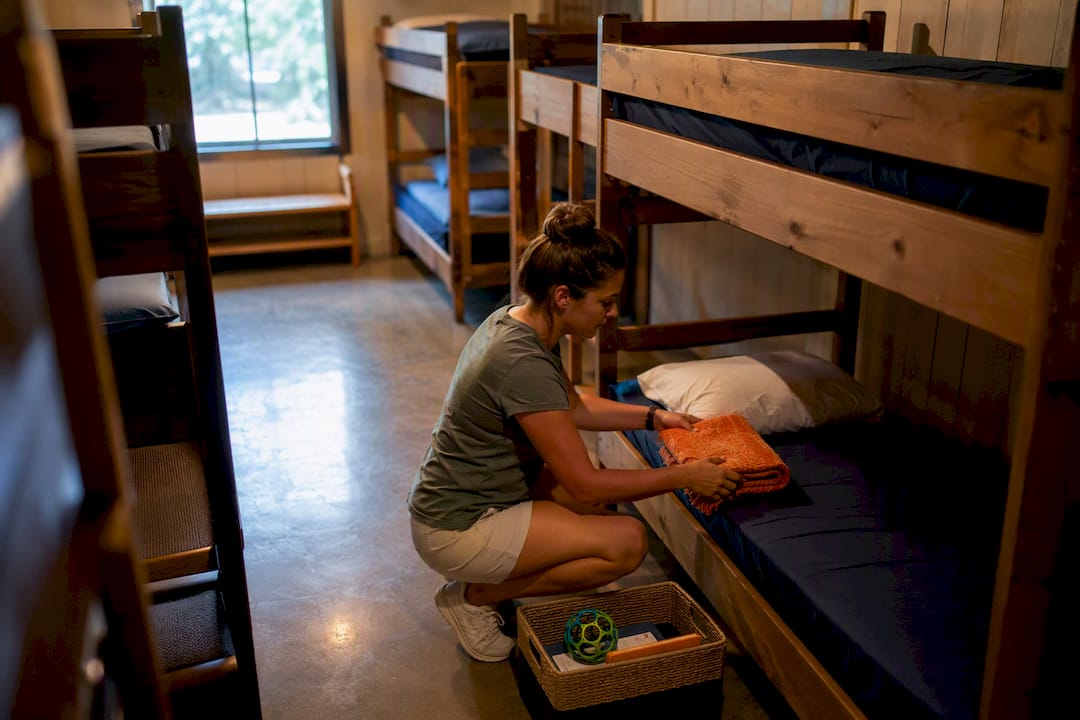
Crisis respite exists for the moments you can't plan for: a caregiver hospitalization, a housing disruption, a behavioral crisis at home. Your LIDDA or MCO crisis line is the fastest route to an emergency bed or short-term placement when you're out of other options.
What Should You Ask Before Hiring a Respite Provider?
Vetting a respite provider for an autistic child isn't like vetting a babysitter, and treating it that way is how families end up with a bad first experience that scares them off respite entirely.
Confirm licensing and background checks. Ask directly whether the agency or individual has passed a criminal background check and holds any required state certification.
Ask about autism-specific experience, not just "experience with kids." A worker who has managed meltdowns, sensory overload, or nonverbal communication is a different hire than one who hasn't.
Ask how they handle emergencies, including what they do if your child becomes distressed or elopes.
Request references from other families, ideally ones caring for a child with similar support needs.
Run a trial session while you're still home, and provide a written routine or behavior plan they can follow.
Set a reporting cadence. A quick text or note after each visit tells you what worked and what didn't.
Navigate Life Texas recommends this same kind of direct questioning before you commit to a provider.
Pro Tip: Ask every provider how they'd calm your child during a meltdown before you ask about scheduling. Their answer tells you more about fit than their resume ever will.
Walk away if a provider dodges questions about training, refuses a trial visit, or has no answer for handling a behavioral emergency.
How Do You Start Applying for Respite Today?
Getting from "I need help" to "someone is actually watching my kid" takes a sequence of steps, and skipping ahead usually backfires.
Gather your child's diagnosis paperwork and any existing behavior plan.
Request a physician's letter documenting medical necessity for respite.
Contact your MCO or LIDDA to start or check your waiver application.
Call 2-1-1 for immediate local referrals while your paperwork processes.
Search Take Time Texas and reach out to two or three providers, not just one.
Waitlists for TxHmL and HCS can run long, so apply broadly and ask every program you contact whether they offer emergency or crisis respite in the meantime. While you wait, consider a caregiver co-op with another autism family, a faith-based respite program at a local church, or a trained sitter working from your written behavior plan.
What Do Official Texas Programs Actually Promise?
The Children's Autism Program requires a documented autism diagnosis and Texas residency, and it caps ABA services at 180 hours per year and 720 hours over a lifetime, numbers worth writing down before you plan around the program. The Texas Respite Resource Network keeps its own directory and funding guidance alongside Take Time Texas, so checking both doubles your chances of finding an opening.
There are platforms designed to help with the part official directories don't cover well: turning a maze of waiver names and paperwork into a checklist you can actually follow. Some platforms offer features such as:
State-specific funding guides that break down which Texas programs users likely qualify for
Bilingual resources for households navigating multiple languages
A resource navigator that tracks which applications have been submitted and their status
Practical checklists built around the documents agencies request
None of that replaces a diagnosis or a waiver approval. It just means you're not rebuilding your own tracking system from scratch while you're already exhausted.
What Legal Rights Do Texas Families Have Around Respite Care?
Respite care itself isn't a right guaranteed by federal law, but the protections around your child's broader care and education are, and they matter when you're negotiating for services. The Americans with Disabilities Act (ADA) requires that public entities, including many state-funded programs, provide reasonable accommodations, which can factor into how respite and other Medicaid-funded services get administered.
The Individuals with Disabilities Education Act (IDEA) guarantees your child a free appropriate public education and covers related services during school hours, but it doesn't extend to home-based respite. That gap is exactly why Medicaid waivers exist as a separate track.
Under Texas Medicaid rules, once your child is approved for a waiver that includes respite, the state is obligated to authorize those hours according to the plan of care, though funding availability and provider capacity can still create real delays. If you believe your family has been denied a service you're legally entitled to, you have the right to request a fair hearing through HHSC. Document every denial in writing and keep copies of every authorization request you submit.
Knowing these boundaries helps you push back appropriately. A waitlist delay isn't usually a legal violation, but a wrongful denial of an already-approved service can be, and that distinction determines whether your next call is to a case manager or to a legal aid organization.
How Can You Stretch Your Respite Funding Further?
Most families find that one funding source alone doesn't cover everything, so combining a few is often the more realistic strategy. Apply to STAR Kids, TxHmL, and HCS simultaneously if you're eligible, since waiver waitlists move at different speeds and enrollment in one doesn't disqualify you from the others while you wait.
While a waiver application processes, pursue smaller, faster funding at the same time:
Local Autism Society of Texas chapters sometimes issue small respite grants or vouchers.
Employer dependent care FSAs can offset private-pay hours tax-free.
Faith-based and community organizations occasionally run sliding-scale respite programs with shorter application processes than state waivers.
Keep a simple log of every application, submission date, and follow-up call. It sounds tedious, but when you're juggling three or four funding tracks at once, that log is what keeps a missed follow-up from costing you a spot. Ask each program directly whether respite hours can stack with another source, since some waivers coordinate with vouchers and some don't.
Where Else Can You Find Support While You Wait?
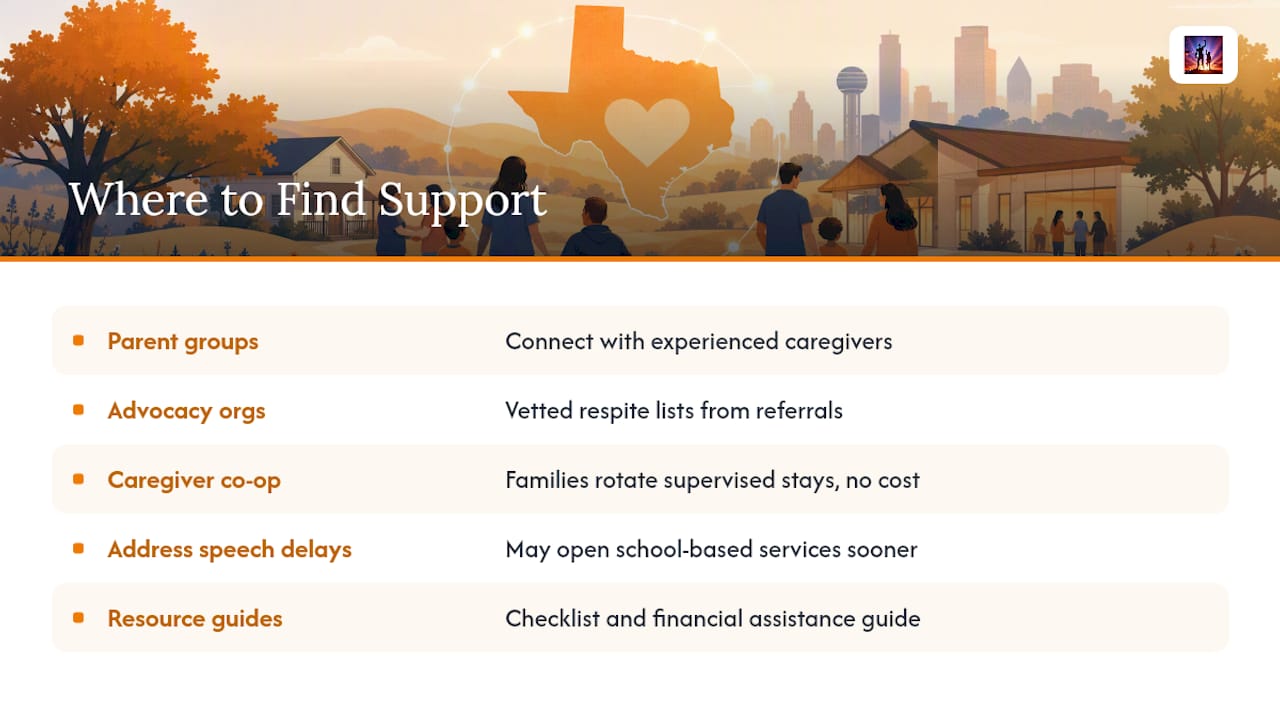
Formal funding takes time, but community support doesn't have to. Parent support groups, often organized through local Autism Society of Texas chapters, connect you with other caregivers who've already navigated the same waitlists and can tell you which local providers actually show up and follow a behavior plan.
Autism advocacy organizations also maintain informal caregiver networks and, in some cases, keep their own lists of vetted respite workers built from other families' recommendations, not just a state database. These lists move faster than official channels because they're based on word of mouth.
A caregiver co-op, where two or three families with similarly aged autistic children rotate supervised stays, is one of the more practical stopgaps while formal approvals crawl forward. It costs nothing but trust and a shared schedule.
If your child's needs trace back to a communication delay, addressing that early can also open doors to school-based services faster. A parent's checklist for recognizing speech delays is worth a read if you're still early in the diagnostic process. For a deeper walkthrough of funding paths once you're ready, the Autism Financial Assistance for Families guide breaks down grants and waiver basics in more detail.
A Caregiver's Honest Take on Asking for Respite
Respite isn't a luxury you earn after you've proven you can't cope anymore. It's maintenance, the same way sleep or meals are maintenance, and putting it off until you're depleted only makes the paperwork harder to finish. Start the search tools and the applications today, even the parts that feel like busywork. Your future self, and your kid, will be glad you didn't wait.
— Ronnie Talent
How Autism Victory Turns Respite Research Into Action
Finding respite in Texas usually means juggling multiple resources: a waiver portal, a provider directory, a physician's letter template, and a running list of contacts. Some apps put that entire process in one place, with state-specific funding guides, bilingual materials, and resource navigators that track application statuses.

It won't file your waiver paperwork for you, but it will tell you what paperwork to gather before you call your MCO, which cuts down on the back-and-forth that stalls most applications. If you want the deeper, step-by-step version of everything covered here, read the Autism Respite Care guide inside the app, or start with a free trial at Autism Victory App to see your state's resources laid out clearly today.
Official Pages and Directories Worth Bookmarking
Children's Autism Program: eligibility and hour limits for ABA services.
Navigate Life Texas: provider vetting tips and family resources.
2-1-1 Texas and your local LIDDA office for direct referrals.
Save your child's diagnosis paperwork and your MCO's contact number somewhere you can find them fast.
This article is general information, not a substitute for advice from a qualified doctor. Consult a qualified healthcare professional about your own circumstances before acting on anything here.
Sources
Respite care for children with disabilities | Navigate Life Texas
4700, Medically Dependent Children Program Respite and Flexible Family Support Services
FAQ
Does Autism Qualify for Respite Care in Texas?
Yes. Autism is a qualifying diagnosis for several Texas Medicaid waivers, including STAR Kids, TxHmL, and HCS, all of which can include respite as a covered service.
Can I Get Respite Care for My Autistic Child?
Most families can, either through a Medicaid waiver, a state program like the Children's Autism Program, or private-pay providers found through directories like Take Time Texas. Start by contacting your MCO or LIDDA to check your waiver status.
Can I Get Paid to Care for My Autistic Child in Texas?
Some Texas Medicaid waivers allow family members to be paid caregivers under certain consumer-directed service models, though rules vary by program and your relationship to the child. Ask your MCO or LIDDA case manager which of your child's approved services allow a family caregiver to be hired directly.
What Is the 6 Second Rule in Autism?
This isn't an established clinical or Texas program term, and definitions circulating online vary widely without a consistent source. If you've heard it referenced regarding sensory processing or behavior response time, ask your child's BCBA or therapist for the specific framework they're using rather than relying on an unverified rule.
How Long Are Respite Waitlists in Texas?
Waitlists for TxHmL and HCS waivers can run for years in some cases, which is why families are advised to apply to multiple programs and pursue short-term options like grants, vouchers, or community co-ops simultaneously.
Recommended