Natural Environment Teaching for Autism: A 2026 Guide
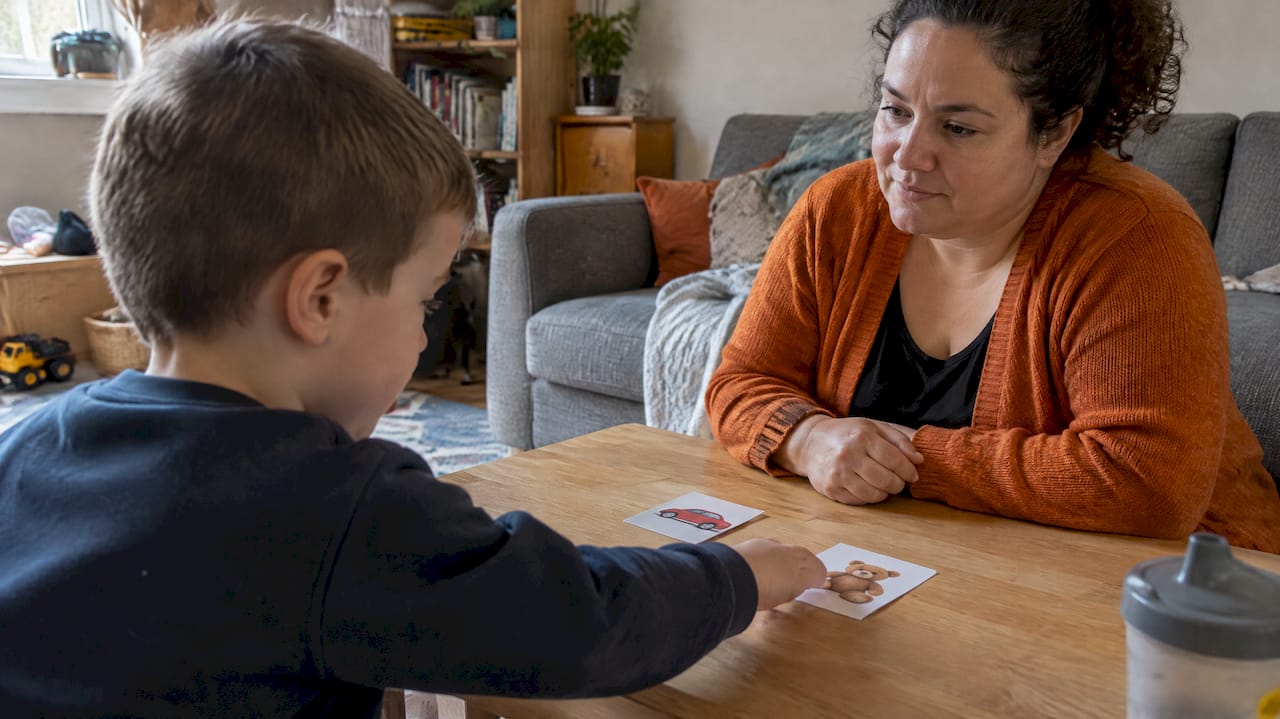
Natural environment teaching (NET) is defined as an evidence-based Applied Behavior Analysis (ABA) method that embeds skill instruction directly into a child's everyday routines using their own interests as the primary motivator. Unlike traditional table-based ABA, NET teaches children with autism in the places where life actually happens: the kitchen, the playground, the grocery store, and the classroom. The American Academy of Pediatrics recognizes naturalistic, play-based instruction as a core component of effective autism intervention. NET works because children learn faster when the skill they are practicing produces an immediate, meaningful result in their real world.
What is natural environment teaching and how does it work?
Natural environment teaching is an ABA instructional approach where therapists, educators, and parents embed learning opportunities into the child's natural routines and play rather than pulling them to a desk for drills. The child's motivation drives every teaching moment. If a child wants a toy on a high shelf, that moment becomes a language lesson. If they want to join a peer on the swings, that becomes a social skills trial.
The core mechanism is straightforward. A therapist or caregiver identifies what the child wants right now, creates or captures an opportunity to practice a target skill, provides the least amount of support needed, and then delivers the natural reinforcer. The child asks for the toy and gets the toy. That direct connection between communication and outcome is what makes NET so powerful.
NET differs from Discrete Trial Training (DTT) in one critical way: generalization. Studies show that skills taught through NET transfer across settings and people more reliably than skills drilled in structured, repetitive trials. A child who learns to request "more" during snack time at home is far more likely to use that word at school and at a friend's house.
The goal of NET is functional control. Experts define functional control as the child's ability to use communication to directly change their environment, which reduces the need for maladaptive behaviors like tantrums or self-injury. When a child can ask for what they need, they no longer need to melt down to get it.
Core strategies used in NET sessions
Effective NET sessions rely on four well-established ABA strategies:
Incidental teaching: The child initiates contact with a preferred item or activity, and the adult uses that moment to prompt a target skill before providing access.
Mand-modeling: The adult presents a motivating item, models the desired communication (for example, saying "ball"), and prompts the child to imitate or approximate it.
Time delay: The adult waits silently after presenting an opportunity, giving the child space to initiate the skill independently before offering a prompt.
Behavior momentum: The adult begins with easy, high-success requests to building the child's engagement before introducing harder targets.
Typical NET sessions embed 10-20 learning opportunities per hour during routine play. That frequency keeps progress moving without turning play into a drill.
Key techniques used within naturalistic teaching
The two foundational techniques in NET are capturing and contriving. Capturing and contriving means therapists both seize spontaneous teachable moments and deliberately arrange the environment to create motivating scenarios. Both are necessary. Relying only on spontaneous moments produces too few trials. Relying only on contrived setups starts to feel artificial to the child.
Capturing looks like this: a child walks to the snack cabinet and reaches for crackers. The therapist waits, then models "crackers, please" and prompts the child to say it before opening the cabinet. The moment was real, unplanned, and highly motivating.
Contriving looks like this: a therapist places a child's favorite puzzle just out of reach, then waits for the child to request help. The scenario was set up intentionally, but the child's desire to solve the puzzle is genuine. The learning opportunity feels natural because the motivation is real.
Prompt fading is the other technique that separates effective NET from ineffective NET. Over-prompting leads to prompt dependency, where the child waits for the adult's cue rather than initiating independently. The least-to-most prompting hierarchy solves this: start with a time delay, move to a gestural prompt, then a partial verbal prompt, and only use a full verbal model as a last resort. Fade prompts as quickly as the child's data supports.
Pro Tip: Plan your session targets before you start, but keep a small notepad or app open to record data in real time. Waiting until after the session to log trials leads to inaccurate records and missed patterns.
Session planning in NET requires pre-set goals combined with real-time flexibility. NET demands a high level of therapist adaptability, because the child's motivation shifts constantly. A therapist who arrives with five target skills and a rigid script will lose the child within minutes. The plan is a guide, not a script.
What are the most common pitfalls in implementing NET?
The biggest misconception about NET is that it is unstructured play. NET is a highly intentional, data-driven intervention with measurable objectives and outcomes. Therapists plan clear session goals, track every trial, and adjust targets based on data. The play looks casual. The work underneath it is not.
Prompt dependency is the most common technical error. When adults prompt too quickly or too heavily, children stop initiating. They learn to wait. The fix is consistent use of the least-to-most hierarchy and regular data review to catch dependency patterns early. If a child's independence scores are not climbing, the prompting strategy needs adjustment.
Inconsistency across team members is the second major pitfall. If a therapist uses NET with fidelity but parents and teachers use a different approach at home and school, generalization suffers. Every adult in the child's life needs a shared understanding of the targets and the prompting strategy. This is not optional. Inconsistency directly undermines the generalization that makes NET worth using.
Pro Tip: Hold a brief monthly check-in with everyone on the child's team, including parents, teachers, and therapists. Even a 15-minute call to align on current targets and prompting levels prevents months of inconsistent implementation.
Managing real-time demands is also genuinely hard. Following a child's lead while tracking data, fading prompts, and staying within session goals requires practice. New practitioners often focus so heavily on following the child that they miss teaching opportunities entirely. The skill is learning to do both at once.
How to apply NET across home, school, and community settings
NET works in every setting where a child spends time. The key is identifying the natural motivators and routines in each environment and building teaching opportunities around them.
At home
Everyday routines like mealtime, playtime, and outings are natural NET opportunities. Parents do not need to create special sessions. They need to recognize the moments already happening.
Mealtime: Pause before giving a child their preferred food. Wait for a request, a point, or a word. Deliver the food immediately when the child communicates.
Playtime: Set up a favorite activity but leave out a key piece. Wait for the child to notice and request the missing item.
Morning routines: Use the toothbrush, shoes, or backpack as prompts for labeling, sequencing, or requesting help.
Caregivers trained in NET strategies multiply teaching opportunities far beyond what any therapist can provide in weekly sessions. A therapist sees a child for a few hours per week. A parent sees them for thousands of hours per year. That math matters.
At school and in the community
Teachers can embed NET into transitions, group activities, and free play without disrupting the classroom schedule. The child's IEP goals should directly inform which skills get targeted during these natural moments. Community outings like grocery trips and park visits add real-world complexity that classroom settings cannot replicate.
Natural opportunities and target skills across common settings include:
Classroom: Choosing a center activity is a natural opportunity to target requesting preferred items verbally.
Playground: Joining a peer game is a natural opportunity to target initiating social greetings.
Cafeteria: Selecting lunch items is a natural opportunity to target labeling foods and making choices.
Grocery store: Picking items from a list is a natural opportunity to target matching, requesting, and following directions.
Park: Asking to use equipment is a natural opportunity to target turn-taking and requesting help.
Collaboration among therapists, teachers, and families is what holds the whole system together. When everyone uses the same targets and the same prompting approach, the child gets consistent practice across every environment. That consistency is what produces durable, generalized skills.
Key Takeaways
Natural environment teaching produces the most durable skill gains when it is implemented with fidelity, consistent data collection, and coordinated teamwork across every setting where the child learns.
NET is structured, not free play: Sessions have pre-set goals, data tracking, and measurable outcomes despite looking casual.
Child motivation drives every trial: Teaching moments are built around what the child wants right now, not a predetermined script.
Prompt fading prevents dependency: Use least-to-most prompting and fade support as quickly as data allows to build independence.
Caregivers multiply learning time: Parents trained in NET strategies extend teaching far beyond formal therapy hours.
Generalization requires consistency: All adults in the child's life must use the same targets and prompting approach across settings.
Why NET is the most underused tool in autism education
I have watched families spend years in weekly therapy sessions without seeing the gains they expected. In most of those cases, the missing piece was not more therapy hours. It was what happened between sessions. NET fixes that problem directly, but only when everyone around the child understands how to use it.
The part that surprises most parents is how little disruption NET requires. You do not need a therapy room or special materials. You need to know your child's current targets, recognize a motivating moment when it appears, and respond with the right level of support. That is a learnable skill. Most parents pick it up faster than they expect once someone shows them what to look for.
What I find most compelling about NET in 2026 is its compatibility with other ABA methods. NET works best alongside DTT for skills that require repetition to build fluency, like letter recognition or math facts. DTT builds the skill. NET generalizes it. Using both together produces better outcomes than either method alone.
The honest challenge is implementation fidelity. NET done poorly looks like unsupervised play with no measurable outcomes. The difference between effective NET and ineffective NET is data. Teams that track trials, review progress weekly, and adjust targets based on what the numbers show get results. Teams that wing it do not. If you are a parent or educator reading this, push for data. Ask to see it. Understand what it means. That single habit will do more for your child's progress than any specific technique.
— Ronnie
FAQ
What is the difference between NET and DTT in ABA?
Natural environment teaching embeds skill instruction into everyday routines using the child's natural motivation, while Discrete Trial Training uses structured, repetitive trials in a controlled setting. NET produces stronger generalization; DTT builds initial skill fluency faster.
How many teaching opportunities should a NET session include?
Effective NET sessions typically include 10-20 learning opportunities per hour during routine play, providing enough practice to drive progress without making the interaction feel like a drill.
Can parents implement NET at home without a therapist present?
Yes. Caregivers trained in NET strategies can embed teaching into daily routines like meals, play, and morning schedules. Consistent caregiver involvement significantly extends the child's total learning time beyond formal therapy sessions.
Is NET appropriate for all children with autism?
NET is most effective for skills tied to motivation and social context, such as requesting, play skills, and social communication. Children who need to build initial fluency in a skill often benefit from DTT first, with NET used to generalize that skill across real-world settings.
How do you track data during a natural environment teaching session?
Therapists and trained caregivers use brief real-time recording methods, such as tally marks or a simple app, to log each trial as it happens. Waiting until after the session to record data reduces accuracy and makes it harder to spot prompt dependency or stalled progress.