
20 Famous People With Autism: Confirmed and Suspected
Notable autistic public figures include Temple Grandin (confirmed, self-disclosed), Kodi Lee (confirmed, self-disclosed), and Stephen Wiltshire (confirmed, diagnosed in childhood), alongside actors, musicians, and activists who have gone public in recent years. When you search for famous people autism, you’re usually looking for two different things at once: a reliable list of names, and some sense of which of those names you can actually trust.
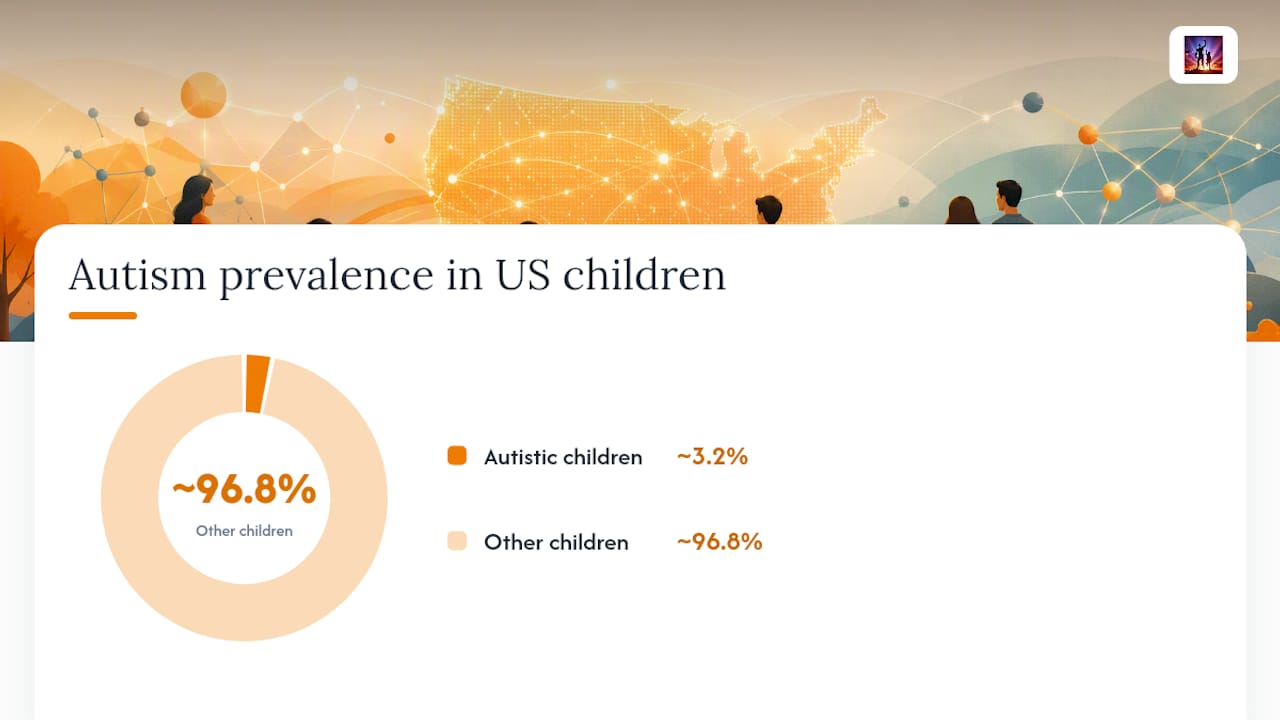
That second part matters more than most lists admit. Autism is a lifelong neurological difference in how a person processes information, communicates, and experiences the world, and the CDC estimates roughly 1 in 31 children in the US are identified with autism spectrum disorder based on its most recent surveillance data. Representation counts because a parent watching Kodi Lee win America’s Got Talent gets something a textbook can’t give them: proof that a specific, hard day doesn’t define the whole story.
Here’s a quick shortlist before we go deeper:
Temple Grandin — confirmed, animal scientist and author who has spoken publicly about her diagnosis for decades
Kodi Lee — confirmed, self-disclosed musician and America’s Got Talent season 14 winner
Stephen Wiltshire — confirmed, artist diagnosed with autism in early childhood
Greta Thunberg — confirmed, self-disclosed climate activist
Anthony Hopkins — self-reported in interviews, Academy Award winning actor
Pro Tip: Treat every “famous autistic person” list with a skeptical eye, including this one. The strongest entries are the ones where the person has spoken for themselves, on record, not the ones repeated across a dozen blogs with no original source.
Key Takeaways
Confirmed disclosures from named public figures carry far more weight than retrospective speculation about historical figures, and representation works best when the labeling stays honest.
Point | Details |
|---|---|
Confirmed beats speculative | Trust self-disclosed or well-documented cases like Temple Grandin and Kodi Lee over historical guesswork about figures like Einstein. |
Savants are rare | Stephen Wiltshire and Kodi Lee represent exceptional, uncommon outcomes, not a typical autism experience. |
Autism is heterogeneous | The CDC’s own data shows wide variation in presentation, so no single list can represent every autistic person. |
Representation shapes expectations | Public figures going on record reduces stigma and pushes institutions toward better accessibility. |
Explore support resources | Families looking for structured next steps can find them through Autism Victory App, built around AI-powered guidance and state-specific support navigation. |
Table of Contents
Famous People With Autism Who Have Confirmed or Self-Disclosed Diagnoses
Historical Figures Sometimes Called Autistic (Unconfirmed)
Notable Autistic Savants and the Role Models Who Changed Public Perception
How We Verified These Inclusions
Strengths Autistic People Often Share, and the Myths That Follow Them Around
Why Verified Representation Actually Matters
Sources
Famous People With Autism Who Have Confirmed or Self-Disclosed Diagnoses
This is the core list, and every name below has either publicly confirmed a diagnosis, self-disclosed it in an interview or memoir, or has a documented childhood diagnosis reported by credible outlets. Where the evidence is softer, that’s noted too.
Temple Grandin — Animal behavior scientist, author, and autism advocate. Diagnosed with autism as a child, Grandin has spent decades writing and speaking about her experience, describing herself as a visual thinker whose cognitive style shaped her career studying livestock handling and animal welfare.
Anthony Hopkins — Academy Award winning actor known for The Silence of the Lambs and The Father. Hopkins has discussed being diagnosed with what was then called Asperger syndrome, self-reported in interviews over the years.
Dan Aykroyd — Actor and comedian, cofounder of Saturday Night Live’s original cast era and star of Ghostbusters. Aykroyd has said in interviews that he was diagnosed with Asperger syndrome as a child, self-reported publicly on multiple occasions.
Greta Thunberg — Climate activist who has addressed the United Nations. Thunberg has spoken openly about her Asperger diagnosis, self-disclosed as part of her public advocacy, describing it as something that helps her see the climate crisis in black and white.
Susan Boyle — Singer who rose to fame on Britain’s Got Talent. Boyle received an Asperger syndrome diagnosis in adulthood, self-reported to the press after years of being misdiagnosed with brain damage from birth.
Kodi Lee — Musician, singer, and pianist. Kodi Lee, who is autistic and legally blind, won season 14 of America’s Got Talent in 2019, with his audition performance drawing over 300 million views online.
Stephen Wiltshire — Artist famous for drawing entire cityscapes from memory after a single helicopter ride. Wiltshire was diagnosed with autism in early childhood and later received an MBE for his contribution to the arts.
Elon Musk — Entrepreneur and CEO. Musk self-disclosed an Asperger diagnosis while hosting Saturday Night Live in 2021, describing himself on the show as the first person with Asperger’s to host the program.
Daryl Hannah — Actor known for Splash and Kill Bill. Hannah has said in interviews she was diagnosed with autism as a child and spent much of her early career avoiding press appearances because of it.
Jim Eisenreich — Former Major League Baseball outfielder. Eisenreich was diagnosed with Tourette syndrome and later understood to be on the autism spectrum, self-reported in his autobiography detailing his path through professional baseball.
Armani Williams — NASCAR driver and the first openly autistic driver in NASCAR national series competition. Williams has spoken to motorsports outlets about his diagnosis and his advocacy for autism awareness within racing.
Bella Ramsey — Actor known for Game of Thrones and The Last of Us. Ramsey has discussed being autistic in interviews, self-reported as part of broader conversations about neurodivergence in the entertainment industry.
Sia — Singer and songwriter behind hits like “Chandelier.” Sia has said publicly that she is on the autism spectrum, self-disclosed while discussing anxiety, chronic pain, and her creative process.
Two more recent additions worth noting: Bradley Riches, the Heartstopper actor, was non-verbal until about age 10 and was diagnosed with autism at nine, and he now advocates for neurodivergent awareness in theater. Robbie Williams has also publicly revealed an autism diagnosis, discussing it alongside ADHD and Tourette’s and describing it as something that “explains so much” about his past behavior.
“I think in pictures. Words are like a second language to me.” That’s how Temple Grandin has long described her own mind, and it’s a line that reframes an entire diagnosis as a different operating system rather than a deficiency.
Historical Figures Sometimes Called Autistic (Unconfirmed)
You’ll see certain names attached to autism in almost every popular list, even though no clinical record supports the claim. Albert Einstein, Isaac Newton, and Nikola Tesla top that group, often cited for reported social awkwardness, intense focus, or unconventional communication styles described by biographers long after their deaths.
There’s a real problem with this practice, and it’s worth naming plainly: none of these figures were ever evaluated against modern diagnostic criteria, because those criteria didn’t exist during their lifetimes. Autism spectrum disorder as a clinical category, defined in the American Psychiatric Association’s DSM-5, only reached its current form decades after Einstein and Newton died. Behavior reported secondhand, filtered through biographers with their own agendas, and interpreted through today’s cultural lens, is not the same as a diagnosis.
Even living public figures illustrate how much diagnostic understanding has shifted. Bill Gates has said in interviews that he would probably receive an autism diagnosis if evaluated today, a comment that says less about a confirmed diagnosis and more about how far the field has moved since his childhood.
Retrospective diagnosis is a guess dressed up as a fact. Treat any historical figure labeled “probably autistic” as a hypothesis, not a biography detail, unless a named biographer or family member with direct access has said so on record.
Notable Autistic Savants and the Role Models Who Changed Public Perception
Three names carry outsized weight in this conversation, and each one earned that weight differently.
Temple Grandin built a career on describing her own mind in public. She has written extensively about visual thinking and how it shaped her work designing livestock handling systems now used across the agriculture industry. Her influence goes beyond one field. Grandin became a template for a strengths-based approach to autism, one that asks what a specific brain does well rather than only what it struggles with.

Stephen Wiltshire can look at a skyline for a matter of minutes and reproduce it from memory in astonishing detail, down to window counts on buildings blocks away. His panoramic drawings of cities like New York and Tokyo have been exhibited and auctioned internationally, and he received an MBE for his contribution to the arts.
Kodi Lee, who is both autistic and legally blind, turned a America’s Got Talent audition into one of the show’s most viewed moments ever, with his performance reaching over 300 million views online. He’s since built an ongoing music career off that visibility.
Here’s the distinction that matters most, and one a lot of casual lists blur: being autistic and being an autistic savant are not the same thing. Savant syndrome, the presence of a prodigious specific skill alongside developmental differences, is rare within the autistic population, not a typical outcome. Most autistic people don’t have a Wiltshire-level drawing gift or a Lee-level musical ear.
Hyperfocus and pattern recognition show up often, but rarely at savant intensity
Visual thinking, as Grandin describes it, is a cognitive style, not a guaranteed talent
Skill profiles are uneven across almost every autistic person, savant or not
Pro Tip: If your child shows an early spark in music, art, or numbers, resist the urge to label it a “savant skill” right away. Support and develop the interest the same way you would for any child, through consistent practice and encouragement, and let the results speak for themselves over time.
How We Verified These Inclusions
Getting a list like this right takes more discipline than pulling names off other websites, which is exactly how misinformation spreads in this space. Here’s the process we followed:
Start with primary sources. Interviews, autobiographies, and first-person statements carry the most weight. When Kodi Lee or Greta Thunberg speaks about their own diagnosis, that’s about as reliable as this topic gets.
Cross-check reputable reporting. Outlets like the BBC and The Independent apply editorial standards that separate a documented disclosure from a rumor.
Flag anything secondhand. If a claim traces back only to a fan forum, a listicle with no sourcing, or a speculative biography, it gets labeled speculative or left out entirely.
Label the confidence level clearly. Confirmed, self-reported, and suspected/historical are three different categories, and conflating them misleads readers.
A few notes on ethics here matter too. Public disclosure is a personal decision, and just because someone shows traits associated with autism doesn’t mean they owe the public an explanation. We also excluded several high-profile rumors circulating online because they trace back to unverified social media claims with no named source, no interview, and no documentation anywhere.
Public self-disclosure or reliable third-party reporting earns a spot on the confirmed list
Rumors with no traceable origin get excluded, regardless of how often they’re repeated elsewhere
Historical speculation gets a clear caveat every time, never presented as settled fact
Strengths Autistic People Often Share, and the Myths That Follow Them Around
Autistic traits show up across a wide spectrum, but certain strengths appear often enough in interviews and research to be worth naming directly.
Hyperfocus lets some autistic people sustain deep concentration on a task others would find tedious, a trait that shows up repeatedly in coding, research, and detailed craft work
Pattern recognition helps in fields like data analysis, music theory, and visual art, where spotting structure others miss becomes a genuine professional edge
Visual thinking, the cognitive style Temple Grandin has described throughout her career, turns abstract problems into something closer to a mental picture that’s easier to manipulate
Strong long-term memory for specific interests can translate into deep subject-matter expertise faster than typical for a given field
Now the myths, because they cause real harm when they go unchallenged.
Myth: Autism guarantees exceptional intelligence or a hidden savant skill. Fact: Savant abilities are rare, and autism itself covers an enormous range of cognitive profiles, support needs, and life outcomes. Assuming every autistic person has a hidden genius sets up unfair expectations and ignores people who need significant daily support.
Myth: Autistic people all experience the condition the same way. Fact: The CDC’s own surveillance data shows wide variation in presentation, and the American Psychiatric Association’s diagnostic framework explicitly accounts for a spectrum of severity and support needs, not a single profile.
Statistic | Figure | Source |
|---|---|---|
US children identified with autism | About 1 in 31 | CDC |
Diagnosis more common in | Boys than girls, by a notable margin | CDC surveillance data |
If sensory sensitivity is part of your family’s experience alongside these strengths, a resource like tactile defensiveness strategies can help translate awareness into daily accommodations that actually work.
Why Verified Representation Actually Matters
Lists like this one get written a lot, and most of them blur confirmed disclosures with vague rumors until the two look identical. That’s not a small editorial nitpick. When a parent reads that some celebrity is “possibly autistic” with the same confidence as a name who has spoken about it directly on record, it cheapens the disclosures of people who took a real risk sharing their diagnosis publicly.
Representation does something specific and measurable in how families experience this diagnosis. Watching Kodi Lee win a national talent competition, or reading how Temple Grandin turned a visual mind into a scientific career, gives a parent a mental model beyond worst-case scenarios. Coverage of figures like Bradley Riches, who was non-verbal until around age ten, also pushes institutions like theaters and media outlets toward accessibility and relaxed performance options they might not have considered otherwise.
Autism Victory App exists because that same need for grounded, honest information shows up every single day in the families we talk to. Parents don’t need more inspirational stories detached from their reality. They need verified information, practical next steps, and a community that doesn’t oversell or undersell what’s ahead. If you’re looking for how strengths like the ones described above map into real career paths, our guide on autism job training programs walks through that transition in more detail.
Sources
Heartstopper star Bradley Riches: ‘Drama helped me find my voice’ - BBC News
Robbie Williams reveals autism diagnosis: ‘It explains so much’ | The Independent
Primary sources, meaning interviews, autobiographies, and direct statements from the person themselves, remain the strongest evidence for any name on a list like this one. When those aren’t available, reputable news reporting is the next best standard, and speculation should always be labeled exactly as that.
This article is general information, not a substitute for advice from a qualified doctor. Consult a qualified healthcare professional about your own circumstances before acting on anything here.
Recommended