
Autism transportation assistance in the United States runs through five main doors: Medicaid non-emergency medical transportation (NEMT) or school-based transportation under an IEP for medical and school trips, ADA paratransit for local rides, and TSA Cares for flights. Most of these programs require documentation, like an IEP excerpt or a medical support plan, so keep that paperwork in one folder from day one. Start by calling your state's Medicaid office or your child's IEP case manager this week, and if you're flying soon, call TSA Cares in advance, ideally several days prior. A state-specific navigator tool can help point you to the right contacts fast.
TL;DR:
Medicaid non-emergency medical transportation covers trips to medical appointments and therapy when necessary, but does not include school runs or extracurricular activities.
Applying for transportation assistance requires gathering documentation early, specifying trip types in the IEP, and coordinating with both Medicaid and school case managers to avoid delays.
Families should request consistent drivers, prepare sensory kits, and run practice trips to reduce stress for autistic riders during transportation.
Funding depends on the trip's purpose: Medicaid covers health-related rides, while school funds pay for educational transportation, with overlap only when specified in the IEP.
Using a caregiver app can streamline the process by centralizing contacts, checklists, and documentation, saving weeks of phone calls and paperwork.
Table of Contents
What Types of Transportation Assistance Are Available?
Matching your need to the right program saves weeks of phone calls. Here's how the main options break down and what each one actually covers.
Medicaid NEMT: Covers rides to medical appointments, therapy, and evaluations when transportation is medically necessary and the beneficiary is Medicaid enrolled. It generally doesn't cover school runs or extracurriculars.
School-based specialized transportation: Kicks in when a student's IEP specifies adaptations, like a wheelchair lift or a trained aide, and can be reimbursed through Medicaid when it meets those conditions.
ADA paratransit and reduced-fare programs: Public transit agencies must offer comparable service for riders who can't use fixed-route buses or trains. Coverage area typically extends somewhat beyond the regular bus network.
Private and district-contracted vendors: Many school districts contract this out entirely, so ask who the vendor is and what their driver-training and behavior-support policies look like.
Nonprofit and volunteer rides: Local disability councils and faith-based volunteer networks often fill short-notice gaps that formal programs can't.
Air travel supports: TSA Cares offers a helpline, a Passenger Support Specialist, and airport practice sessions before a real trip.
How Do You Apply for Transportation Assistance?
Getting approved usually comes down to sequencing. Do these in order and you'll cut weeks off the process.
Define the trip type first. A medical appointment, a school day, and a flight each route through a different program, so don't apply blind.
Gather documentation early: appointment letters, a copy of the IEP, and a medical support plan describing the diagnosis and functional needs.
Request specialized transportation in the IEP meeting if it isn't already there. Name the exact adaptation needed, such as "trained driver with behavior support plan," rather than a vague request for "help."
Call your state Medicaid office or local NEMT broker. They'll typically ask for your Medicaid ID, the provider's name, and proof the trip is medically necessary.
Apply separately to your local transit agency's ADA paratransit program. Most require an in-person or phone eligibility interview and a functional assessment, and approval can take several weeks under federal rules.
Loop in both case managers. Your school's case manager and your Medicaid waiver coordinator should know about each other's involvement so services don't duplicate or fall through a gap.
Keep every denial letter and appeal deadline. If a request is denied, you generally have the right to request a fair hearing, and the clock starts the day you receive the letter.
Pro Tip: Photograph every form before you mail or submit it. Denials often hinge on "missing" paperwork that families swear they sent, and a timestamped photo settles the dispute fast.
Practical Ways to Make Rides Less Stressful
The logistics matter, but so does what happens inside the vehicle. A few adjustments make a real difference on travel day.
Ask for the same driver every time. Consistency of driver and route often matters more to autistic riders than the vehicle itself, and many NEMT and paratransit providers will accommodate the request if you ask directly.
Pack a small sensory kit: noise-canceling headphones, a fidget item, and a visual schedule showing what happens at each stop.
Request a practice run. Some transit agencies and school districts will run an empty-vehicle rehearsal before the first real trip.
Confirm vehicle accommodations in advance, including harnesses, wheelchair lifts, and whether a caregiver can ride along.
For ride-hail or taxi trips, text the driver a short script ahead of time (for example, "Please wait quietly at the curb; my child may need a minute before getting in") and ask for a photo of the car and driver to preview together.
Pro Tip: Autism Victory App's travel-prep resources recommend limiting a travel day to one major activity, which applies just as well to a doctor's visit as it does to a vacation.
Who Pays: Medicaid, SSI, School Funds, or Waivers?
Funding depends entirely on the trip's purpose, and mixing that up is the single most common reason claims get denied. Medicaid pays for transportation to a Medicaid-covered service, like a therapy appointment, when it's medically necessary and the person is enrolled. School districts pay for transportation tied to a student's education, which can overlap with Medicaid reimbursement only when the IEP specifies the exact adaptation and the CMS reimbursement criteria are met.
SSI eligibility for children depends on SSA's disability definition for minors, and SSA's guidance walks through the medical and income requirements. If your child qualifies for SSI, that doesn't fund transportation directly, but it often opens the door to Medicaid, which does.
States updated their "Medicaid While Working" income thresholds for 2026, and SSA's Red Book is the fastest way to check your state's current number before assuming earnings will disqualify your family.
A few things to keep in mind:
Field trips and extracurricular activities are generally not Medicaid-reimbursable, even with an IEP in place.
Medicaid transportation policy expects states to provide accessible vehicles and account for behavioral health needs, not just wheelchair access, per Medicaid.gov guidance.
Keep every receipt and denial letter. If you appeal, you'll need to show what was requested, what was denied, and why.
Where to Find Local Help and Verified Contacts
Start with your state Medicaid office or NEMT broker, and ask directly: "What documentation do you need to approve medical transportation?" Your school's special education team is the second call. Ask them to name the specific adaptation in the IEP rather than a general note about needing help.
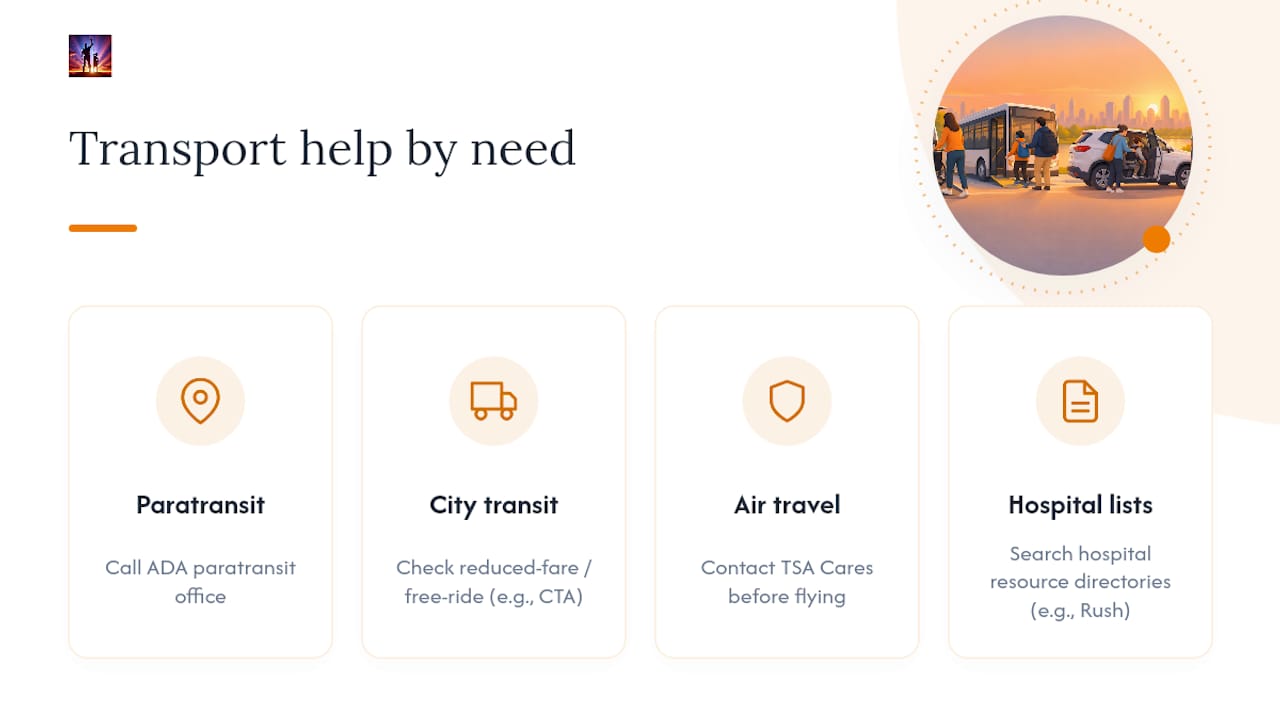
For local transit, contact the ADA paratransit office directly. Reduced-fare and free-ride programs vary by city. Chicago's CTA, for example, runs both, and most metro areas have a comparable version worth checking. If you're flying, TSA Cares is the single best contact, and hospital-affiliated resource directories, like the one from Rush University, often list additional community and volunteer transport options specific to your region.
What Actually Works: A Caregiver's Short List
Families who navigate this well tend to do a few things consistently: request the same driver every time, keep every form in one folder instead of scattered across email threads, run a practice trip before anything important, and carry a small sensory kit in the car regardless of who's driving. None of it is complicated. It's just consistent.
State-specific checklists and contact templates are often built around this kind of repeatable process, not one-time advice.
— Ronnie Talent
How Autism Victory App Simplifies the Search for Help
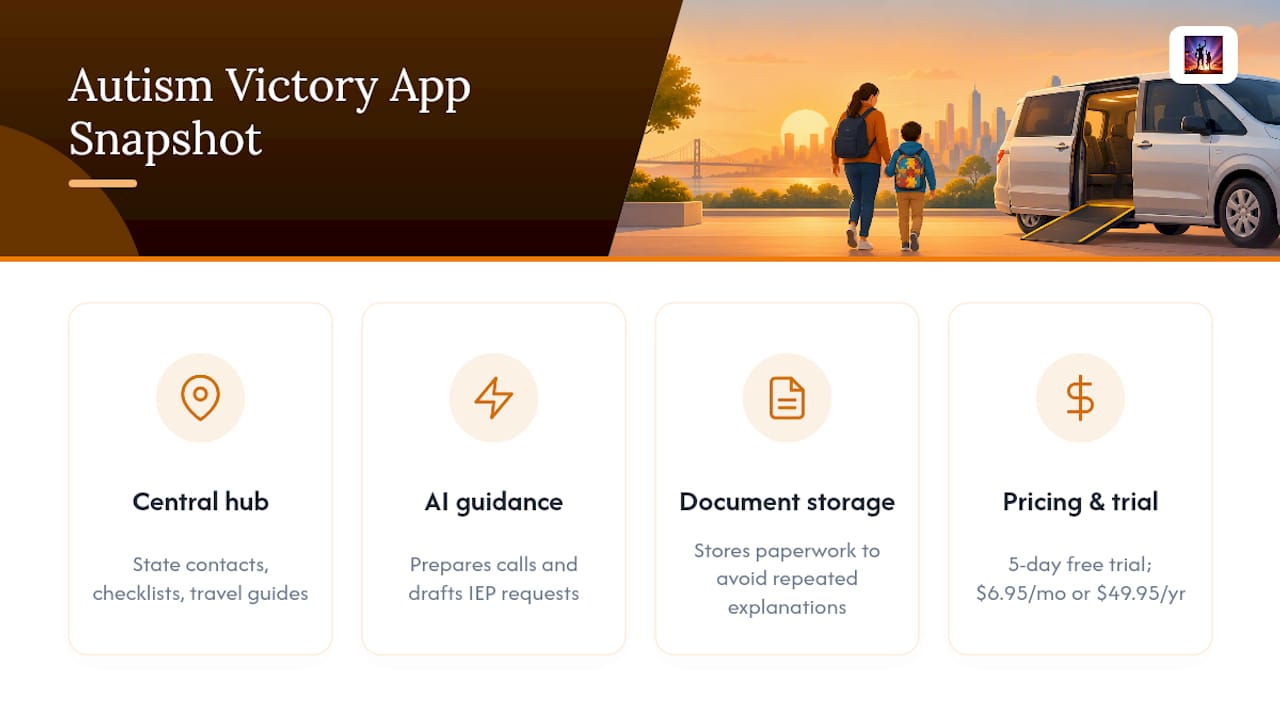
An app solution exists that centralizes state-specific contacts, documentation checklists, and travel-prep guides in one place built specifically for caregivers, avoiding the need to hunt down separate government pages and rules.

AI guidance tools can help you prepare what to say when calling your Medicaid broker, assist in drafting language to request specialized transportation in an IEP meeting, and store paperwork to avoid repeated explanations. Some apps also include bilingual educational content and caregiver communities for sharing experiences.
A 5-day free trial gets you into the full platform, and subscriptions run $6.95 per month or $49.95 per year through the pricing page. If your family is also working through counseling or behavioral support alongside transportation logistics, resources like Prism Counseling & Coaching's play therapy guidance pair well with the practical steps above. Start your trial today and get your state's contacts and checklists in minutes, not weeks.
This article is general information, not a substitute for advice from a qualified financial advisor. Consult a qualified financial professional about your own circumstances before acting on anything here.
Sources
TSA Cares: Screening Travelers on the Autism Spectrum | Transportation Security Administration
TSA disability notification card (PDF) | Transportation Security Administration
Specialized transportation and Medicaid SBS reimbursement (CMS/Medicaid guidance)
FAQ
Can an Autistic Child Receive SSI Benefits?
Yes, if the child meets SSA's disability definition for minors and the family meets income and resource limits. SSA's guidance for children covers the medical and financial criteria, including the Compassionate Allowances process for faster review in certain cases.
What Free Resources Are Available for Parents of Autistic Children?
Free resources include your state Medicaid office, your child's school special education team, local disability councils, and nonprofit volunteer driver networks. Autism Victory App also offers free content alongside its subscription features, including educational videos and a caregiver community.
What Free Transportation Options Exist for People With Disabilities in Chicago?
Chicago's CTA offers reduced-fare and free-ride programs for qualifying riders with disabilities, alongside standard ADA paratransit service. Eligibility typically requires an application and a functional assessment through the transit agency.
How Do I Get a TSA Autism Notification Card?
TSA's disability notification card is available as a free downloadable PDF that caregivers can print and bring to airport security. Call TSA Cares at 1-855-787-2227 well ahead of your flight, ideally several days beforehand to also request a Passenger Support Specialist.
Does Medicaid Pay for School Transportation for Autism?
Medicaid can reimburse specialized school transportation, but only when it's medically necessary and specified in the student's IEP, per CMS guidance. Routine transportation to school generally isn't Medicaid-covered unless it's tied to a Medicaid-covered service listed in that IEP.
Recommended