
Yes, respite care is available for many families in Florida. Start by dialing your regional Center for Autism & Related Disabilities office or calling 2-1-1 and asking specifically for respite referrals. Most families end up funding sessions through a Medicaid waiver like iBudget or CDC+, which means your next call after that should be to your support coordinator or the Agency for Persons with Disabilities.
TL;DR:
Most families can access respite care through Medicaid waivers like iBudget or CDC+, but waitlists can cause delays of weeks or months.
Formal referrals should begin with calls to Florida CARD, 2-1-1, or searching the ARCH Respite Locator for available programs nearby.
Funding options include waivers, nonprofit scholarships, employer assistance programs, and private pay, with each having different application processes and wait times.
In-home, center-based, camp, and crisis respite all serve different needs, requiring families to vet providers carefully for training, temperament, and reliability.
Using the Autism Victory App can streamline research, document storage, and communication, saving time during the respite planning process.
Table of Contents
What Respite Care Actually Means for Your Family
Respite care is short-term relief for the person doing the daily work of caregiving, according to the National Institute on Aging. It's not babysitting. It's a trained person or program stepping in so you can sleep, work, run errands, or just breathe, while your child or family member stays safe and supported.
There are two broad categories you'll hear repeatedly:
Planned respite — scheduled in advance, whether that's a few hours a week, a weekend, or a week at camp
Crisis respite — emergency coverage when a caregiver is hospitalized, a placement falls through, or a household simply hits a breaking point
Eligibility usually runs through one of three doors: Medicaid waiver enrollment, a referral through your school district or Early Steps (for children under three), or intake through a nonprofit program. Each door has different paperwork, so knowing which one applies to your situation early saves weeks of back-and-forth.
Where to Look First: ARCH, 2-1-1, and Florida CARD
Don't scatter your energy across a dozen Google searches. Three resources cover almost every referral path in the state, and they work best in this order.
Call your regional Florida CARD center. These centers offer individualized, consultative support to families, and their staff often know which local providers actually have openings, not just which ones exist on paper.
Dial 2-1-1. This connects you to a live specialist who can search local respite and caregiver-support listings in real time, including special-needs-specific helplines in several Florida counties.
Search the ARCH National Respite Locator by zip code. It pulls a state-by-state, county-by-county list of respite programs, and it's the fastest way to see what exists within driving distance.
Ask your child's clinician or local Arc chapter. Developmental pediatricians, BCBAs, and Arc chapters frequently maintain informal referral lists that never make it onto a public website.
Layer these four together and you'll usually surface options within a week, even in counties with thinner formal networks.
Paying for It: iBudget, CDC+, and What Happens If You're Waitlisted
Most ongoing respite funding in Florida flows through one of two Medicaid home and community-based services waivers. iBudget Florida gives approved individuals an annual budget they can allocate across services, including respite, based on assessed need. CDC+ (Consumer-Directed Care Plus) works similarly but gives families more direct control over hiring and paying their own support staff. Neither program is something you sign up for online. You start by contacting APD or your assigned support coordinator, who walks you through the application and budget process.
Waiver enrollment isn't instant. Florida's iBudget waiver has carried a long-standing waitlist, and caregiving research consistently shows respite reduces burnout and stabilizes families — which is exactly why getting on a list early, even before you need services urgently, matters more than most families realize.
While you wait, other funding routes can bridge the gap:
Lifespan Respite grant programs, where active in your county
Nonprofit scholarships through organizations like Nathaniel's Hope
Employer Employee Assistance Programs (EAPs), which sometimes cover short-term caregiver support
Private pay, which varies widely by provider and region
If you want a deeper walkthrough of application steps and documentation, our guide on finding and funding autism respite care covers the process in more detail.
The Different Types of Respite and What Each One Looks Like
Not every respite session looks the same, and knowing the differences helps you match the right option to your family's actual need.
In-home respite brings a trained provider into your home. It's the least disruptive option for kids who do better with familiar surroundings, but you'll want to run a full intake checklist before the first visit.
Center-based or group respite happens at a facility, often with other children present. Programs like those run through Nathaniel's Hope or Broward Children's Center offer this model, and the social component can be a real benefit for kids who enjoy peer interaction.
Camps and overnight respite give caregivers a longer stretch of relief, sometimes a full weekend or week. Apply early. Slots and scholarships fill months in advance.
Crisis respite exists for emergencies, meaning it's accessed differently, often through APD or a crisis line rather than a standard intake form.
How to Vet a Respite Provider Without Losing Your Mind
Hiring someone to care for your child, especially one with autism, deserves more scrutiny than a typical babysitter search. Here's a short process that actually works:
Check references and run a background check before anyone sets foot in your home.
Ask about clinical training — RBT or BCBA supervision, first aid certification, and medication administration training, if relevant.
Interview for temperament, not just credentials. Ask how they'd respond to a meltdown, a shutdown, or a refusal to transition activities.
Run a short trial shift with you present before committing to unsupervised time.
Pro Tip: Prioritize emotional rapport and consistency over an impressive resume. A calm, patient provider who shows up reliably every week often serves your child better than someone with more letters after their name but less staying power.
Your Action Plan for This Week
Momentum matters more than perfection here. Follow this order:
Make three calls: your regional Florida CARD center, 2-1-1, and (if you already have one) your APD support coordinator.
Gather documents before those calls: a medical summary, current behavior support plan, medication list, emergency contacts, and a page of routine notes (sleep, food preferences, sensory triggers).
Prepare your child for a new caregiver using a short social story or a brief introductory visit. Our autism caregiver guide has practical scripts for easing that first handoff.
Set realistic expectations: informal respite can sometimes start within days, but waiver-funded placement often takes weeks to months depending on waitlist status.
How Autism Victory App Fits Into This Process
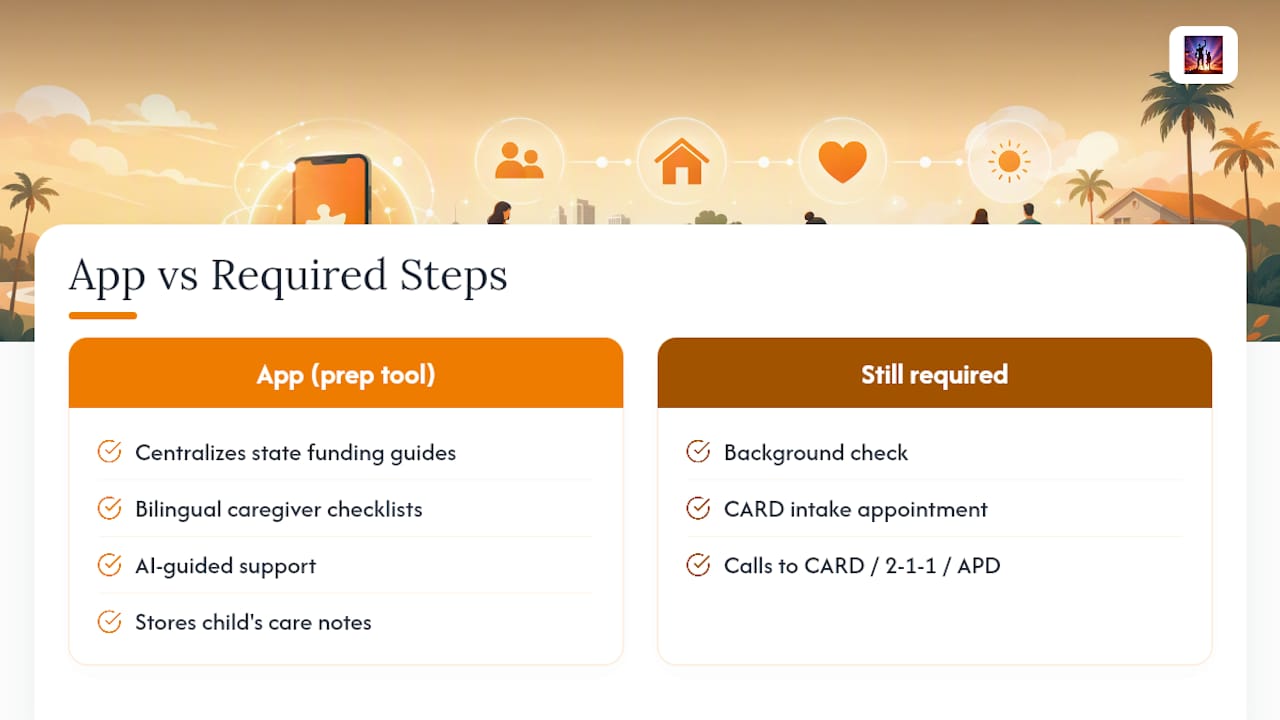
Autism Victory App won't replace a background check or a CARD intake appointment, but it can save you hours of scattered searching. The app centralizes state-specific funding guides, bilingual (English and Spanish) caregiver checklists, and AI-guided support so you're not rebuilding the same research from scratch every time a provider falls through. Store your child's care notes in one place, and hand a new provider a bilingual summary in minutes instead of retyping it every time. Think of it as your prep tool. The calls to CARD, 2-1-1, and APD are still yours to make.
A Caregiver's Honest Take on Asking for Help
Caregiving without breaks isn't sustainable, and needing respite isn't a failure. It's a fact of the job. If you're stretched thin right now, the single best move is calling 2-1-1 or your regional CARD office today. Keep a simple folder, digital or paper, with provider notes from every trial session. Small trials, documented honestly, tell you more than any resume ever will.
— Ronnie Talent
Try Autism Victory App While You Search for Respite
Autism Victory App is the alternative to hunting through a dozen bookmarked state websites for autism respite care in Florida. It puts state-specific funding guides, bilingual care-plan templates, and quick links to CARD, ARCH, and 2-1-1 in one mobile app, so the prep work that used to eat an evening takes minutes instead.
If you're juggling waiver paperwork, a provider search, and a household that doesn't pause for either, the app's AI-guided support helps you organize documents and track next steps without losing your place. It's built by caregivers who've navigated this same system, which shows up in details like ready-made handover notes for new providers. For families researching benefits eligibility alongside respite, checking your health insurance coverage for behavioral health services is worth doing in the same sitting.
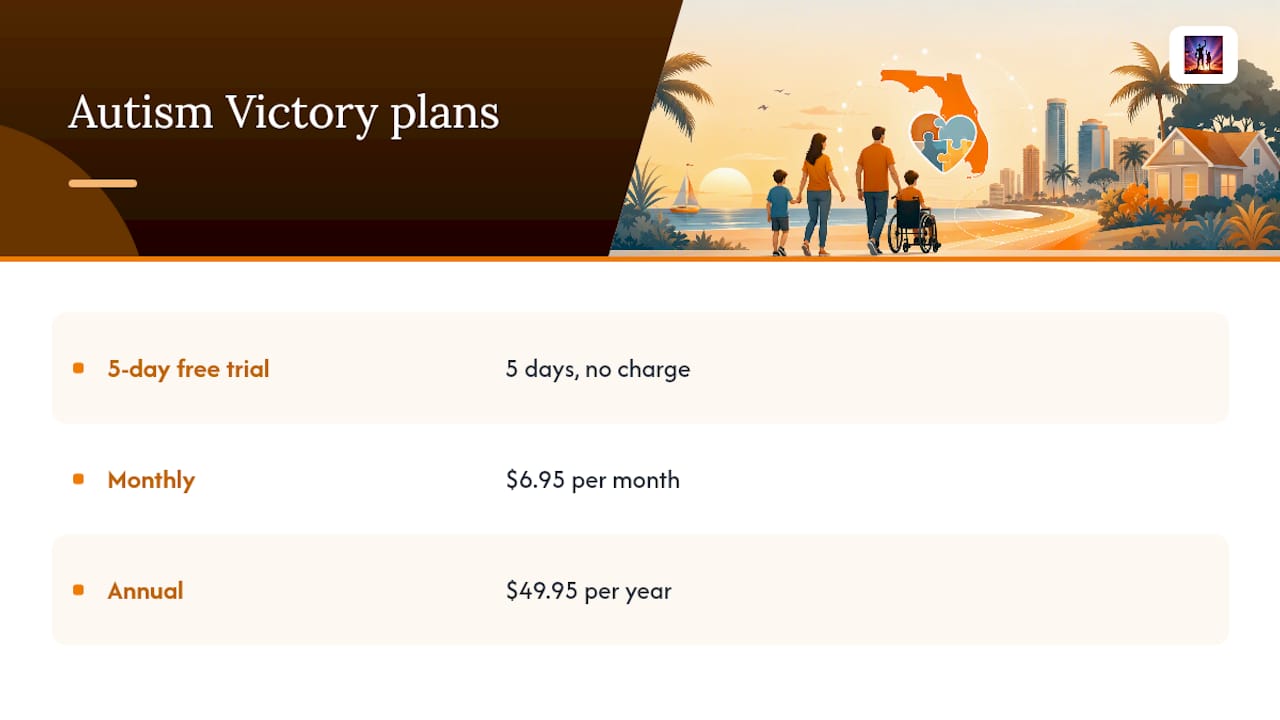
Start a 5-day free trial or check the Annual plan at $49.95 per year or Monthly at $6.95 per month to see whether the app fits your family's routine before you commit.
This article is general information, not a substitute for advice from a qualified doctor. Consult a qualified healthcare professional about your own circumstances before acting on anything here.
Sources
FAQ
Does Autism Qualify for Respite Care?
Yes. Autism is one of the most common qualifying diagnoses for respite programs funded through Medicaid waivers like iBudget and CDC+, as well as many nonprofit and school-linked programs. Eligibility details vary by program, so confirming with your support coordinator or Florida CARD center is the fastest way to know for sure.
Can I Get Respite Care for My Autistic Child?
In most cases, yes, though the path depends on funding source and your area's provider availability. Start with a call to 2-1-1 or your regional CARD office, and search the ARCH Respite Locator by zip code to see what's near you.
Can I Get Paid to Stay Home With My Autistic Child in Florida?
Some families access paid caregiving through CDC+, which allows a participant to hire and direct their own support staff, sometimes including certain family members, depending on program rules. This isn't automatic. It requires waiver approval, so contact APD or your support coordinator to find out whether your situation qualifies.
Which States Offer the Best Autism Services for Adults?
There's no single ranked list, since services depend on waiver structure, waitlist length, and local provider density rather than a fixed quality score. Florida's iBudget waiver and its network of CARD centers give adults a structured path to funded services, though waitlists remain a real factor to plan around.
How Fast Can I Get Emergency Respite in Florida?
Crisis respite works differently than planned respite. It's typically accessed through APD or a crisis contact rather than a standard waiver application, so timing depends on your county's available emergency slots. Call 2-1-1 immediately and ask directly for crisis or emergency respite options in your area.
Recommended