
Autism Respite Care: Where to Find Help and Fund It
Autism respite care is short-term, trained substitute care that gives primary caregivers planned relief from their caregiving responsibilities. Start today by checking the ARCH National Respite Locator, contacting your state’s Lifespan Respite program or State Respite Coalition, and applying for Medicaid Home and Community Based Services (HCBS) waivers if your family may qualify. These three steps put you on the fastest path to real, funded breaks.
Three immediate actions to take this week:
Check the ARCH National Respite Locator at archrespite.org to find state-listed providers near you.
Contact your State Lifespan Respite program or State Respite Coalition for local vouchers, training, and referrals.
Apply for your state’s Medicaid HCBS waiver even if a waitlist exists, because the clock starts on the day you apply.
Respite is not a sign that you are struggling as a parent. According to the ARCH fact sheet on respite for autism, respite for families of autistic individuals supports family stability and has been linked to a reduced likelihood of psychiatric hospitalization for children with autism. That is evidence-backed caregiver support, not a luxury.
Key Takeaways
Autism respite care is funded, evidence-backed caregiver relief. Apply for your state’s Medicaid HCBS waiver now, use the ARCH National Respite Locator to find providers, and plan for six hours of provider training before your first solo session.
Point | Details |
|---|---|
Start with ARCH and your state | The ARCH National Respite Locator and your State Lifespan Respite program are the fastest first contacts for finding funded providers. |
Apply for waivers immediately | Medicaid HCBS waiver waitlists start on the application date; apply now and pursue vouchers and grants in parallel. |
Budget six hours for provider training | Survey data show 79% of families train their own providers, averaging six hours before trusting them for solo sessions. |
Build a provider bench | Hire at least two providers and mix funding sources to avoid losing all respite hours from a single cancellation or funding gap. |
Autism Victory App | The app’s state-specific navigator organizes waiver names, agency contacts, and copyable scripts by state to speed up your search. |
This article is general information, not a substitute for advice from a qualified doctor. Consult a qualified healthcare professional about your own circumstances before acting on anything here.
Table of Contents
What is autism respite care, and what types are available?
Who qualifies for respite, and who pays for it?
How do you find autism respite services near you?
How do you screen and choose the right respite provider?
What safety and behavior training does every respite provider need?
How do you build a reliable respite routine from scratch?
Authoritative U.S. resources and national contacts
State-specific resources: a checklist you can copy and use
What caregivers actually feel when they start using respite
Autism Victory App helps you find programs and track funding faster
Sources
What is autism respite care, and what types are available?
The National Institute on Aging defines respite care as short-term care that allows primary caregivers to rest. For autism families, the practical reality is more specific: you need someone trained in autism-related communication, behavior supports, and sensory needs, not just a warm body who can supervise.
The five main types families use:
In-home respite. A trained provider comes to your home. Least disruptive for the autistic person because the environment stays familiar.
Out-of-home or center-based respite. Your family member attends a day program or specialized center. Often includes structured activities and peer interaction.
Overnight or short-term residential respite. Stays of one to several nights at a licensed facility. Used for longer caregiver breaks, medical appointments, or family emergencies.
Camp or program-based respite. Structured recreational programs, often summer camps designed for autistic participants. Builds social skills while giving caregivers extended relief.
Crisis or emergency respite. Unplanned, rapid-response care when a caregiver faces a sudden health event, family emergency, or acute burnout. Harder to access but critical to plan for in advance.
Type | Setting | Typical duration | Approximate cost (out-of-pocket) | Best fit |
|---|---|---|---|---|
In-home | Caregiver’s home | 2 hours | Routine breaks, sensory-sensitive individuals | |
Center-based day program | Specialized facility | Half or full day | $80–$106/day | Social skill-building, structured activities |
Overnight/residential | Licensed facility | one to several nights | $150–$300/day | Extended caregiver breaks, medical needs |
Camp/program | Recreational site | Days to weeks | Varies widely; grants often available | Peer interaction, summer programming |
Crisis/emergency | Home or facility | Hours to days | Varies; some states fund emergency slots | Sudden caregiver incapacity |
Respite also benefits the autistic person directly. Center-based and camp settings create structured social opportunities, and consistent respite routines can reduce anxiety by making “caregiver away” a predictable, safe experience rather than an unpredictable disruption.
Who qualifies for respite, and who pays for it?
Many families assume they earn too much to qualify for publicly funded respite. That assumption is often wrong. Medicaid HCBS waivers frequently use the child’s income for eligibility rather than the household income, which means middle-income families qualify more often than they expect. Waivers are state-administered, so the name and rules vary: your state may call it a Developmental Disabilities waiver, an Autism waiver, a Home and Community Based waiver, or something else entirely.
The main U.S. funding routes:
Funding source | What it typically covers | Timing reality | First contact |
|---|---|---|---|
Medicaid HCBS waiver | In-home and center-based respite hours, sometimes overnight | Waitlists of months to years; apply immediately | Your state Medicaid office or DD/IDD agency |
Lifespan Respite Program / State Respite Coalition | Vouchers, training, and provider matching | Faster than waivers; varies by state | archrespite.org state map |
State DD/IDD agency vouchers | Respite hours for individuals with developmental disabilities | Varies; some states have separate autism tracks | State developmental disabilities office |
Veterans programs (VA Caregiver Support) | Respite for veteran caregivers | Enrollment-based; relatively accessible | VA Caregiver Support Line |
Nonprofit grants | Partial funding for respite costs | Competitive; apply year-round | Autism Speaks, Easterseals, The Arc local chapters |
Private pay | Any type, any provider | Immediate | Direct hire or agency |
The single most important funding move is applying for the Medicaid waiver now, even if you expect a long wait. Waitlist clocks typically start on the application date, so a family that applies today and waits 18 months is 18 months ahead of a family that waits to apply until they are in crisis. While the waiver application is pending, pursue Lifespan Respite vouchers and nonprofit grants in parallel. Families routinely combine two or three funding sources to build workable hours. For a deeper look at autism financial assistance options beyond respite, including grant programs and state-specific aid, that resource covers the broader picture.
How do you find autism respite services near you?
Start with the national locators, then work down to state and local channels. Here is a prioritized sequence:
ARCH National Respite Locator (archrespite.org/caregiver-resources/respitelocator). Enter your zip code to see state-listed providers and programs. ARCH does not provide care directly but maintains the most comprehensive national directory of state respite programs and community providers.
Your State Lifespan Respite program or State Respite Coalition. These programs receive federal funding to coordinate respite across agencies. They often know about vouchers, training, and local providers that do not appear in national databases.
Your state’s Aging and Disability Resource Center (ADRC) or Area Agency on Aging (AAA). Call 211 or visit eldercare.acl.gov to find your local contact. The Eldercare Locator connects families to community-based services including respite, regardless of the caregiver’s age.
Your state DD/IDD agency or Medicaid case manager. If your family member already has a Medicaid case manager, that person can often refer you directly to waiver-funded respite providers.
Local Autism Society chapters, Autism Speaks resource guides, and Easterseals affiliates. These organizations maintain regional provider lists and sometimes fund respite directly through grants.
University programs and volunteer respite networks. Some universities with special education or psychology programs run supervised respite programs at reduced or no cost.
When you call any of these contacts, have the following ready:
Your family member’s diagnosis documentation (IEP, medical records, or diagnostic report)
Current insurance information (Medicaid ID if applicable)
A brief description of support needs (communication style, behavioral supports, medical needs)
Your preferred respite type (in-home, day program, overnight)
A short script that works: “I’m the primary caregiver for my [child/adult family member] with autism. I’m looking for respite services and want to understand what programs are available in my area, whether we qualify, and how to apply. Can you help me get started or point me to the right contact?”
Hospital-affiliated autism resource directories, such as the one maintained by Rush University Medical Center, can also surface local options that state databases miss.
How do you screen and choose the right respite provider?
Finding a provider is iterative. Survey data from the Woodman national survey show that families typically try multiple providers before finding a long-term match, and a notable portion stop working with providers due to fit or performance issues. That is not a failure on your part. It is the normal reality of matching a complex individual to a caregiver.
Provider screening checklist
What to check | Why it matters | Example question to ask |
|---|---|---|
Background check and references | Basic safety verification | “Can you provide two references from families of autistic individuals you’ve worked with?” |
Autism-specific experience or training | Reduces onboarding time and risk | “Have you worked with someone who uses AAC or has significant sensory sensitivities?” |
Medicaid/waiver provider enrollment | Required if you plan to use waiver funding | “Are you enrolled as a Medicaid waiver provider in this state?” |
Familiarity with positive behavior supports | Reduces behavioral incidents | “How do you respond when someone becomes dysregulated?” |
Comfort with communication supports | Critical for non-speaking or minimally verbal individuals | “Are you comfortable using a PECS board, AAC device, or visual schedule?” |
Availability and reliability | Prevents last-minute cancellations | “What is your backup plan if you can’t make a scheduled session?” |
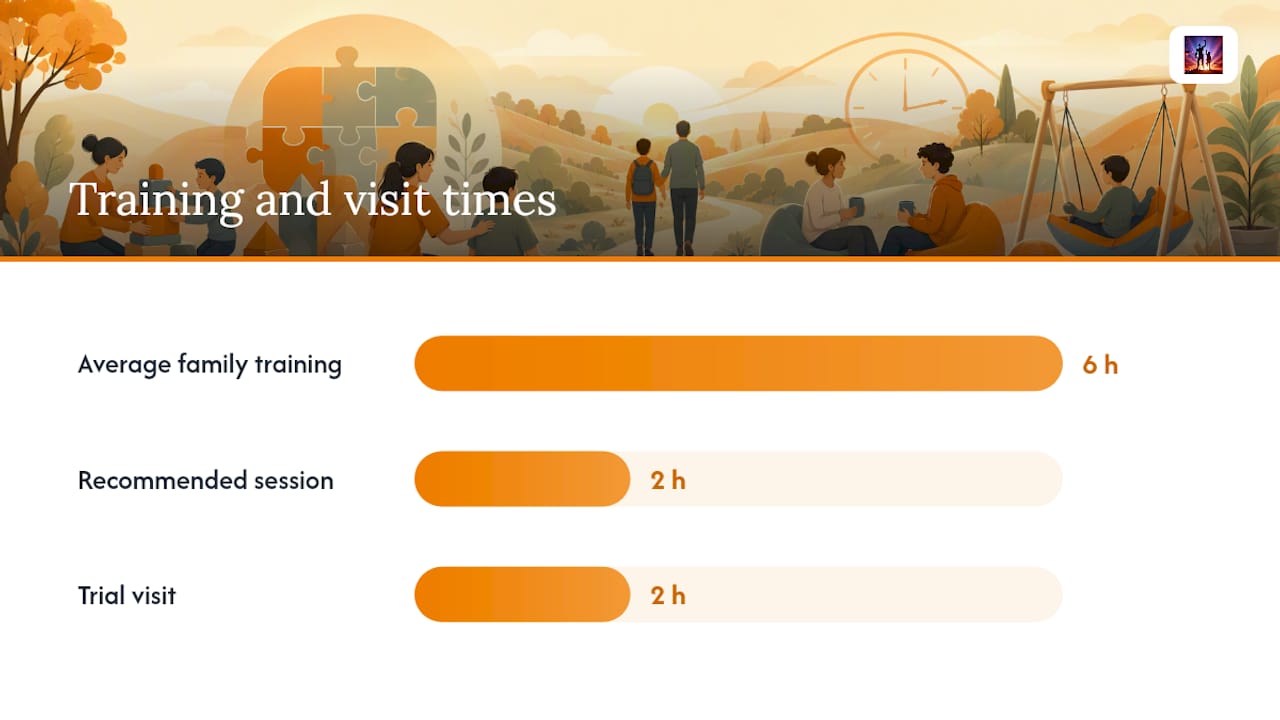
The same Woodman survey found that 79% of families provided initial training to new respite providers, averaging about six hours before feeling comfortable. Plan for that training time rather than hoping a provider arrives ready.
Pro Tip: Run your first training as three short sessions of two hours each rather than one six-hour block. Shorter sessions let providers absorb routines, ask questions, and practice responses before the stakes are higher. Pair each session with a written one-page summary of the key points covered.
For trial visits, start with a two-hour session where you stay in the home but are not actively supervising. Observe how the provider interacts, whether they follow the routine, and how your family member responds. A provider who ignores the visual schedule on the first visit will not suddenly start using it on the third.
Red flags that justify ending a match quickly: dismissing behavioral supports as unnecessary, failing to follow medication protocols, using physical restraint without prior authorization in a behavior plan, or showing visible frustration with communication differences.
What safety and behavior training does every respite provider need?
A respite provider working with an autistic individual needs more than general childcare experience. The gap between “good with kids” and “prepared for this specific person” is where most safety incidents and behavioral crises happen.
Core training topics every provider should understand before their first solo session:
Communication supports. Know the individual’s primary communication method: verbal, AAC device, PECS, sign language, or a combination. Practice using it before the first session.
Positive behavior supports (PBS). Understand the function of challenging behaviors (escape, attention, sensory, access) and the preferred responses outlined in the behavior support plan. Never use punishment-based approaches without explicit guidance from a BCBA.
Predictable routines and visual schedules. Transitions are high-risk moments. Providers should follow the established schedule and use visual supports to signal what comes next. Visual schedule resources can help you create materials to hand directly to a new provider.
Sensory accommodations. Know the individual’s sensory profile: what environments, textures, sounds, or activities are calming versus dysregulating.
Medication management. If the individual takes scheduled medications, the provider must know the name, dose, timing, and what to do if a dose is missed or a reaction occurs.
Emergency procedures. Know what to do for a seizure, an elopement attempt, a behavioral crisis, or a medical emergency. This includes who to call and in what order.
Pro Tip: Create a one-page “Emergency Respite Card” that lists the individual’s name, primary diagnosis, communication method, top three behavioral triggers, top three calming strategies, emergency contacts (including the family’s cell, a backup contact, and the child’s doctor), and the nearest hospital. Laminate it and leave it on the refrigerator. Hand a copy to every provider on day one.
Provider competence in these areas is not optional. The ARCH fact sheet links adequate respite support directly to reduced family crisis and reduced hospitalization risk. A poorly prepared provider does not just create a bad session; it creates a safety risk and makes families less likely to use respite again.
How do you build a reliable respite routine from scratch?
The gap between “I need a break” and “I have a working respite system” is mostly paperwork and planning, not money. Here is what a functional setup looks like.
Sample respite plan template
Field | What to include |
|---|---|
Individual’s name and age | Full name, date of birth, preferred name |
Primary communication method | Verbal, AAC device model, PECS level, sign language |
Key behavioral supports | Top 3 triggers, top 3 calming strategies, behavior plan summary |
Medical needs | Medications (name, dose, time), allergies, seizure protocol if applicable |
Daily routine | Morning, afternoon, and evening schedule with visual schedule attached |
Emergency contacts | Caregiver cell, backup contact, pediatrician, nearest ER |
Provider instructions | What to do if the individual refuses a transition, becomes dysregulated, or needs sensory support |
For session logs, track the date, provider name, hours, any behavioral incidents, and one note on what went well. A simple notebook works. The log helps you spot patterns (which providers get the best responses, which times of day work best) and gives you documentation if you need to report a concern.
Onboarding timeline for a new provider
Session 1 (caregiver present). Walk through the respite plan, demonstrate the routine, and let the provider observe. Two hours maximum.
Session 2 (caregiver nearby but not supervising). Provider runs the session; caregiver is in another room or outside. Debrief afterward.
Session 3 (first solo session). Short, two to three hours. Caregiver reachable by phone.
Build a bench of at least two providers so a single cancellation does not eliminate your break. Mix funded options (waiver hours, vouchers) with informal paid arrangements to avoid total dependence on one funding source. If your waiver hours run out mid-month, a trusted neighbor or trained volunteer can fill the gap.
Authoritative U.S. resources and national contacts
Start here: The ARCH National Respite Locator is the fastest first step for most families. Enter your zip code to find state-listed programs and providers, then follow up with your State Respite Coalition for local vouchers and training.
Key national resources, organized by what you need:
ARCH National Respite Network (archrespite.org): National locator, state coalition contacts, fact sheets, and caregiver training resources. Call first if you need a provider list or state program contacts.
Lifespan Respite Programs / State Respite Coalitions: Federally funded state programs that coordinate respite across agencies. Find your state contact through the ARCH website.
Administration for Community Living / Eldercare Locator (eldercare.acl.gov): Federal referral tool for aging and disability community resources, including respite. Useful for adult caregivers and families seeking local ADRC contacts.
Autism Speaks (autismspeaks.org): Resource guides, local chapter contacts, and a tool kit for finding respite providers. Good for families new to the system.
Easterseals (easterseals.com): Direct service provider in many states; also offers respite program information and local affiliate contacts.
The Arc (thearc.org): Advocacy and direct services for individuals with intellectual and developmental disabilities; local chapters often know about state-specific respite funding.
NIA/NIH caregiving pages (nia.nih.gov): Federal-level definition and context for respite as a caregiver support tool.
If you need funding first: Contact your state Medicaid office or DD/IDD agency and the ARCH locator simultaneously. If you need an emergency placement now: Call 211, your local ADRC, and your state’s crisis line. Formal waitlists will not help in a same-day emergency; informal networks and local disability agencies move faster.
State-specific resources: a checklist you can copy and use
Most of the work in finding respite happens at the state level, not the national level. The programs, waiver names, and contact points differ by state. Use this checklist as a template to fill in your state’s specifics before you make your first call.
Field | What to find | How to find it |
|---|---|---|
State DD/IDD agency name and phone | Your state’s developmental disabilities office | Search “[your state] developmental disabilities agency” |
Medicaid HCBS waiver name | The waiver that covers respite in your state | Search “[your state] Medicaid waiver autism respite” |
State Lifespan Respite contact | Your state’s federally funded respite coordinator | ARCH state map at archrespite.org |
Local DD/IDD office contact | County-level office for waiver enrollment | State DD/IDD agency website |
Local Autism Society chapter | Regional chapter for provider referrals and grants | autismsociety.org chapter finder |
Copyable search phrases to paste into Google:
[your state] Medicaid HCBS waiver autism respite[your state] Lifespan Respite program application[your state] developmental disabilities respite voucher[your state] autism society respite grant
Short contact script for your first call to a state agency: “Hi, I’m the primary caregiver for my [child/family member] with autism. I’m trying to find out what Medicaid waiver programs cover respite care in [your state], whether we qualify, and how to get on the waitlist. Can you walk me through the process or connect me with the right person?”
Families who use a state-specific navigator to pre-fill these fields before calling report significantly shorter call times and fewer transfers. The Autism Victory App’s state-specific resource navigator organizes this information by state, so you are not starting from a blank search every time.
What caregivers actually feel when they start using respite
The most common reason families delay using respite is guilt, not logistics. There is a persistent, quiet belief that needing a break means you are not doing enough, or that no one else can care for your family member as well as you can. Both feelings are understandable. Neither one is a reason to skip respite.

The Woodman national survey documents what most experienced caregivers already know from living it: finding the right provider takes time, the training burden falls mostly on families, and the emotional payoff of a reliable break is real. Caregiver burnout does not make you a better parent. It makes you a depleted one.
One practical reframe that works: treat respite as a scheduled medical appointment for yourself. You would not cancel a necessary procedure because you felt guilty about leaving. The same logic applies here. Your capacity to care well over years and decades depends on having regular, protected recovery time.
Autism Victory App helps you find programs and track funding faster
Locating state-specific respite programs, tracking multiple funding applications, and keeping provider paperwork organized is genuinely time-consuming. Autism Victory App puts your state’s Medicaid waiver contacts, Lifespan Respite program links, and copyable contact scripts in one place, so you spend less time searching and more time acting.

The app’s state-specific navigator pulls together the exact agency names, waiver program titles, and local contacts for your state, which means your first call goes to the right office rather than the third transfer. It also stores your documents and tracks application status so nothing falls through the cracks while you are managing everything else. For families who want autism financial assistance guidance alongside respite resources, the platform covers both in one subscription.
Start your 7-day free trial at Autismvictory and get your state’s respite contacts in minutes.
Sources
Recommended