Autism Haircut Tips That Actually Work for Your Child
For the next haircut, do three things right now: book the earliest or latest slot of the day when the salon is quietest, pack noise-reducing earmuffs or headphones, and bring one comfort item your child already loves. Those three moves alone reduce the most common triggers before you even walk through the door.
A few quick accommodations you can request at booking:
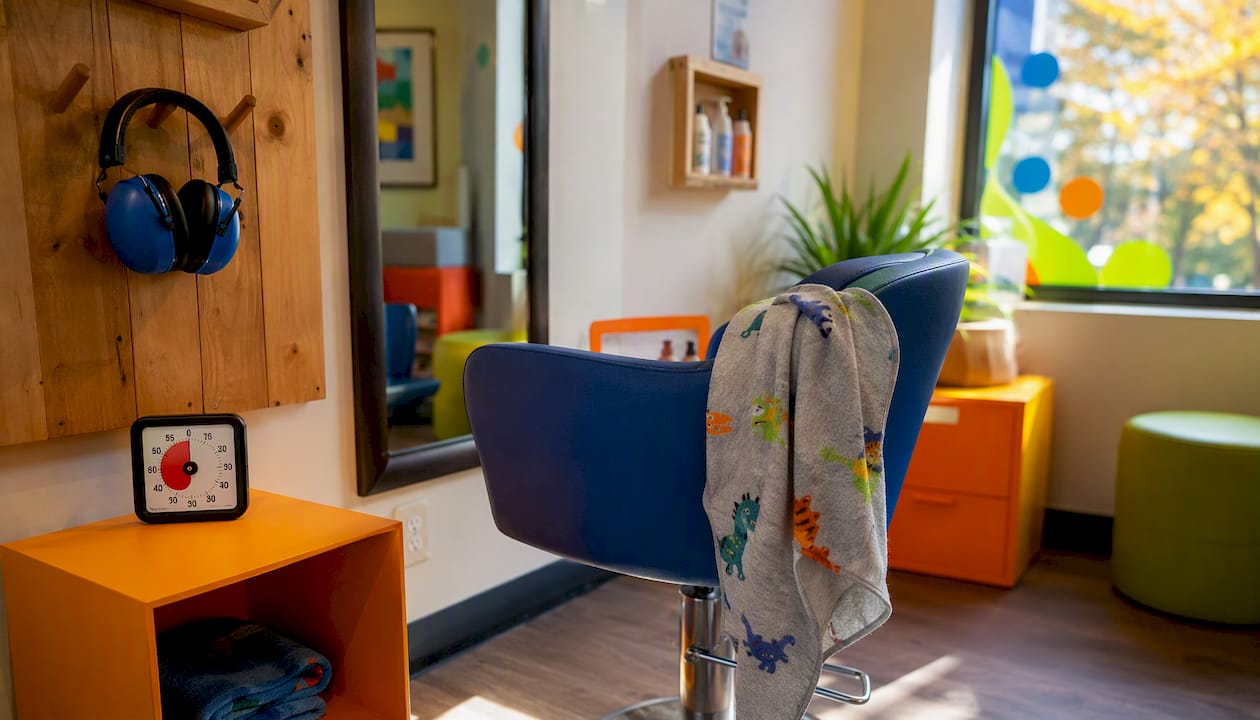
Ask for a clear plastic cape or offer to use a soft towel from home instead.
Request that staff skip scented products and aerosol sprays entirely.
Ask the stylist to use scissors rather than clippers whenever possible.
These aren’t unusual requests. Many U.S. salons that serve families with special needs already accommodate them. Occupational therapy principles, ABA task analysis, and the practical resources inside Autism Victory App all point to the same starting place: small, predictable changes to the environment make the biggest difference.
Pro Tip: Call ahead and speak directly with the stylist, not just the front desk. A two-minute conversation about your child’s needs tells you immediately whether this is the right fit.
Key Takeaways
Consistent, low-pressure preparation combined with sensory accommodations and immediate reinforcement gives your child the best chance of tolerating haircuts over time.
Point | Details |
|---|---|
Prepare days in advance | Use a social story and visual schedule starting five to seven days before the appointment. |
Regulate before cutting | Apply deep pressure and calming strategies before the stylist touches the hair. |
Address each sense separately | Manage sound, touch, smell, and vibration with specific tools like earmuffs and unscented products. |
Use graduated exposure | Follow an ABA-style task analysis, moving to the next step only after three calm, successful sessions. |
Autism Victory App | Provides social-story templates, calming audio, and personalized guidance to support every step of haircut preparation. |
Table of Contents
What are the best autism haircut tips for preparing before the appointment?
How do you reduce sensory overload during a haircut for an autistic child?
How do you use task analysis to build haircut tolerance step by step?
How to give a calm at-home haircut when a salon visit isn’t possible
How do you find an autism-friendly stylist and what should you request?
What products and tools actually help with autism haircut sensory tips?
When should you ask for professional help with haircut distress?
Social story template, visual schedule, and regulation routine you can use today
What realistic progress looks like and how to redefine success
Autism Victory App has the tools to support every step of this plan
A caregiver’s honest perspective on what progress really takes
Sources
What are the best autism haircut tips for preparing before the appointment?
Preparation is where most of the real work happens, and it starts days or even weeks before the appointment. The goal is to make the salon feel predictable, not surprising.
Build a short social story
A social story is a brief, first-person narrative that walks your child through exactly what will happen. Keep it to five or six sentences. Use photos of the actual salon, the stylist’s face, and the chair your child will sit in. Write it in present tense: “I go to the salon. I sit in the chair. The stylist cuts my hair with scissors. When we are done, I get [reward].” Social stories, visual schedules, and home practice with tools are standard preparation steps recommended for children with ASD before salon visits.
Read the story together once a day for at least a week before the appointment, not just the night before.
Use a visual schedule
A simple 3–5 step visual schedule works better than a verbal explanation for many children. You can draw it, print icons, or use photos. A basic sequence:
We drive to the salon.
We sit in the chair.
The stylist cuts my hair.
I get my reward.
Start showing the schedule five to seven days out. Point to each step as it happens on the day. Visiting the salon ahead of time and using brief practice play at home are steps clinicians and parents commonly endorse alongside visual supports. A visual schedule guide can help you build one quickly if you’re starting from scratch.
Practice runs at home
Run short practice sessions, five to ten minutes each, several times in the week before the appointment. Practice these elements separately:
Sitting still in a chair for increasing lengths of time.
Wearing the cape or towel around the shoulders.
Hearing the sound of scissors near the ears (record a short clip on your phone).
Feeling a comb move through the hair.
Stealth visits for high-anxiety kids
For children with high anticipatory anxiety, a “stealth” familiarization visit works well. You go to the salon on a day with no appointment booked, just to look around, say hello, and leave. No pressure, no haircut. This kind of casual visit builds comfort without the pressure of a scheduled appointment and can make the actual visit feel far less threatening.
72-hour checklist before the appointment
Protect sleep the two nights before. Fatigue amplifies sensory sensitivity.
Serve a familiar, preferred meal beforehand, not a new food.
Pack the comfort item, headphones, and a tablet or fidget toy the night before.
Review the social story and visual schedule together that morning.
Plan the reward in advance and tell your child what it is.
Pro Tip: Schedule the appointment at your child’s best time of day, not yours. If they’re sharpest at 10 AM, book 10 AM.
How do you reduce sensory overload during a haircut for an autistic child?
Haircuts hit multiple senses at once: the buzz of clippers, the scratch of a cape, the smell of salon products, the glare of lights. Addressing each sense separately gives you a clear plan rather than a vague hope.
Sound
Noise-reducing earmuffs or headphones are the single most effective tool for clipper-sensitive children. Practical sensory accommodations include avoiding scented products, using minimal water spray, dimming lights, and offering off-peak or private-room bookings in some U.S. salons. Ask the salon to turn off background music entirely. Request scissors over clippers whenever the style allows.
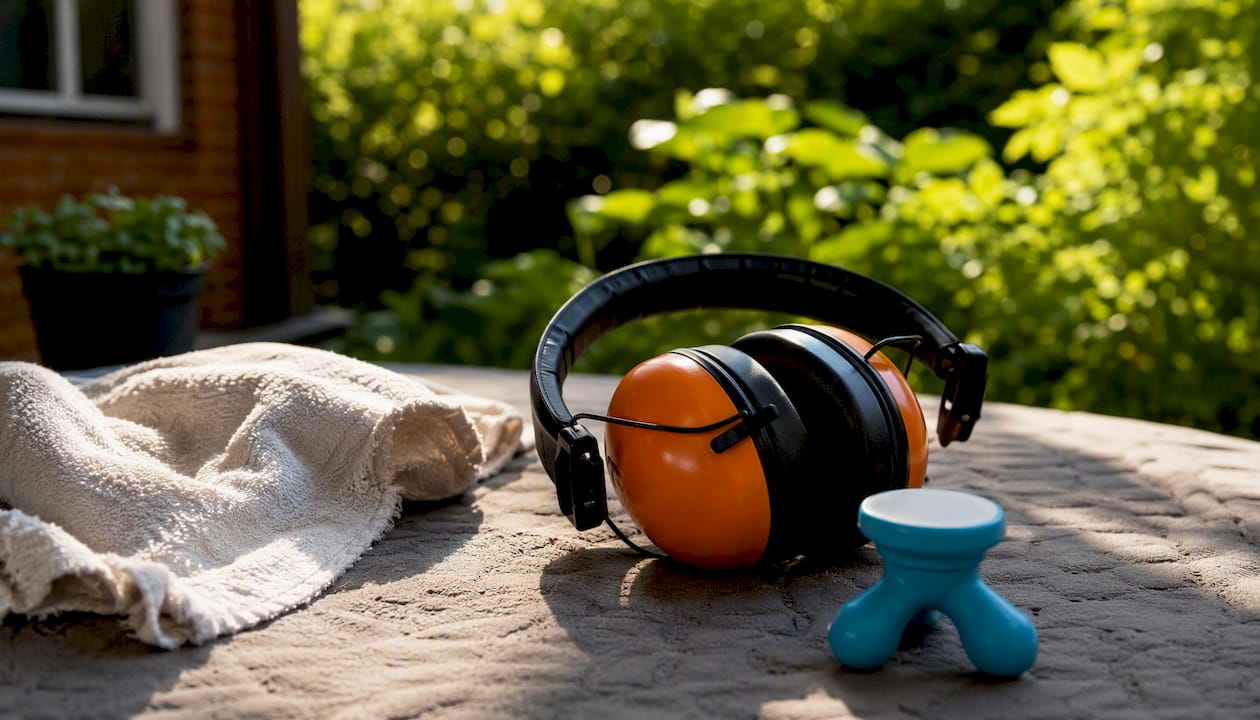
One underused trick: wear the earmuffs upside down, with the band under the chin rather than over the head. The ears stay covered, and the stylist can access the crown without removing the protection.
Touch
Offer a soft towel under or instead of the standard vinyl cape.
A weighted lap pad can provide grounding pressure during the cut.
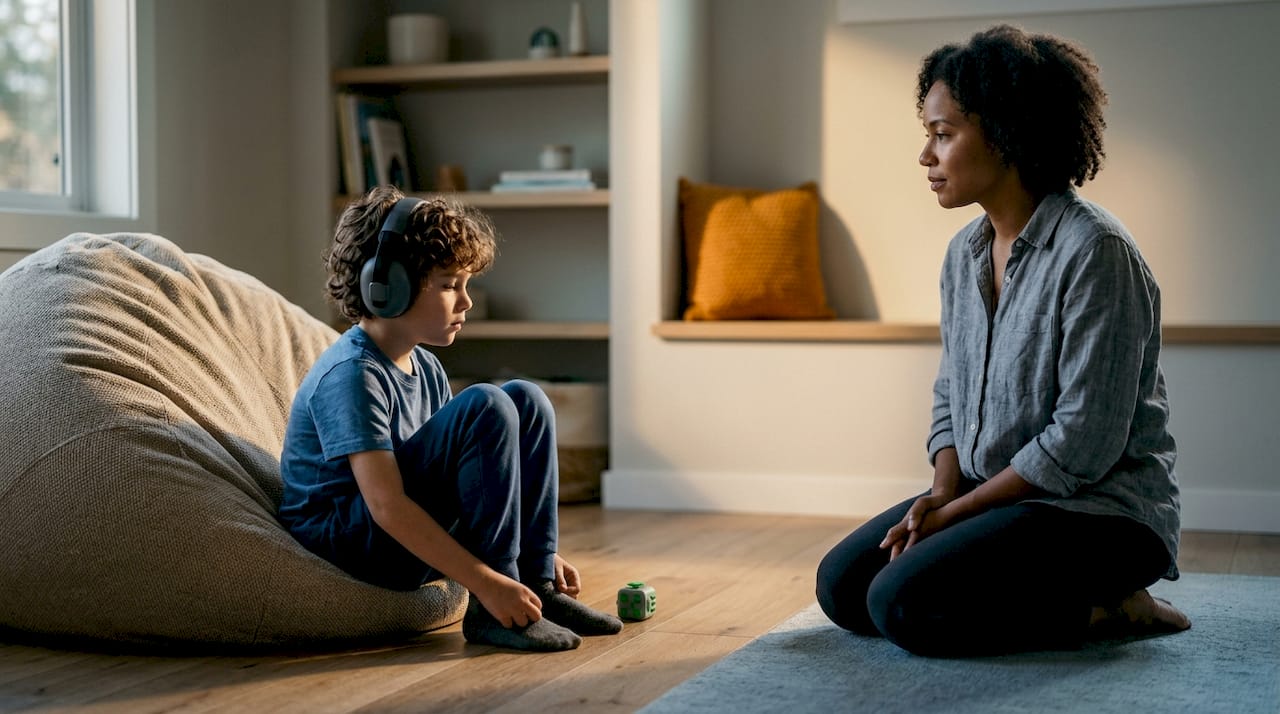
Apply deep pressure (firm shoulder squeeze, bear hug) before the stylist begins. Occupational therapists advise “regulate first, cut second” because haircuts involve concurrent sensory inputs, and calming the nervous system first reduces distress during the cut.
Avoid spraying water directly on the scalp; use a damp comb instead.
For children with significant touch sensitivity, the tactile defensiveness strategies used in occupational therapy can help you build tolerance before the appointment even starts.
Sight and smell
Dim the lights if the salon allows it. Some children find mirrors distracting or distressing; ask whether your child can face away from the mirror. A visual timer on a tablet or phone gives a concrete, non-verbal signal of how much time remains.
For smell, request that staff skip all scented sprays, gels, and hairsprays during your child’s appointment. Bring your child’s own familiar shampoo if washing is needed.
Pro Tip: Ask the stylist to narrate each step before touching: “I’m going to comb the left side now.” That one-second warning prevents most startle reactions.
Vibration
Clippers vibrate. For children who can’t tolerate that sensation, introduce it gradually at home using a battery-powered toothbrush or a small vibrating toy on the arm or hand, well before the appointment. The goal is familiarity, not desensitization in a single session.
How do you use task analysis to build haircut tolerance step by step?
Task analysis, an approach used consistently in ABA therapy, breaks a complex activity into small, measurable steps. Visual supports and ABA-style task analysis are commonly recommended by practitioners as effective preparation methods for salon haircuts. The key is to master each step before moving to the next.
The graduated exposure sequence
Sit near the chair. Your child sits in the same room as the styling chair for two to three minutes. No tools, no touching.
Sit in the chair. Your child sits in the chair with no cape, no tools. Reinforce immediately.
Tools on the lap. Place scissors or a comb on your child’s lap or nearby. Let them hold or examine the tools.
Cape or towel on shoulders. Drape the towel or cape for 30 seconds. Reinforce, then remove.
Comb touches hair. One or two gentle strokes. Stop. Reinforce.
Scissors near the ear. Open and close scissors near (not on) the hair. Reinforce.
First small trim. One snip on a small section. Reinforce immediately.
Increasing duration. Gradually extend the trimming time across sessions toward a full cut.
Reinforcement
Use immediate, preferred reinforcers: a small piece of a favorite food, 30 seconds of a preferred video, a sticker. Deliver the reward within seconds of the target behavior, not at the end of the session. As tolerance grows, gradually stretch the interval between the behavior and the reward.
Progress tracking
Keep a simple log after each session:
This log becomes useful when you share progress with an OT or BCBA.
When to move forward vs. repeat a step
Move to the next step only when your child completes the current one calmly across three consecutive sessions. If distress spikes, go back one step. Never push through a meltdown; that teaches the opposite of what you want.
Pro Tip: Keep practice sessions under ten minutes. Ending on a calm, successful moment matters more than covering more ground.
How to give a calm at-home haircut when a salon visit isn’t possible
At-home haircuts remove the unfamiliar environment entirely, which is a real advantage. The trade-off is that you’re the stylist, so setup and safety matter.
Equipment checklist
Sharp, rounded-tip scissors designed for hair cutting.
Clippers with multiple guard sizes (a guard prevents skin contact).
A soft towel or child-sized cape.
A non-slip booster seat or stable chair at a comfortable height.
A tablet or phone loaded with a preferred show or calming audio.
A small mirror if your child tolerates it (optional).
A spray bottle with plain water.
5-step short session plan
Prepare the space. Set up the chair in a familiar room, not the bathroom if that’s a trigger. Lay out tools where your child can see them.
Regulate first. Run a short calming routine: deep pressure, slow breathing, or a preferred sensory activity for three to five minutes.
Trim for two to three minutes. Focus on the most visible or problematic area first (often around the ears or eyes). Stop when the timer goes off, regardless of how much is done.
Reward immediately. Deliver the preferred reinforcer right after the trim, not after cleanup.
Document what worked. Write one sentence: what you cut, how long your child tolerated it, and what reinforcement you used.
Safety callouts
Never cut hair while your child is moving suddenly. Pause and wait.
Keep clipper guards on at all times unless you are a trained stylist.
If your child reaches for the scissors, stop the session immediately.
Skin nicks happen most often around the ears and nape. Use a comb as a guide between the skin and the scissors.
Splitting the haircut across sessions
A full haircut does not have to happen in one sitting. Cut the sides one day, the back another, the top a third. A combination of preparation, sensory accommodations, and positive reinforcement is recommended to increase the chance of a successful haircut, and splitting sessions is one of the most practical ways to keep each interaction short and positive.
Pro Tip: Take a photo after each at-home session. It helps you track what’s been done and gives you a reference for the next session.
How do you find an autism-friendly stylist and what should you request?
Finding the right stylist is as important as any preparation strategy. A skilled, willing stylist can make the same child’s experience completely different.
Where to look
Ask your child’s occupational therapist or BCBA for referrals. They often know local stylists who have worked with sensory-sensitive clients.
Search for salons that advertise sensory-friendly or special-needs services.
Ask in local autism parent Facebook groups or through your school district’s parent network.
Contact your state’s autism society chapter for regional recommendations.
What to say when you call
Be direct. A sample script:
A stylist who hesitates or says “we’ll just see how it goes” is not the right fit. You want someone who says yes confidently or asks follow-up questions.
In-person briefing checklist for the stylist
Hand this to the stylist when you arrive:
My child’s main sensory triggers (e.g., clipper noise, water spray, neck touching).
Calming strategies that work (e.g., deep pressure, preferred video, verbal warnings before each touch).
Preferred reinforcers (e.g., a specific snack, a sticker).
Signal for a break (e.g., your child will say “stop” or raise a hand).
Permission to pause at any time without explanation.
Red flags to watch for
A stylist who insists on the standard vinyl cape when you’ve explained the issue, rushes through the cut without pausing, or dismisses your child’s distress as “just nerves” is not a safe choice. Leave if you need to. A partial haircut on a calm child is a better outcome than a full cut on a distressed one.
Including siblings or family helpers
A sibling or second caregiver can hold the tablet, manage the reinforcement schedule, or simply sit nearby as a calming presence. Give them a specific job before you arrive so they aren’t improvising. Avoid having too many adults in the space; extra people can increase stimulation rather than reduce it.
What products and tools actually help with autism haircut sensory tips?
The right gear makes a measurable difference. Here’s what to consider, organized by sensory category.
Sound
Noise-reducing earmuffs (look for a Noise Reduction Rating of 22 or higher for children). Brands like 3M Peltor make child-sized options.
Alternatively, over-ear headphones connected to a preferred playlist or calming audio.
Remember the upside-down trick: band under the chin keeps ears covered while the stylist accesses the top of the head.
Tactile
Soft microfiber towels as a cape alternative.
Weighted lap pads for grounding during the cut.
A familiar, soft fidget toy held in the hands during the appointment.
Cutting tools
Scissors with rounded tips for home use.
Clippers with a full set of numbered guards (a guard between the blade and skin is non-negotiable at home).
Quieter clipper models marketed for sensitive users produce less vibration and lower decibel output than standard salon clippers.
Distraction and calming
A tablet mount that clips to the chair arm keeps the screen at eye level without requiring anyone to hold it.
Chewable jewelry (silicone, food-grade) for children who seek oral input; always choose age-appropriate, supervision-appropriate options and check that the product meets U.S. consumer safety standards.
A calming sound library (white noise, nature sounds, or preferred music) loaded on a phone or tablet before you leave home.
Apps and digital resources
Visual timer apps like Time Timer give a non-verbal, concrete countdown. The Autism Victory App includes a calming sound library, sensory diet guidance, and in-app templates that support the kind of stepwise preparation described throughout this article.
Pro Tip: Avoid heavy, stiff capes that press on the neck and shoulders. A lightweight towel draped loosely is often tolerated far better.
When should you ask for professional help with haircut distress?
Most children make gradual progress with consistent practice. Some need more support than a parent can provide alone.
Safety do’s and don’ts
Do:
Stop any session, at home or in a salon, the moment your child shows signs of genuine distress (crying, hitting, attempting to flee).
Keep all sharp tools out of reach between sessions.
Clean clippers and scissors before each use.
Don’t:
Restrain your child physically to complete a haircut.
Continue cutting through a meltdown.
Use food reinforcers that your child is allergic to or that conflict with dietary restrictions.
When to contact an occupational therapist
Reach out to an OT if:
Your child’s distress during haircuts has not improved after four to six weeks of consistent practice.
Your child engages in self-injury (head-banging, biting) in response to haircut-related stimuli.
Haircut avoidance is affecting other grooming routines (tooth brushing, nail trimming).
You’re unsure whether your child’s sensory profile needs a formal sensory integration assessment.
An OT can conduct a sensory processing evaluation and build a sensory diet that addresses haircut tolerance as part of a broader plan.
When to contact a BCBA
A Board Certified Behavior Analyst can design a formal desensitization program with precise reinforcement schedules, data collection, and decision rules for when to advance or retreat. This is the right call when the graduated steps described in this article aren’t producing progress after consistent effort.
Documenting incidents for clinicians
Keep a brief note after each difficult session:
Date and setting (home or salon).
What triggered the distress (specific sound, touch, or moment).
What you tried and how your child responded.
Duration of the distress and how it resolved.
This log gives an OT or BCBA the data they need to build an effective plan quickly.
Medical considerations
If your child shows extreme anxiety, panic-level responses, or physiological symptoms (vomiting, fainting) related to haircuts, consult your pediatrician. In some cases, a referral to a developmental pediatrician or child psychiatrist is appropriate. This is general information; always confirm next steps with a qualified clinician who knows your child.
Social story template, visual schedule, and regulation routine you can use today
These ready-to-use templates are grounded in the same principles occupational therapists and ABA practitioners apply. Adapt the language and photos to fit your child.
Social story template
Copy this and fill in the bracketed sections:
“Today I am going to [salon name]. I will sit in the chair. [Stylist name] will cut my hair with scissors. It might feel a little funny, but I am safe. When we are done, I will get [reward]. I did it!”
Add a photo of the salon exterior, the chair, and the stylist’s face above each sentence. Laminate it or save it on a tablet so your child can hold it during the appointment.
3-step visual schedule template
Step | Icon or photo | What happens |
|---|---|---|
1. Arrive | Photo of salon entrance | We walk in and say hello. |
2. Sit and cut | Photo of chair | I sit down. The stylist cuts my hair. |
3. Reward | Photo of preferred reward | I get [reward] when we are done. |
Print it, laminate it, and let your child carry it. Pointing to each completed step gives a concrete sense of progress.
Regulation routine (run this 5 minutes before entering the salon)
Deep pressure: firm bear hug or shoulder squeeze for 10 seconds.
Slow breathing: three slow breaths together, in through the nose, out through the mouth.
Transitional object: hand your child their comfort item to hold going in.
Autism Speaks publishes a haircutting training guide that reinforces this same principle: the more predictable the experience, the lower the sensory load. Autism Victory App supports this approach with in-app social-story templates, a calming sound library, and step-by-step caregiver guidance you can access before, during, and after the appointment.
Share your completed social story and visual schedule with the stylist before the appointment starts. A stylist who can see the plan is far more likely to follow it.
What realistic progress looks like and how to redefine success
Here is something worth saying plainly: a perfect haircut is not the goal. Not yet.
Success at week one might be sitting in the chair for 30 seconds without distress. At week three, it might be tolerating a comb through the hair. A month in, it might be accepting a small trim near the ears. These are real wins, and they build on each other.
Timelines vary enormously by child. Some children move through the graduated steps in a few weeks. Others take months. Neither pace is wrong. What matters is consistent, low-pressure practice with genuine reinforcement at every step.
Keep a simple win log: one line per session, noting what your child tolerated and what reinforcement worked. Over time, that log becomes evidence of progress, even when progress feels invisible in the moment.
Caregiver guilt is real. Many parents feel they’ve failed when a haircut ends in tears. Reframe it this way: you showed up, you tried a new step, and you stopped before it became traumatic. That is good caregiving. The next session starts fresh.
Autism Victory App has the tools to support every step of this plan
Haircut prep is exactly the kind of detailed, multi-step challenge where having the right resources in one place makes a real difference. Autism Victory App gives you social-story templates, visual schedule guides, a calming sound library, and personalized AI guidance, all built for caregivers navigating situations like this one.
The app’s state-specific resource navigator can also help you locate OT services or funding support if professional help is the right next step for your family. You get caregiver-focused books and audiobooks in both English and Spanish, educational videos, and a community of parents who’ve worked through exactly these challenges.
Start with a 7-day free trial and access the full platform, including the in-app templates that pair directly with the stepwise plan in this article. No guesswork, no searching across a dozen websites. Everything your family needs is in one place.
A caregiver’s honest perspective on what progress really takes
Progress with haircuts is almost always slower than parents expect and faster than they fear.
The conventional advice, “just keep trying,” misses the point. Repeated exposure to an unmodified, distressing experience doesn’t build tolerance. It builds avoidance. What builds tolerance is graduated exposure, where each step is small enough that your child can succeed, paired with reinforcement that makes the experience worth repeating.
The parents who see the most consistent progress are the ones who treat haircut prep the same way a good coach treats athletic training: short sessions, clear goals, immediate feedback, and rest between efforts. They don’t try to get the whole haircut done in one session when the child isn’t ready. They celebrate the comb touching the hair for ten seconds as a genuine win, because it is.
There’s also something worth saying about the stylist relationship. A stylist who has worked with sensory-sensitive children even a handful of times is worth traveling across town for. That experience changes everything about how the appointment feels. Don’t settle for a convenient location when the right person is 20 minutes away.
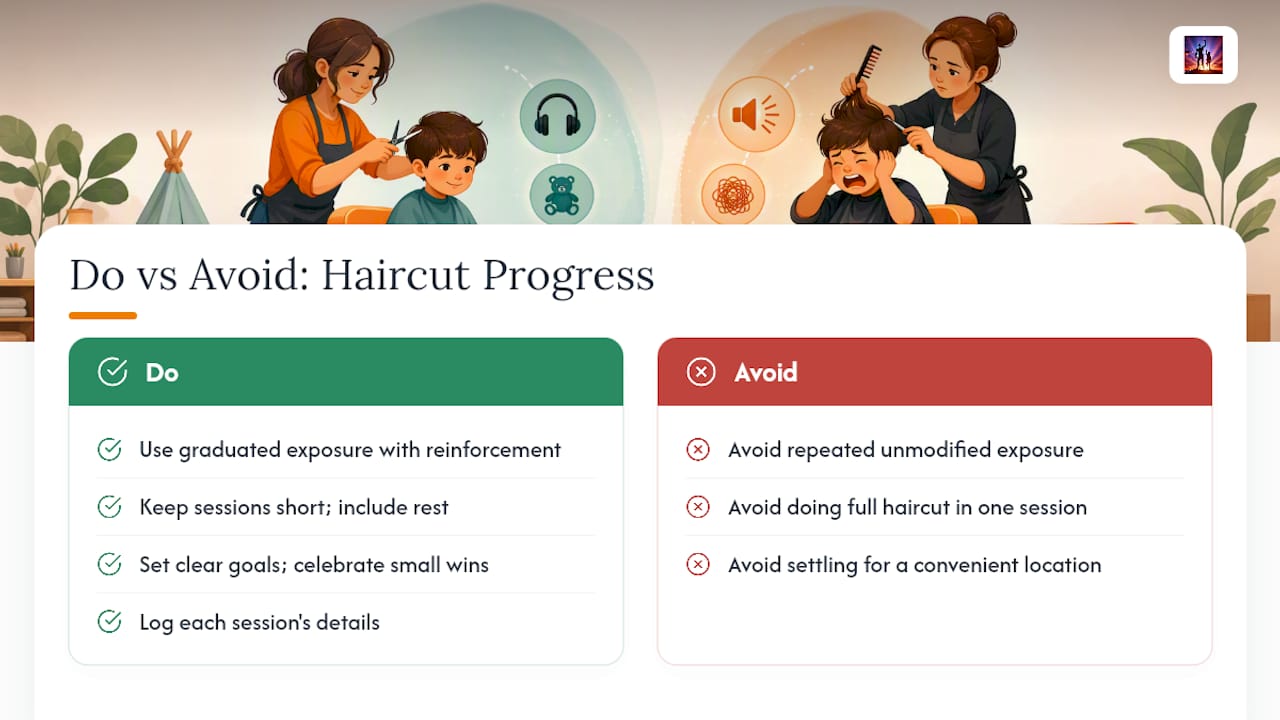
Finally, document everything. The log you keep after each session is not busywork. It’s the evidence that shows you and your child how far you’ve come, and it’s the data that helps an OT or BCBA build a better plan if you need one.
Sources
9 Practical Tips for getting your Autistic Child through a Haircut | Sensory Direct Blog
Hair Cut For Autistic Child: Tips And Strategies For A Successful Experience
First Haircut Tips for Autistic Children: For Parents | Move Up ABA
Autism and haircuts: Strategies for autistic children | Autism Parenting Magazine
Recommended